Product, Web & Systems Builder | Founder, Eterna Clarity





UI/UX Design & Web Dev | WordPress, Shopify, 3D Integration
- $1k+
- Earned
- 6x
- Hired
- 5.0
- Rating
- 77
- Followers
UI/UX Design & Web Dev | WordPress, Shopify, 3D Integration

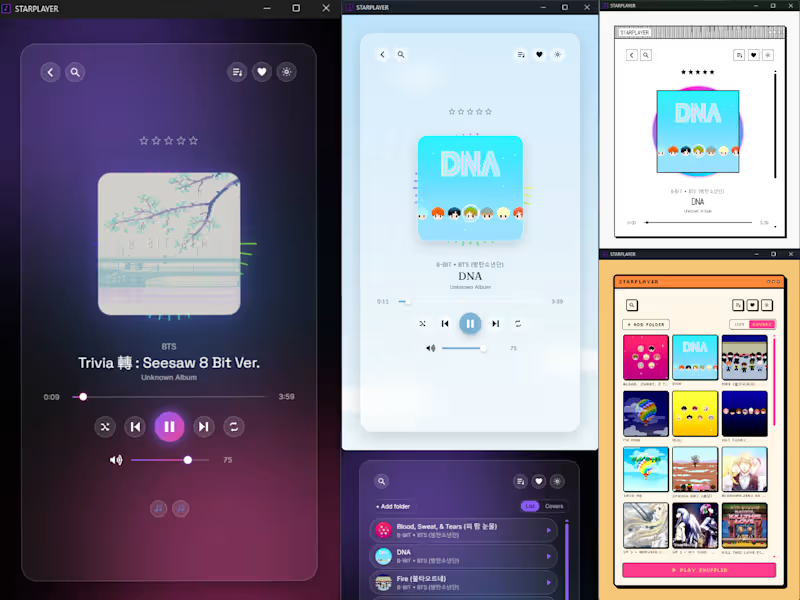
STARPLAYER. Ad-free, private, and highly customizable music player app
UI Design · Frontend Development · Desktop Application Development
This is a personal music player project that combines retro-inspired interface design with modern frontend development. Inspired by my favorite design aesthetics, it explores how a familiar desktop experience can become more expressive, customizable, and enjoyable to use.
The interface brings together pixel-style typography, neon accents, layered windows, and distinctive visual themes. Instead of limiting the experience to a single aesthetic, STARPLAYER features five built-in skins and a custom skin builder, allowing the interface to change without modifying the underlying UI components.
Design & Development
I worked on building a cohesive visual experience supported by a modular frontend architecture. The desktop application uses React, TypeScript, Vite, and Tauri, with shared packages for UI components, application logic, and theme configuration.
Key features include:
Customizable interface: Five visual themes, including Vaporwave, Neo-Brutalist Cute, Gradient Glass, Monochrome Retro, and Soft Glass.
Personal music library: Local music file scanning, embedded metadata reading, and a library stored in SQLite.
Adaptive visual themes: Options for manual theme selection, random themes on launch, and beat-adaptive styling based on cached BPM-derived mood data.
Reusable UI components: A skin system built around shared design tokens and CSS custom properties.
Desktop-focused experience: A Tauri-powered desktop application combining web technologies with native capabilities.
Tools & Technologies
React · TypeScript · Vite · Tauri · Rust · CSS Modules · pnpm · SQLite
The Idea Behind the Project
STARPLAYER is an exploration of the intersection between interface design, frontend engineering, and great user experience (ad-free and private). It demonstrates my interest in building applications where UX, visual identity and functionality work together, from the underlying component architecture to the smallest interface details.
I enjoy creating digital experiences that feel distinctive while remaining practical to use. This project reflects that approach through a customizable visual system and a desktop music player designed around personal expression.
Interested in working together? I design and develop websites, interfaces, and digital products, combining visual design with frontend development to bring ideas to life.
Explore the source code on GitHub (https://github.com/GVPV12/STARPLAYER) · Read the project article on Substack (https://greciart.substack.com/p/starplayer-reproductor-musica-sin-anuncios)
2
245
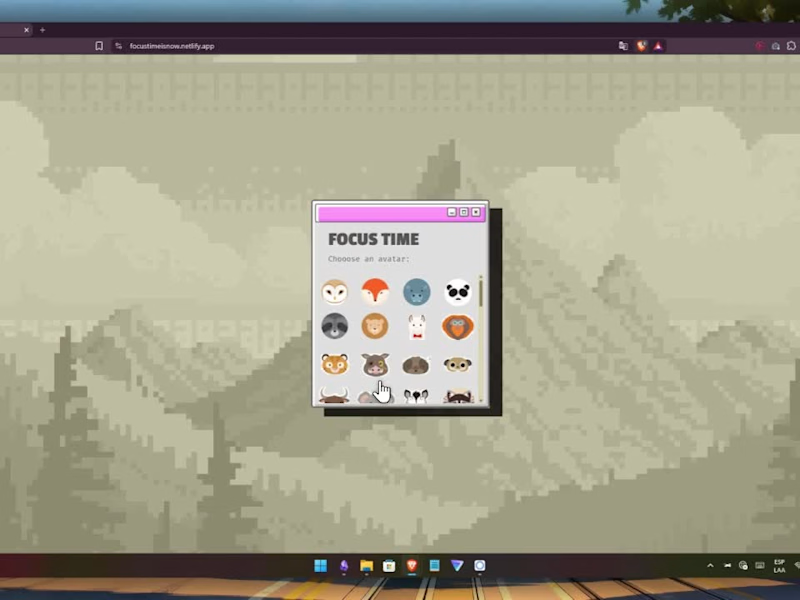
FOCUS TIME: ADHD-Friendly Productivity App Design & Development (UI/UX + React): https://focustimeisnow.netlify.app/
Repo: https://github.com/GVPV12/focus-time
This app was made by me for the Contra 2026 Figma config makeathon. In the end, I produced the version with the original design (and I like this version more), and the version for the Makeathon was a prototype.
Most productivity apps are built around one assumption: a clean list plus a timer equals done. That works if your brain reliably starts tasks, tracks time accurately, and finds a plain checkmark rewarding. For a lot of ADHD brains, none of those three things are reliable, so I designed and built a tool around a different assumption entirely.
FOCUS TIME is a gamified, retro-vaporwave productivity web app where every feature has a specific behavioral reason behind it, not gamification for its own sake, and not another app quietly glorifying hustle culture. Health and rest are built directly into the scoring system: the Overall Score combines HP (Health Points) with MP (Magic Points, your work/rest/distraction balance), plus Strength, Motivation, and Wisdom. If HP and MP aren't balanced, the score doesn't look good, no matter how many tasks got checked off. The app won't reward burning yourself out to finish a list, and it won't reward rushing through one either: the scoring pushes back on the quantity-over-quality mindset that social media has normalized and rewards actually giving a task the time it needs.
WHAT I DESIGNED & BUILT
🟡 A visual moodboard planning system (drag-and-drop images, stickers, notes, and a single task checklist), because externalizing a plan spatially works better for a lot of ADHD brains than a plain text list.
🟡 A focus timer with optional Pomodoro breaks and a body doubling mode, targeting time blindness and the real, research-backed boost from working alongside someone else.
🟡 A mood-tracking and honesty-check system feeding directly into the scoring engine.
🟡 A full gamified scoring system (HP/MP/STR/MOT/WIS/DET, power-ups, a hearts-based accountability mechanic) designed around immediate, visible reward instead of distant, abstract praise.
🟡 A complete retro/Y2K/vaporwave visual identity, designed end-to-end in Figma.
This is an example of my skills in product design, UI/UX, and frontend development: from the original Figma design system through a full technical specification to a working app. To know more about my stack, visit my portfolio: https://grevaleart.com/
The stack underneath is React, TypeScript, Vite, and Tailwind CSS, with React DnD powering the drag-and-drop moodboard editor, React Router handling navigation, and Motion handling the UI animations.
10
17
1K

Marketing & Digital media for Dublin businesses.
- $1k+
- Earned
- 7x
- Hired
- 5.0
- Rating
- 41
- Followers
Marketing & Digital media for Dublin businesses.


Multidisciplinary Designer ✳︎ We're ready to serve you


Multidisciplinary Designer ✳︎ We're ready to serve you



Animated sites, motion & isometric icons, built with AI
- 1x
- Hired
- 30
- Followers
Animated sites, motion & isometric icons, built with AI
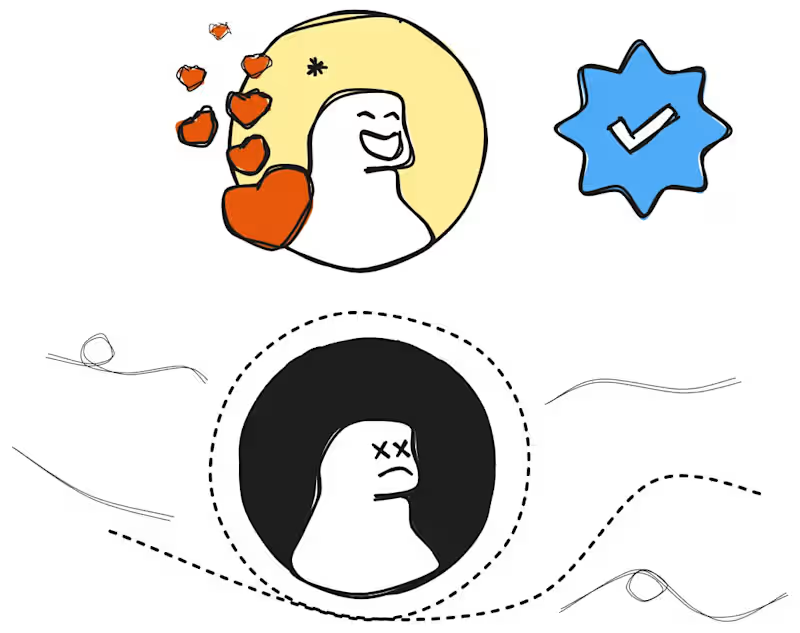
The Power of the Checkmark in Social Media Today
Elon Musk's paid verification on X (formerly Twitter) in Nov 2022 was mocked as a cash grab for the $44B buyout. Critics: chaotic, fake accounts surged, legacy badges stripped from celebs/journalists, backlash ensued.
Fast-forward: proven model emulated widely. Meta's Verified for IG/FB in early 2023 ($11.99/mo web, $14.99 mobile) bundles visibility, support, anti-impersonation—like X Premium.
Some decry shift from authenticity to pay-to-play, but revenue's huge: X fights spam, boosts creators, sustains amid ad dips; Meta sees strong uptake.
Trend: verification drives monetization/retention. Laughter to imitation, reshaping social media.
In Contra, it's the same with the Pro Badge. I think Contra will shape freelancing platforms.
1
216
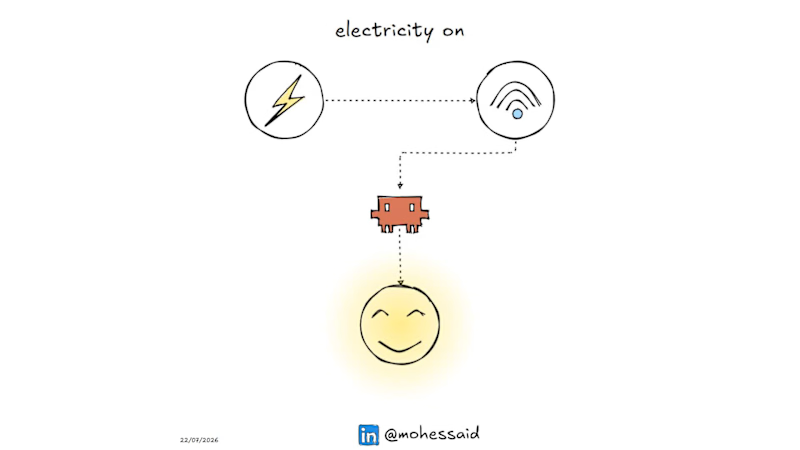
This video was created with Claude code, Excalidraw, and hyperframer. It's about me working these days with all the electricity cut-off because of the overwhelming heat.
Since I am relaying too much on Claude code for some projects, it's hard to work if it's not available. The electricity goes off, internet follows, Claude shut down, then me going mad.
5
4
291
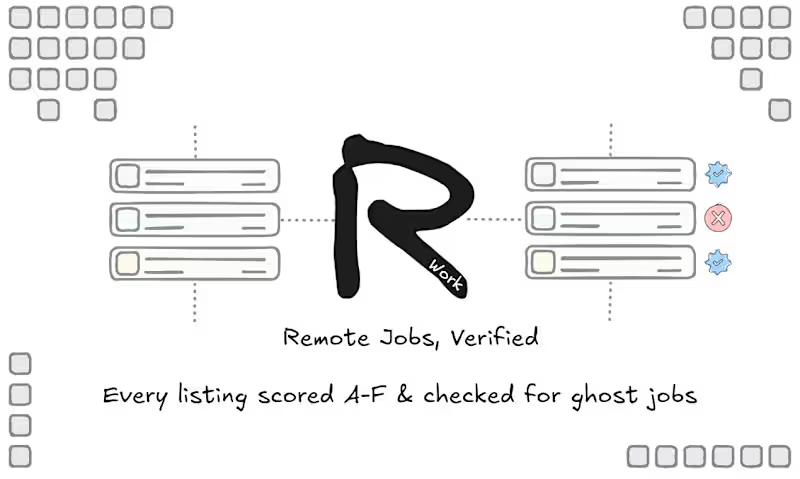
I shipped Remoty.work (http://Remoty.work) in 10 days. From the first PRD to the first 100 organic users.
All of it built with AI agents, pushed to their limit. I tried nearly every workflow people are hyping in the social space.
Here is what I actually learned.
The AI agentic era is real. That part is not hype.
But the noise is real too. It is hard to trust what people say. And worse, the metrics we used to pick tools no longer hold. A GitHub repo with tens of thousands of stars can still bankrupt you overnight.
Human in the loop is not optional. You have to stay in the loop, understand what is happening, and keep control. Lose that, and you end up somewhere you cannot fix.
If you need to move fast and get to market, let us know.
2
291

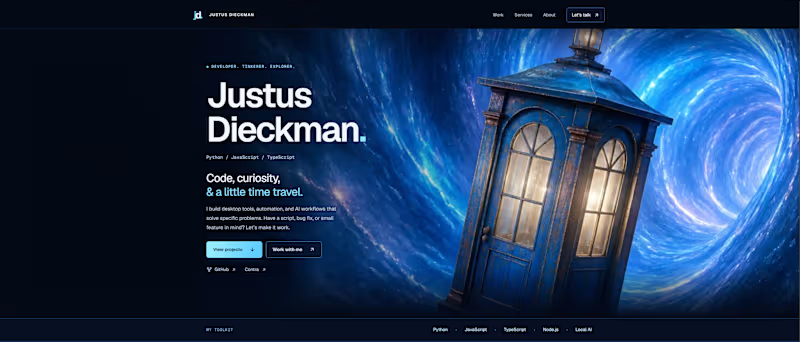
Fast fixed-scope Python/JS/TS + polished landing pages


Marketing strategist specializing in organic marketing.
Marketing strategist specializing in organic marketing.




"Video Editor | Specialized in High-Converting VSLs & Motion
New to Contra
"Video Editor | Specialized in High-Converting VSLs & Motion