DevOps & MLOps engineer who designs what he ships.
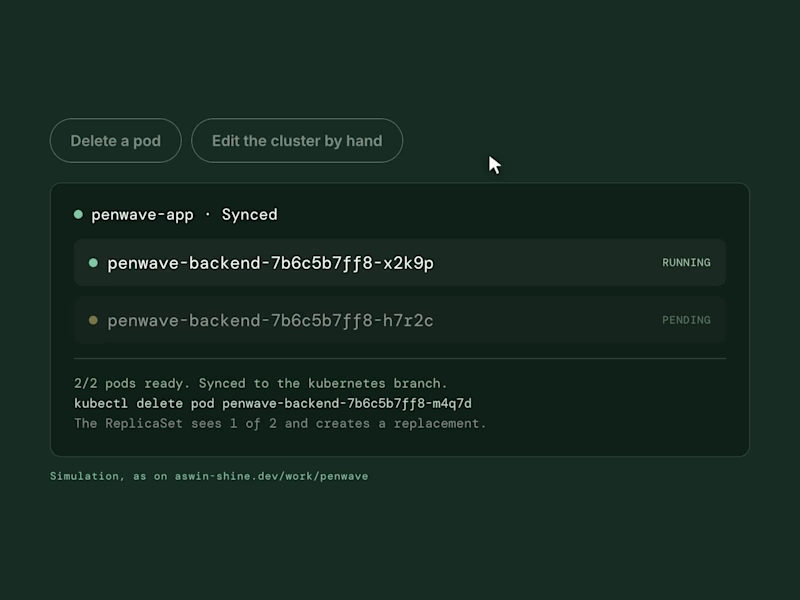
Delete a pod. Edit the cluster by hand. Penwave puts both back 🔁
On EKS, the ReplicaSet saw 1 of 2 pods and made a replacement, which joined once its readiness probe on /ready passed. ArgoCD's self-heal re-applied the kubernetes branch, so the hand edit was gone.
The clip is a simulation of both, with the real ReplicaSet name. The EKS version of Penwave was built on EKS Auto Mode with ArgoCD and Helm, and has since been spun down.
What's the first thing you try to break on a new cluster? 👇
🔗 aswin-shine.dev/work/penwave (http://aswin-shine.dev/work/penwave)
2
0
71
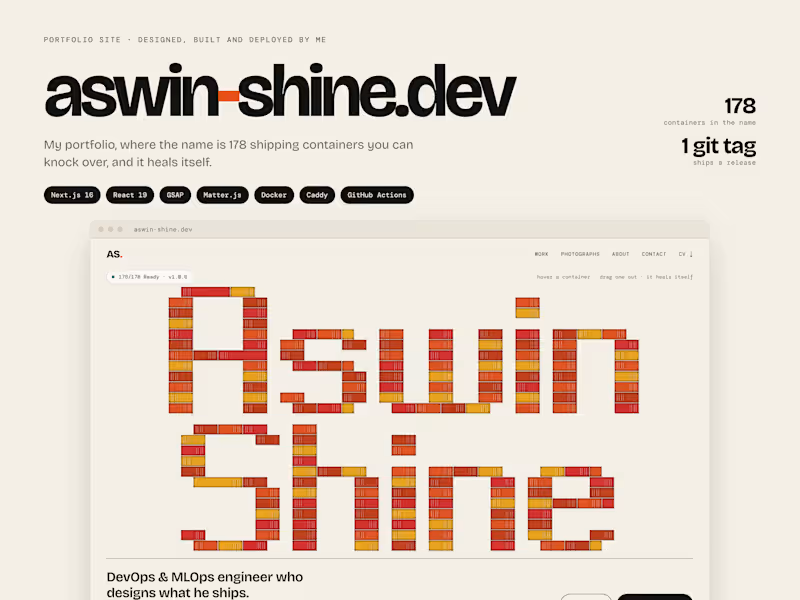
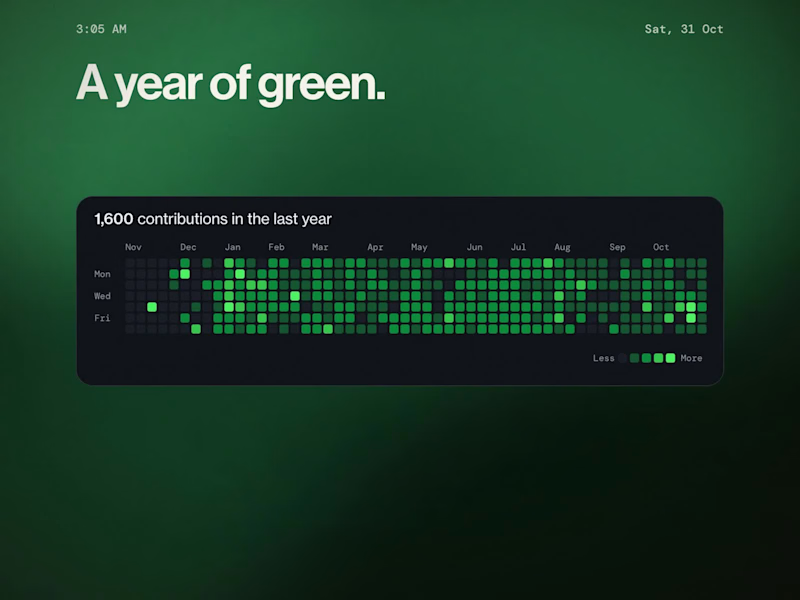
1,866 contributions on my GitHub graph 🟩, green all year, until 3 AM today, when the whole thing turned orange 🟧
When you run production systems, green turning orange is how a bad night starts 😬 So I checked the monitoring 📊, then went through the logs 🔍, looking for whatever had failed.
Nothing had. Under the graph, GitHub had written "Happy Halloween!" 🎃
Happy Halloween, everyone 👻 What's your best 3 AM false alarm? 👇
🔗 github.com/Aswin-Shine
#Halloween #DevOps #GitHub #MotionDesign
1
0
156



Expert cloud & platform consultant building AI platforms
Expert cloud & platform consultant building AI platforms
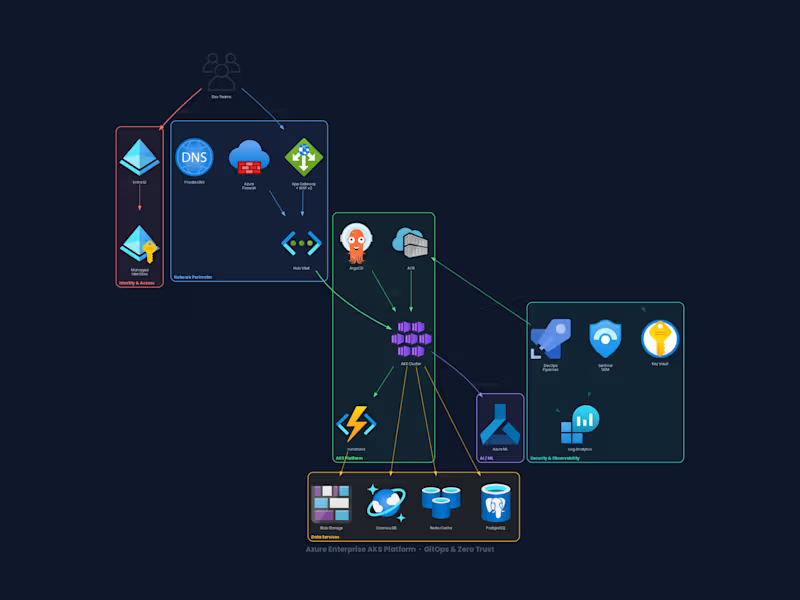
Architected an enterprise Kubernetes platform on Azure AKS for a fintech company running 40+ microservices. Traffic enters through Application Gateway with WAF v2 policies and Azure Firewall before reaching the AKS cluster inside a hub-spoke VNet. ArgoCD manages all deployments through GitOps with automatic drift detection and self-healing. ACR stores container images built by Azure DevOps Pipelines with integrated vulnerability scanning. Workloads connect to Cosmos DB, PostgreSQL Flexible Server, and Redis Cache through private endpoints. Azure ML handles fraud detection model inference called directly from within cluster pods. Entra ID with Managed Identities provides passwordless auth across all services.
0
107
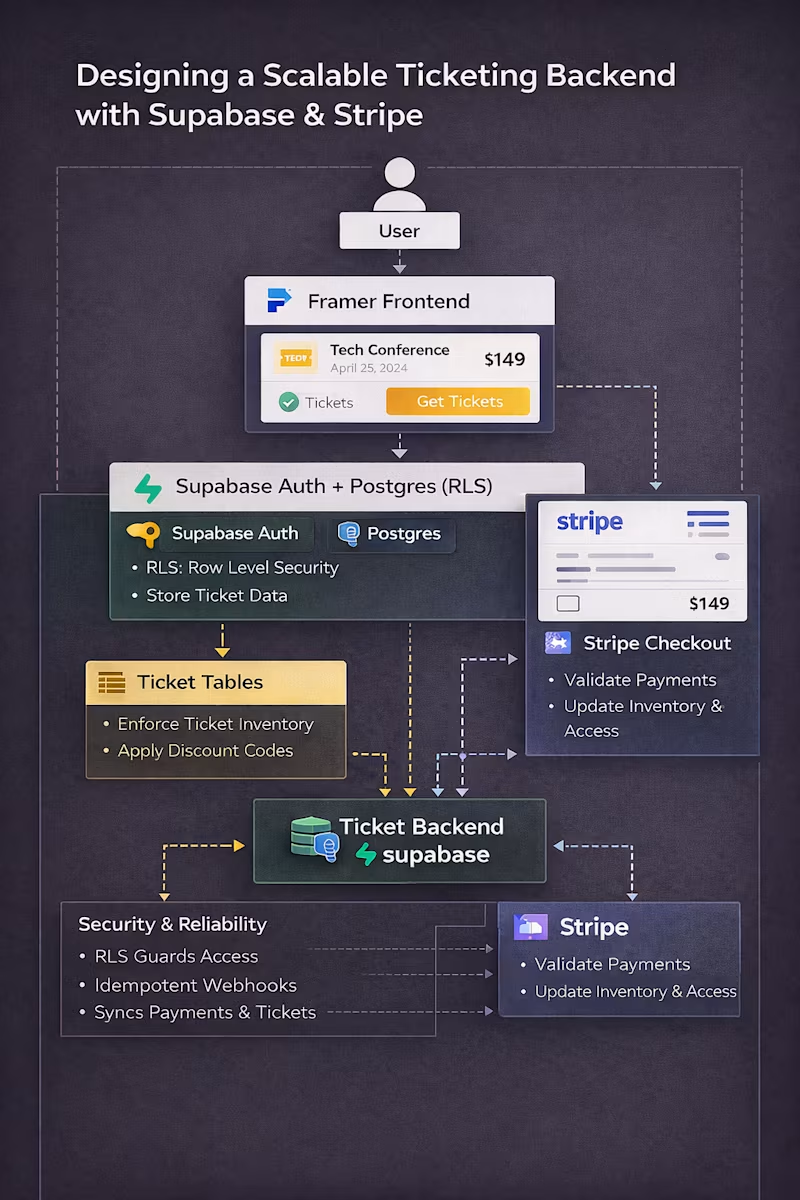
Here's how I'd build a scalable ticketing backend with Supabase & Stripe.
The backend is where everything lives or breaks. Supabase handles auth and Row Level Security out of the box, Postgres enforces ticket inventory and access at the database level, and Stripe Checkout processes payments with webhooks that keep everything in sync. Capacity limits, discount logic, and user access all of it stay consistent when real traffic hits. Built to scale without needing a full rewrite six months down the road.
0
105
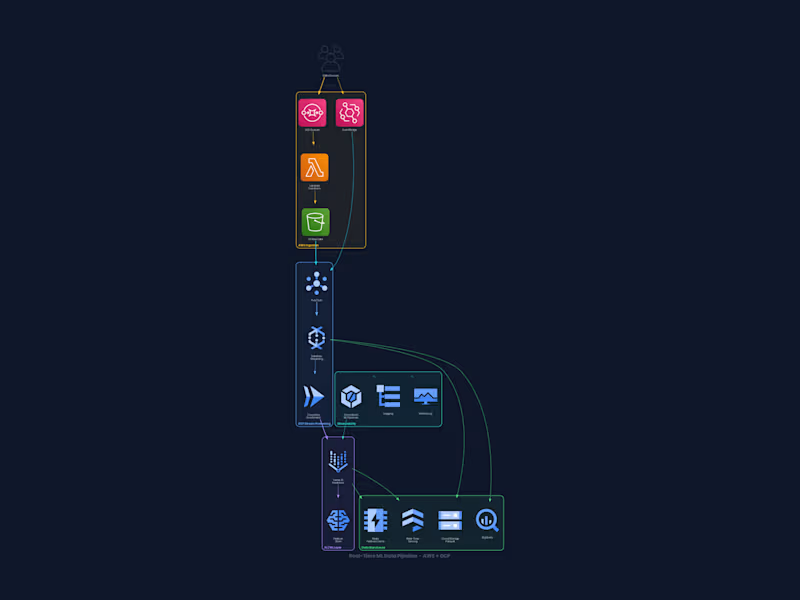
Cross-cloud real-time data pipeline for an e-commerce platform processing 2M+ events per day. Event sources feed into SQS queues and AWS EventBridge. Lambda functions handle initial transformation and validation before landing raw data in S3. A cross-cloud sync layer pushes events into GCP Pub/Sub for real-time stream processing. Dataflow streaming jobs handle enrichment, deduplication, and windowed aggregations before passing to Cloud Run microservices for feature engineering. Vertex AI runs real-time prediction models for recommendation scoring and fraud detection. Processed features land in Redis for low-latency serving and BigQuery for analytics. Cloud Storage holds Parquet files for batch retraining. Cloud Build orchestrates the ML pipeline, including model training, evaluation, and deployment.
1
139
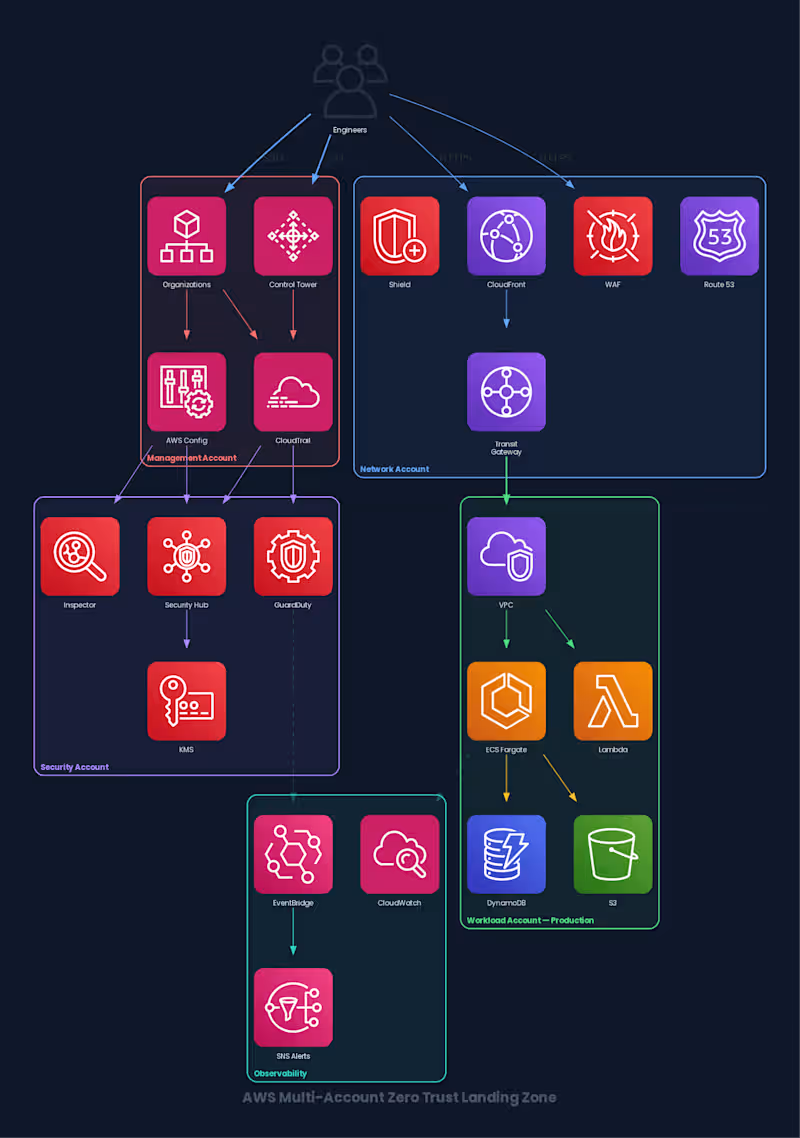
Designed and deployed a multi-account AWS landing zone using Control Tower and Organizations for a healthcare SaaS company handling PHI data. The architecture separates management, security, network, and workload accounts with dedicated IAM boundaries. Traffic routes through CloudFront and WAF into a Transit Gateway hub before reaching production VPCs running ECS Fargate workloads. Security Hub aggregates findings from GuardDuty, Inspector, and AWS Config across all accounts. CloudTrail feeds into EventBridge for real-time alerting through SNS. All encryption managed through a centralized KMS account. Infrastructure provisioned entirely with Terraform and Terragrunt modules. Achieved SOC 2 Type II and HIPAA compliance within 90 days.
0
117

DevOps Engineer | AWS Specialist | Backend Developer
DevOps Engineer | AWS Specialist | Backend Developer

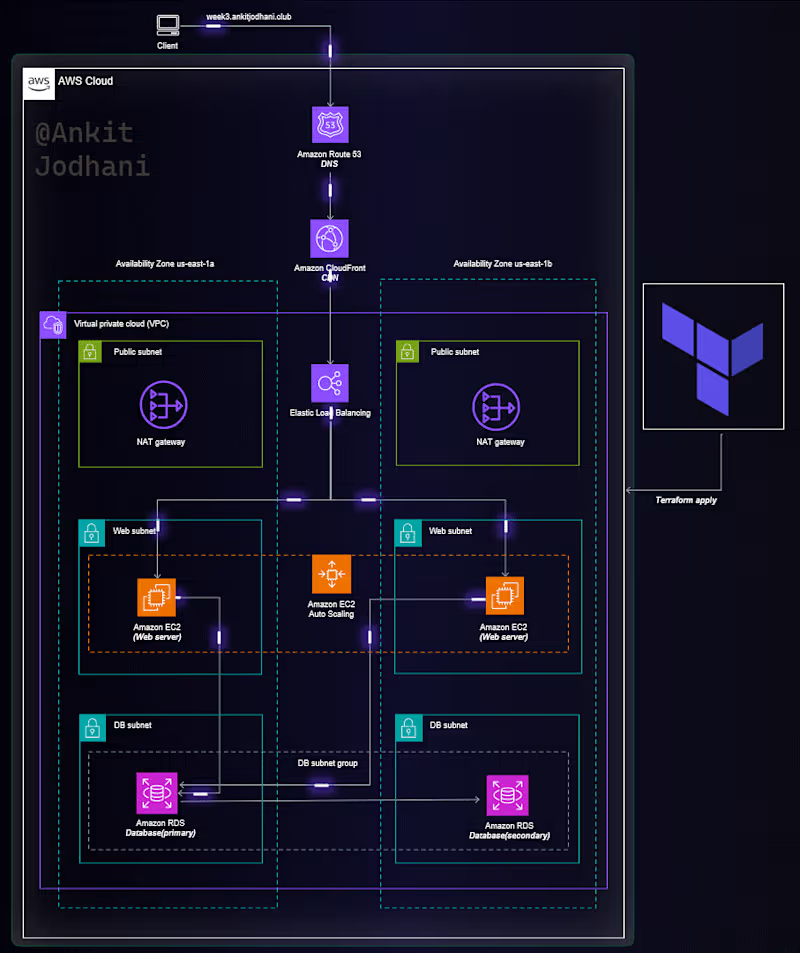

View more →

AI & Full-Stack Engineer | Building Production AI SaaS, APIs
New to Contra
AI & Full-Stack Engineer | Building Production AI SaaS, APIs
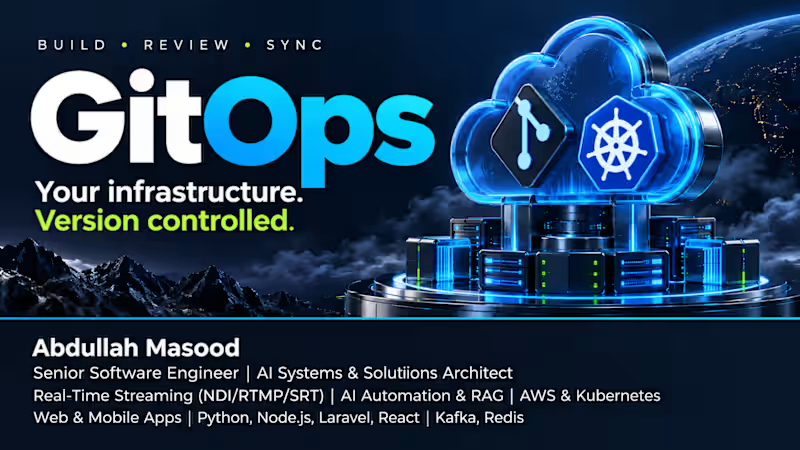
A Kubernetes deployment should be easy to trace: what changed, who changed it, and why.
That’s what interests me about GitOps.
With GitOps, the desired state of your infrastructure and applications lives in Git. Changes go through commits and pull requests, while a controller such as Argo CD or Flux continuously reconciles the running environment with that desired state.
A typical workflow looks like this:
• Build and test the application through CI.
• Push the Docker image to a registry.
• Update the image version in the Git configuration.
• Review and merge the change.
• Let the GitOps controller reconcile the cluster.
The benefits go beyond automated deployments:
✅ A versioned history of configuration changes
✅ Reviewable changes before deployment
✅ Visibility into configuration drift
✅ A repeatable way to manage environments
One important detail: reverting a Git commit can restore an earlier configuration, but database migrations and changes to application data still need their own recovery plan.
For me, GitOps connects development and operations through a workflow both teams already understand: Git.
Are you using Argo CD, Flux, or CI-driven deployments for your Kubernetes workloads?
1
307
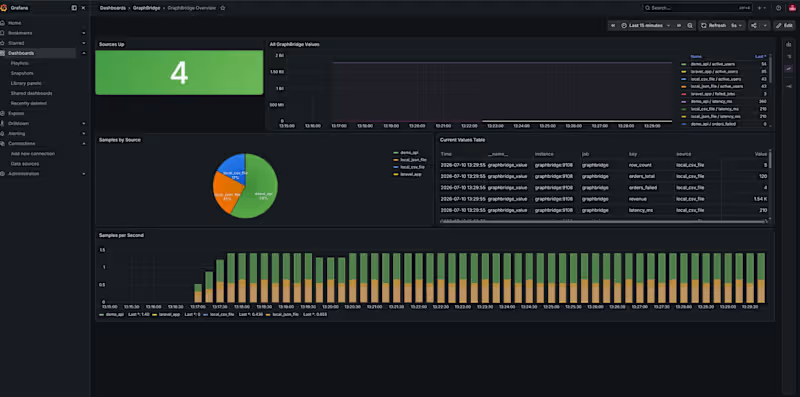
🚀 Introducing GraphBridge – Turn JSON into Grafana Dashboards
One thing I've noticed while working on different projects is that applications already have valuable metrics, but getting those metrics into Grafana often requires exporters, custom integrations, or additional setup.
I wanted something much simpler.
So I built GraphBridge.
The idea is straightforward:
Your Application
↓
Send JSON
↓
GraphBridge
↓
Prometheus
↓
Grafana
Instead of writing custom exporters, your application simply sends JSON metrics to GraphBridge.
For example:
{
"active_users": 85,
"orders_today": 42,
"revenue_today": 9840,
"failed_jobs": 3,
"latency_ms": 210
}
GraphBridge automatically converts the data into Prometheus metrics, making it immediately available for Grafana dashboards.
Current features
✅ JSON Webhook API
✅ REST API polling
✅ JSON & CSV data sources
✅ Prometheus /metrics endpoint
✅ Docker Compose deployment
✅ Auto-configured Grafana dashboard
✅ Example integrations for Laravel, FastAPI, Node.js, and custom applications
Possible use cases
• Application monitoring
• Queue & background job metrics
• Business dashboards
• API performance monitoring
• FFmpeg streaming statistics
• IoT sensor metrics
• Internal analytics
• Custom operational dashboards
The goal is simple:
Send JSON. Visualize everything.
This is the first public MVP, and I'm planning to continue improving it with additional integrations and monitoring templates.
I'd love your feedback and suggestions!
⭐ GitHub:
https://lnkd.in/dAYdNJxg
1
220
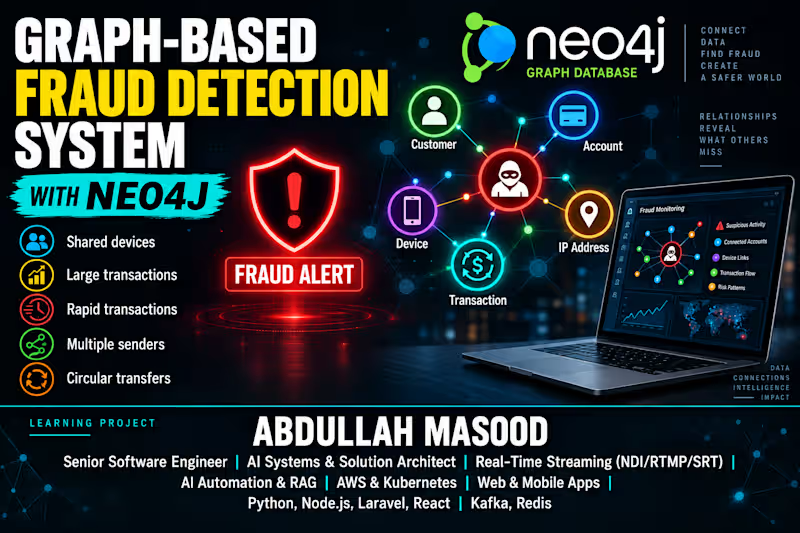
🚀 Building a Graph-Based Fraud Detection System with Neo4j
A single transaction may look normal. Its connections can tell a different story.
I’m building a learning project using Neo4j and Cypher to explore relationships between customers, accounts, transactions, and devices—and flag patterns worth investigating.
🔍 Patterns I’m exploring:
• Multiple customers sharing the same device
• Unusually large transactions
• Rapid transactions within a short period
• Multiple accounts sending money to one account
• Circular transfers between connected accounts
The focus is explainability: showing the relationships behind each flag so the suspicious activity is easier to understand.
Through this project, I’m strengthening my graph data modelling, Cypher queries, and rule-based detection skills.
Next: FastAPI integration, transaction risk scores, fraud alerts, and an interactive monitoring dashboard.
🛠️ Currently a learning prototype, with more updates coming as I build.
What would you investigate first: shared devices or circular transfers?
#Neo4j #GraphDatabase #FraudDetection #Cypher #BackendDevelopment #LearningInPublic
1
303
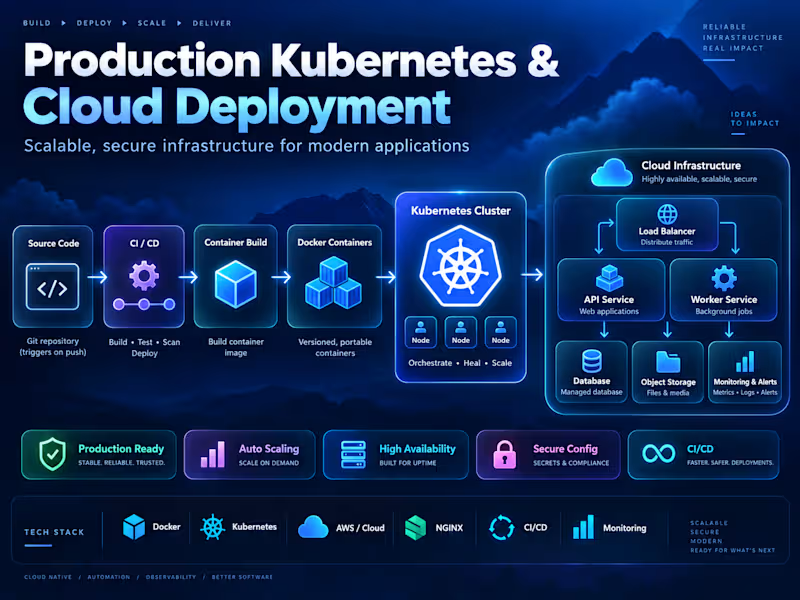

CI/CD Specialist | Kubernetes, Docker & Jenkins Guru
- $1k+
- Earned
- 1x
- Hired
- 3
- Followers
CI/CD Specialist | Kubernetes, Docker & Jenkins Guru


View more →

DevOps Engineer | Cloud Infrastructure | Scripting
DevOps Engineer | Cloud Infrastructure | Scripting
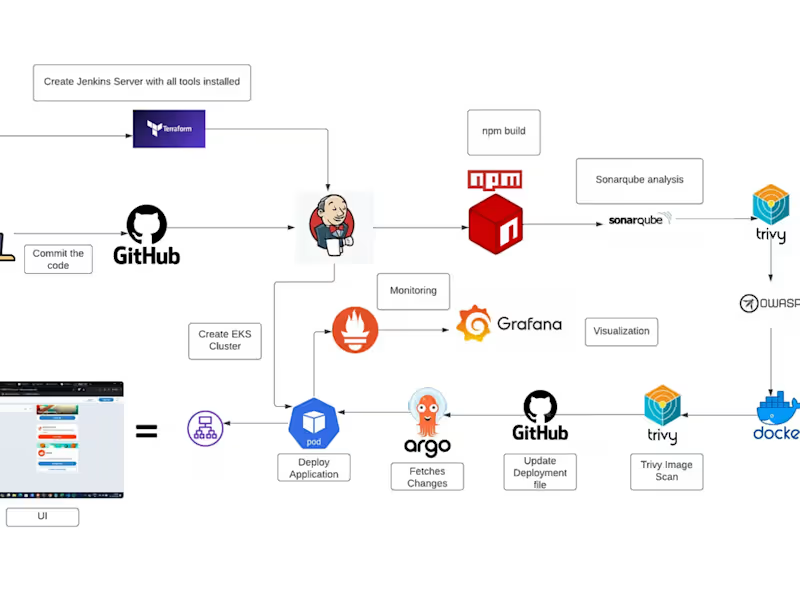
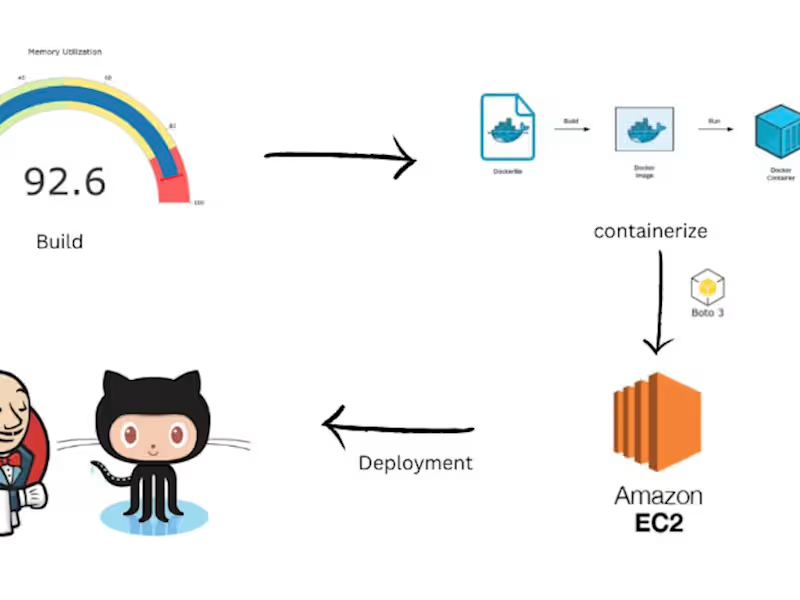
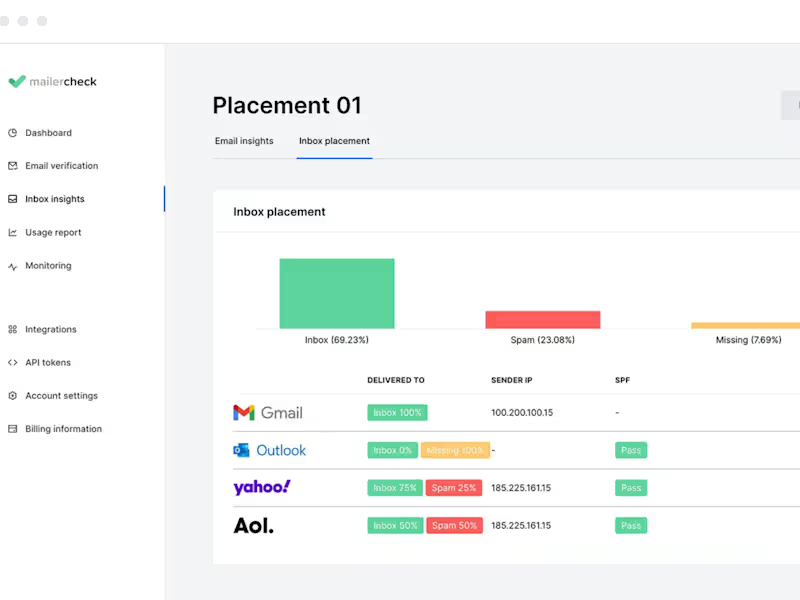

View more →

Senior Cloud, DevOps & AI Engineer driving transformation
Senior Cloud, DevOps & AI Engineer driving transformation
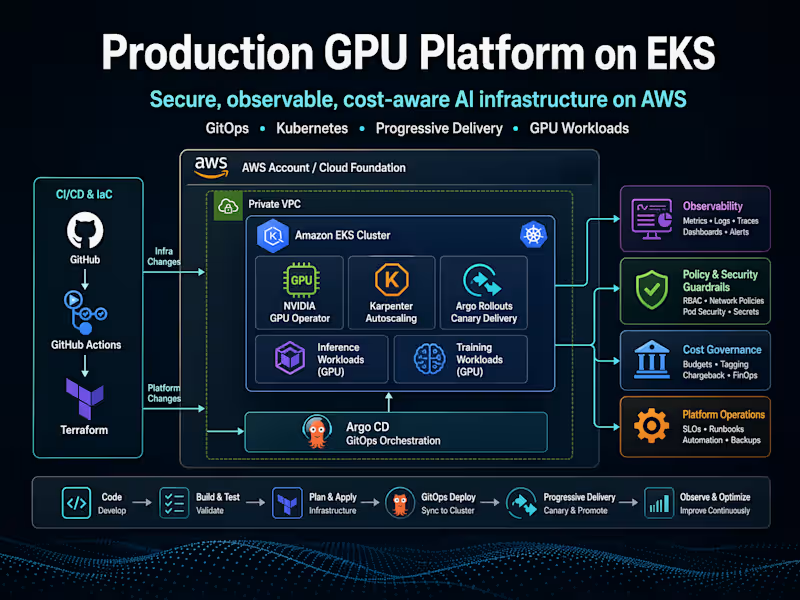
Built a production-oriented GPU platform on AWS EKS with a strong focus on security, observability, progressive delivery, and cost-aware scaling. This case study shows how I design cloud foundations for AI workloads using Kubernetes, GitOps, policy guardrails, and platform automation.
1
71
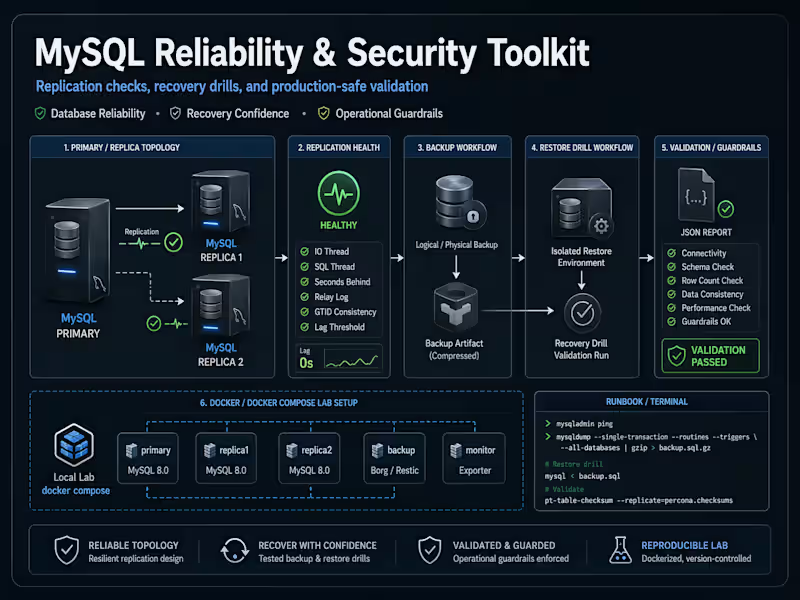
Created a reliability-focused MySQL toolkit covering replication checks, backup and restore drills, and operational validation with clear guardrails. This project demonstrates my production mindset around database reliability, recovery confidence, and safer operations.
1
62

AI Platform Engineer | LLM, Kubernetes, Cloud
AI Platform Engineer | LLM, Kubernetes, Cloud