

Freelance Data Analysts in Washington
Sign Up
Post a job
Sign Up
Log In
Filters
2
Projects
People
Marco Wong
pro
Ashburn, USA
Mobile Developer | FlutterFlow, React Native, SwiftUI
$5k+
Earned
3x
Hired
5.0
Rating
25
Followers
Follow
Message
Mobile Developer | FlutterFlow, React Native, SwiftUI
10
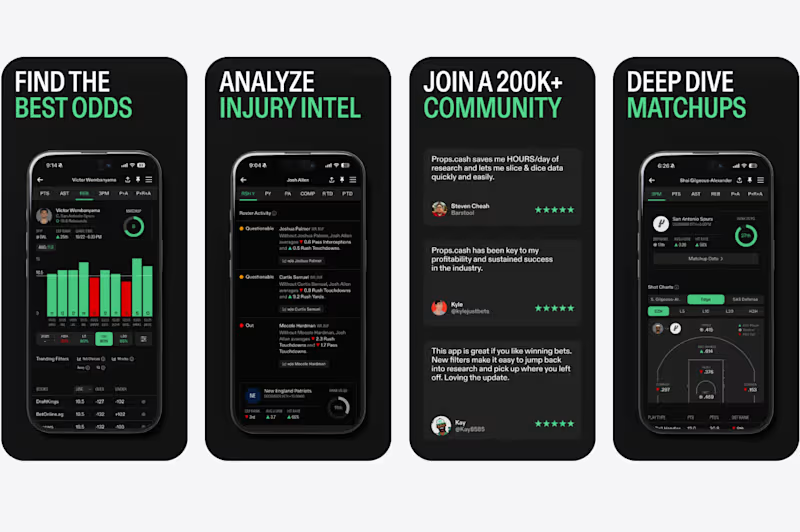
Mobile App Development for Sports Betting Analytics Platform
10
13
4
Friendly Options Analysis Tool Development
4
17
4
Development of Friendly Screener for Stocks With Josh
4
24
5
FlutterFlow Development of AYULYFE Ayurveda App
5
9
Data Analyst
(1)
Follow
Message
Michael Gould
pro
Lorton, USA
Workflow automation for forms, CRMs, Zapier, Make, n8n.
New to Contra
Follow
Message
Workflow automation for forms, CRMs, Zapier, Make, n8n.
0
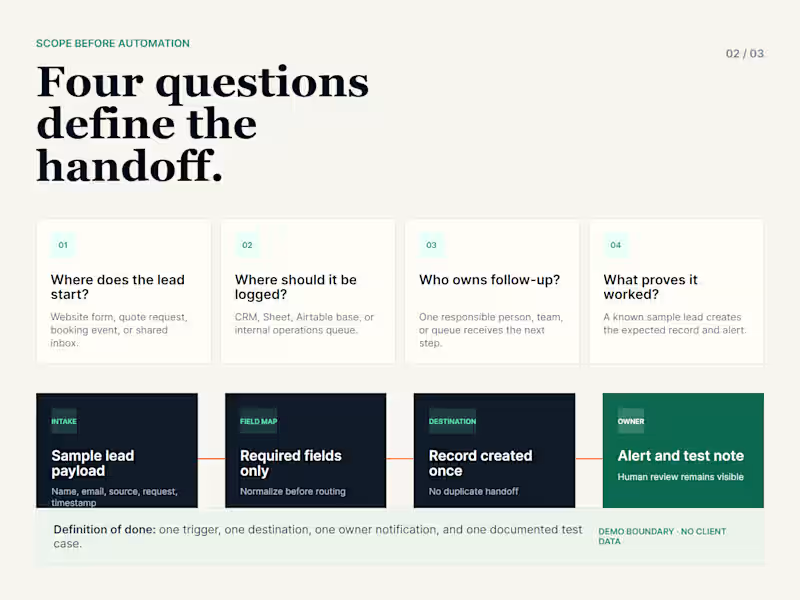
A self-initiated workflow automation demo showing a simple lead handoff: intake, routing, CRM or sheet logging, owner notification, and test-ready review output.
0
39
0
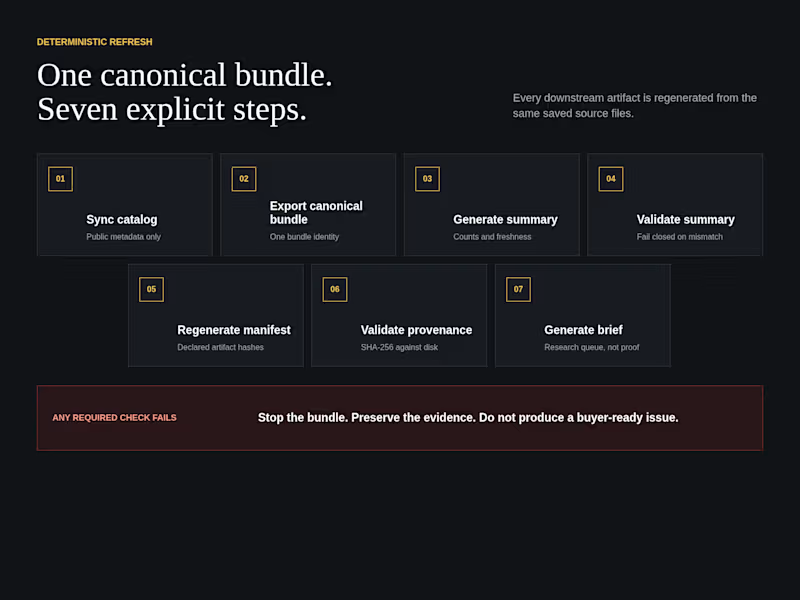
Self-initiated internal product. Odds Desk uses public data only. It is not client work, a trading tool, or financial advice. I built this because a research brief is only as trustworthy as the source snapshot behind it. Catalog freshness, derived summaries, file identity, and editorial status need to stay consistent across every generated artifact. The workflow synchronizes a public catalog, exports one canonical bundle, generates and validates a summary, regenerates a manifest, checks declared SHA-256 values against disk, and produces a dashboard and Markdown brief from the same saved files. The workflow fails closed. If a required validation fails, the bundle stops, the evidence is preserved, and no buyer-ready issue is produced. The gallery shows a July 30, 2026 snapshot with 675 saved markets, 36 unverified research leads, zero verified cards, and four of four declared hashes matching disk. The state remains RESEARCH_PREVIEW. Best fit: public API ingestion, reproducible research bundles, validation pipelines, provenance checks, fail-closed editorial workflows, and automated briefing systems.
0
38
0
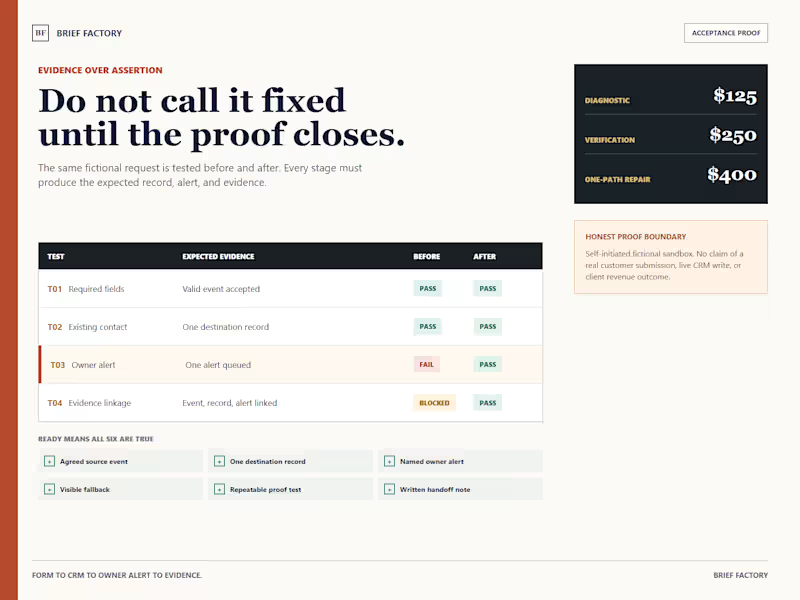
A self-initiated Brief Factory internal system. The gallery shows public post titles only. No names, handles, contact details, or private messages are shown. I built this to make public automation research more consistent. Instead of manually checking communities for scattered requests, the monitor reads selected RSS and Atom feeds, normalizes source URLs, rejects stale or generic items, scores observable workflow pain, deduplicates accepted rows, and records source health. The output is a structured review queue, not permission to contact anyone. The system does not post, bid, message, or send. The gallery shows a dated run from July 30, 2026: seven configured feeds, seven review rows, two HTTP 429 rate limits, zero high-intent rows, and zero external actions authorized. Best fit: public-source monitoring, qualification queues, source-health reporting, research triage, and review-first opportunity workflows.
0
36
0
HVAC Lead Handoff Rescue Case Study
0
1
Data Analyst
(3)
Follow
Message
George Railean
Merrifield, USA
AI Interface designer and developer.

Follow
Message
AI Interface designer and developer.
3
For this project, I had the chance to design a VR training system for soldiers, simulating real-world mission scenarios. My focus was on creating an interactive, efficient, and accessible experience, ensuring both learning effectiveness and user engagement. Each screen was crafted to deliver essential information clearly and intuitively - from risk zone symbols to interactive mission progress charts. The integration of real-time feedback empowers soldiers to make swift tactical adjustments, ensuring quick decision-making during training. This project blends cutting-edge VR technology with human-centered design, allowing soldiers to interact confidently with the system while preparing for any situation, all without the risks of traditional field training.
1
3
173
2
As a designer, I focused on crafting an experience that brings clarity to complexity. This project embodies the future of intelligent stadium management and sets a new standard in how we interact with data at scale. This bird’s-eye view gives an effortless preview of how data flows across the venue, highlighting availability, network performance, and traffic patterns, helping managers ensure smooth operations for thousands of spectators. Through motion-driven design, complex data is turned into meaningful insights. Dynamic, color-coded charts and intuitive visuals reduce cognitive load, offering clear, actionable information, like network status, crowd accessibility, and engagement - at a glance. The real power of this animation lies in its ability to provide contextual insights at scale, enabling proactive decision-making.
2
2
166
1
I’m excited to share EyeViz - a data-driven dashboard suite for exploring mutual funds through an artistic, human lens. ✨ 👁️ Data You Can See (Eye Chart) Meet the hero screen: a living iris where each colored blade maps an asset class, orbiting a bold KPI. It’s data-as-vision - instant clarity on allocation, balance, and momentum - with a slim Interactions stream and a built-in AI sidekick for quick explanations. 💡 Research Workspace Search, compare, and understand — fast. Clean tables, smart chips, and a compact chart show stability, income focus, diversification, and risk side-by-side. The chat panel flags Unverified insights so trust stays front and center. 📱 Personal Workspace Your everyday hub: activity tiles, pinned studies, and ongoing team chats - so you can jump back into work in seconds and keep insights reusable.
1
129
22
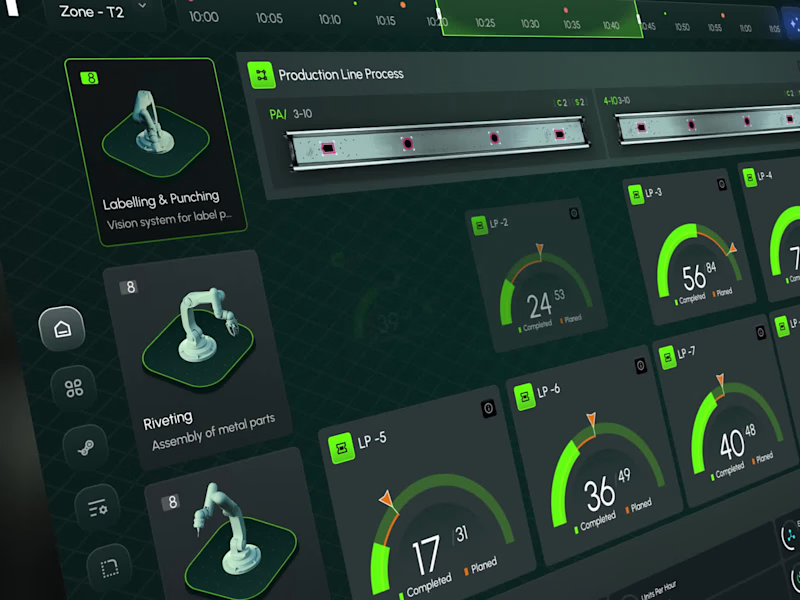
An animated interface designed to reflect the precision of industrial intelligence - a sleek, high-level dashboard built to orchestrate robotics, production analytics, and system-wide monitoring. From robot status indicators to real-time task flow and factory zone mapping, every visual layer is crafted for engineers who demand clarity at a glance and precision at scale. Instant visibility across all production zones Seamless integration of robotic systems Performance insights delivered live Designed for decisions - not just data Welcome to the new standard in industrial UX: fast, focused, and fully connected.
22
323
Data Analyst
(4)
Follow
Message
Brian Pyatt
pro
Ashburn, USA
Senior AI Solutions Architect | Agentic AI & RAG

New to Contra
Follow
Message
Senior AI Solutions Architect | Agentic AI & RAG

0
StarCityGames — 38% Retention & 99.9% Inventory Accuracy
0
4
1
Velocity Electric : AI Voice Agent + CRM Integration
1
8
0
Textpro.ai — AI Universal Concierge Platform
0
5
0
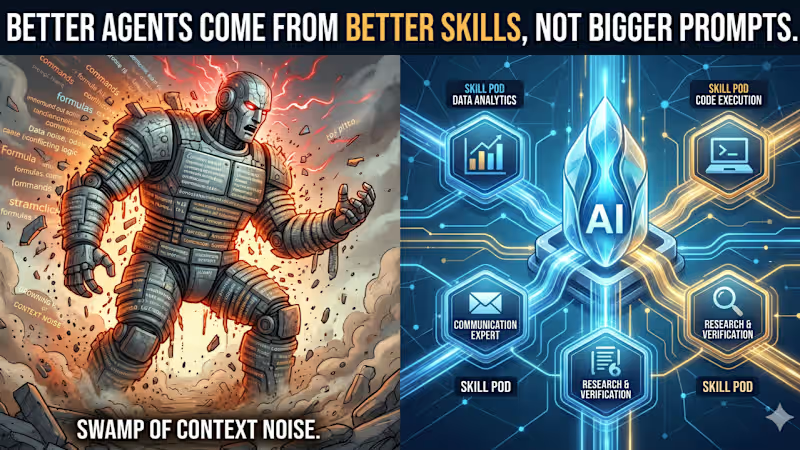
A lot of people building with Claude Code-style agents are still focused on prompt engineering. I get why. It’s the most visible lever. But I think the bigger opportunity is usually somewhere else: the reusable skills, workflows, or slash commands an agent relies on over and over again. Those are what shape behavior over time. And in my experience, improving them is less about piling on new instructions and more about tightening the loop around failure. Watch where the agent breaks. Figure out why. Fix the workflow. Repeat. Sometimes that means adding a rule. Just as often, it means removing one. Over the last couple of days, I rebuilt the /close-loop cycle in my framework, Rebar, and it clarified something I’ve been feeling for a while: A lot of agent systems have evaluation. Fewer have a feedback loop that actually makes them simpler, cheaper, and more reliable over time. That difference matters. In the old version of my loop, a feature could be marked complete because the evaluator returned a PASS. The orchestrator would close the issue, everything looked fine, and only later would I realize something important was still missing — like a Prisma migration file. So the feature wasn’t really done. It just had the appearance of being done. The evaluator had often already pointed at the problem in its follow-up notes. But the system wasn’t treating that kind of language as blocking. “PASS with follow-ups” was getting interpreted too generously. That was the real failure: not bad evaluation, but a weak handoff between evaluation and release. So I rebuilt the loop around four gates, and all four have to pass before “done” means anything: 1 . Evaluator Checks code, scope, and completeness and writes structured findings. 2. Release gate Scans those findings for blocking language like “must generate,” “cannot ship,” or “before any live DB.” If that language shows up, the work is blocked. 3. Cycle-scoped improve step Promotes only the current cycle’s validated observations into the expertise file, instead of dragging in stale backlog noise. 4. Meta-improve Looks across evaluator logs for repeated failure patterns and proposes changes to the templates themselves, with a human review step before anything sensitive gets updated. That last piece is where the compounding effect starts to show up. Because the default instinct in agent systems is usually to add. Add another reminder. Add another caveat. Add another paragraph to the template so the model doesn’t make that mistake again. Sometimes that’s right. But it’s also how workflows slowly turn into bloated instruction stacks that cost more and work worse. Every extra line gets paid for on every future run. And long prompts full of overlapping rules are often harder for models to follow consistently than a smaller number of clear ones. So the better question is not “what else should we add?” It’s “what actually belongs in the workflow?” In the first real cycle of the rebuilt loop, I saw four patterns: - schema changes without Prisma migrations - dirty working tree bleeding across features - orphan Vue refs that were declared but never rendered - Hono context typing debt across multiple routes Only the first two justified workflow changes. The orphan refs were already being caught by the evaluator, so there was no reason to duplicate that logic in the template. The Hono typing issue was real, but it was cleanup work, not a process problem. That distinction matters more than it sounds. If every bug becomes a workflow rule, the system gets heavier every week. If you’re disciplined about separating repeatable process failures from one-off implementation issues, the workflow stays lean. And that’s really the bigger point here. There are two things improving at the same time: First, context gets better. Validated observations get promoted into structured expertise, so the next run starts with better knowledge of the codebase and less repeated discovery. Second, workflow gets sharper. The system looks at repeated failures and changes the reusable commands around the agent — ideally by adding only what consistently matters and cutting what doesn’t. That combination is where the gains compound. The agent starts with better context, but a lighter operating model. That’s a much healthier direction than what a lot of systems drift toward, which is more and more prompt text, more accumulated edge-case handling, and rising cost without much improvement in reliability. The artifact trail is what makes this workable. Each cycle leaves behind evidence: evaluator logs, raw findings, expertise updates, queued template patches, wiki notes. After enough cycles, you’re not just reacting to the last annoying failure. You can actually see what keeps recurring, what was already covered elsewhere, and which instructions are no longer doing useful work. That makes subtraction much easier to justify. And yes, there’s a token-cost argument here too. A 2,000-token template invoked 50 times a day costs 100,000 tokens a day just to load. Trim 500 tokens of dead guardrails and the savings add up quickly. But the bigger win is clarity. In practice, models usually do better with fewer, more coherent rules than with long prompts full of defensive clutter. So shortening the workflow isn’t just cheaper. It often improves quality too. To me, this is the more interesting layer of agent design: not just agentic coding, but skill engineering. The reusable commands around an agent should themselves be under active improvement. Not based on vibes. Not based on one weird miss. Based on repeated observation and actual evidence. If your setup doesn’t have: - an evaluator producing structured findings - a release gate that can interpret blockers - a way to detect recurring failure patterns - and a human review step for sensitive workflow changes then there’s a good chance the system will get more expensive over time, not less. Every miss turns into another sentence. Every edge case turns into another rule. Eventually you’re feeding the model more instructions and getting less leverage out of them. The better path is a tighter loop: less prompt where possible, more signal where it matters, and workflows that get sharper as the system learns. That’s what I’m trying to build into Rebar. Rebar is open-source. The close-loop command, the meta-improve queue, and the release gate are in the repo. Play with it, and if you see a dead instruction in my own templates, send me a pull request.
0
212
Data Analyst
(1)
Follow
Message
D’Mya Sanford
Washington, USA
Automating the boring stuff = better work/life balance.
$1k+
Earned
2x
Hired
1
Followers
Follow
Message
Automating the boring stuff = better work/life balance.

0
Digital Transformation Plan: AI Strategy
0
37
0
Netflix Customer Demographic Visualizer: AI Data Analysis
0
51
0
CRM Data Migration : AI Data Prep
0
20
View more →
Data Analyst
(2)
Follow
Message
Fannie Mukua
Bowie, USA
Optimizing ops, boosting marketing impact, driving growth.

Follow
Message
Optimizing ops, boosting marketing impact, driving growth.

0
Case Study: CRM Transformation for “StyleHive”
0
10
0
Case Study: Marketing Strategy for "City Bites"
0
9
0
Case Study: Hiring System Optimization for ShopEase
0
14
View more →
Data Analyst
(1)
Follow
Message
Elijah Dempewolf
Ashburn, USA
Expert SEO content writer driving engagement and rankings

Follow
Message
Expert SEO content writer driving engagement and rankings

0
Data Expert | Data Entry | Data Analysis | Research
0
4
0
I will create architectural 2d floor plan, 3d floor plan
0
8
0
Expert CV Writer | Career Coach | Resume Specialist
0
2
0
Professional Content Writer | SEO & Creative Expert
0
1
Data Analyst
(1)
Follow
Message
The Zcribbla
Washington, USA
Business Writing: Storytelling for Success

5.0
Rating
Follow
Message
Business Writing: Storytelling for Success

0
Grant Writing for Non-Profit Organization
0
5
0
Business Plan Development for Startup Company
0
12
0
CBE Application for Minority-Owned Business
0
4
0
Capability Statement
0
8
Data Analyst
(3)
Follow
Message
Explore people