Android Development Projects in PunjabAndroid Development Projects in PunjabTitle: SubTracker: Minimalist Subscription Manager
Platform: Android
Live Link: avgdev.gumroad.com/l/subtracker (https://avgdev.gumroad.com/l/subtracker)
Overview:
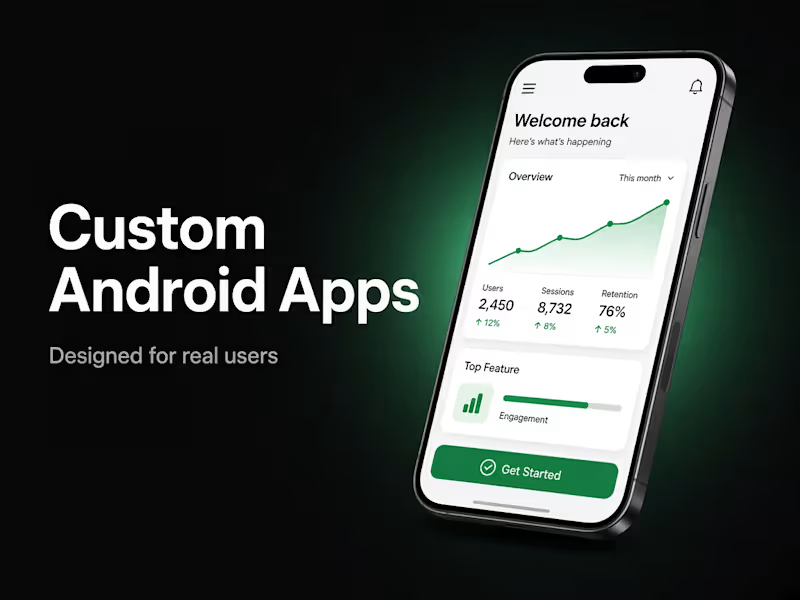
SubTracker is a streamlined Android application designed to put users back in control of their recurring digital expenses. With the rapid growth of subscription-based services, SubTracker eliminates financial blind spots by providing a friction-free, intuitive dashboard to monitor where money is going every month.
Built utilizing Antigravity and Lovable, the application prioritizes a clean, minimalist, Apple-esque design language within the Android ecosystem. The dark-mode interface utilizes high-contrast color coding and typography to make financial data instantly readable, stripping away unnecessary clutter to focus entirely on user experience.
Key Features:
Proactive Alerts: Automated notifications trigger exactly two days before any subscription renews, giving users ample time to cancel unwanted services before they are charged.
Financial Insights: The dashboard automatically calculates both monthly and yearly spending overhead, translating small monthly fees into their true annual cost.
'Most Expensive' Target: A dedicated UI card highlights the highest-cost subscription, actively showing users how much they could save annually by cutting their biggest expense.
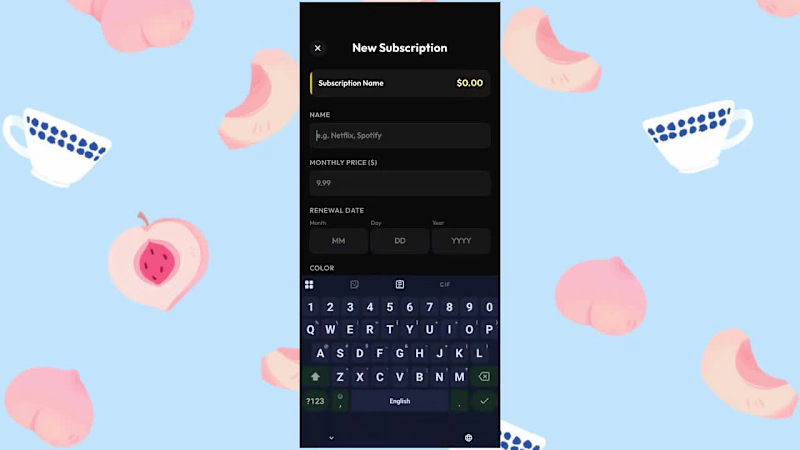
Seamless Data Entry: A simplified, color-coded input flow allows users to add new subscriptions (like Netflix, Spotify, or Amazon Prime) in seconds.
My Role:
End-to-end product development, including UI/UX design, dark-mode color theory application, and frontend Android development. I am Muhammad Zakriya, an Android app developer based in Lahore, Pakistan. I help founders and businesses turn an app idea into a polished product that their customers can download and use with ease.
I build custom Android apps in Kotlin, from the first screens to a release that is ready for Google Play. The work covers clean interface design, user accounts, dashboards, notifications, payments, and the connection between the app and your backend. Every screen is kept simple, so a new user understands it without a guide.
Before I write code, I agree the features, the timeline, and the price with you. You see the screens first. After your approval, I build the app, test it on real phones, and share progress at each stage. When the app is ready, I help you publish it on the Google Play Store. Fixes for the agreed features are included. New features can be added later as a separate update.
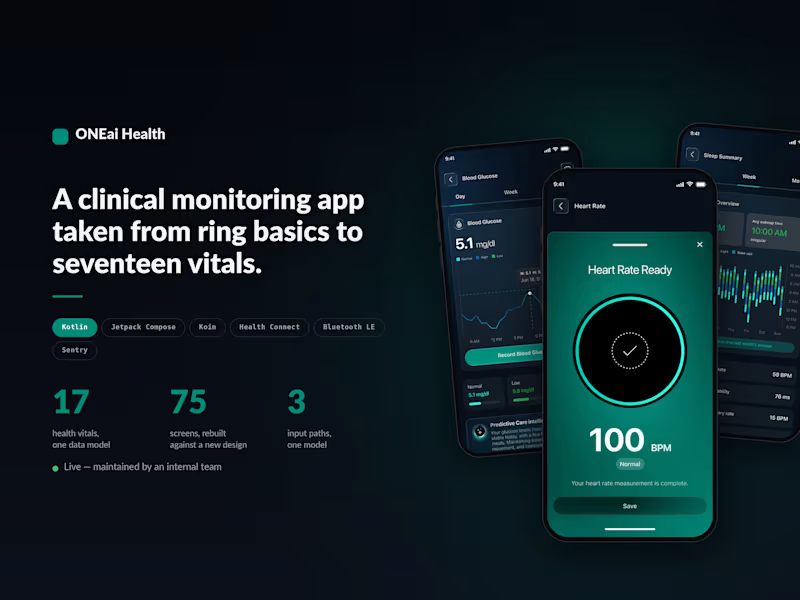
If you have an app in mind, send me the idea, the main features, and your timeline. I will reply with a clear plan and the next step. ONEai Health — a clinical monitoring app, from ring basics to seventeen vitals
Patients enrol through their healthcare provider and wear an FDA-cleared smart ring. The app had been live about a year when I joined, and its public reviews weren’t about polish — they were about readings that didn’t arrive and a ring that wouldn’t stay connected.
I came in as primary Android engineer and built most of what the product does today. The core problem was that health data arrived three different ways — the ring over Bluetooth, Android Health Connect, and the patient typing it in — and each path had grown its own handling. I converged all three onto one per-vital model, so every one of the seventeen vitals renders, charts and uploads identically no matter where its numbers came from.
From there: seventeen health-vital surfaces, Health Connect sync, a structured daily diary and an AI chatbot, across roughly seventy-five screens. Then the client brought a new design, and I reimplemented the entire interface against it without touching the business logic underneath — which is the whole argument for keeping the two apart. Live on the App Store and Play Store, now maintained by an internal team