The network for creativity
Join 1.25M professional creatives like you
Connect with clients, get discovered, and run your business 100% commission-free
Creatives on Contra have earned over $150M and we are just getting started
Back to feedPost

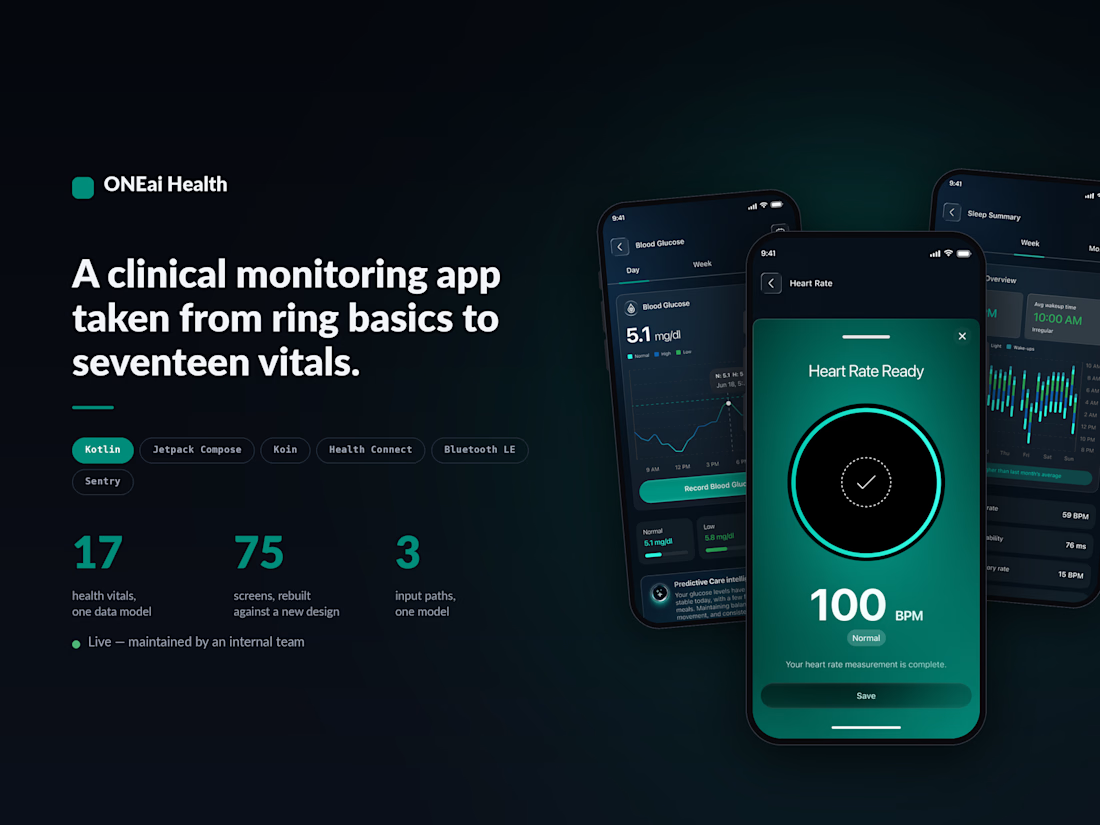
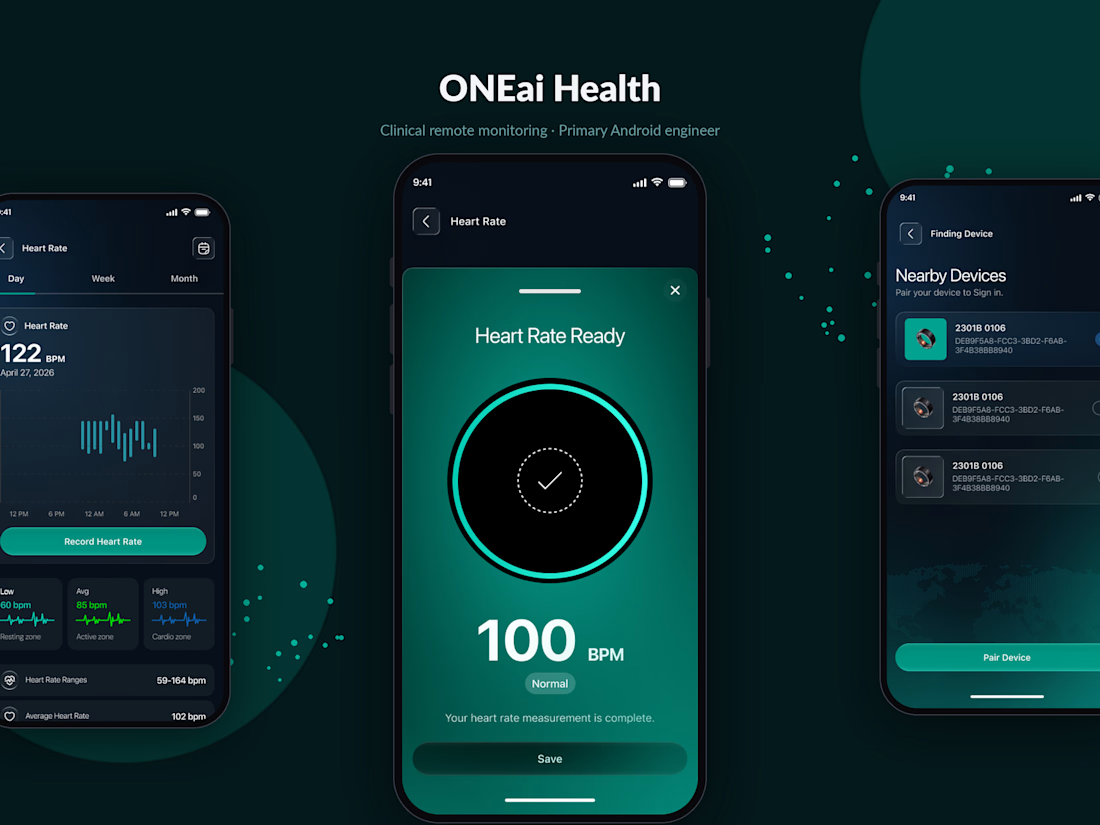
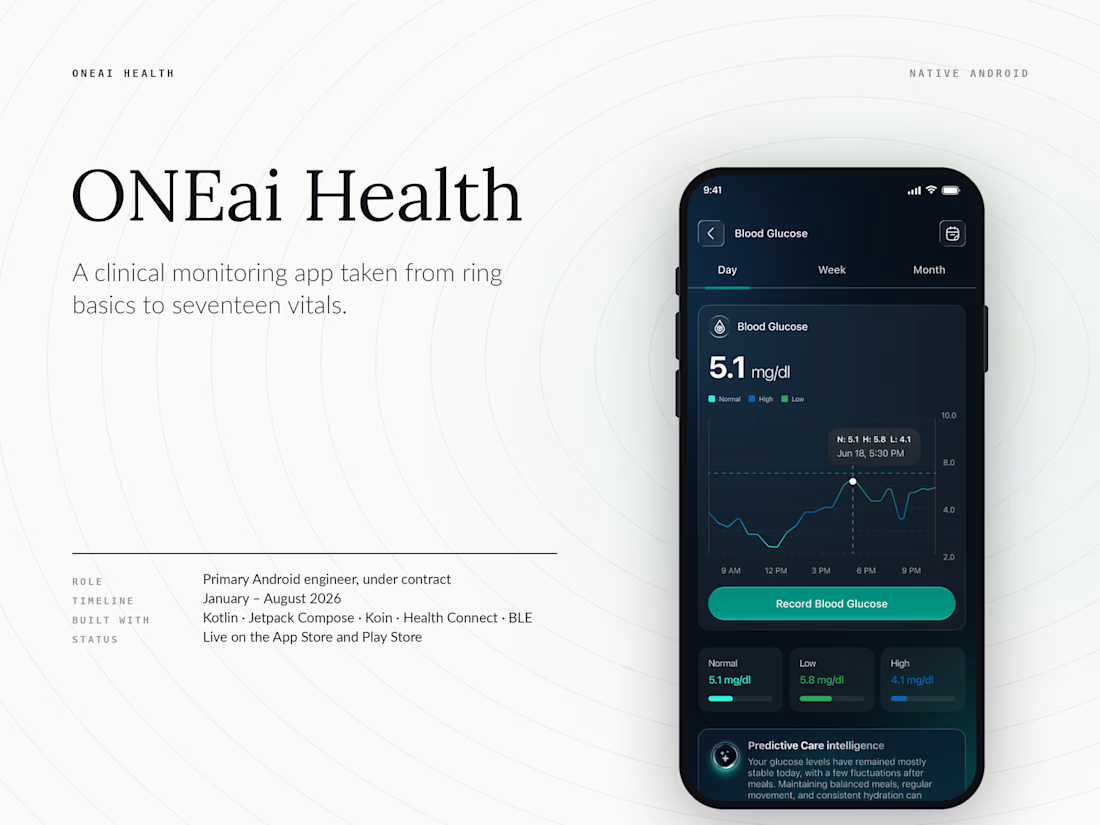
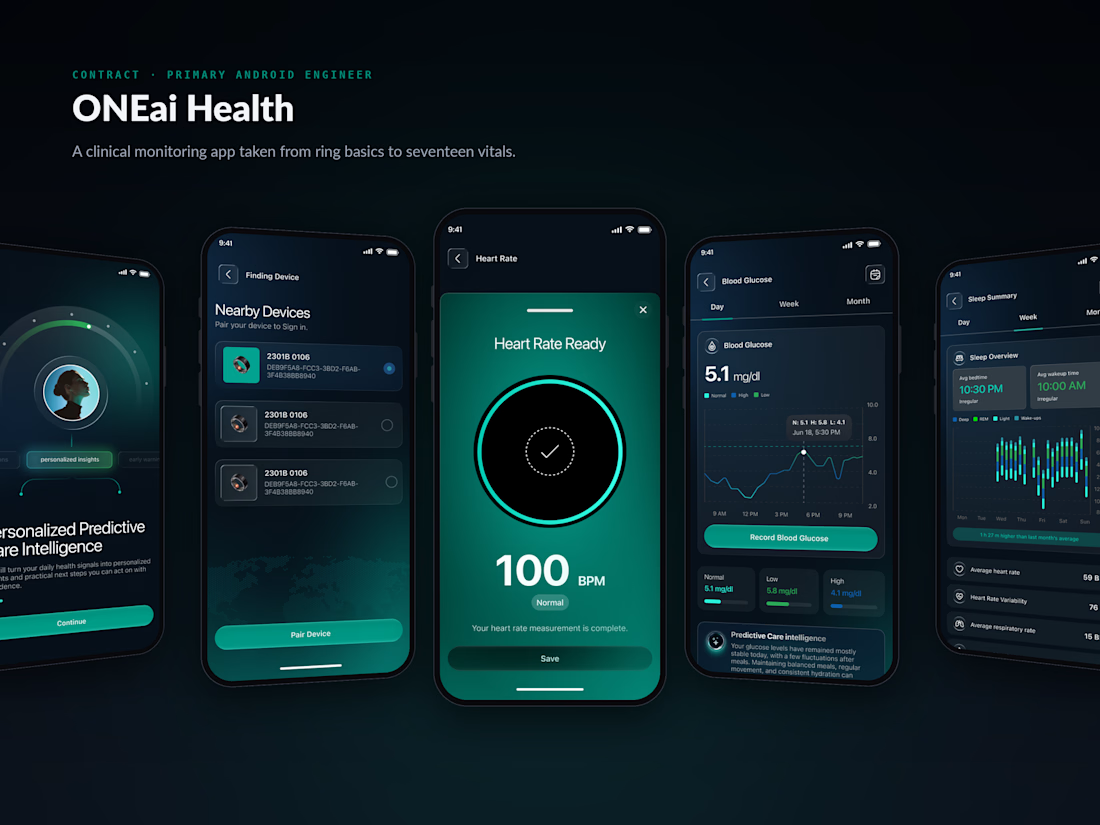
ONEai Health — a clinical monitoring app, from ring basics to seventeen vitals
Patients enrol through their healthcare provider and wear an FDA-cleared smart ring. The app had been live about a year when I joined, and its public reviews weren’t about polish — they were about readings that didn’t arrive and a ring that wouldn’t stay connected.
I came in as primary Android engineer and built most of what the product does today. The core problem was that health data arrived three different ways — the ring over Bluetooth, Android Health Connect, and the patient typing it in — and each path had grown its own handling. I converged all three onto one per-vital model, so every one of the seventeen vitals renders, charts and uploads identically no matter where its numbers came from.
From there: seventeen health-vital surfaces, Health Connect sync, a structured daily diary and an AI chatbot, across roughly seventy-five screens. Then the client brought a new design, and I reimplemented the entire interface against it without touching the business logic underneath — which is the whole argument for keeping the two apart. Live on the App Store and Play Store, now maintained by an internal team

The network for creativity
Join 1.25M professional creatives like you
Connect with clients, get discovered, and run your business 100% commission-free
Creatives on Contra have earned over $150M and we are just getting started



Related posts

Healthcare AI Agent – Reschedule Appointments by Voice
AI Healthcare Assistant — Turn On Sound for the Best Experience.
Movexa AI Assistant helps physiotherapy clinics reschedule patient appointments in seconds, by text or by voice, without leaving the dashboard.
THE PROBLEM
Rescheduling a single session in a busy clinic means checking the therapist's calendar, finding a free slot, updating the booking and remembering to notify the patient. Front desk staff and therapists repeat this many times a day across different tools, and missed reminders lead to no-shows.
THE SOLUTION – THE FLOW
Ask – Open the AI search (⌘K) or tap the mic and say: "Reschedule Tezah's session tomorrow to 4 PM and remind her."
Understand – Voice mode transcribes live and shows exactly what the AI understood.
Check – Movexa checks the therapist's calendar and finds that 4:00 PM is free.
Confirm – The AI never acts silently. It shows a clear action card (patient, old time, new time, therapist, reminder) to confirm, edit or cancel.
Done – The appointment moves, the patient gets an SMS + app reminder, and the change is logged with one-tap Undo.
THE RESULT
A task that took several clicks and calls now takes one sentence, while the clinic team stays in full control of every action.


Exploring two color palette directions for a women’s health app. Which one feels right to you? 👀
32 voted
56%
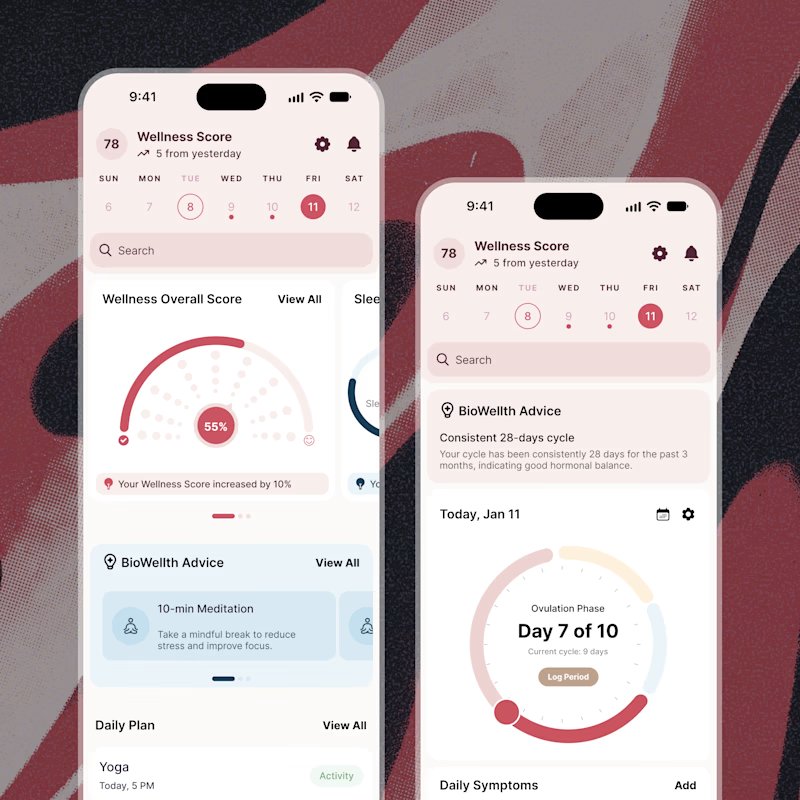
25 voted
44%
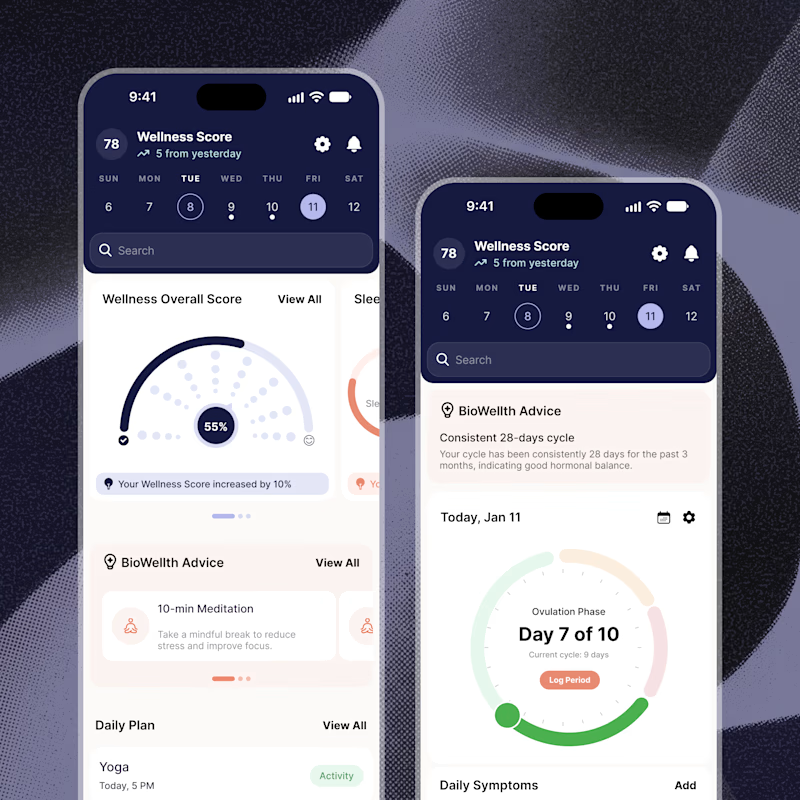
57 votes
Closed

Both are amazing! The purple definitely has better contrast, but I’d still go with the berry one, purely a personal preference
AI-Powered Physiotherapy Clinic Dashboard | Smart Appointment Scheduling
A modern AI-powered dashboard concept designed for physiotherapy clinics to simplify appointment scheduling, therapist management, and daily operations. The interface focuses on improving workflow efficiency with an intuitive calendar, smart booking experience, patient scheduling, and a clean visual system.
The design features an elegant and minimal UI, helping healthcare professionals manage appointments, therapists, and patient availability with ease. Every screen is crafted to deliver a fast, accessible, and user-friendly experience while maintaining a premium SaaS aesthetic.

so nice work