Systems Engineering Projects in Little RockSystems Engineering Projects in Little RockA roofing company was spending $70,000 a year on a 4-person manual inventory and procurement operation.
I replaced it with a zero-touch pipeline. No human data entry. No spreadsheet handoffs. No "did we order that?" Slack messages at 9pm.
The system runs on Airtable, Python, and OpenAI. It took 3 weeks to build. It paid for itself in the first month.
Here's what I've learned after 20+ years of operations work and building these systems across hospitality, e-commerce, SaaS, and construction:
The expensive problem is almost never the one you think it is.
It's not the software. It's the 6 spreadsheets nobody wants to touch. It's the workaround that became company policy. It's the process that only works because one person memorized it.
I build systems that replace all of that: the CRM, the automation, the AI agents, the dashboards, the content pipelines. One architect, one connected system, everything built to work together from day one.
Recent builds:
Recovered 20 hours/week for a multi-venue hospitality operation
Unified 5 e-commerce storefronts into one automated command center
Built an AI system that replaced 8 improv actors per venue per night (yes, really)
Turned a hiring round into a one-button AI content pipeline
What's the one manual process in your business that you know is costing you the most time, but you haven't fixed yet?
#BusinessAutomation #AI #Operations #SystemsArchitecture #Airtable #Python #WorkflowAutomation #NoCode #ECommerce +1 Building an AI-powered affiliate publishing engine from the ground up.
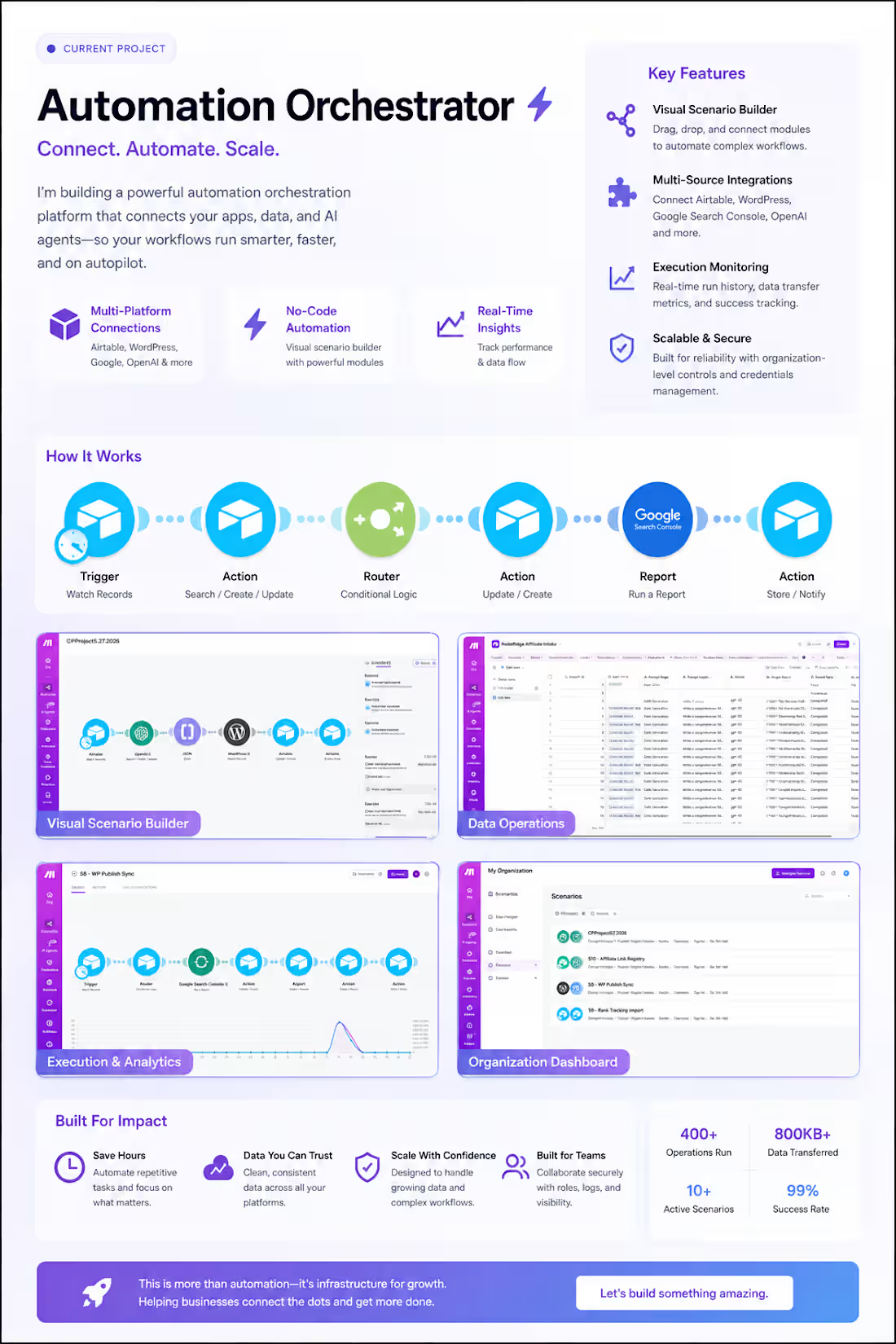
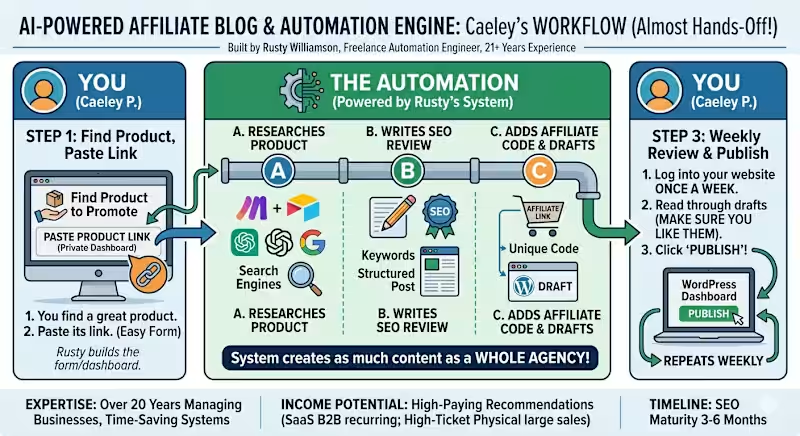
I am currently working on a full automation system for NodeRidge, designed to turn product and software research into structured, review-ready WordPress content with human approval built into the workflow.
The goal is simple: remove the repetitive work from affiliate publishing while keeping quality control, visibility, and editorial review in place.
This build connects:
🗄️Airtable as the central operations hub
⚡Make.com (http://Make.com) for workflow automation
🧠OpenAI for content generation
📝WordPress for draft publishing
📊Google Search Console for rank and performance tracking
What I like most about this project is that it is not just "AI writing content." It is a real backend publishing engine with structured data, review gates, sync monitoring, and operational visibility.
The system is already handling prompt runs, WordPress draft syncing, affiliate link registry logic, and QA tracking. My next focus is scaling the Airtable architecture to handle higher volume.
This is the kind of build I enjoy most: connecting messy manual workflows into a clean system that can actually scale.
What are the biggest operational bottlenecks you're currently dealing with in your own workflows? Stop building science experiments and start building scalable, autonomous operational systems.
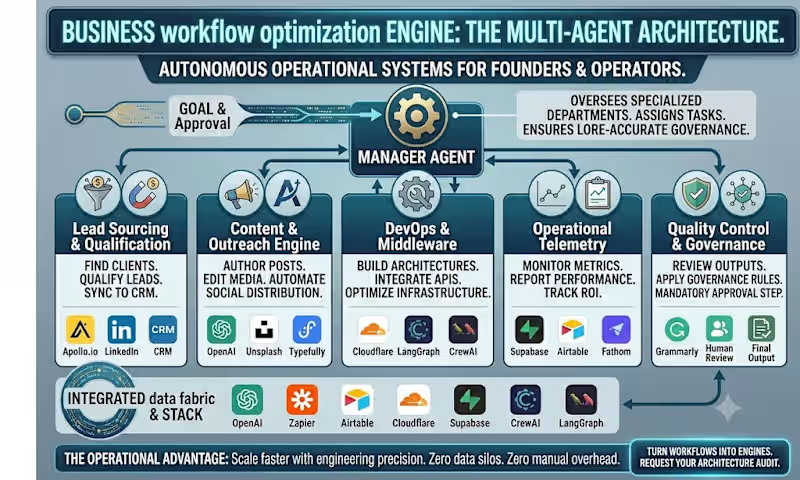
I just published a detailed look under the hood at my most sophisticated AI integration yet: The Hierarchical Multi-Agent Business System.
Most founders use ChatGPT to write emails. I build AI agent teams to source leads, design technical architectures, manage client-facing dashboards, and automate complex content pipelines—all with zero human input for everything except final approval.
Take a look at the attached infographic to see how this recursive, self-optimizing architecture functions. Here is the operational impact of what I build:
Departmental Specialization:
I don't use one "smart" agent. I build a crew of highly specialized agents (Lead Gen, Content, DevOps) overseen by a Manager Agent to ensure quality and prevent hallucinations.
The Human-in-the-Loop Safeguard:
The entire workflow is designed to be fully autonomous until final quality control and strategic approval. You get the scale of AI with the certainty of a human final check.
Tool Agnosticism:
My builds are logic-first. We use the best tool for the task, whether that's CrewAI, LangGraph, Supabase, Cloudflare, OpenAI, or a custom API.
If you are a founder or operator ready to turn your standard business workflows into high-performance, autonomous engines, check out the full case study.
https://contra.com/s/2rFLgNAU-custom-ai-agent-for-your-business-workflow Building Tether — From Noisy Telemetry to Deterministic Operations
Role: Lead Architect & Full-Stack Developer
Tech Stack: React, Cloudflare (Pages, Workers, R2, Zero Trust), Google Cloud Platform (Cloud Run, Cloud Storage), Python, FastAPI, Scikit-Learn.
The Challenge: The Hospitality Data Gap
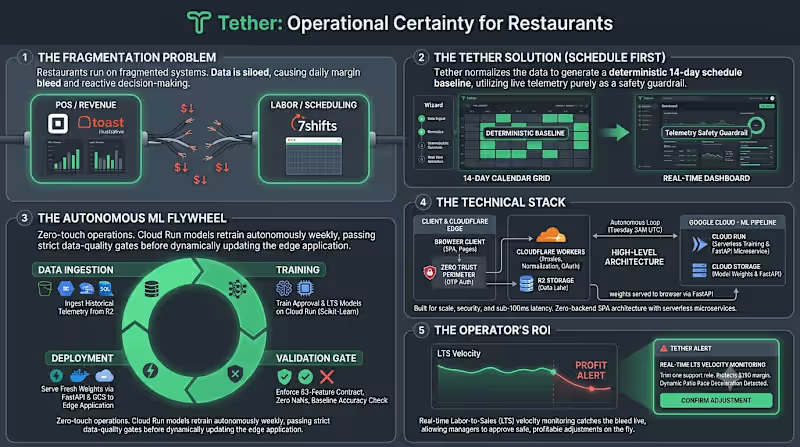
Modern hospitality operators are drowning in data but starving for actionable intelligence. A restaurant's two most critical systems—the Point of Sale (revenue) and the scheduling platform (labor)—operate in complete isolation. Because these systems do not dynamically communicate, managers are forced to make high-stakes labor cuts on the fly based on delayed reporting and gut feeling.
This disconnect results in thousands of dollars of weekly margin bleed. The challenge was clear: build a system that bridges these fragmented APIs, normalizes the data, and provides real-time operational certainty.
The Solution & The Product Pivot
I engineered Tether to be an AI-native operational layer for restaurant management. However, the true breakthrough of this project wasn't just technical—it was architectural.
Initially, I designed Tether as a "Live Data Prediction Tool" that used active telemetry to drive real-time floor decisions. Through testing and auditing the data streams, I identified a critical UX flaw: live data is inherently noisy and reactive. To solve this, I executed a complete priority inversion, refactoring the application state to a "Schedule-First" philosophy.
Instead of chasing live data, Tether now ingests historical data to generate a deterministic, highly optimized 14-day schedule baseline. The machine learning models were strategically demoted from "decision makers" to "real-time guardrails." Once the floor opens, Tether acts as a safety net, validating execution against the baseline and alerting managers to profit leaks before they compound.
Technical Execution: A Masterclass in Edge ML
To ensure security, scale, and sub-100ms latency, I architected Tether as a zero-backend Single Page Application (SPA) driven by serverless microservices.
Edge Infrastructure & Security: The frontend is deployed via Cloudflare Pages and secured behind a Cloudflare Zero Trust perimeter, requiring One-Time PIN (OTP) authentication for operator access.
Data Normalization: I developed Cloudflare Worker proxies to securely handle OAuth handshakes, ingest data from POS systems (Square, Toast) and labor platforms (7shifts), and normalize the varied streams into a unified, sanitized client schema.
Autonomous ML Pipeline: I engineered a fully autonomous, serverless retraining loop hosted on Google Cloud Run. Every Tuesday at 3:00 AM UTC, the pipeline wakes up, pulls historical telemetry from Cloudflare R2, and retrains the primary Approval and Labor-to-Sales (LTS) models (using Ridge and Logistic Regression).
Strict Data Contracts: The ML pipeline strictly enforces a 63-feature data contract. It validates baseline accuracy and ensures zero NaNs before allowing any model to pass into production, guaranteeing operational stability.
Highly Optimized Model Distribution: Fresh model weights are served to the browser via a Dockerized FastAPI microservice (kept aggressively lean at ~500MB) and distributed globally through Google Cloud Storage (GCS).
The Business Impact
Tether replaces the anxiety of restaurant management with mathematical certainty.
By automating the schedule generation and monitoring real-time Labor-to-Sales (LTS) velocity, Tether catches margin bleed live—such as a sudden drop in patio sales pace due to weather. It translates complex ML predictions into simple, actionable alerts (e.g., "Trim one support role. Protects $190 margin.").
The result is protected daily profit margins, guaranteed labor compliance, and management teams empowered to run their floors with absolute confidence.