The network for creativity
Join 1.25M professional creatives like you
Connect with clients, get discovered, and run your business 100% commission-free
Creatives on Contra have earned over $150M and we are just getting started
Back to feedPost

Stop building science experiments and start building scalable, autonomous operational systems.
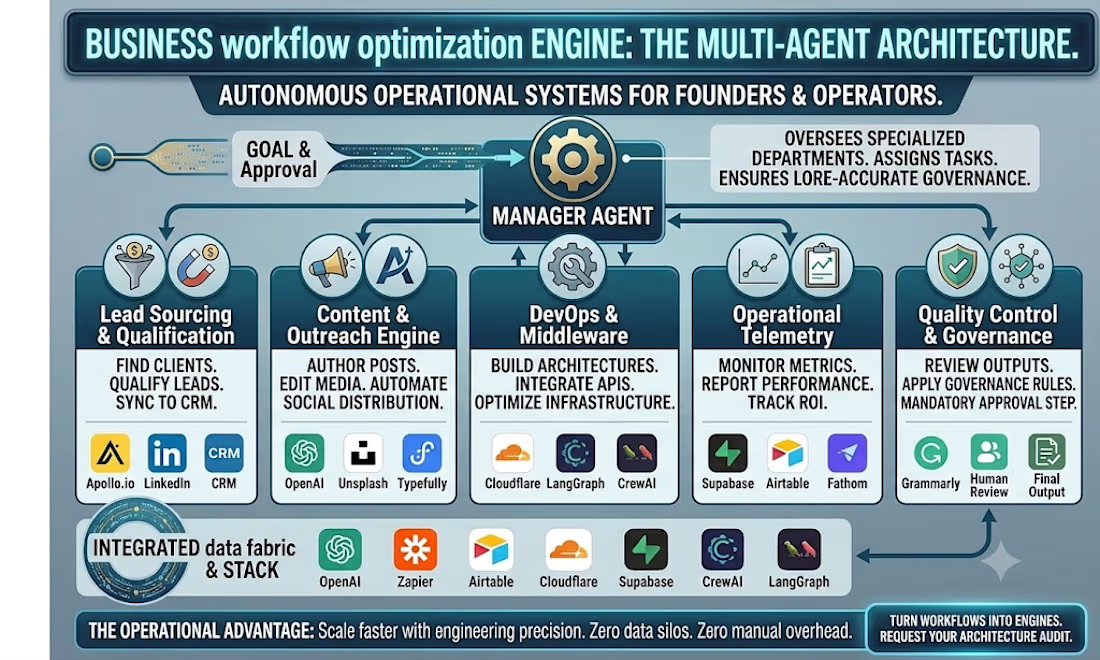
I just published a detailed look under the hood at my most sophisticated AI integration yet: The Hierarchical Multi-Agent Business System.
Most founders use ChatGPT to write emails. I build AI agent teams to source leads, design technical architectures, manage client-facing dashboards, and automate complex content pipelines—all with zero human input for everything except final approval.
Take a look at the attached infographic to see how this recursive, self-optimizing architecture functions. Here is the operational impact of what I build:
Departmental Specialization:
I don't use one "smart" agent. I build a crew of highly specialized agents (Lead Gen, Content, DevOps) overseen by a Manager Agent to ensure quality and prevent hallucinations.
The Human-in-the-Loop Safeguard:
The entire workflow is designed to be fully autonomous until final quality control and strategic approval. You get the scale of AI with the certainty of a human final check.
Tool Agnosticism:
My builds are logic-first. We use the best tool for the task, whether that's CrewAI, LangGraph, Supabase, Cloudflare, OpenAI, or a custom API.
If you are a founder or operator ready to turn your standard business workflows into high-performance, autonomous engines, check out the full case study.
AI Agent DesignerSystems EngineeringAirtableCRMXZapieraiautomationsystemsarchitectureaiagentworkflow


The network for creativity
Join 1.25M professional creatives like you
Connect with clients, get discovered, and run your business 100% commission-free
Creatives on Contra have earned over $150M and we are just getting started

Challenges
View all


Related posts

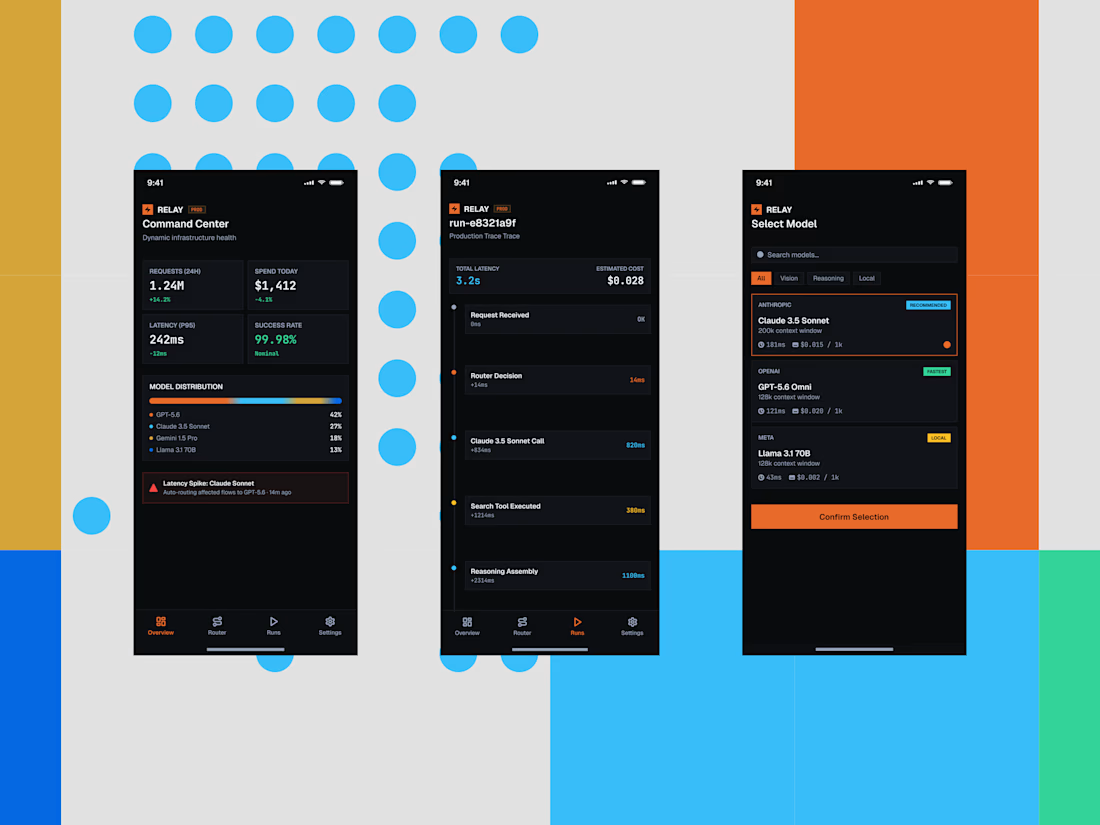
Some quick mockups for Relay, an AI infrastructure platform concept built around model routing, observability, and performance.
Exploring what a mobile command center could look like for teams managing multiple AI models, with a focus on clear data, fast decisions, and a developer-first UX.
Product design, mobile UI, AI tools, and a little systems thinking all in one.




the blue dots and orange blocks pop. did you build this in Framer?

Experimented a bit today with Krea and image generation for a case study I’m putting together around AI EarPods connected to OpenAI.
The focus has been on creating fashion-forward product imagery and art directing a world that feels specific to the identity, rather than just generating nice-looking AI images.
The trickiest part has been product consistency. Especially getting the EarPods to actually sit snug in the ear. If you’ve worked through this process, you probably know the struggle 😅
Simply telling AI to “make it fit more snug or in the ear” doesn’t always work. It loves to reinterpret the product every time.
Still experimenting, but getting closer. If anyone has found a good workflow for keeping products consistent across AI-generated shoots, I’d love to hear it!


TOP!

🚀 Automated AI Document Processing & ATS Pipeline (n8n)
Project Summary
Replaced a manual candidate screening process with a fully automated, n8n-orchestrated backend pipeline. The system automatically intercepts incoming applications, uses OpenAI to analyze documents, updates databases, and triggers client communication—cutting manual data entry down to zero.
The Outcome & Business Value
Eliminated Manual Data Entry: Automated 100% of resume parsing, document conversions (Docs to PDF), and data extraction tasks.
Instant Candidate Screening: Integrated an OpenAI Chat Model Decider to evaluate incoming resumes against job descriptions in real-time with zero human delay.
Automated Sync & Follow-Ups: Automated instant logging to Google Sheets and launched immediate multi-path email responses based on candidate status.
How It Works (System Architecture)
Phase 1 (Ingestion & Extraction): Captures files via webhooks/emails ➡️ Cleans data via custom code nodes ➡️ Parallel-processes files to extract raw text ➡️ Uses AI structured parsing to match applicants to open roles.
Phase 2 (Database & Delivery): Routes structured applicant data ➡️ Upserts matching rows into a centralized tracking database ➡️ Triggers dynamic conditional emails back to candidates.


