The network for creativity
Join 1.25M professional creatives like you
Connect with clients, get discovered, and run your business 100% commission-free
Creatives on Contra have earned over $150M and we are just getting started
Back to feedPost

A roofing company was spending $70,000 a year on a 4-person manual inventory and procurement operation.
I replaced it with a zero-touch pipeline. No human data entry. No spreadsheet handoffs. No "did we order that?" Slack messages at 9pm.
The system runs on Airtable, Python, and OpenAI. It took 3 weeks to build. It paid for itself in the first month.
Here's what I've learned after 20+ years of operations work and building these systems across hospitality, e-commerce, SaaS, and construction:
The expensive problem is almost never the one you think it is.
It's not the software. It's the 6 spreadsheets nobody wants to touch. It's the workaround that became company policy. It's the process that only works because one person memorized it.
I build systems that replace all of that: the CRM, the automation, the AI agents, the dashboards, the content pipelines. One architect, one connected system, everything built to work together from day one.
Recent builds:
Recovered 20 hours/week for a multi-venue hospitality operation
Unified 5 e-commerce storefronts into one automated command center
Built an AI system that replaced 8 improv actors per venue per night (yes, really)
Turned a hiring round into a one-button AI content pipeline
What's the one manual process in your business that you know is costing you the most time, but you haven't fixed yet?
#BusinessAutomation #AI #Operations #SystemsArchitecture #Airtable #Python #WorkflowAutomation #NoCode #ECommerce +1


The network for creativity
Join 1.25M professional creatives like you
Connect with clients, get discovered, and run your business 100% commission-free
Creatives on Contra have earned over $150M and we are just getting started




Related posts

AI Assistant Using Your Business Knowledge Base — RAG on Your Documents
THE PROBLEM
Q&A bots break down when knowledge lives in documents: a 100-page manual has no "questions" to match, it can't fit into a prompt, and generic chatbots hallucinate instead of admitting what they don't know.
THE SOLUTION
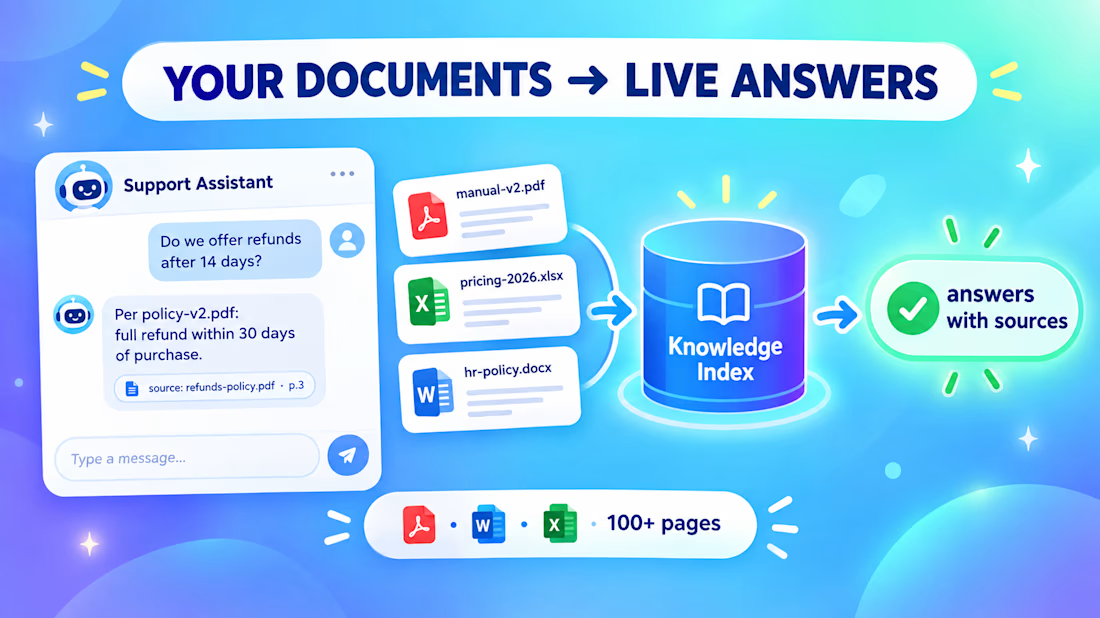
A RAG (Retrieval-Augmented Generation) knowledge base: documents are split into meaningful chunks, embedded into a vector index, and the assistant answers from the right sections — by meaning, not keywords.
Any format as-is: PDF, DOCX, TXT, Markdown — 100+ pages is fine
Answers grounded in YOUR documents — it says "I don't have that information" rather than inventing
Source references — every answer shows which document and section it came from
Runs on your infrastructure — documents never leave your control
One command to re-index after updating documents — documented, no programmer needed
LIVE DEMO
Ask it about my products, pricing, deployment and support — it answers from 6 real documents with sources:
https://kb-assistant-demo.dvc-ai.workers.dev



The 'I don't have that information' line is the part most RAG builds skip, and it's the one that matters. How do you set the cutoff? On mine, a fixed similarity threshold broke once I filtered results by user role. Scores shifted and it refused questions it could answer.

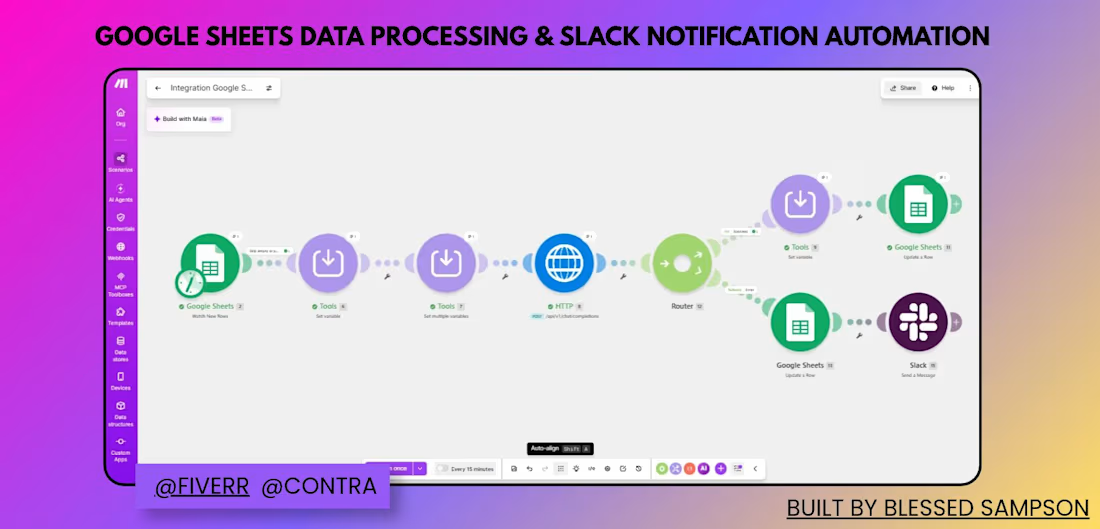
Automated a manual Google Sheets → Slack workflow to eliminate repetitive data entry and give the team instant notifications.
Previously, new data had to be manually checked, processed, and shared across the team — slow and easy to miss. I built a Make.com scenario that:
Watches Google Sheets for new/updated rows
Processes and routes the data through a router based on conditions
Creates corresponding Trello cards for task tracking
Logs processed records back to Google Sheets
Sends real-time Slack notifications so the team is instantly updated
Result: What used to be manual checking and updating is now fully automated — saving hours weekly and removing room for human error.
Tools: Make.com, Google Sheets, Trello, Slack



wow love this
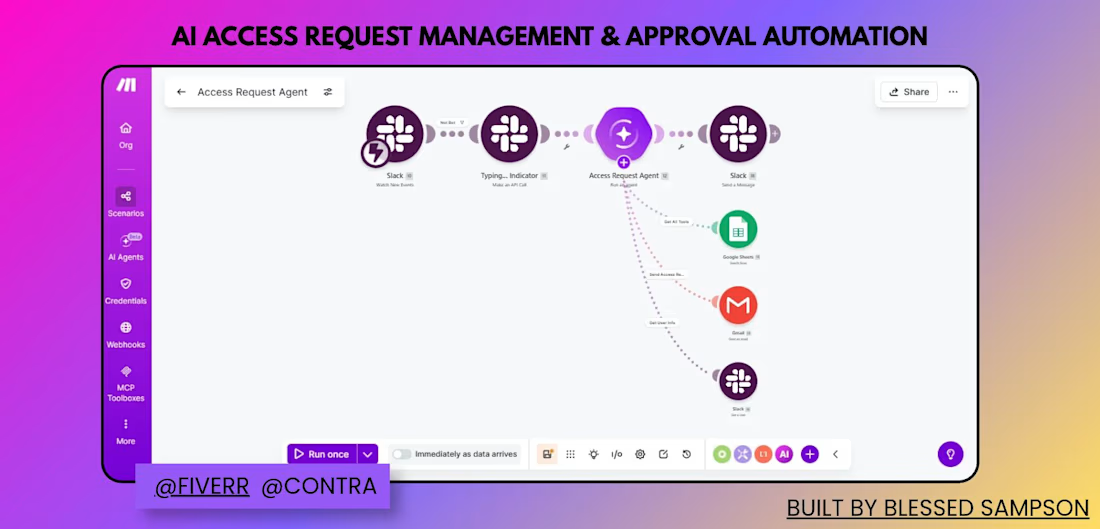
Built an AI agent that handles access requests end-to-end inside Slack — reviewing, approving, and notifying automatically.
Manually tracking who requested access to what (and following up over email) was slow and easy to lose track of. I built a Make.com scenario that:
Watches Slack for new access request messages
Shows a typing indicator while the AI Agent processes the request
The AI Agent (Access Request Agent) evaluates the request and decides the next action
Depending on the decision, it logs the request in Google Sheets, sends an email via Gmail, or replies in Slack
Sends a confirmation message back to the requester in Slack
Result: Access requests are now reviewed and routed automatically — no manual follow-up, and every request is logged and answered consistently.
Tools: Slack, Make AI Agents, Google Sheets, Gmail (built on Make.com)