Freelancers using CapCut in KyivFreelancers using CapCut in Kyiv
Want a Mobile App UI UX Design that scales and converts?🚀

8x
Hired
4.8
Rating
404
Followers
Want a Mobile App UI UX Design that scales and converts?🚀

Cover image for 🚨 MOST PRODUCTIVITY APPS DON’T
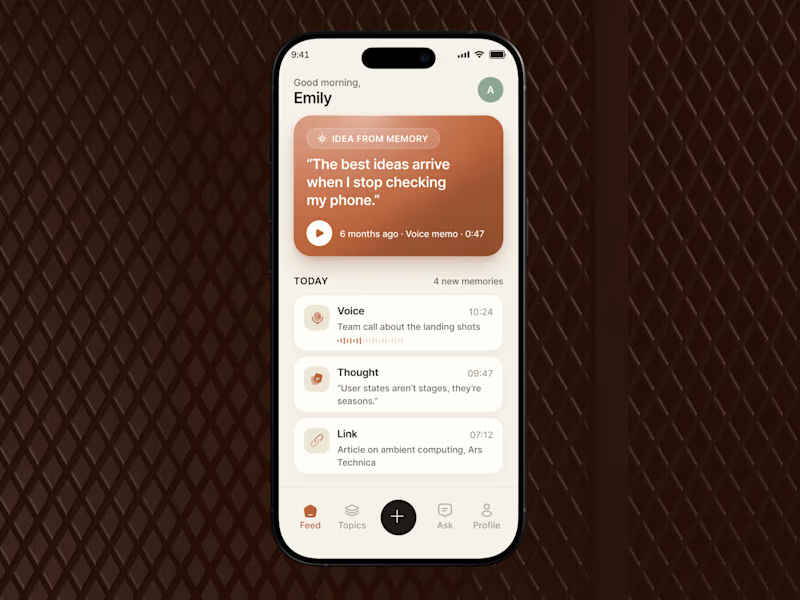
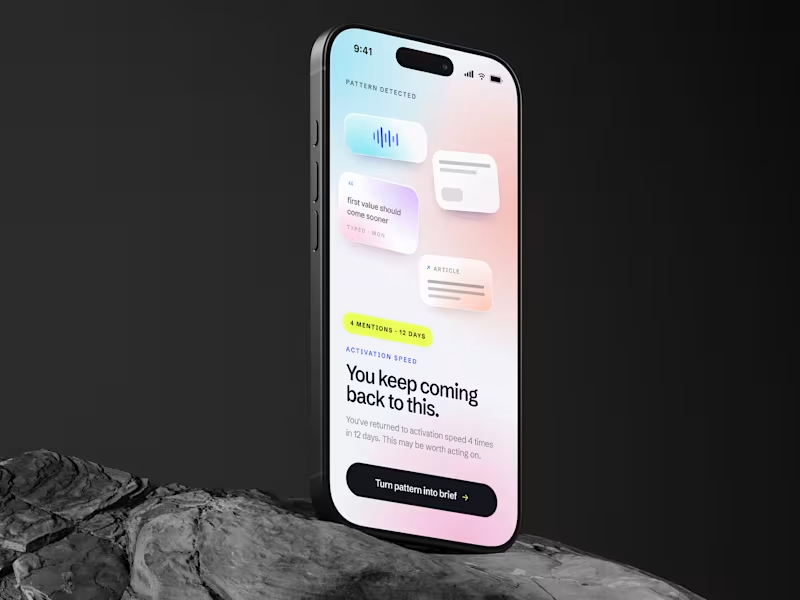
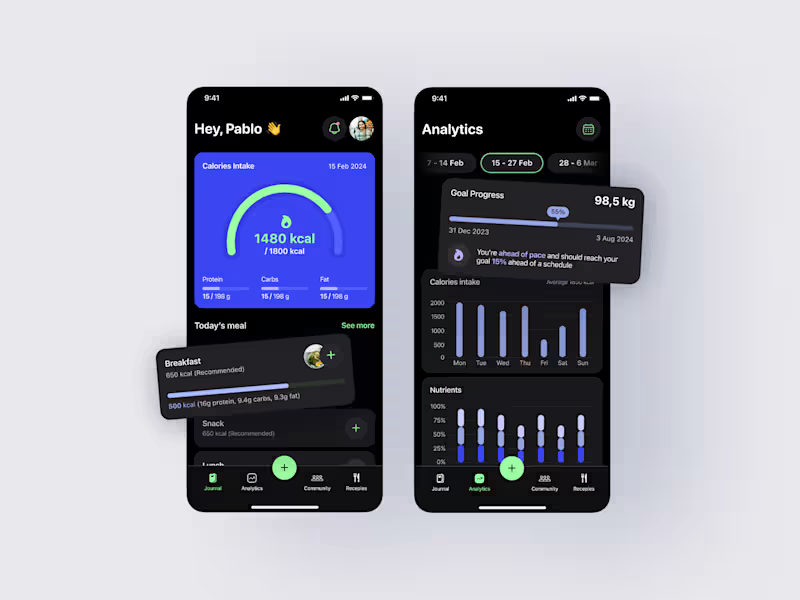
🚨 MOST PRODUCTIVITY APPS DON’T HAVE A RETENTION PROBLEM. THEY HAVE A VALUE-COMPOUNDING PROBLEM. They help users capture more: 📝 More notes 🔗 More links 📸 More screenshots 🎙️ More voice memos But a larger archive does not automatically become a more valuable product The real test starts later: ❓ WHAT HAPPENS AFTER THE USER HAS ALREADY CAPTURED 300 THOUGHTS? That is where most products quietly fail. Because the archive grows. But the user’s understanding does not. A voice note from Monday. A screenshot from Thursday. An article saved two weeks later. A sentence typed at 1 AM. Individually, they look unrelated. But sometimes they are the same unresolved question appearing in different forms. And this is where AI becomes genuinely interesting. Not when it summarizes another note. Not when it rewrites another paragraph. Not when it gives users another chat box. But when it recognizes: 🧠 YOU HAVE BEEN CIRCLING THE SAME PROBLEM FOR 12 DAYS. For this concept, the core mechanic was built around one distinction: ⚡ FREQUENCY IS NOT REPETITION. REPETITION IS EVIDENCE. A thought mentioned once may be noise. A thought mentioned four times across different contexts may be a signal. And a product that can detect that signal can create value a normal archive cannot. 01 - CAPTURE 🎙️ The thought should enter the system before it disappears. No folders. No tagging. No forced structure. 02 - UNDERSTAND AI extracts the underlying meaning. “Maybe onboarding should get people to value faster…” becomes: 💡 REDUCE TIME TO FIRST VALUE. That is already more useful than transcription. But it is still not the interesting part. 03 - CONNECT The system sees another thought about activation. Then an article about onboarding. Then a screenshot. Then another voice note. Now the product has enough context to say: 🔁 YOU KEEP COMING BACK TO THIS. 4 mentions. 12 days. At that moment, the system is no longer helping the user remember information. It is helping the user recognize importance. 04 - TURN CONTEXT INTO VALUE This is where the growth logic changes. Most retention loops ask users to come back and repeat the same action: 📝 Create another note 📊 Track another habit 🍽️ Log another meal ✅ Complete another task A stronger loop can work differently: 📈 EVERY NEW INPUT INCREASES THE VALUE OF PREVIOUS INPUTS. The product becomes better not simply because the user used it more often, but because accumulated context creates new insight. That creates compounding value. Day 1: The product understands what you said. Day 10: It understands what keeps repeating. Day 30: It may understand what deserves action. That is a much more defensible form of retention. Because the user’s history is no longer just stored data. It becomes product intelligence. ✨ AI SHOULD NOT JUST HELP USERS PRODUCE MORE. IT SHOULD HELP THEM NOTICE WHAT THEY ARE ALREADY REVEALING THROUGH THEIR OWN BEHAVIOR. That is where a note-taking product stops being an archive. And starts becoming a thinking system. 👇 FULL CASE STUDY BELOW 👉 BOOK A MOBILE APP SESSION https://calendly.com/asol_design/book-diagnostic-call-linkedin-clone Check it out (https://contra.com/p/ckLremOs-ai-voice-notes-mobile-app-design)
60
99
4.5K
Art Director / AI Video Producer / Generative AI / 3D
Софія Котовенко | AI Product Content Creator

75
Followers
Софія Котовенко | AI Product Content Creator

UX Designer, Product Designer, Visual Designer
$5k+
Earned
34
Followers
UX Designer, Product Designer, Visual Designer
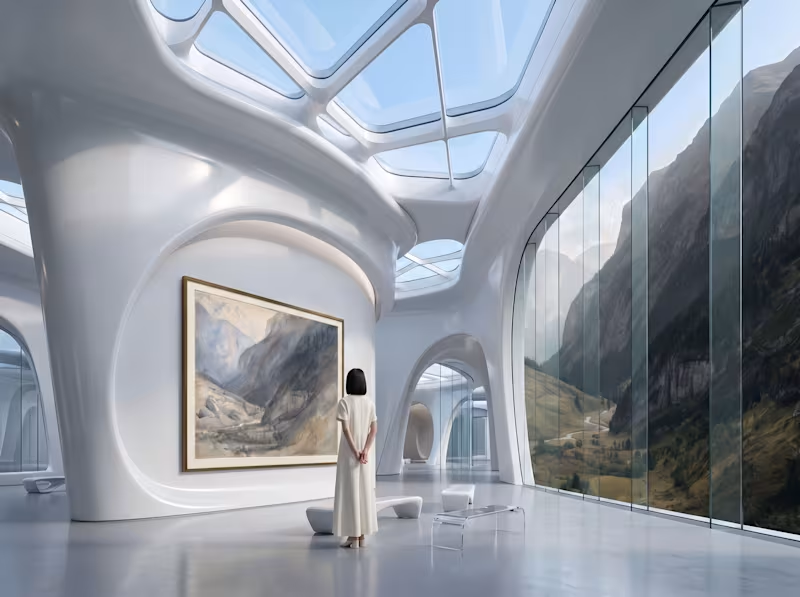
Cover image for NATURE, ARCHIVED
What if the painting
NATURE, ARCHIVED What if the painting outlived the landscape?  The project was inspired by John Ruskin’s The Valley of Lauterbrunnen, Switzerland (ca. 1866), from The Metropolitan Museum of Art’s Open Access collection. Ruskin’s watercolor captures the Alpine landscape through layers of light, shadow, distant peaks, and atmospheric haze. Before generating, I mapped the idea into six scenes, each supporting a different part of the story. In FLORA, I worked iteratevly , and eplored several AI models, refining references, motion, scale, and composition to preserve photographic realism and visual consistency. Rather than remaking the painting, I imagined a future in which Ruskin’s work is no longer simply an image of a place. It has become an archive of something humanity can no longer encounter in the physical world. The museum preserves the artwork, but also reconstructs the world contained within it: its scale, atmosphere, movement, and sense of life. The painting becomes a portal between two realities — a record of what once existed and a way for future generations to experience what has been lost. The artwork survived. The landscape didn’t. For us today, the painting is a representation of nature. For people of the future, it is nature. Created in @ for the #FLORAMuseum challenge. 🖼️ Original artwork: John Ruskin — The Valley of Lauterbrunnen, Switzerland, ca. 1866 (https://www.metmuseum.org/art/collection/search/359021?utm_source=chatgpt.com) 🎨 Project link Nature, Archived (https://app.flora.ai/join-project/a0596e28-6868-4c6a-a21f-a53a807d44e1)
5
10
573
Video-Photo Content creation / Social Media Marketing / Ads

$10k+
Earned
2x
Hired
6
Followers
Video-Photo Content creation / Social Media Marketing / Ads

Video editor