Freelancers using AWS in Karachi
Sign Up
Post a job
Sign Up
Log In
Filters
2
Projects
People
Ehtasham Ali
pro
Karachi, Pakistan
Production-ready AI agents and SaaS built to scale reliably.
$25k+
Earned
2x
Hired
108
Followers
Follow
Message
Production-ready AI agents and SaaS built to scale reliably.
2
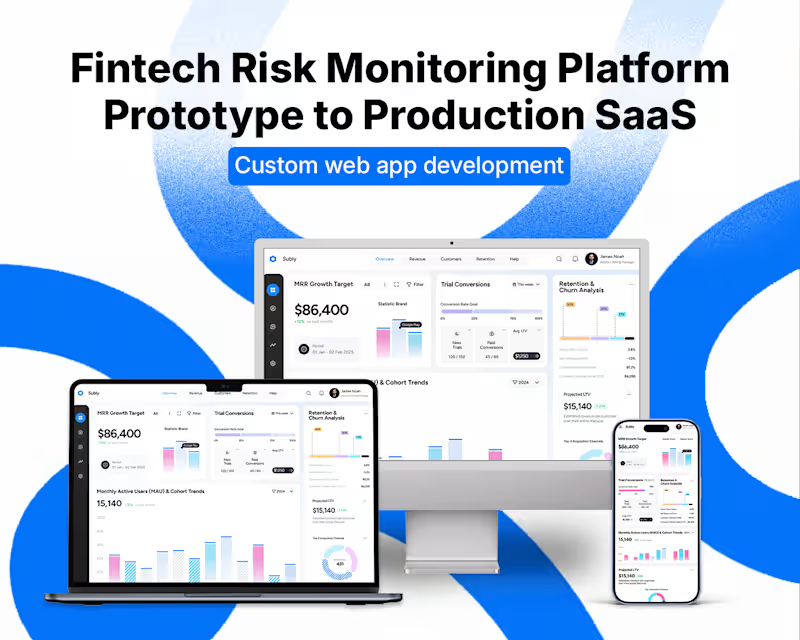
KovaRisk: When the Interface Knew More Than the System ────────────────────────────────────────── The Expert in the Room Compliance officers don't struggle to understand risk. They struggle to act on it fast enough. The team behind KovaRisk understood this precisely. They had spent years inside financial institutions watching the same dysfunction repeat: alerts buried in spreadsheets, investigations tracked in email threads, audit trails reconstructed after the fact. They knew what the interface needed to feel like because they'd lived with the one that didn't. So they built it. Fast. Exactly as they'd imagined it. What emerged was sharp: a risk monitoring dashboard with filterable alert feeds, entity profiles with 12-month risk trajectories, a rule engine with toggle controls, and an audit log that felt immutable. The scenario switcher let compliance teams stress-test different alert load states. The side panel made investigations feel contained and intentional. It looked like a system that had survived production. It hadn't been asked to yet. ────────────────────────────────────────── What Existed Was a Strong Interface - Not a System Every alert in KovaRisk was generated at startup. Every risk score was computed by a random seed function. Every status change - Investigating, Resolved, Escalated - lived in component state. Every timeline event was appended to an in-memory array. Every rule toggle disappeared on refresh. The audit log recorded nothing. The export downloaded a snapshot of what React was holding at that moment. The entity risk history was a curve drawn from a formula, not a record. The logic was there. But it had nowhere to live. A compliance officer investigating a high-risk wire transfer would open the side panel, read the plain-English rule explanation, mark the alert as Investigating, add an internal note - and lose every one of those actions the moment they refreshed the browser. No colleague could see what they'd done. No regulator could verify it had happened. In financial compliance, that's not a UX problem. It's a liability. The prototype validated the workflow brilliantly. It exposed exactly how a compliance team would move through their day. But three things were missing: a source of truth, a coordination layer, and a trail that could be audited under pressure. ────────────────────────────────────────── They Didn't Need More Features - They Needed a System Behind the Interface The team came with a clear idea and a working prototype. What they needed was the architecture that made the prototype a product - the layer that turned interface actions into durable facts. Not a rebuild. A foundation. ────────────────────────────────────────── The Layer That Made It Dependable Data Models: Giving State a Home The first thing to reconstruct was where the data should actually live. KovaRisk's frontend implied a clear schema - alerts, entities, rules, audit events - but none of it persisted. The production system needed a PostgreSQL core with five primary entities: • Alert — with foreign keys to Entity, Rule, Transaction, and a JSONB timeline column for ordered event history • Entity — with risk tier, jurisdiction metadata, and a one-to-many relationship to RiskScore snapshots • Rule — with active/disabled state, trigger thresholds, false-positive tracking, and a versioning mechanism so changes to rules didn't retroactively alter historical alerts • AuditEvent — append-only, with actor ID, action type, target reference, and a server-generated timestamp that clients cannot modify • InternalNote — owned by an alert, with authorship and a soft-delete flag to preserve compliance integrity Every status change, note, escalation, and flag the UI handled ephemerally became a write to this schema. The Alert Generation Engine: Replacing the Seed Function In the prototype, 85 alerts appeared because a loop ran 85 times at startup. In production, alerts are the output of a Transaction Monitoring Service - a background process that runs continuously against incoming transaction streams. This service: • Evaluates each transaction against every active Rule definition • Computes a risk score using rule weights, entity risk tier, jurisdiction flags, and behavioral baselines • Creates an Alert record only when a threshold is breached • Emits an event to a notification queue for high-risk triggers The rule engine the UI let users toggle wasn't decorative. Each rule mapped to an evaluation function in the monitoring service. Disabling a rule didn't just grey out a card - it removed it from the active evaluation set. Re-enabling it didn't retroactively generate alerts it would have caught; it resumed from the point of activation. That distinction mattered for regulatory defensibility. ────────────────────────────────────────── Async Workflows: The Operations the UI Implied But Couldn't Sustain Several interactions in the prototype implied workflows that couldn't complete synchronously. Escalation - When an alert was escalated, the UI changed a status badge. In production, escalation triggers a queue job that: notifies the senior compliance officer via a configured channel, creates a case record linking the alert, and starts a response SLA timer. The UI reflects the outcome - it doesn't produce it. Scheduled Screening - The Sanctions Screening Match rule in the prototype was static. In production, it's a nightly job that re-screens all active entities against updated OFAC, EU, and UN sanctions lists - generating new alerts if a previously clean entity now appears. The results feed back into the alert pipeline. Report Export - The dashboard's Export Report button downloaded a text file of whatever React was holding in memory. In production, report generation is an async job: the user requests the report, the job runs server-side against the live database, and a download link is returned when ready. The content is a verifiable, timestamped record - not a UI snapshot. ────────────────────────────────────────── The Audit Log: From Feed to Fact The prototype's audit log was populated by a generateAuditLog function. It looked comprehensive and immutable. It was neither. Production audit events are written by the API layer on every state-modifying operation - before the response is returned to the client. The table is append-only. No update operations are permitted on AuditEvent records. Timestamps are server-generated in UTC and stored with full precision. Actor identity comes from the authenticated session, not from a string the client sends. The audit log the interface displayed was a simulation of accountability. The production version is the accountability. ────────────────────────────────────────── Tech Stack 1. Frontend: React + Vite, React Router v6, Recharts, React Context + local state, TanStack Query 2. Backend: Node.js + TypeScript, Fastify, Prisma, PostgreSQL, Redis, BullMQ, Passport.js + express-session 3. Infrastructure: AWS ECS / Railway / Render, S3, AWS Secrets Manager / Doppler, Sentry + Datadog, GitHub Actions 4. External Integrations: OFAC / ComplyAdvantage, Refinitiv World-Check, SendGrid / SMTP, Webhooks ────────────────────────────────────────── From Interface to System The prototype answered the right questions. It proved the workflow was sound, the information hierarchy was correct, and the alert investigation pattern worked the way compliance officers needed it to. What it couldn't answer was: what happens when two investigators open the same alert simultaneously? What happens when a rule change needs to take effect immediately across 200 pending alerts? What happens when a regulator asks for every action taken on a specific entity over the past 18 months? Those questions don't live in the interface. They live in the system. KovaRisk's interface was always strong. What it needed was the architecture to make it real - persistent, coordinated, auditable, and defensible under scrutiny. The logic existed from the beginning. We gave it somewhere to live.
2
1.9K
2
Case Study: From Prototype to Production — Building a Credit Management Platform for Ad Operations The Starting Point The founder wasn't guessing the problem. They had spent years inside the ad-credit ecosystem, managing wallet balances across regions, reconciling top-ups via bank wire and stablecoin, chasing compliance documents, and watching campaigns stall because a pixel stopped firing at 2am. They knew exactly what a credit management platform needed to look like. So they built one. Using Figma wireframes translated directly into a React frontend, they shipped a working prototype in days. Two portals were created. One for clients managing wallets and ad accounts, and one for internal operators handling treasury, compliance, and risk. It included real-time spend charts, AI-driven anomaly detection banners, a work queue for ops teams, and an embedded AI assistant that could answer questions about balances, compliance status, and pixel health. The prototype proved the concept. Clients could see their wallet balances, request top-ups, allocate funds to ad accounts, and track campaign performance. Admins could manage treasury operations, review KYB pipelines, monitor risk scores, and process a prioritized work queue. The domain logic was sound. The UX was sharp. But the system was never designed to survive real load. What Started Breaking The prototype worked on mock data. Every API call returned hardcoded arrays after a random delay. There was no backend. No database. No real authentication. The login screen accepted any email and assigned a role based on a toggle switch. Session state lived in localStorage as a raw JSON blob. This was fine for demos. It stopped being fine the moment real money entered the picture. The specific fractures: 1. No transactional integrity. Wallet balances, top-ups, fund transfers, and ad account allocations were all simulated. In a live system, a transfer of $25,000 from a master wallet to a regional sub-wallet is not a UI state change. It is a financial transaction that requires atomicity, audit trails, and rollback capability. The prototype had none of this. 2. Compliance was cosmetic. KYB document statuses were static labels. In production, document verification involves third-party identity providers, expiration tracking, automated re-upload reminders, and regulatory audit logs. The prototype rendered badges like "Verified", "Pending", and "Missing", but nothing enforced the state machine behind them. 3. Risk scoring was decorative. The AI risk badges showed tooltips like "Large P2P transfer detected, document expiring", but these were string literals, not outputs from a scoring model. Real risk assessment requires transaction pattern analysis, velocity checks, cross-referencing compliance status, and escalation workflows that route to the right ops agent. 4. The work queue had no backend. Urgent items like "$45,000 P2P transfer anomaly" appeared in the queue, but resolving them was just a frontend state toggle. There was no case history, no assignment logic, no SLA tracking, and no integration with the compliance or treasury systems that actually needed to act on these events. 5. Multi-tenancy was absent. The platform served one mock client and one mock admin. Scaling to dozens of clients, each with their own wallets, sub-wallets, ad accounts, compliance profiles, and credit limits, required data isolation, permissioning, and tenant-aware queries that did not exist. 6. Ad platform integration was faked. TikTok metrics like impressions, clicks, ROAS, and pixel health were all static datasets. Production requires OAuth-based API integrations, rate-limited data syncing, webhook listeners for pixel status changes, and graceful degradation when platform APIs go down. The founder understood all of this. The prototype was never meant to be the product. It was meant to prove that the product was worth building. Why They Brought In a Team The gap between the prototype and production was not a matter of fixing bugs. It was an architecture problem. The founder needed: - A real backend with transactional guarantees for financial operations - A compliance engine that could enforce document workflows across jurisdictions - A risk system that could ingest transaction data and surface actionable alerts, not static strings - Multi-tenant data architecture with proper isolation and access control - Ad platform integrations that could handle real API contracts, rate limits, and failures - Observability including logging, monitoring, and alerting so the ops team could trust the system under load They did not need someone to rewrite the frontend. They needed someone to build the system underneath it. What We Delivered Financial Operations Layer We replaced the mock API with a transactional backend. Every wallet operation, including top-ups, transfers, allocations, and refunds, now runs through an auditable pipeline with: - Atomic balance updates with optimistic locking - Double-entry ledger for every fund movement - Idempotent transaction processing to prevent duplicate charges - Full audit trail with actor, timestamp, and before and after state Top-up requests now flow through a verification pipeline with submission, proof-of-payment upload, approval, and balance credit. Each step is recorded and reversible. Compliance and KYB Engine - We built a document lifecycle system that replaces static badges with enforced state transitions: - Documents move through missing → uploaded → under_review → verified → expired with rules governing each transition - Expiration monitoring triggers automated client notifications before deadlines - Third-party identity verification integration for director ID matching - Jurisdiction-aware requirements where different regions require different document sets - Audit-grade logging for every status change, reviewer action, and override The KYB pipeline now routes cases to specific compliance agents based on workload, region, and verification type. Risk and Anomaly Detection We replaced hardcoded risk labels with a scoring system that evaluates: - Transaction velocity based on spend acceleration versus historical baseline - P2P transfer patterns and threshold breaches - Compliance status correlation, such as expired documents combined with high spend - Account dormancy detection where inactivity triggers review Risk scores update in near real time. High-risk events automatically generate work queue items with priority, context, and suggested actions. Work Queue and Case Management We transformed the frontend-only task list into an event-driven operations system: - Events from treasury, compliance, and risk systems automatically create queue items - Assignment logic routes items to the right agent based on type, region, and capacity - SLA tracking with escalation rules for overdue items - Case history that records every action, note, and resolution - Enforced status transitions so items cannot be resolved without required actions Multi-Tenant Architecture We designed the data layer for tenant isolation from the ground up: - Each client organization has isolated wallets, documents, ad accounts, and transaction histories - Role-based access control separates client-facing and admin-facing data - API endpoints are tenant-scoped to prevent cross-tenant data leakage - Admin views aggregate across tenants with proper permissioning Ad Platform Integration We built a sync layer for TikTok Ads with an architecture that supports additional platforms: - OAuth-based account linking with token refresh management - Scheduled metric pulls with rate limit awareness and backoff - Pixel health monitoring via event signal tracking instead of static labels - Graceful degradation where stale data is clearly labeled if APIs fail Observability We added the infrastructure the ops team needs to trust the system: - Structured logging for every financial operation, compliance action, and API call - Health dashboards for backend services, integration sync status, and queue throughput - Alerting on anomalies such as failed transactions, sync delays, and SLA breaches - Error tracking with business context, not just stack traces The Outcome The system went from a prototype that could demo well to a platform that could process real money, enforce real compliance, and surface real risk under real load. What changed: - Financial operations now run with transactional guarantees. Wallet balances are accurate, auditable, and reconcilable. - Compliance is enforced, not displayed. Document workflows follow regulated state machines with full audit trails. - Risk detection is continuous and contextual. The ops team acts on scored alerts instead of static labels. - The work queue drives operations. Events flow in automatically, route correctly, and track resolution against SLAs. - Multi-tenancy works. New clients onboard into isolated environments without architectural changes. - Ad integrations sync reliably. When they fail, the system clearly shows it instead of masking stale data. The founder’s instinct was right from the start. The domain model, the UX, and the operational workflows all held up. What we built was the engineering foundation that made it dependable. The system worked until it didn’t. Not because the idea was flawed, but because it was never designed to handle this level of complexity. The prototype proved the product. The production system proved it could scale. Tech Stack Overview 1. Backend: Node.js (NestJS) 2. API: GraphQL 3. Auth: Auth0 4. Database: PostgreSQL 5. Cache/Queue: Redis 6. Search: Elasticsearch 7. Infrastructure: AWS 8. Containers: ECS Fargate 9. CI/CD: GitHub Actions 10. IaC: Terraform 11. Integrations: Stripe 12. Risk Engine: Python (FastAPI) 13. ML Pipeline: scikit-learn 14. AI Assistant: OpenAI GPT-4 15. Vector Store: Pinecone
2
1.9K
4
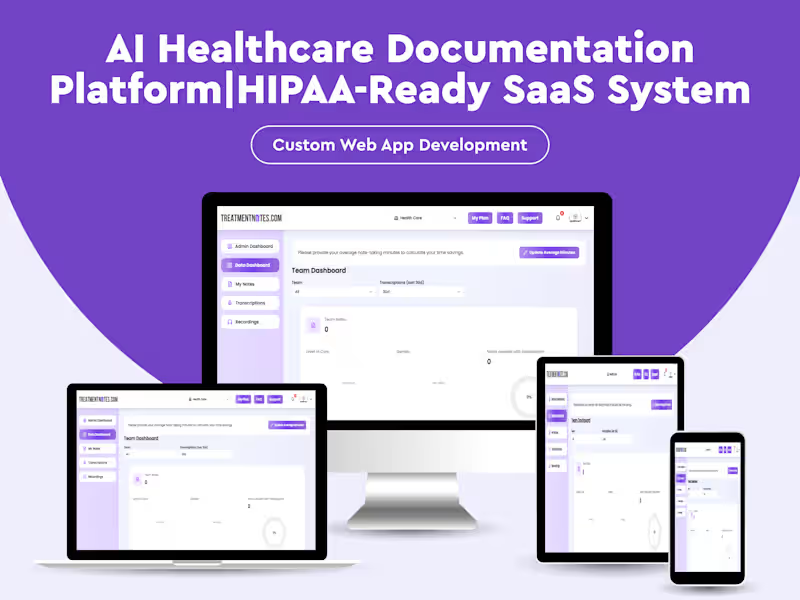
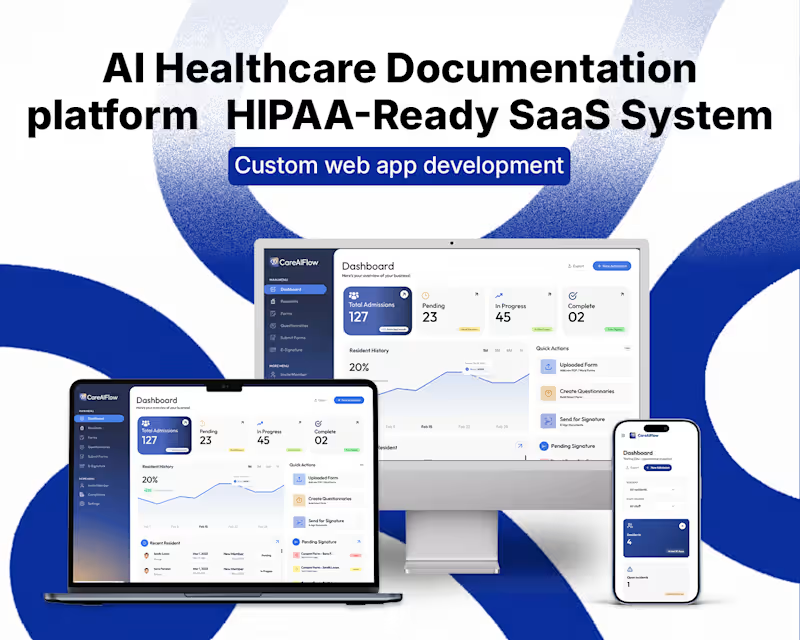
😍 This the best I have done in health industry - A SaaS platform: https://treatmentnotes.com/ 🚀 Built an AI-powered behavioral health documentation platform designed for real clinical workflows. The system supports AI generated notes from live conversations, uploaded transcripts, and custom knowledge-base logic tailored to mental health and addiction treatment. It was designed for secure, scalable healthcare use with HIPAA ready architecture and EMR integration support. 💯 Complete Tech Stack: AI Summarization, Clinical Nuance Detection, FastAPI, Vite, React, AWS Bedrock, Anthropic Claude, PostgreSQL, pgvector, Vector Database, Retrieval-Augmented Generation (RAG), AI Agent Architecture, HIPAA Compliant Cloud, Speech-to-Text API, LLM Fine-tuning, Healthcare Interoperability, HL7/FHIR Integration, Serverless Backend, Semantic Search, Private LLM Deployment, Encryption at Rest, Python Backend Development. 🧠 What do you say Contra Community?
1
4
1.7K
2
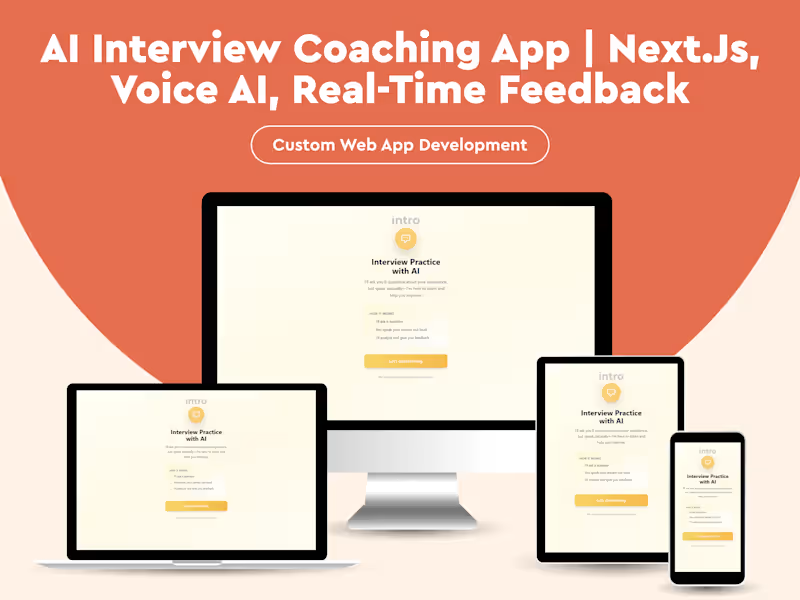
Turning Interview Prep into Structured, Real-Time Coaching
2
23
AWS
(4)
Follow
Message
Isfandyar khan
Karachi, Pakistan
Production ready AI agents & SaaS platforms built for scale
New to Contra
Follow
Message
Production ready AI agents & SaaS platforms built for scale
1
AI Behavioral Health Documentation Platform AI-Powered Clinical Documentation Built for Behavioral Healthcare Workflows Overview Designed an AI-powered documentation platform focused on real clinical workflows across mental health and addiction treatment. The platform transforms live conversations and uploaded transcripts into structured clinical documentation while using custom knowledge-base logic to maintain domain-specific context. The architecture was designed around security, scalability, healthcare interoperability, and AI-assisted clinical workflows, providing a foundation for integration with existing EMR systems. The Challenge Behavioral health documentation requires more than basic transcription. Clinical notes need to capture nuance, context, treatment terminology, and relevant patient information while fitting naturally into existing healthcare workflows. The platform needed to: Convert conversations into structured clinical notes Understand behavioral health and addiction-treatment terminology Ground AI outputs in custom clinical knowledge Support transcript and speech-based inputs Maintain secure handling of sensitive healthcare data Provide a scalable foundation for EMR interoperability AI-Powered Documentation The system combines speech-to-text, LLM-based summarization, clinical nuance detection, and retrieval-augmented generation (RAG) to transform raw conversations into meaningful documentation. Custom knowledge-base logic and semantic search help ground generated content in relevant clinical information rather than relying solely on general-purpose model knowledge. Intelligent AI Architecture The platform uses an agent-oriented architecture combining: AI summarization Clinical context and nuance detection RAG pipelines Semantic search Vector-based knowledge retrieval Private LLM deployment LLM fine-tuning capabilities Custom healthcare knowledge bases This creates a flexible foundation for specialized behavioral-health documentation workflows. Healthcare-Ready Infrastructure Security and interoperability were considered at the architecture level, including: HIPAA-ready cloud architecture Encryption at rest Secure backend infrastructure PostgreSQL + pgvector Healthcare interoperability support HL7/FHIR integration readiness EMR integration support Serverless backend architecture Technology Stack Frontend: React, Vite Backend: Python, FastAPI AI/LLM: AWS Bedrock, Anthropic Claude, AI Agents AI Infrastructure: RAG, Vector Database, pgvector, Semantic Search, LLM Fine-tuning Database: PostgreSQL Healthcare: HL7/FHIR, EMR Integration Cloud & Security: AWS, HIPAA-ready architecture, Encryption at Rest Speech: Speech-to-Text APIs The Result A scalable AI clinical documentation platform built specifically around behavioral healthcare workflows—combining conversational AI, clinical knowledge retrieval, secure infrastructure, and healthcare interoperability into a unified system.
1
1
111
0
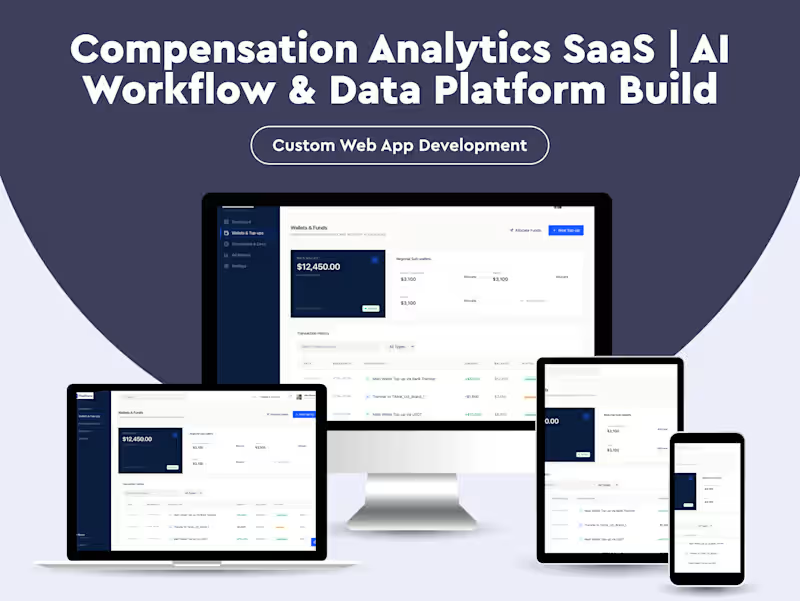
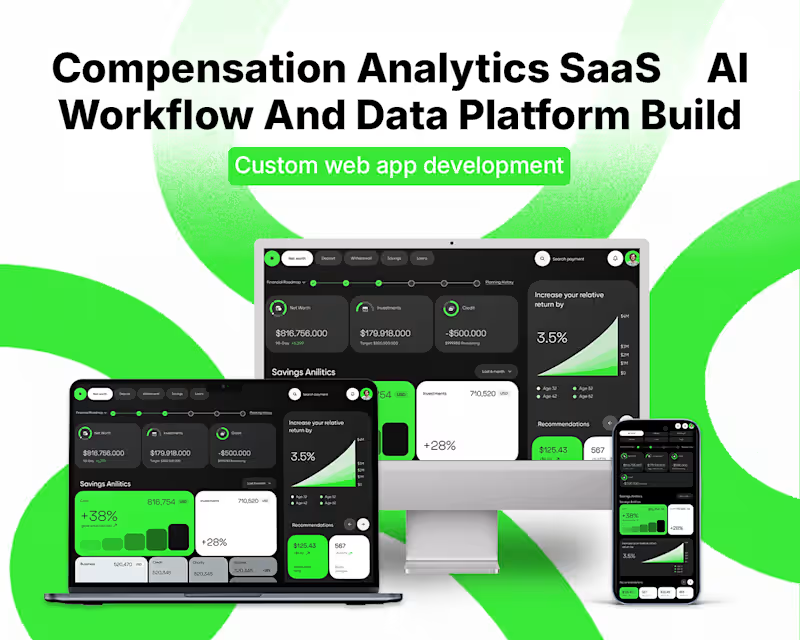
From Prototype to Production: Building a Scalable Credit Management Platform for Ad Operations Transforming a Conceptual Ad-Credit System Into a Production-Ready Financial Operations Platform The platform was designed around a complex operational challenge: managing advertising credit, wallets, compliance, risk, and campaign activity across multiple clients and regions. The original product concept came from deep experience in the ad-credit ecosystem. The workflow covered everything from wallet funding and regional allocations to KYB verification, transaction monitoring, campaign performance, and operational support. A working React prototype had already demonstrated the core experience. It included separate portals for clients and internal operations teams, with features such as: Wallet and balance management Ad account allocation Top-up requests Campaign performance dashboards Compliance monitoring Risk indicators Operations work queues AI-assisted support Treasury management The product vision was validated. The next challenge was creating the infrastructure required to operate it with real financial data. From Mock Data to Real Infrastructure The prototype relied heavily on simulated API responses and frontend state. That worked well for demonstrating workflows, but financial operations require persistent data, transactional integrity, authentication, auditability, and controlled access. We rebuilt the underlying architecture while preserving the validated frontend experience. Financial Operations & Wallet Management We introduced a transactional backend for core financial operations, including: Wallet top-ups Fund transfers Regional wallet allocation Ad account funding Refunds Balance reconciliation A double-entry ledger provided a structured record of every movement of funds. Transactions were designed with: Atomic balance updates Optimistic locking Idempotent processing Transaction history Actor tracking Before-and-after state records Full auditability Top-up requests were also converted into structured workflows covering submission, payment verification, approval, and balance crediting. Compliance & KYB Management The prototype represented compliance through simple status indicators. We replaced those static states with a structured KYB lifecycle. Documents could progress through stages such as: Missing → Uploaded → Under Review → Verified → Expired The system introduced rules governing each transition, along with: Document expiration monitoring Automated notification workflows Identity verification integrations Region-specific compliance requirements Reviewer activity tracking Compliance overrides Audit history Cases could also be routed to compliance agents according to factors such as workload, region, and verification requirements. Risk & Anomaly Detection Static risk indicators were replaced with a dedicated risk evaluation layer. The platform could evaluate multiple signals, including: Transaction velocity Changes in spending behavior P2P transfer patterns Threshold breaches Account activity Compliance status Dormancy indicators Risk conditions could generate prioritized operational alerts with relevant context and recommended actions. This connected the risk engine directly to the operations workflow rather than treating risk as a visual indicator inside the dashboard. Operations Work Queue The original work queue was primarily frontend-driven. We transformed it into an event-based operations system. Events from financial, compliance, and risk workflows could automatically create operational tasks. The system supported: Intelligent task assignment Regional routing Capacity-based allocation SLA monitoring Escalation workflows Case history Required-action validation Resolution tracking Every operational case could maintain a complete history of actions, notes, and status changes. Multi-Tenant Architecture The production system needed to support multiple client organizations while keeping their financial and compliance data isolated. We introduced tenant-aware architecture across the data and API layers. Each organization could maintain its own: Wallets Ad accounts Transactions Compliance records Credit limits Operational history Role-based permissions separated client-facing functionality from internal administrative operations, while tenant-scoped API access helped prevent cross-organization data exposure. Advertising Platform Integration We also replaced simulated advertising metrics with a dedicated integration layer. The architecture supported TikTok Ads through: OAuth account authorization Token refresh handling Scheduled metric synchronization Rate-limit awareness Retry and backoff strategies Pixel health monitoring API failure handling When an external platform became unavailable, the system could clearly identify stale information rather than presenting outdated metrics as current. Observability & Infrastructure Production financial systems require visibility across both technical and business operations. We introduced: Structured application logging Transaction monitoring Integration health checks Queue monitoring SLA alerts Error tracking Backend service dashboards Synchronization monitoring This gave operations teams visibility into both application health and business-critical events. AI & Risk Intelligence The platform also incorporated intelligent services into the broader architecture. The risk layer was supported by a Python-based service and machine-learning pipeline, while an AI assistant provided a conversational interface for accessing relevant operational information. The architecture included: Python / FastAPI risk services scikit-learn ML workflows OpenAI-powered AI assistant Pinecone vector storage These capabilities were integrated into the broader platform rather than operating as isolated AI features. Technology Stack Backend: Node.js, NestJS API: GraphQL Authentication: Auth0 Database: PostgreSQL Caching & Queues: Redis Search: Elasticsearch Cloud Infrastructure: AWS, ECS Fargate CI/CD: GitHub Actions Infrastructure as Code: Terraform Payments: Stripe Risk Engine: Python, FastAPI Machine Learning: scikit-learn AI: OpenAI GPT-4 Vector Database: Pinecone The Outcome The platform evolved from a prototype designed to demonstrate the concept into a production-oriented system capable of supporting real financial and operational workflows. The transformation introduced: Transaction-safe financial operations Structured compliance workflows Continuous risk evaluation Event-driven operations management Multi-tenant architecture Live advertising integrations Automated monitoring and alerts AI-assisted operational intelligence The original prototype had already established the product vision and user experience. Our work focused on building the engineering foundation underneath it—turning simulated workflows into persistent, secure, scalable, and operationally reliable systems. From an impressive prototype to a financial operations platform built for real-world complexity.
0
78
0
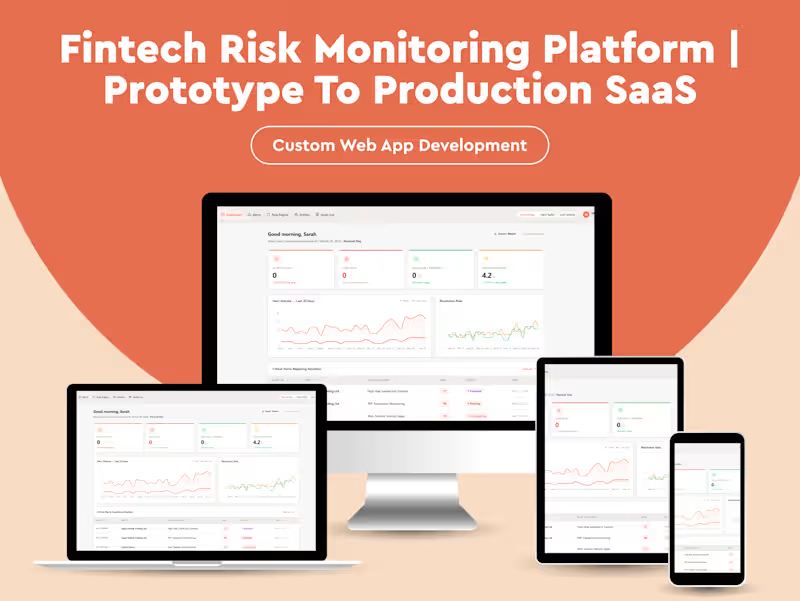
KovaRisk: Turning a Risk Monitoring Prototype Into a Production-Ready Fintech Platform From Interactive Compliance Dashboard to Persistent Risk Intelligence System KovaRisk started with a clear goal: give compliance teams a centralized way to monitor financial risk, investigate alerts, manage rules, and maintain reliable audit records. The original prototype already had a strong product foundation. It included: Risk and alert monitoring dashboards Filterable alert feeds Entity-level risk profiles Historical risk trends Configurable monitoring rules Investigation workflows Audit activity Scenario-based testing The interface effectively demonstrated how a compliance team could interact with the product. The challenge was that most of the underlying functionality was still simulated. The Gap Between the Prototype and Production The frontend represented a complete risk-management workflow, but much of its state existed only inside the browser. Alerts were generated when the application started. Risk scores were simulated. Status changes were stored in component state, and audit events existed only in memory. Refreshing the application could erase an investigation update, internal note, or rule configuration. For a financial compliance platform, persistence isn't simply a technical requirement. Investigations, decisions, and user actions need to remain traceable and verifiable. The next phase was therefore focused on building the system behind the interface. Building the Production Foundation Structured Data Architecture We translated the prototype's workflows into a persistent relational data model using PostgreSQL. The architecture introduced dedicated entities for: Alerts Financial entities Monitoring rules Risk-score history Audit events Internal investigation notes Transactions Relationships between these entities allowed actions performed through the interface to become durable records rather than temporary frontend state. Rule versioning was also introduced so historical alerts could remain associated with the conditions that existed when they were generated. Real-Time Alert Generation The prototype initially generated a predefined set of alerts. We replaced this behavior with a transaction-monitoring architecture capable of evaluating incoming transactions against active compliance rules. The system could: Evaluate transactions against configured rules Calculate risk scores Consider entity and jurisdiction risk Identify threshold breaches Create persistent alert records Trigger notifications for high-risk events Rule controls in the dashboard became connected to the actual monitoring engine. Disabling a rule affected future evaluations rather than simply changing the appearance of a UI component. Asynchronous Compliance Workflows Several actions required more than a simple frontend state change. We introduced background processing for operational workflows such as: Alert Escalation Escalating an alert could initiate notifications, create a corresponding case, and begin tracking the response timeline. Scheduled Screening Entities could be periodically screened against external sanctions data, with newly identified matches feeding back into the alert workflow. Report Generation Instead of exporting whatever happened to be loaded in the browser, reports were generated server-side from the current database state and made available once processing completed. This created a more reliable separation between the user interface and the underlying business operations. Building a Reliable Audit Trail One of the most important parts of KovaRisk was transforming the audit interface from a simulated activity feed into a persistent record of system events. Audit events were generated at the API layer whenever important state changes occurred. Each event captured: Authenticated user Action performed Target entity Event type Server-generated timestamp Relevant activity context The audit records were designed to be append-only, preventing normal application workflows from modifying historical events. This gave compliance teams a much more dependable record of how alerts and investigations progressed. Technology Stack Frontend: React, Vite, React Router, Recharts, TanStack Query Backend: Node.js, TypeScript, Fastify, Prisma Database & Processing: PostgreSQL, Redis, BullMQ Authentication: Passport.js, Express Session Infrastructure: AWS ECS, Railway / Render, Amazon S3 Security & Monitoring: AWS Secrets Manager, Doppler, Sentry, Datadog Integrations: OFAC / ComplyAdvantage, Refinitiv World-Check, SendGrid / SMTP, Webhooks The Result KovaRisk evolved from an interactive compliance prototype into a structured fintech risk-monitoring platform. The interface remained focused on the workflows compliance teams needed, while the underlying architecture introduced: Persistent data Automated alert generation Configurable rule processing Background workflows External screening integrations Reliable report generation Role-aware system operations Persistent audit records The key transformation wasn't adding more screens. It was connecting every important interaction in the interface to a dependable backend process. The prototype demonstrated how compliance teams should work. The production architecture made those workflows persistent, automated, and operationally reliable.
0
75
0
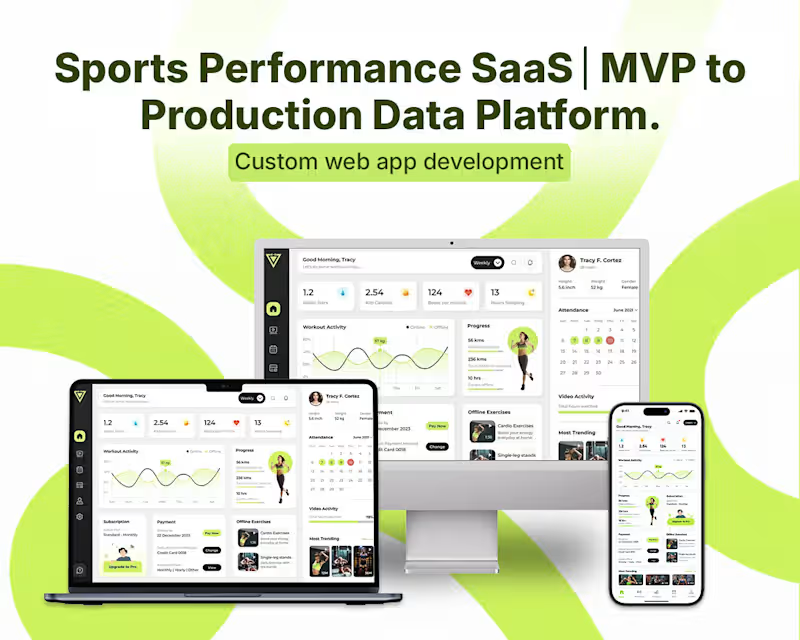
Moving From Prototype to Production Our focus wasn't to redesign the product from scratch. The original UX already reflected how performance teams actually work, so we preserved the existing product experience while rebuilding the underlying infrastructure. Real-Time Data Infrastructure We replaced static datasets with a structured ingestion architecture capable of receiving information from multiple sources. The system was designed around: GPS and wearable data HRV and recovery metrics Sleep information Wellness submissions Training-load records External performance systems Each integration required validation, normalization, and error handling so inconsistent or incomplete data wouldn't compromise the platform. Live Performance Calculations Static calculations were replaced with dynamic processing. The platform could evaluate: ACWR Training-load trends Readiness scores Historical performance Rolling training windows Individual athlete baselines This allowed performance metrics to evolve with the athlete instead of remaining fixed to predefined values. Intelligent Performance Insights We replaced simulated recommendations with a data-driven inference layer. Insights were generated based on actual athlete conditions and predefined performance rules. For example, when training load increased significantly while recovery indicators dropped below an athlete's baseline, the system could surface an appropriate risk signal rather than displaying a generic recommendation. Role-Based Access Athliq required different users to work with different levels of information. We implemented role-based access so that: Performance Directors could monitor squad-level performance Sport Scientists could analyze training and performance metrics Physiotherapists could access injury and return-to-play information Coaches could focus on readiness and daily training Athletes could access relevant individual information Access restrictions were enforced at the system level rather than simply being controlled through the interface. Monitoring & Reliability Production systems need visibility when something goes wrong. We introduced logging and monitoring across data ingestion, calculations, and system events. The platform could identify issues such as: Missing data Delayed integrations Invalid records Calculation anomalies Stale data sources Application errors This helped prevent outdated information from being presented as current performance data. Technology Stack Frontend: React 19, Vite, Tailwind CSS, Recharts, React Router Backend: Node.js, Fastify Database: PostgreSQL, TimescaleDB Infrastructure: Redis, Vercel, Railway / Render, Supabase Storage Integrations: Catapult, Polar, Garmin, Google Forms, Typeform Authentication & Security: Auth0, Row-Level Security Monitoring: Sentry, Datadog The Result Athliq transformed a fragmented performance-monitoring workflow into a centralized platform. Instead of moving between multiple browser tabs, spreadsheets, forms, and communication channels, performance teams could access their core athlete information through a unified dashboard. The platform provided role-specific views, continuously updated performance information, historical context, and actionable signals from integrated data sources. More importantly, it created a shared data layer for coaches, sport scientists, physiotherapists, and performance directors. The product evolved from a concept-validation prototype into a production-ready performance intelligence platform. What Made the Project Interesting The biggest challenge wasn't simply building another analytics dashboard. It was translating real-world sports performance workflows into reliable software infrastructure. The original product concept came from someone deeply familiar with the domain. Our role was to preserve that domain knowledge while introducing the engineering foundations required for scalability, reliability, security, and live data processing. The result was a system designed around the questions performance teams actually need answered—not simply around the data available to them. Athliq Today Athliq has evolved into a multi-role sports performance platform supporting professional and university-level performance environments. The platform brings together data from multiple sources and transforms it into role-specific performance insights, giving teams a centralized environment for monitoring readiness, training load, recovery, and athlete progression. From a coach's notebook and fragmented data sources to a scalable performance intelligence platform.
0
67
AWS
(3)
Follow
Message
Mohsin Sheikhani
Karachi, Pakistan
AWS Cloud Engineer | Serverless & Containers | IaC
Follow
Message
AWS Cloud Engineer | Serverless & Containers | IaC
0
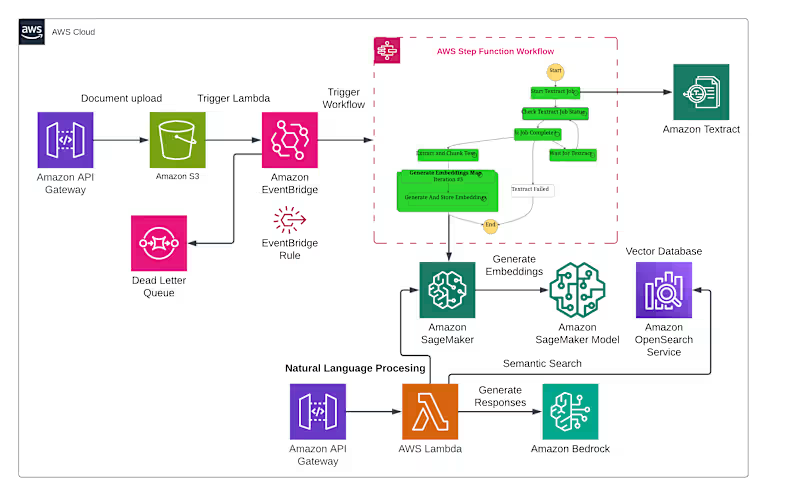
Serverless MLOps Pipeline for RAG
0
12
0
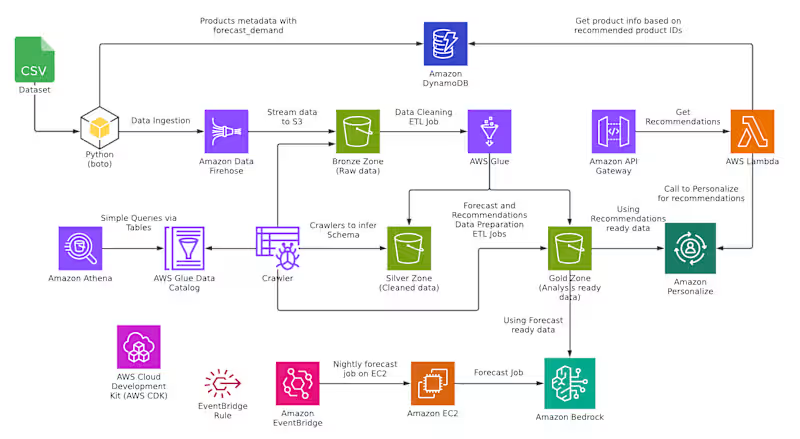
Retail AI Insights on AWS
0
8
0
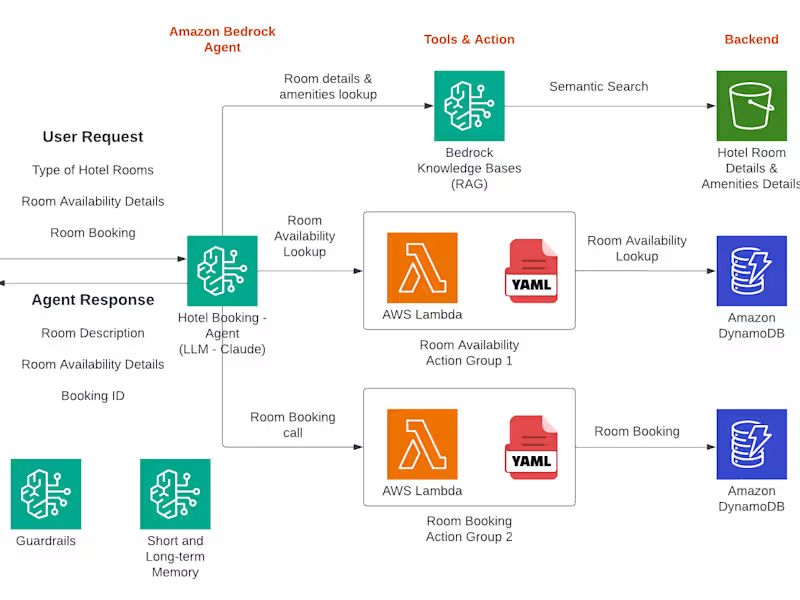
AI-powered hotel booking agent
0
6
View more →
AWS
(3)
Follow
Message
Moid Khan
Karachi, Pakistan
Product Builder | Nurturing Ideas into ROI $$$ | moidrk
$1k+
Earned
5.0
Rating
60
Followers
Follow
Message
Product Builder | Nurturing Ideas into ROI $$$ | moidrk
1
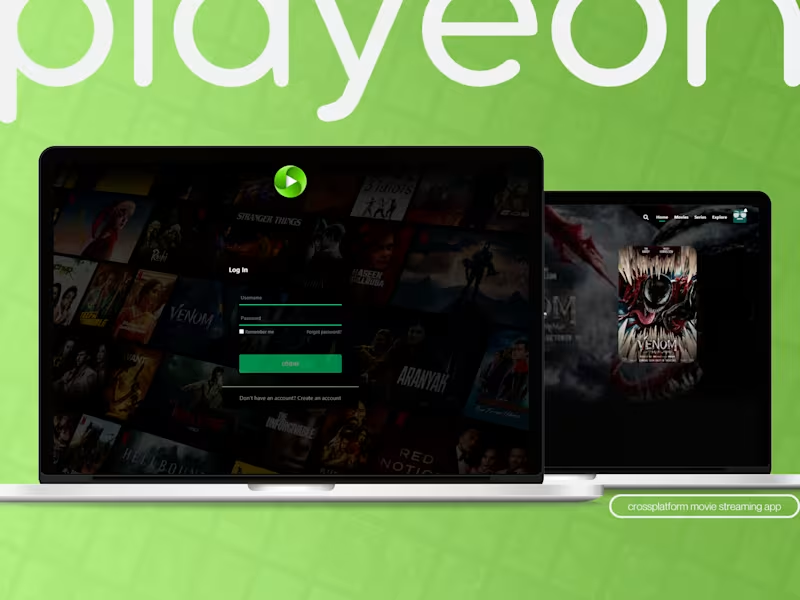
Playeon Streaming App - Full App Design & Development
1
7
0
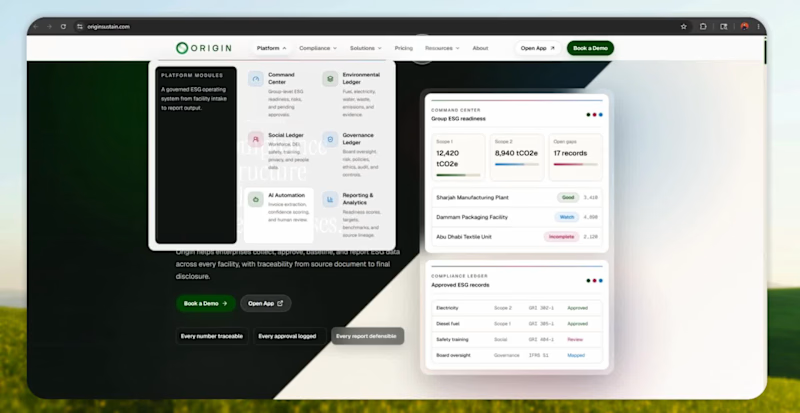
Landing Page for Origin - Intelligent ESG Compliance Infrastructure.
0
279
0
Crazy what a savvy dev + AI can achieve - the speed is unreal! I'm not handing over the reins to AI; I still love controling my code and my own git commits. Claude, Cursor, Codex not my cup of tea. But Gemini Pro as a sidekick when you've got the vision? Pure magic. Targeted a niche campaign, built up a standalone landing page: masonry portfolio grid, custom stepper form. killer domain. All custom-built with Next.js, Sanity CMS, Resend, Tailwind CSS, Vercel. Blazing fast (high-res loads <100ms), spot-on design, mobile optimized, total code/infra control. I love my work, honestly. Check it out: http://studioparfum.com
0
283
2
Designed & Custom-built something fresh for OneOqood - a B2B real estate enterprise. The founder wanted an attractive first look that immediately grabs the attention of brands and organizations looking to scale their physical locations. A multi-layered search bar with tight copy clearly conveys OneOqood’s message right from the entry point. The footer links are clean, paired with a prominent big CTA. Would love some comments! Like for the final site URL and more design screenshots.
1
2
305
AWS
(1)
Follow
Message
Faiza Malik
Karachi, Pakistan
Backend Development & API Design (Laravel / API Expert)
22
Followers
Follow
Message
Backend Development & API Design (Laravel / API Expert)
0
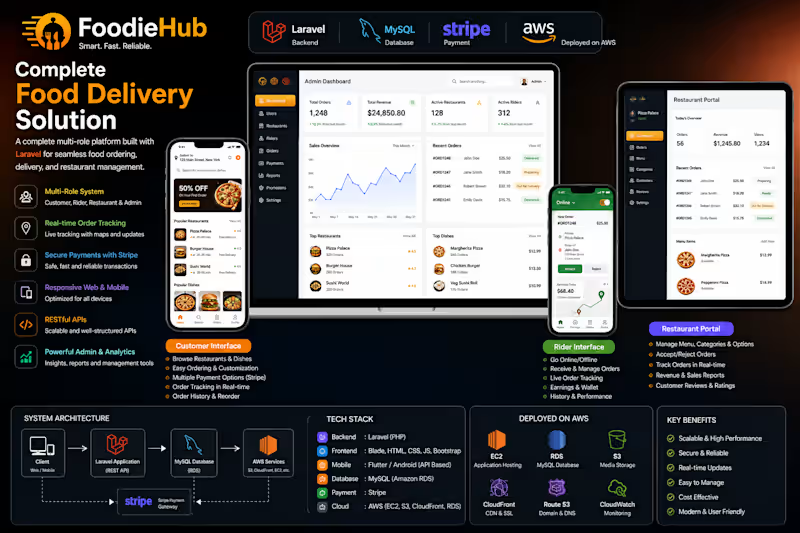
Food Delivery Application Developed a complete multi-role Food Delivery Application and Web Platform using Laravel and MySQL with secure payment integration through Stripe and deployed on Amazon Web Services. The platform includes: Customer/User Interface Restaurant browsing Food ordering system Live order tracking Secure online payments Responsive mobile & web experience Rider Interface Order pickup & delivery management Real-time delivery status updates Earnings & delivery tracking Restaurant Portal Menu management Order handling Restaurant analytics Customer order history Admin Dashboard User & restaurant management Order monitoring Payment management Reports & analytics System configuration Technologies Used Backend: Laravel (PHP) Database: MySQL Payment Gateway: Stripe Cloud Deployment: AWS REST APIs for mobile & web integration Key Features Multi-role authentication system Real-time order tracking Secure Stripe payment integration Scalable AWS deployment Responsive UI/UX for web and mobile High-performance RESTful APIs
0
123
0
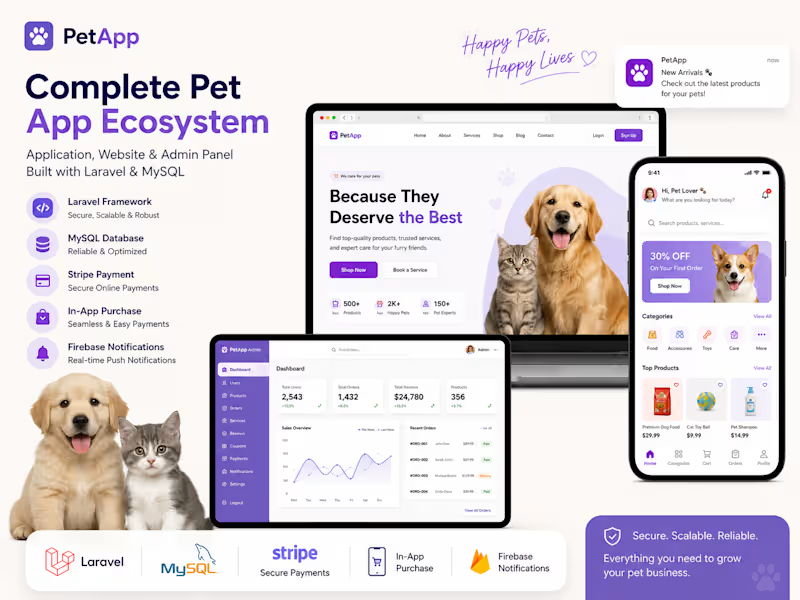
🐾 Pet Care & Services App (Web + Mobile + Admin Panel) We have developed a complete Pet Care Platform designed to make pet management easy, fast, and reliable for pet owners and service providers. ✨ Key Features: Pet adoption & care services marketplace Web, Mobile App & Admin Panel Secure online payments with Stripe 💳 In-app purchase functionality Real-time Firebase notifications 🔔 User-friendly dashboard for seamless management Built with Laravel + MySQL, this system is fully scalable and optimized for performance. Perfect solution for modern pet care businesses looking to go digital! 🐶🐱
0
109
0
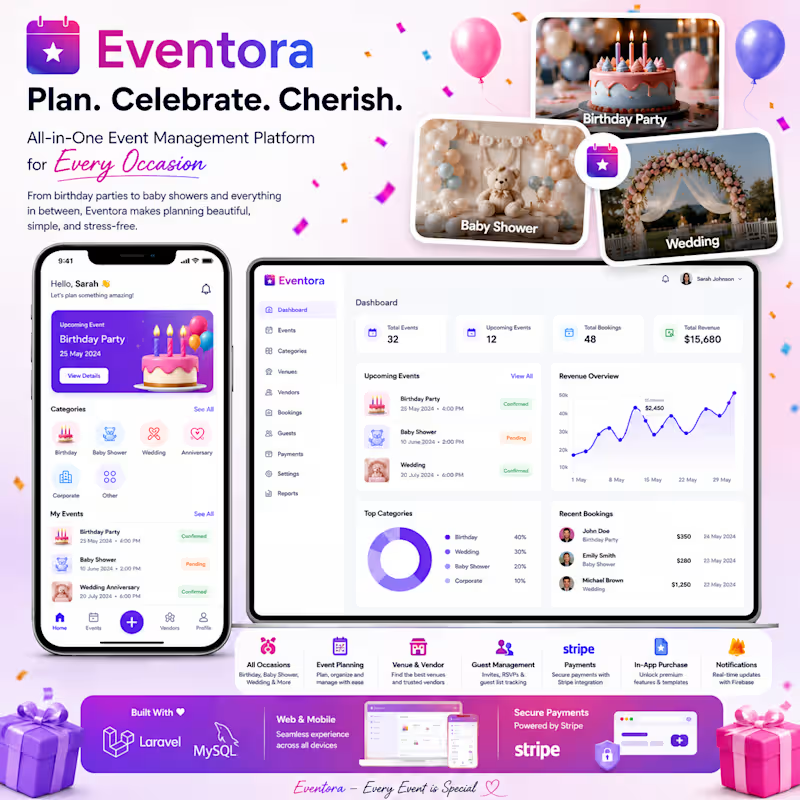
Modern Event Management App promotional cover design for mobile and web platforms. The design showcases an all-in-one event planning system for Birthday Parties, Baby Showers, Weddings, Corporate Events, and more. It features elegant UI mockups of both mobile app and web dashboard built with Laravel and MySQL. The poster highlights premium features including Stripe payment integration, in-app purchases, Firebase push notifications, venue and vendor management, guest tracking, secure online bookings, and real-time event updates. The overall style is modern, vibrant, luxurious, and festive with balloons, confetti, soft gradients, celebration elements, and clean typography.
0
152
0
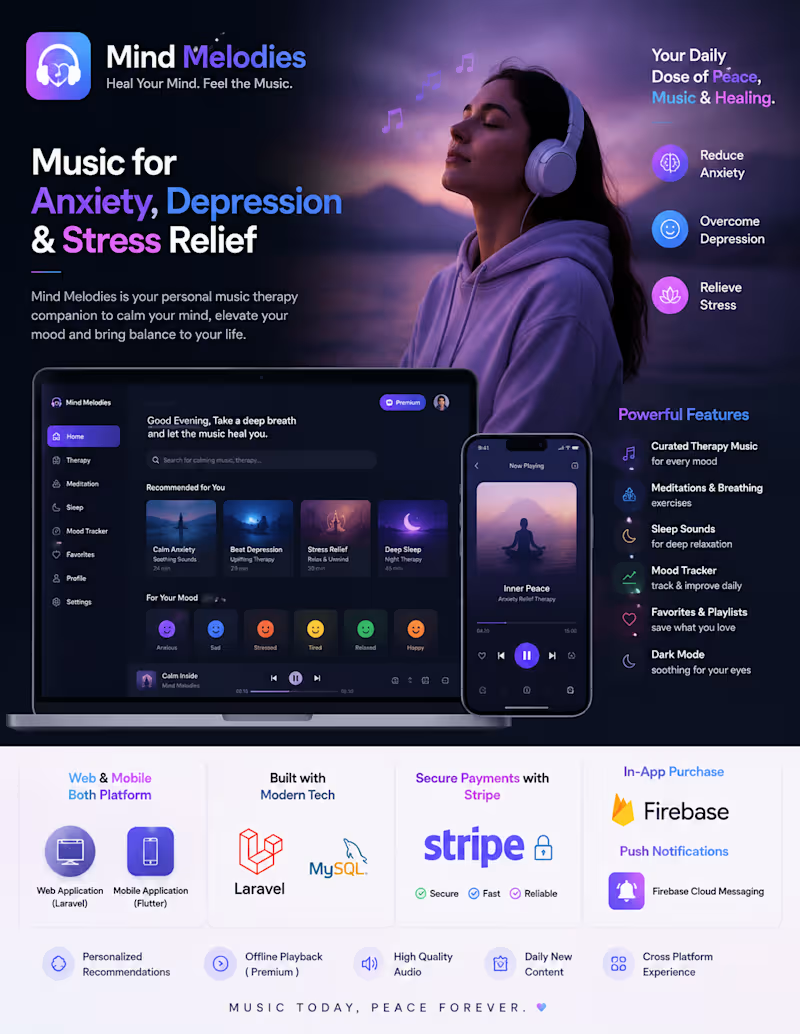
Mind Melodies is a modern music therapy platform designed to help people reduce anxiety, depression, and daily stress through calming audio experiences. The application is available on both mobile and web platforms, offering users a seamless and relaxing experience anywhere, anytime. The platform includes personalized therapy music, meditation tracks, sleep sounds, mood-based playlists, and stress-relief audio sessions to support mental wellness and emotional balance. Users can explore soothing content specially curated to improve focus, relaxation, sleep quality, and peace of mind. The system is built using Laravel with MySQL for a secure and scalable backend infrastructure. Stripe integration is implemented for secure subscription payments on the website, while In-App Purchases are available for mobile users. Firebase Cloud Messaging is integrated for real-time push notifications and user engagement. Key Features: • Anxiety, depression, and stress relief music • Meditation and sleep therapy sounds • Personalized playlists and favorites • Cross-platform web and mobile experience • Secure Stripe payment integration • In-App Purchase support • Firebase push notifications • Modern, fast, and scalable architecture Mind Melodies combines technology and wellness to create a peaceful digital environment where music becomes a source of healing and relaxation.
0
219
AWS
(1)
Follow
Message
Tooba Khaliq
Karachi, Pakistan
AI Agents, Automation & Backend Developer
9
Followers
Follow
Message
AI Agents, Automation & Backend Developer

1
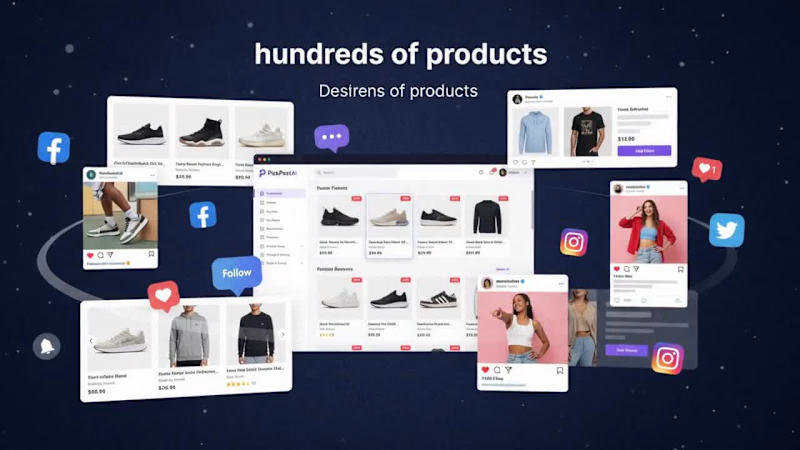
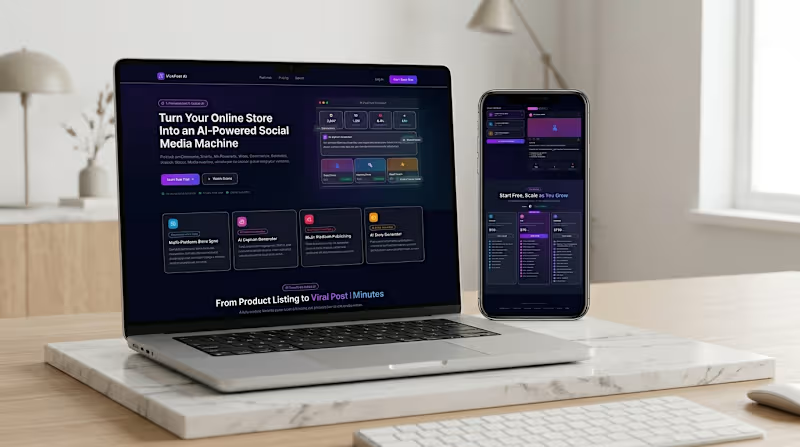
PickPostAI Website Designed and developed the official marketing website for PickPostAI, an AI-powered ecommerce marketing platform. The website was created to effectively communicate the product's value, showcase its features, present pricing plans, and drive user registrations through a modern, conversion-focused user experience. Responsibilities Designed and developed a fully responsive marketing website. Built reusable and optimized UI components. Created product feature sections, pricing pages, FAQs, and call-to-action areas. Implemented responsive layouts for desktop, tablet, and mobile devices. Optimized the website for performance, SEO, and accessibility. Added contact forms and lead generation functionality. Integrated authentication pages for user sign-up and login. Created legal pages including Privacy Policy, Terms of Service, and Refund Policy. Connected the website with the SaaS application and subscription flow. Deployed the website using Docker and AWS. Technologies Next.js React TypeScript Tailwind CSS HTML5 CSS3 Docker AWS EC2 Nginx Git GitHub Key Outcomes Delivered a fast, modern, and SEO-friendly marketing website. Improved user engagement with a clean, responsive interface. Established a professional online presence for the SaaS platform. Created a scalable frontend architecture that supports future feature additions and marketing pages.
1
210
1
I built FrameFlow for the Lovable Challenge. Live Project: https://framefoundstudio.lovable.app Live Project Studio Login: https://framefoundstudio.lovable.app/auth Meet Ayesha, a solo photographer in Karachi. Most of her customers reach out through WhatsApp or Instagram, asking about availability, pricing, booking, and rescheduling. The problem wasn't getting inquiries. It was everything that happened after them. FrameFlow turns a natural-language customer inquiry into a confirmed booking: → Customer describes what they need → AI understands the request → Real availability is checked → Customer chooses a suitable time → Booking is confirmed → Owner dashboard updates automatically → Reminders and follow-ups are scheduled → Customers can reschedule without another conversation The goal: remove the repetitive back-and-forth while keeping the booking experience simple for the customer. Built with Lovable, React, TypeScript, Tailwind, and Supabase. #LovableChallenge #Lovable #AI #NoCode #ProductDesign #Automation
1
154
0
AI-Powered Ecommerce Social Media Automation
0
2
3
What if your online store could market itself? 🤖 I’ve been building an AI-powered social media automation platform that turns ecommerce products into ready-to-publish marketing content. The workflow can: → Connect to an ecommerce store → Sync products automatically → Generate social media content with AI → Create product-focused visuals → Prepare posts/stories for social platforms → Schedule and publish content → Keep product marketing running with minimal manual work The bigger idea isn’t just “AI-generated posts.” It’s building an automated marketing workflow around the actual products in your store. This is the kind of automation I enjoy building: connecting APIs, AI agents, ecommerce systems, content generation, and social platforms into one practical workflow. If you're running an ecommerce business and still creating every product post manually, there’s probably a lot that can be automated. #AIAutomation #Ecommerce #AI #MarketingAutomation #SaaS #Automation #Contra
2
3
333
AWS
(1)
Follow
Message
Mohtashim Khan
Karachi, Pakistan
Backend Engineer | DevOps | Linux, AWS, Docker,System Design

7
Followers
Follow
Message
Backend Engineer | DevOps | Linux, AWS, Docker,System Design
1
Playeon - Streaming Application
1
1
2
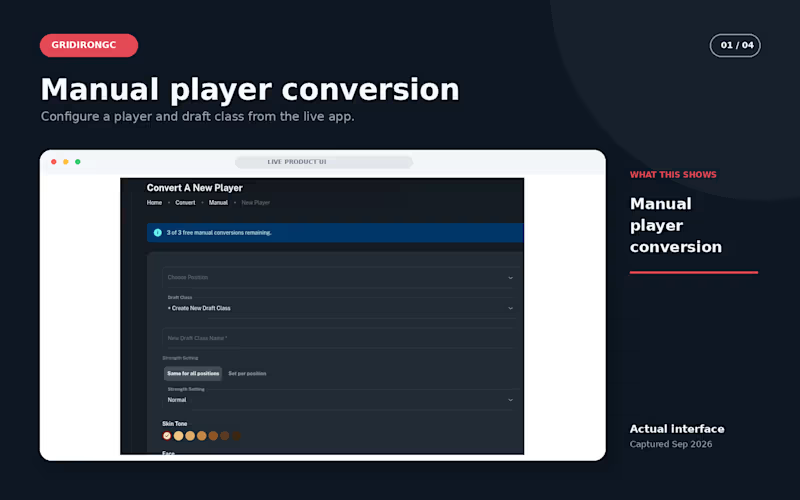
A college football roster is more than a list of stats when the goal is a Madden-ready draft class. For GridIronGC, I built the Node.js/TypeScript backend, conversion pipeline, and API, with Python stages and OpenAI-assisted data normalization. The live SaaS supports manual conversion, bulk uploads, and draft-class organization. I shared the real product screens and backend context in the case study: https://contra.com/p/3qRLLQ6c-grid-iron-gc-or-ai-assisted-player-conversion-backend
1
2
438
3
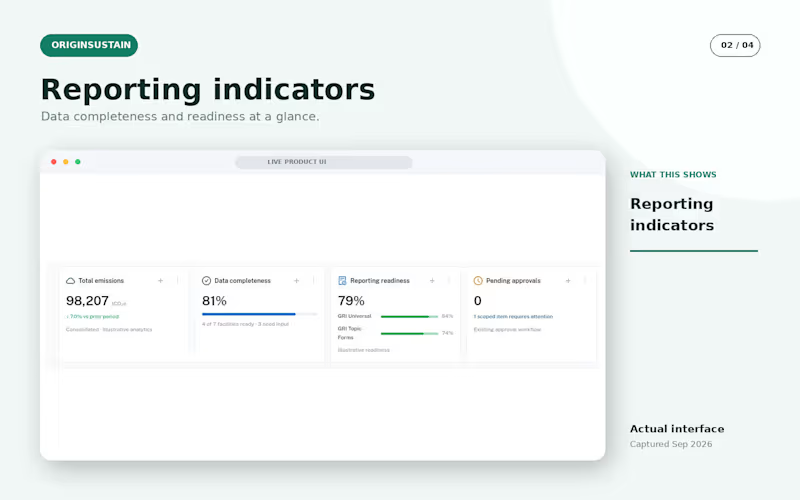
ESG reporting is a workflow problem as much as a data problem: teams need applicability rules, evidence, consolidation, review, and approvals before a report is ready. For OriginSustain, I built NestJS/TypeScript backend services, PostgreSQL and Redis/BullMQ processing, and AWS/Docker delivery with CI/CD. OpenAI API and RAG support part of the reporting flow. The screens here are from the product’s illustrative command center; the numbers are demo values, not client outcomes. The full backend case study: https://contra.com/p/WvNXbmQR-origin-sustain-or-multi-tenant-esg-reporting-backend
3
747
1
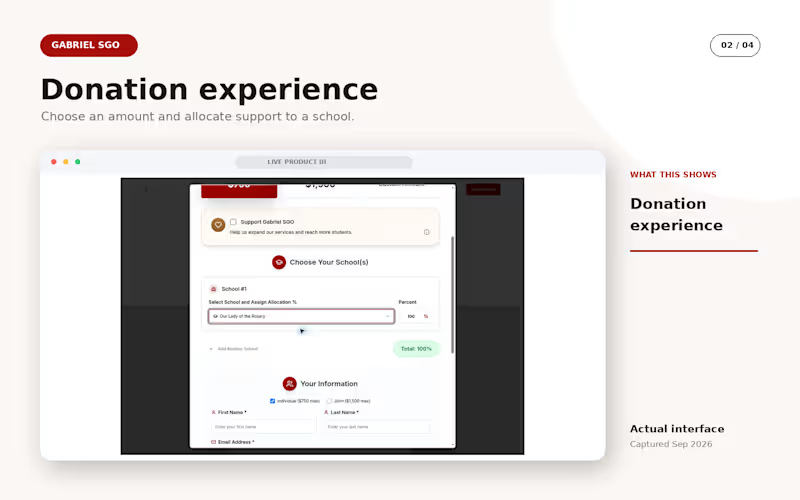
A good donation flow needs dependable systems behind the screens. For Gabriel SGO, I built the NestJS/PostgreSQL backend for donor and school workflows, with PayPal donation processing, Redis/BullMQ background jobs, Mailgun email, and AWS delivery. The public experience helps Ohio donors estimate a contribution, choose a school, and understand the tax-credit process. I documented the backend work and real site screens here: https://contra.com/p/Ls6L2o7Y-gabriel-sgo-or-donation-and-school-allocation-backend
1
438
AWS
(3)
Follow
Message
Hassan Ali
Karachi, Pakistan
React and React Native Developer | Hybrid mobile application
5.0
Rating
4
Followers
Follow
Message
React and React Native Developer | Hybrid mobile application
0
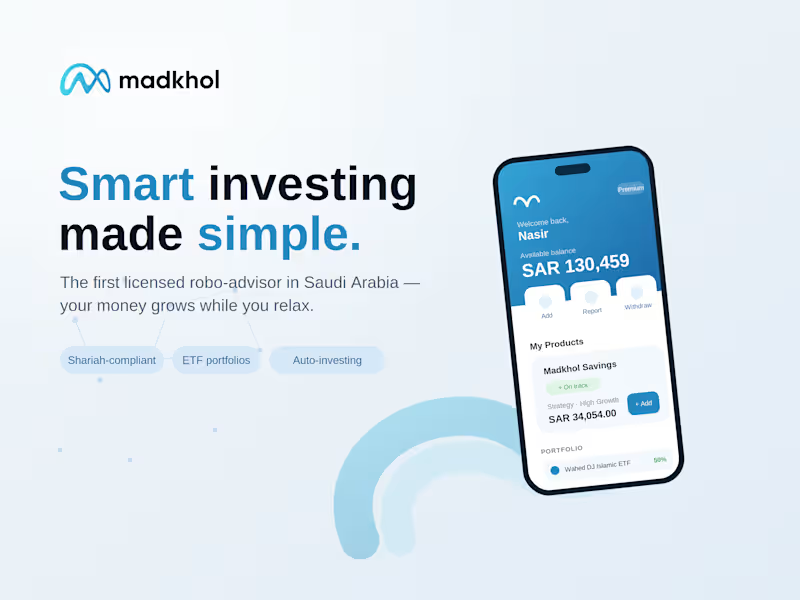
Madkhol is your smart, Sharia-compliant investment partner built to help you grow your wealth with confidence. In just minutes, you can open your portfolio, choose your strategy, and start investing with expert-backed guidance and advanced technology. What does Madkhol offer? • Comprehensive investment management powered by experienced specialists. • Open your investment portfolio in under three minutes with a smooth, simple process. • Personal consultation sessions to guide your financial decisions. • Flexible portfolios tailored to your goals and risk level. • Diversified investment options designed for balance and long-term growth. • Global investing across both local and international markets. • Advanced strategies to help enhance your portfolio performance sustainably. • Continuous learning through easy, in-app educational lessons. Why choose Madkhol? • A complete, end-to-end investment experience built to support your financial goals. • Among the lowest investment fees in Saudi Arabia, with full transparency. • Expert support to help you make informed and confident decisions. • Industry-leading security standards to protect your data and investments. • 100% Sharia-compliant investment solutions aligned with Islamic principles. Madkhol smart investing that aligns with your goals and your values.
0
71
0
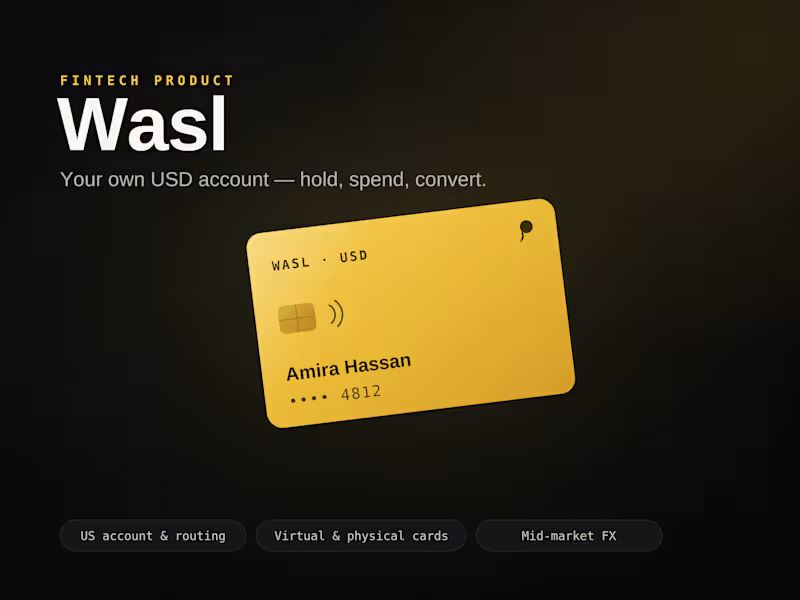
Wasl a USD banking app for MENA freelancers. Real US account & routing numbers, virtual and physical cards, and mid-market currency conversion so creators can get paid by Upwork, ACH, or wire and spend or convert instantly.
0
93
0
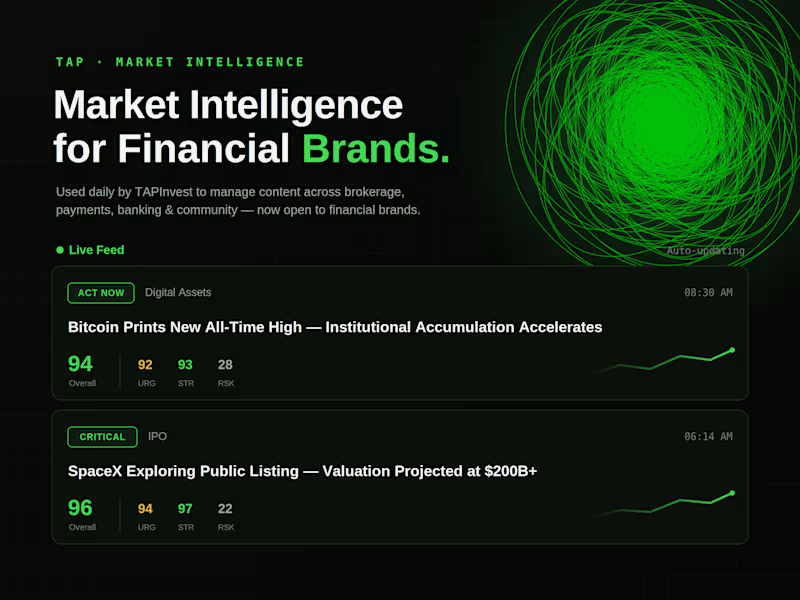
Market Intelligence for Financial Brands. Tap Market Intelligence uses this platform daily to manage content across its brokerage, payments, banking, and community products, and now it's available to other financial brands.
0
66
0
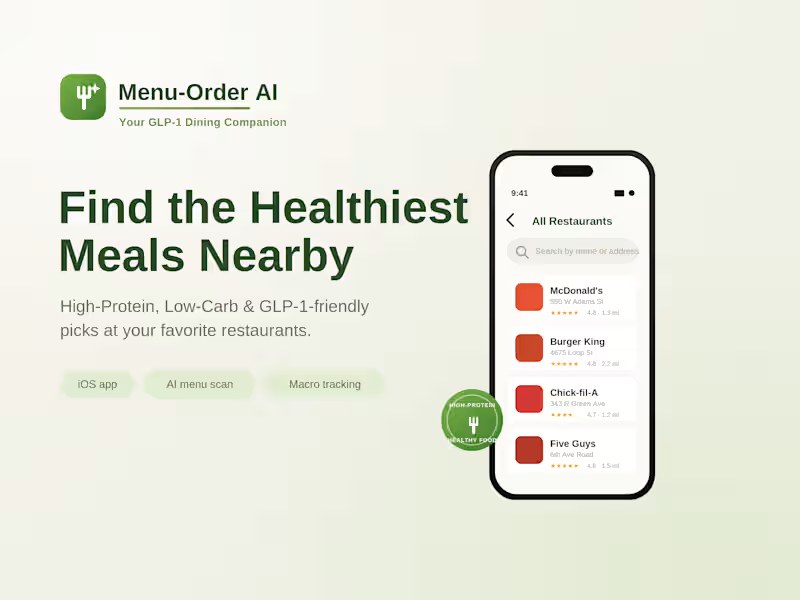
A health & nutrition iOS app that helps users find high-protein, low-carb, and GLP-1-friendly meals at nearby restaurants. Features restaurant discovery with Yelp ratings, instant menu suggestions, a scan-the-menu tool, and daily calorie & macro tracking.
0
84
AWS
(2)
Follow
Message
Explore people