
Isfandyar khan
Production ready AI agents & SaaS platforms built for scale
- 4
- Followers


Moving From Prototype to Production
Our focus wasn't to redesign the product from scratch.
The original UX already reflected how performance teams actually work, so we preserved the existing product experience while rebuilding the underlying infrastructure.
Real-Time Data Infrastructure
We replaced static datasets with a structured ingestion architecture capable of receiving information from multiple sources.
The system was designed around:
GPS and wearable data
HRV and recovery metrics
Sleep information
Wellness submissions
Training-load records
External performance systems
Each integration required validation, normalization, and error handling so inconsistent or incomplete data wouldn't compromise the platform.
Live Performance Calculations
Static calculations were replaced with dynamic processing.
The platform could evaluate:
ACWR
Training-load trends
Readiness scores
Historical performance
Rolling training windows
Individual athlete baselines
This allowed performance metrics to evolve with the athlete instead of remaining fixed to predefined values.
Intelligent Performance Insights
We replaced simulated recommendations with a data-driven inference layer.
Insights were generated based on actual athlete conditions and predefined performance rules.
For example, when training load increased significantly while recovery indicators dropped below an athlete's baseline, the system could surface an appropriate risk signal rather than displaying a generic recommendation.
Role-Based Access
Athliq required different users to work with different levels of information.
We implemented role-based access so that:
Performance Directors could monitor squad-level performance
Sport Scientists could analyze training and performance metrics
Physiotherapists could access injury and return-to-play information
Coaches could focus on readiness and daily training
Athletes could access relevant individual information
Access restrictions were enforced at the system level rather than simply being controlled through the interface.
Monitoring & Reliability
Production systems need visibility when something goes wrong.
We introduced logging and monitoring across data ingestion, calculations, and system events.
The platform could identify issues such as:
Missing data
Delayed integrations
Invalid records
Calculation anomalies
Stale data sources
Application errors
This helped prevent outdated information from being presented as current performance data.
Technology Stack
Frontend: React 19, Vite, Tailwind CSS, Recharts, React Router
Backend: Node.js, Fastify
Database: PostgreSQL, TimescaleDB
Infrastructure: Redis, Vercel, Railway / Render, Supabase Storage
Integrations: Catapult, Polar, Garmin, Google Forms, Typeform
Authentication & Security: Auth0, Row-Level Security
Monitoring: Sentry, Datadog
The Result
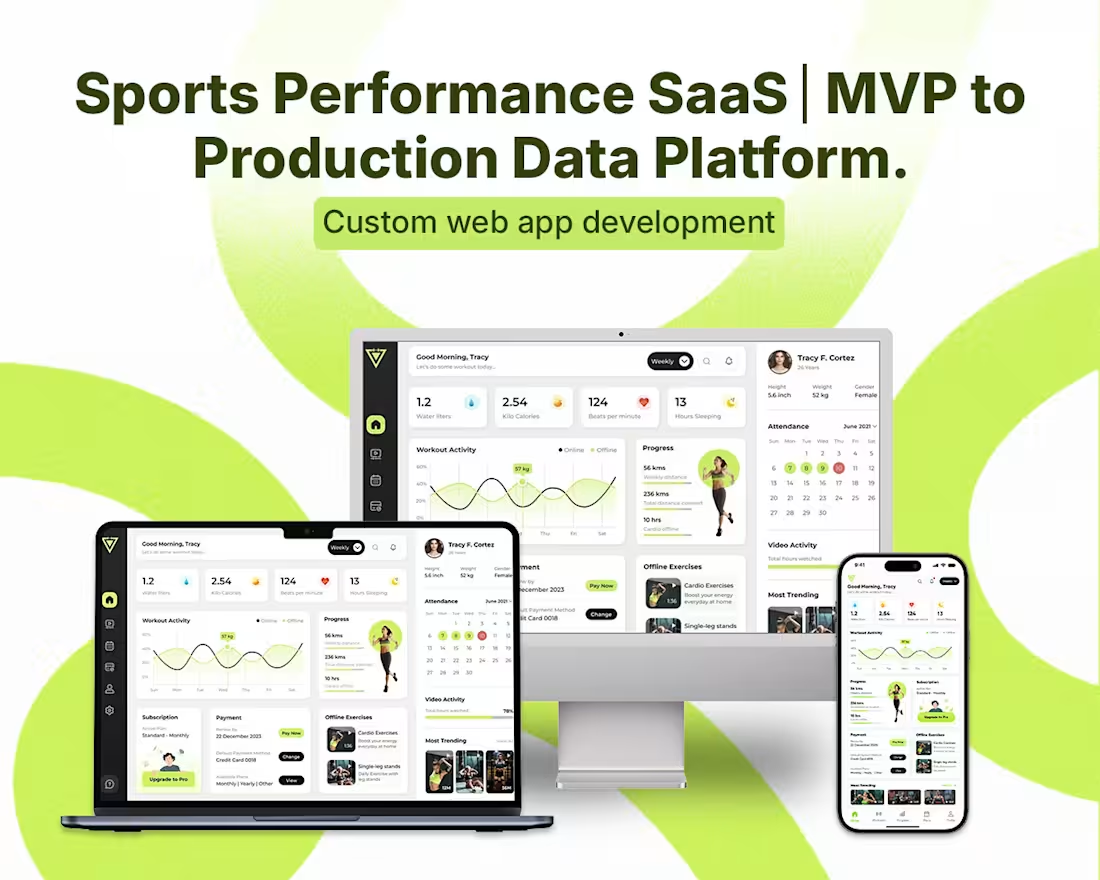
Athliq transformed a fragmented performance-monitoring workflow into a centralized platform.
Instead of moving between multiple browser tabs, spreadsheets, forms, and communication channels, performance teams could access their core athlete information through a unified dashboard.
The platform provided role-specific views, continuously updated performance information, historical context, and actionable signals from integrated data sources.
More importantly, it created a shared data layer for coaches, sport scientists, physiotherapists, and performance directors.
The product evolved from a concept-validation prototype into a production-ready performance intelligence platform.
What Made the Project Interesting
The biggest challenge wasn't simply building another analytics dashboard.
It was translating real-world sports performance workflows into reliable software infrastructure.
The original product concept came from someone deeply familiar with the domain. Our role was to preserve that domain knowledge while introducing the engineering foundations required for scalability, reliability, security, and live data processing.
The result was a system designed around the questions performance teams actually need answered—not simply around the data available to them.
Athliq Today
Athliq has evolved into a multi-role sports performance platform supporting professional and university-level performance environments.
The platform brings together data from multiple sources and transforms it into role-specific performance insights, giving teams a centralized environment for monitoring readiness, training load, recovery, and athlete progression.
From a coach's notebook and fragmented data sources to a scalable performance intelligence platform.
0
72
KovaRisk: Turning a Risk Monitoring Prototype Into a Production-Ready Fintech Platform
From Interactive Compliance Dashboard to Persistent Risk Intelligence System
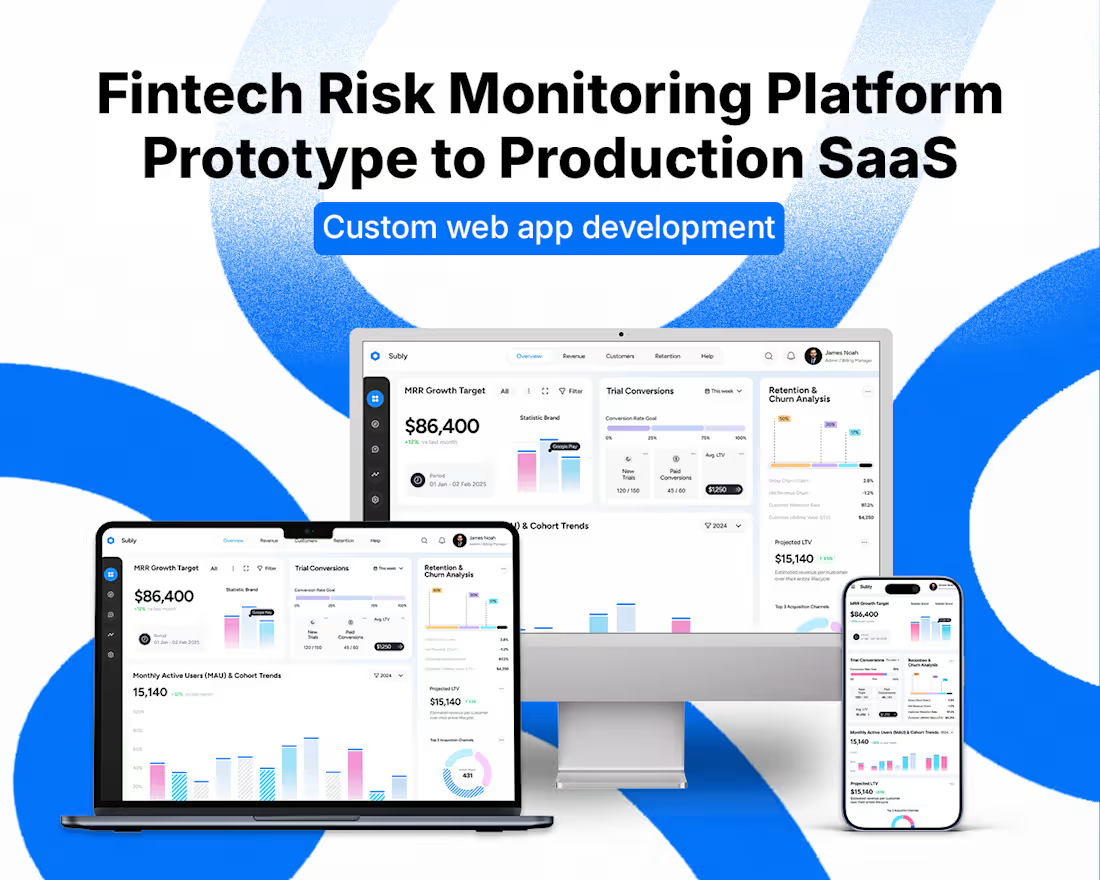
KovaRisk started with a clear goal: give compliance teams a centralized way to monitor financial risk, investigate alerts, manage rules, and maintain reliable audit records.
The original prototype already had a strong product foundation. It included:
Risk and alert monitoring dashboards
Filterable alert feeds
Entity-level risk profiles
Historical risk trends
Configurable monitoring rules
Investigation workflows
Audit activity
Scenario-based testing
The interface effectively demonstrated how a compliance team could interact with the product.
The challenge was that most of the underlying functionality was still simulated.
The Gap Between the Prototype and Production
The frontend represented a complete risk-management workflow, but much of its state existed only inside the browser.
Alerts were generated when the application started. Risk scores were simulated. Status changes were stored in component state, and audit events existed only in memory.
Refreshing the application could erase an investigation update, internal note, or rule configuration.
For a financial compliance platform, persistence isn't simply a technical requirement. Investigations, decisions, and user actions need to remain traceable and verifiable.
The next phase was therefore focused on building the system behind the interface.
Building the Production Foundation
Structured Data Architecture
We translated the prototype's workflows into a persistent relational data model using PostgreSQL.
The architecture introduced dedicated entities for:
Alerts
Financial entities
Monitoring rules
Risk-score history
Audit events
Internal investigation notes
Transactions
Relationships between these entities allowed actions performed through the interface to become durable records rather than temporary frontend state.
Rule versioning was also introduced so historical alerts could remain associated with the conditions that existed when they were generated.
Real-Time Alert Generation
The prototype initially generated a predefined set of alerts.
We replaced this behavior with a transaction-monitoring architecture capable of evaluating incoming transactions against active compliance rules.
The system could:
Evaluate transactions against configured rules
Calculate risk scores
Consider entity and jurisdiction risk
Identify threshold breaches
Create persistent alert records
Trigger notifications for high-risk events
Rule controls in the dashboard became connected to the actual monitoring engine.
Disabling a rule affected future evaluations rather than simply changing the appearance of a UI component.
Asynchronous Compliance Workflows
Several actions required more than a simple frontend state change.
We introduced background processing for operational workflows such as:
Alert Escalation
Escalating an alert could initiate notifications, create a corresponding case, and begin tracking the response timeline.
Scheduled Screening
Entities could be periodically screened against external sanctions data, with newly identified matches feeding back into the alert workflow.
Report Generation
Instead of exporting whatever happened to be loaded in the browser, reports were generated server-side from the current database state and made available once processing completed.
This created a more reliable separation between the user interface and the underlying business operations.
Building a Reliable Audit Trail
One of the most important parts of KovaRisk was transforming the audit interface from a simulated activity feed into a persistent record of system events.
Audit events were generated at the API layer whenever important state changes occurred.
Each event captured:
Authenticated user
Action performed
Target entity
Event type
Server-generated timestamp
Relevant activity context
The audit records were designed to be append-only, preventing normal application workflows from modifying historical events.
This gave compliance teams a much more dependable record of how alerts and investigations progressed.
Technology Stack
Frontend: React, Vite, React Router, Recharts, TanStack Query
Backend: Node.js, TypeScript, Fastify, Prisma
Database & Processing: PostgreSQL, Redis, BullMQ
Authentication: Passport.js, Express Session
Infrastructure: AWS ECS, Railway / Render, Amazon S3
Security & Monitoring: AWS Secrets Manager, Doppler, Sentry, Datadog
Integrations: OFAC / ComplyAdvantage, Refinitiv World-Check, SendGrid / SMTP, Webhooks
The Result
KovaRisk evolved from an interactive compliance prototype into a structured fintech risk-monitoring platform.
The interface remained focused on the workflows compliance teams needed, while the underlying architecture introduced:
Persistent data
Automated alert generation
Configurable rule processing
Background workflows
External screening integrations
Reliable report generation
Role-aware system operations
Persistent audit records
The key transformation wasn't adding more screens.
It was connecting every important interaction in the interface to a dependable backend process.
The prototype demonstrated how compliance teams should work. The production architecture made those workflows persistent, automated, and operationally reliable.
0
87
From Prototype to Production: Building a Scalable Credit Management Platform for Ad Operations
Transforming a Conceptual Ad-Credit System Into a Production-Ready Financial Operations Platform
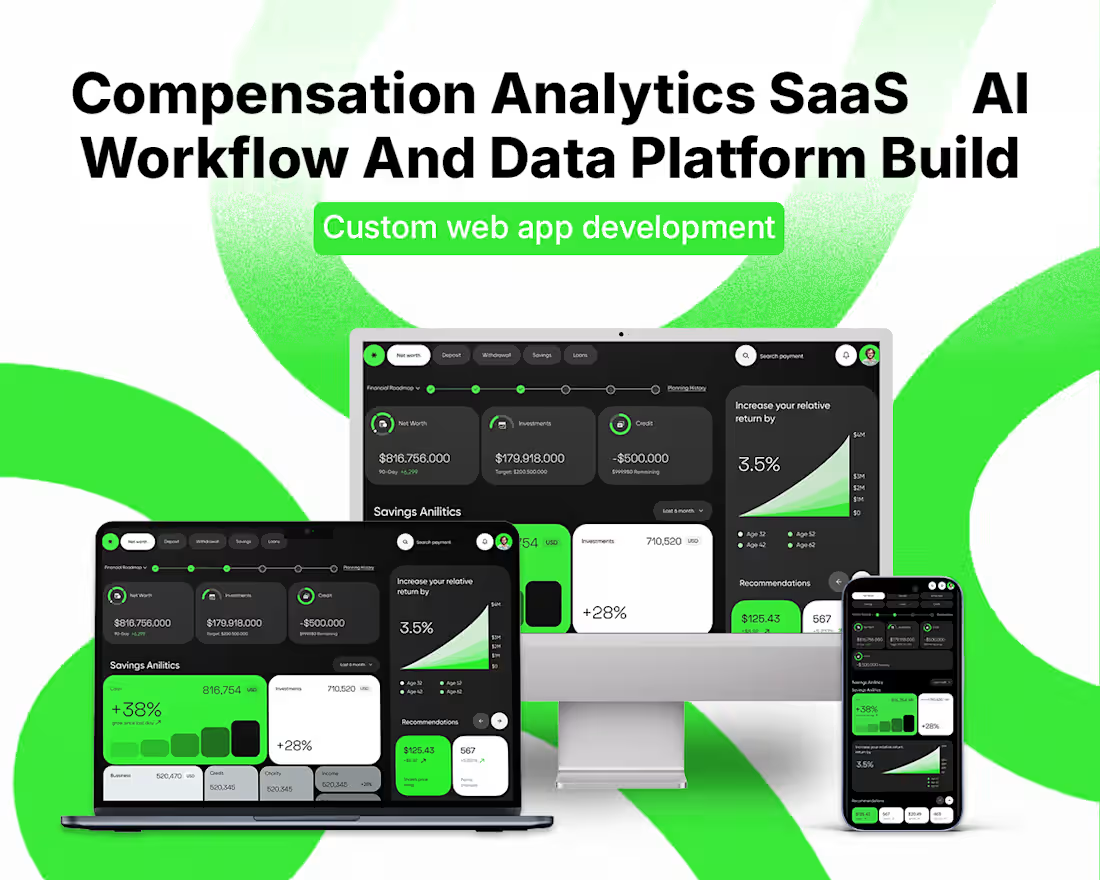
The platform was designed around a complex operational challenge: managing advertising credit, wallets, compliance, risk, and campaign activity across multiple clients and regions.
The original product concept came from deep experience in the ad-credit ecosystem. The workflow covered everything from wallet funding and regional allocations to KYB verification, transaction monitoring, campaign performance, and operational support.
A working React prototype had already demonstrated the core experience.
It included separate portals for clients and internal operations teams, with features such as:
Wallet and balance management
Ad account allocation
Top-up requests
Campaign performance dashboards
Compliance monitoring
Risk indicators
Operations work queues
AI-assisted support
Treasury management
The product vision was validated. The next challenge was creating the infrastructure required to operate it with real financial data.
From Mock Data to Real Infrastructure
The prototype relied heavily on simulated API responses and frontend state.
That worked well for demonstrating workflows, but financial operations require persistent data, transactional integrity, authentication, auditability, and controlled access.
We rebuilt the underlying architecture while preserving the validated frontend experience.
Financial Operations & Wallet Management
We introduced a transactional backend for core financial operations, including:
Wallet top-ups
Fund transfers
Regional wallet allocation
Ad account funding
Refunds
Balance reconciliation
A double-entry ledger provided a structured record of every movement of funds.
Transactions were designed with:
Atomic balance updates
Optimistic locking
Idempotent processing
Transaction history
Actor tracking
Before-and-after state records
Full auditability
Top-up requests were also converted into structured workflows covering submission, payment verification, approval, and balance crediting.
Compliance & KYB Management
The prototype represented compliance through simple status indicators.
We replaced those static states with a structured KYB lifecycle.
Documents could progress through stages such as:
Missing → Uploaded → Under Review → Verified → Expired
The system introduced rules governing each transition, along with:
Document expiration monitoring
Automated notification workflows
Identity verification integrations
Region-specific compliance requirements
Reviewer activity tracking
Compliance overrides
Audit history
Cases could also be routed to compliance agents according to factors such as workload, region, and verification requirements.
Risk & Anomaly Detection
Static risk indicators were replaced with a dedicated risk evaluation layer.
The platform could evaluate multiple signals, including:
Transaction velocity
Changes in spending behavior
P2P transfer patterns
Threshold breaches
Account activity
Compliance status
Dormancy indicators
Risk conditions could generate prioritized operational alerts with relevant context and recommended actions.
This connected the risk engine directly to the operations workflow rather than treating risk as a visual indicator inside the dashboard.
Operations Work Queue
The original work queue was primarily frontend-driven.
We transformed it into an event-based operations system.
Events from financial, compliance, and risk workflows could automatically create operational tasks.
The system supported:
Intelligent task assignment
Regional routing
Capacity-based allocation
SLA monitoring
Escalation workflows
Case history
Required-action validation
Resolution tracking
Every operational case could maintain a complete history of actions, notes, and status changes.
Multi-Tenant Architecture
The production system needed to support multiple client organizations while keeping their financial and compliance data isolated.
We introduced tenant-aware architecture across the data and API layers.
Each organization could maintain its own:
Wallets
Ad accounts
Transactions
Compliance records
Credit limits
Operational history
Role-based permissions separated client-facing functionality from internal administrative operations, while tenant-scoped API access helped prevent cross-organization data exposure.
Advertising Platform Integration
We also replaced simulated advertising metrics with a dedicated integration layer.
The architecture supported TikTok Ads through:
OAuth account authorization
Token refresh handling
Scheduled metric synchronization
Rate-limit awareness
Retry and backoff strategies
Pixel health monitoring
API failure handling
When an external platform became unavailable, the system could clearly identify stale information rather than presenting outdated metrics as current.
Observability & Infrastructure
Production financial systems require visibility across both technical and business operations.
We introduced:
Structured application logging
Transaction monitoring
Integration health checks
Queue monitoring
SLA alerts
Error tracking
Backend service dashboards
Synchronization monitoring
This gave operations teams visibility into both application health and business-critical events.
AI & Risk Intelligence
The platform also incorporated intelligent services into the broader architecture.
The risk layer was supported by a Python-based service and machine-learning pipeline, while an AI assistant provided a conversational interface for accessing relevant operational information.
The architecture included:
Python / FastAPI risk services
scikit-learn ML workflows
OpenAI-powered AI assistant
Pinecone vector storage
These capabilities were integrated into the broader platform rather than operating as isolated AI features.
Technology Stack
Backend: Node.js, NestJS
API: GraphQL
Authentication: Auth0
Database: PostgreSQL
Caching & Queues: Redis
Search: Elasticsearch
Cloud Infrastructure: AWS, ECS Fargate
CI/CD: GitHub Actions
Infrastructure as Code: Terraform
Payments: Stripe
Risk Engine: Python, FastAPI
Machine Learning: scikit-learn
AI: OpenAI GPT-4
Vector Database: Pinecone
The Outcome
The platform evolved from a prototype designed to demonstrate the concept into a production-oriented system capable of supporting real financial and operational workflows.
The transformation introduced:
Transaction-safe financial operations
Structured compliance workflows
Continuous risk evaluation
Event-driven operations management
Multi-tenant architecture
Live advertising integrations
Automated monitoring and alerts
AI-assisted operational intelligence
The original prototype had already established the product vision and user experience.
Our work focused on building the engineering foundation underneath it—turning simulated workflows into persistent, secure, scalable, and operationally reliable systems.
From an impressive prototype to a financial operations platform built for real-world complexity.
0
90
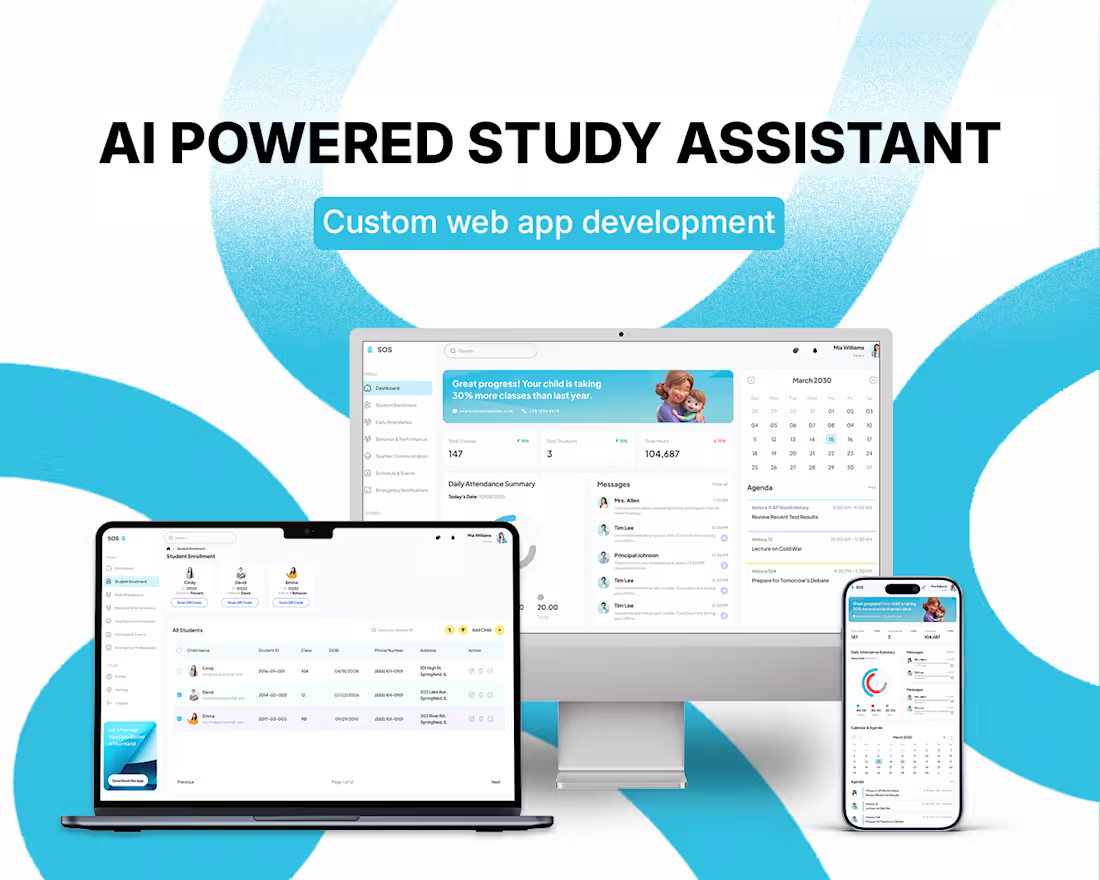
StudySpace — AI-Powered Study & Learning Platform
Transforming Course Materials Into Personalized, Exam-Ready Learning
StudySpace is an AI-powered learning platform designed to turn unstructured academic content into organized, personalized study resources.
Instead of manually working through lecture slides, textbooks, PDFs, and past examinations, students can upload their materials and use AI to transform them into an interactive learning environment.
The Challenge
Students often have plenty of study material but lack an efficient way to turn it into structured preparation.
Common challenges include:
Large volumes of disconnected course material
Passive note-reading instead of active recall
Difficulty identifying weak areas
Generic study tools that don't adapt to individual goals
Limited connection between generated study content and original source material
StudySpace was designed to bring these activities into one intelligent workspace.
AI-Powered Content Processing
Students can upload PDFs, lecture materials, textbooks, and previous exams.
The platform processes these documents through a multi-stage AI pipeline that identifies:
Topics
Concepts
Themes
Important sections
Exam-relevant information
The extracted knowledge then becomes the foundation for the student's personalized study environment.
Automated Study Material
StudySpace generates learning resources directly from uploaded content, including:
Condensed study notes
Spaced-repetition flashcards
Practice questions
Topic-based quizzes
Exam simulations
Generated content remains connected to the original material, allowing students to trace information back to its source.
Personalized Study Planning
The platform adapts the learning experience around each student's objectives.
During onboarding, students can define their:
Academic level
Learning goals
Exam date
Study preferences
Areas requiring additional attention
The system then builds a personalized study plan and adjusts recommendations as the student's progress changes.
Course Workspace
Each uploaded document becomes an interactive study environment.
Students can navigate through topics, review AI-generated notes, access source references, practice flashcards, and complete quizzes from a centralized workspace.
The interface brings the complete learning workflow into one structured experience rather than requiring students to switch between multiple study tools.
SpaceBot & Personalized Dashboard
StudySpace also includes an AI learning assistant designed to answer questions using the student's own uploaded materials.
SpaceBot can adapt its communication style based on the student's preference, including:
Friendly explanations
Formal academic responses
Socratic questioning
The dashboard provides an overview of the student's current learning activity, including:
Today's study sessions
Exam countdowns
Upcoming objectives
Weak topics
Progress indicators
What We Built
The final platform included:
AI-powered document processing
PDF upload and content extraction
Automated topic discovery
AI-generated notes
Flashcard generation
Adaptive quizzes
Personalized study planning
Source-level content attribution
Exam simulation
AI study assistant
Progress tracking
Personalized onboarding
The backend was designed around a multi-stage processing pipeline capable of handling document extraction, content generation, study planning, and adaptive review.
Results
The platform delivered measurable improvements across the study workflow:
90% reduction in time required to transform uploaded material into structured study resources
3× improvement in reported retention through flashcard and quiz engagement
100% source traceability for generated learning content
A centralized learning environment combining content processing, AI assistance, planning, and assessment
Technology Stack
Frontend: React, Vite, Tailwind CSS
Backend: FastAPI
Database: PostgreSQL
Processing: PyMuPDF, Celery, Redis
AI: OpenAI GPT-4o
Authentication: Clerk
Infrastructure: Docker
The Result
StudySpace turned static academic content into an interactive, personalized learning system.
Instead of simply giving students another place to store notes, the platform creates a workflow that moves from:
Upload → Understand → Organize → Practice → Track → Prepare
The result is an AI-powered study environment built around the student's own material, goals, and learning progress.
0
75