Freelance DevOps Engineers in Islamabad
Sign Up
Post a job
Sign Up
Log In
Filters
2
Projects
People
Usama Idrees
Islamabad, Pakistan
Enterprise Cloud · DevOps · AI/ML · Email · Marketing Expert
$10k+
Earned
13x
Hired
4.4
Rating
36
Followers
Follow
Message
Enterprise Cloud · DevOps · AI/ML · Email · Marketing Expert

$501 earned
2
IT/AI Infrastructure Support
2
45
30
I’m Usama Idrees, IT & AI Specialist based in Islamabad, Pakistan. Thrilled to be part of this amazing community and to connect with talented Professionals from around the world! 🚀 A little about me: What I do: I lead tech and product strategy, focusing on building innovative solutions that empower businesses and individuals. Passion: Creativity meets technology — I love turning ideas into impactful products. Looking for: Collaborations with designers, developers, and creative minds who want to build something extraordinary. Excited to learn, share, and grow together here. If you’re working on something cool or looking for a tech partner, let’s connect! 💡 What’s your current creative project? Drop it below — I’d love to check it out. 👇
2
30
694
1
Google Cloud Platform Optimization for Signal Research
1
32
$750 earned
2
Email Ticketing System Optimization with Trello + SendBoard
2
63
DevOps Engineer
(7)
Follow
Message
Rehmat Ali
pro
Islamabad, Pakistan
Full-Stack Technology, Cloud & Cybersecurity Solutions
5.0
Rating
3
Followers
Follow
Message
Full-Stack Technology, Cloud & Cybersecurity Solutions
0
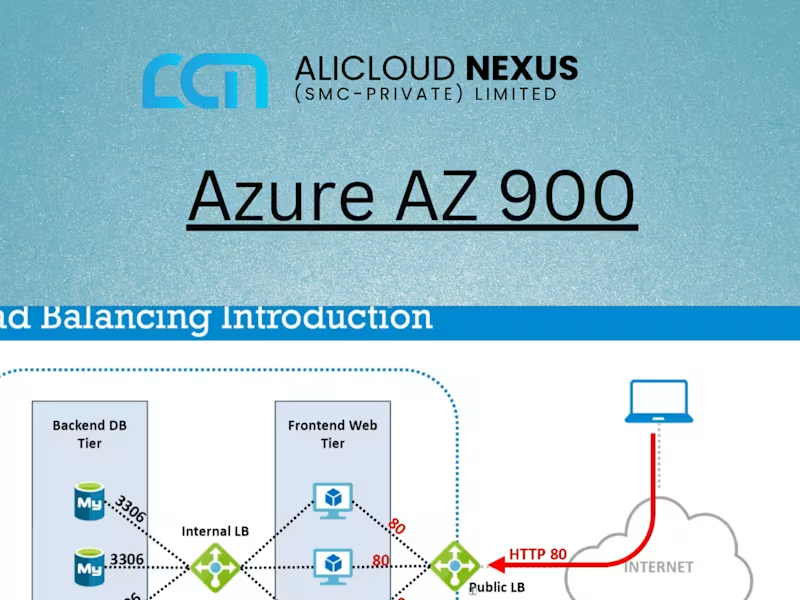
IT Instructor to make recorded lectures for Azure 900
0
35
0
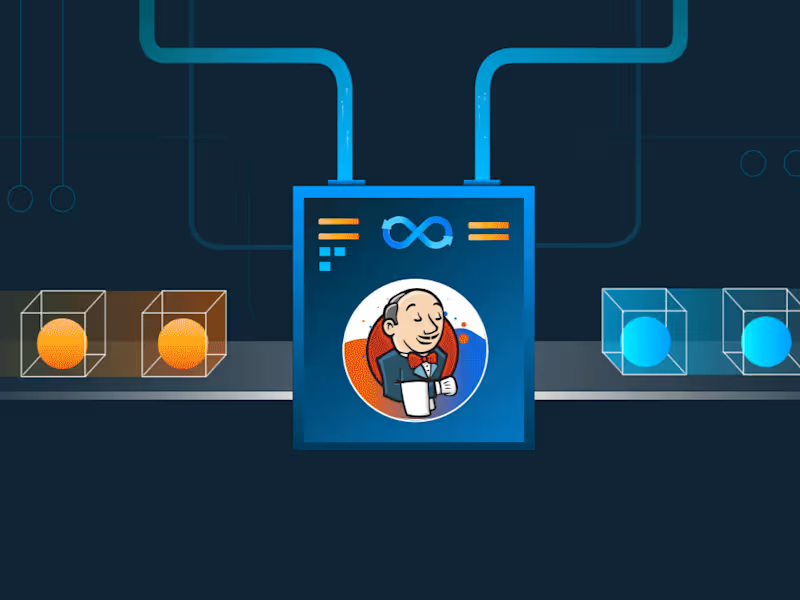
Design CI/CD and automated systems for website deployment.
0
23
0
Lambda Deployment with CICD using Terraform
0
52
1
Developement Projects , UXUI Designs of Web Apps & Mob Apps
1
135
DevOps Engineer
(3)
Follow
Message
Kamran Akhlaq
Islamabad, Pakistan
Web Developer Building Fast, Custom Websites & Tools.
New to Contra
Follow
Message
Web Developer Building Fast, Custom Websites & Tools.
0
CronShieldLabs.com (https://CronShieldLabs.com) - A SaaS Monitoring Platform I designed and developed CronShieldLabs.com as a lightweight SaaS platform that helps developers, agencies and online businesses detect silent failures across their digital services. The platform combines five monitoring functions within one secure dashboard: cron heartbeat monitoring, website uptime and response-time checks, SSL certificate tracking, domain-expiry monitoring and DNS-change detection. Users can create and manage monitors, review historical results and receive failure, recovery and expiry notifications. I developed the application using PHP, MySQL/MariaDB, HTML and CSS, with scheduled server-side processes handling automated checks. The architecture includes secure authentication, account-based data isolation, CSRF protection, prepared database queries, rate limiting and private configuration stored outside the public website directory. CronShieldLabs.com also includes Free, Pro and Business subscription plans, manual Binance Pay verification, an administrator dashboard, registered-user management and service limits based on each customer’s plan. A major technical consideration was securing website checks against private-network access and unsafe redirects. The platform validates public destinations, blocks private and reserved addresses and rechecks redirect targets before connecting. The project was designed as a cost-efficient shared-hosting MVP with a clear expansion path. Future opportunities include branded public status pages, API and keyword monitoring, Telegram and webhook alerts, team accounts, incident management, multi-location checks and automated subscription billing. CronShieldLabs.com demonstrates my ability to design a complete SaaS product from public marketing pages and secure authentication to database architecture, background monitoring processes, payment workflows and future commercial planning. Website: https://cronshieldlabs.com
0
41
0
MobileMartPK is a custom-built mobile discovery and price-comparison platform designed for the Pakistani market. I developed a responsive, SEO-friendly website where users can explore smartphones, compare prices and filter models by brand, budget, RAM and storage. The platform includes detailed product pages, brand listings, search functionality, blog content and a custom administration system for managing mobile data. Its lightweight interface delivers a fast and user-friendly experience across desktop and mobile devices.
0
56
0
AskTechDigital.com (http://AskTechDigital.com) is a lightweight technology platform combining two complementary services: an automated technology-news discovery feed and a collection of practical browser-based utilities. The news section organizes current developments across software, artificial intelligence, cybersecurity, consumer technology, cloud services and digital products. Its automated workflow helps identify and organize relevant technology stories while preserving source attribution and directing readers to the original publisher for complete coverage. The second major component is the Web Utilities Directory. It provides fast, tracking-free tools that run primarily inside the visitor’s browser, reducing unnecessary server processing and helping protect user data. The utility collection includes text-processing tools, word and character counters, case conversion, JSON formatting and validation, Base64 encoding, URL encoding, password generation, QR-code creation, UUID generation, barcode generation, calculators, measurement converters and frontend-code utilities. The platform was developed with a lightweight PHP and JavaScript architecture suitable for standard hosting. Its modular structure allows additional utilities, content categories and automation workflows to be introduced without rebuilding the entire website. Responsive layouts provide a consistent experience across desktop, tablet and mobile devices. Technical SEO was incorporated through descriptive page titles, metadata, canonical URLs, internal linking, crawlable tool descriptions and sitemap-based discovery. Performance improvements include deferred functionality, efficient asset loading, browser-side processing and reduced dependency on heavy frameworks. The monetization structure also supports carefully placed affiliate recommendations inside relevant commercial content. Affiliate destinations are separated from general editorial navigation and accompanied by appropriate disclosure, helping preserve transparency and user trust. AskTechDigital.com has the potential to expand into a broader technology decision and productivity platform. Future services could include software-comparison pages, AI-tool directories, hosting comparisons, saved utility histories, user accounts, embeddable tools, API access and premium business utilities. The result is a scalable digital platform that attracts visitors through timely technology discovery while giving them practical reasons to return through its expanding collection of free web tools.
0
21
0
HowToDocument.com (http://HowToDocument.com) is a technical knowledge platform designed to make practical engineering solutions easier to discover, understand and reuse. Instead of publishing long, theory-heavy tutorials, the website organizes focused code blueprints covering PHP, Python, DevOps, server configuration, application security, data engineering and frontend performance. The platform combines a searchable blueprint catalogue with category filtering, individual documentation pages and community features. Registered users can interact with published solutions through upvotes and technical notes, helping useful implementations become easier to identify. A key component of the project is the browser-based Code Playground. It allows developers to write and preview HTML, CSS and JavaScript without installing a development environment. The playground includes separate editing tabs, automatic preview, console output, browser-based autosaving, code copying, reset controls and downloadable project output. The website was developed around a lightweight architecture intended to remain practical on standard hosting. The interface uses responsive layouts and reusable components to provide a consistent experience across desktop and mobile devices. Content is structured so that new blueprints and technical categories can be added without redesigning the platform. Search discoverability was treated as an important part of the architecture. Blueprint pages support focused titles and descriptions, internal category linking, crawlable content and sitemap-driven discovery. Performance work includes controlled asset loading, efficient frontend code and an interface that avoids unnecessary framework overhead. HowToDocument.com has strong expansion potential. Future development can introduce contributor profiles, blueprint collections, verified solutions, saved favourites, advanced code search, downloadable project bundles and premium implementation guides. The platform could eventually support subscriptions, sponsored technical content, expert reviews and a marketplace connecting businesses with developers capable of implementing the published solutions. The result is more than a documentation website it is the foundation of a community-driven technical blueprint library and practical developer toolkit.
0
27
DevOps Engineer
(2)
Follow
Message
Danyal Rashid
Islamabad, Pakistan
DevOops, Backend & SaaS Solutions
Follow
Message
DevOops, Backend & SaaS Solutions
0
DevOps Engineer
0
11
0
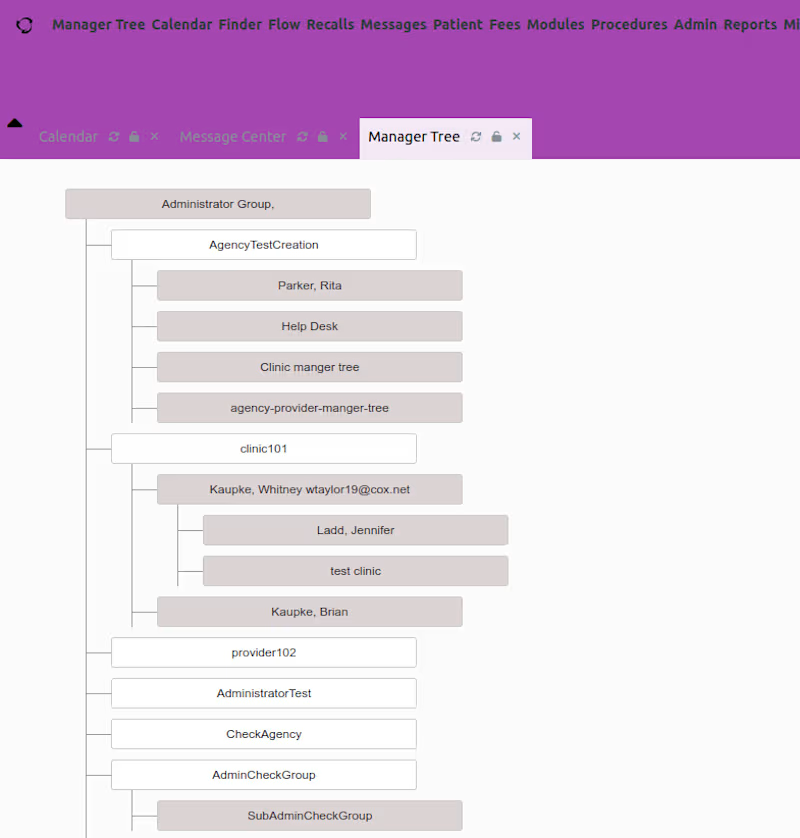
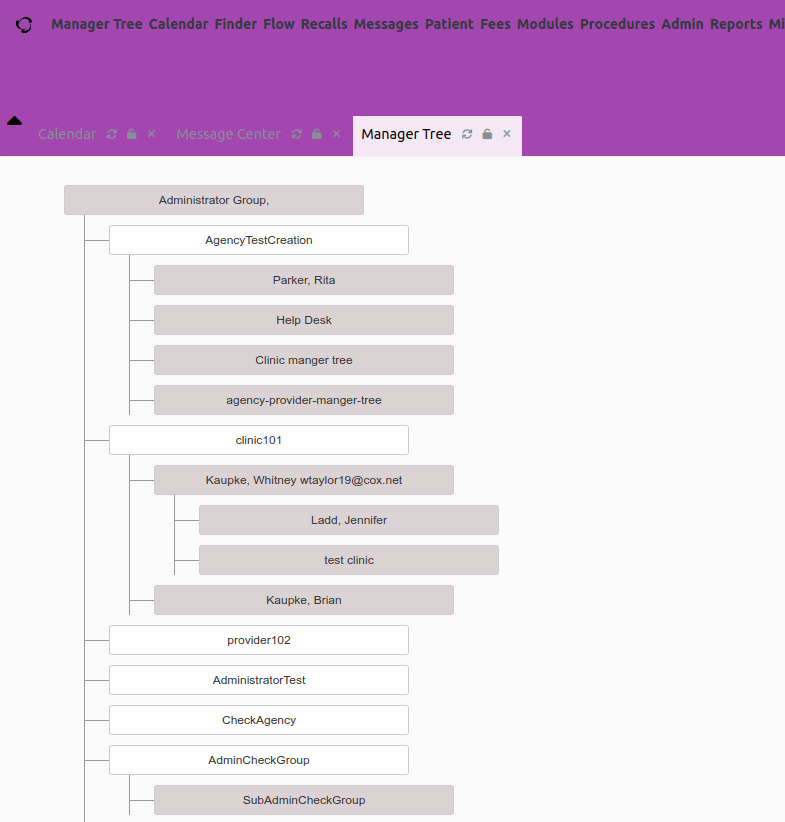
OpenEMR Manager Tree Module
0
13
0
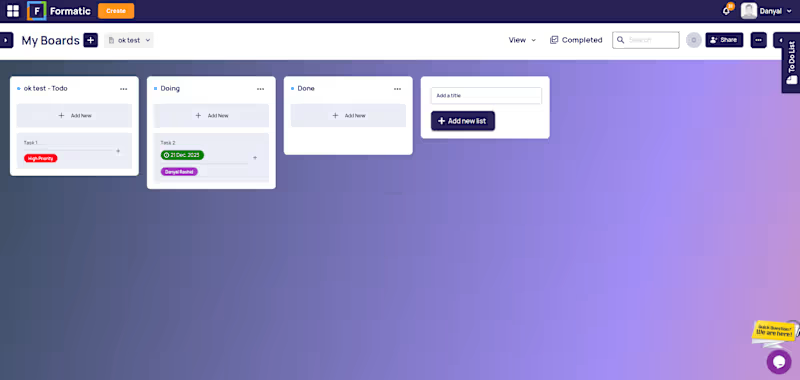
MyFormatic
0
23
View more →
DevOps Engineer
(3)
Follow
Message
Ghayas Ud Din
Islamabad, Pakistan
SaaS MVP Developer for Startups | MERN & Next.js
Follow
Message
SaaS MVP Developer for Startups | MERN & Next.js
1
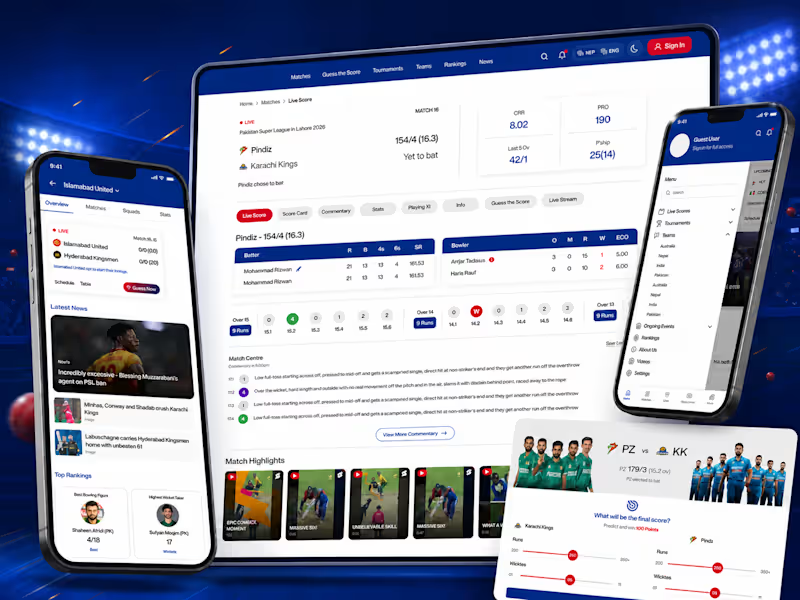
Cricket Live Updates Platform Development
1
5
1
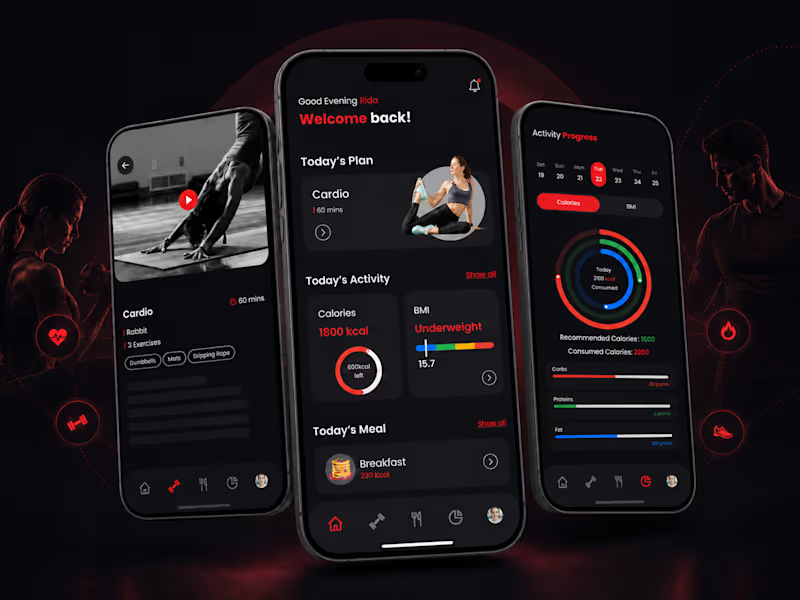
Mobile Fitness App Development
1
9
1
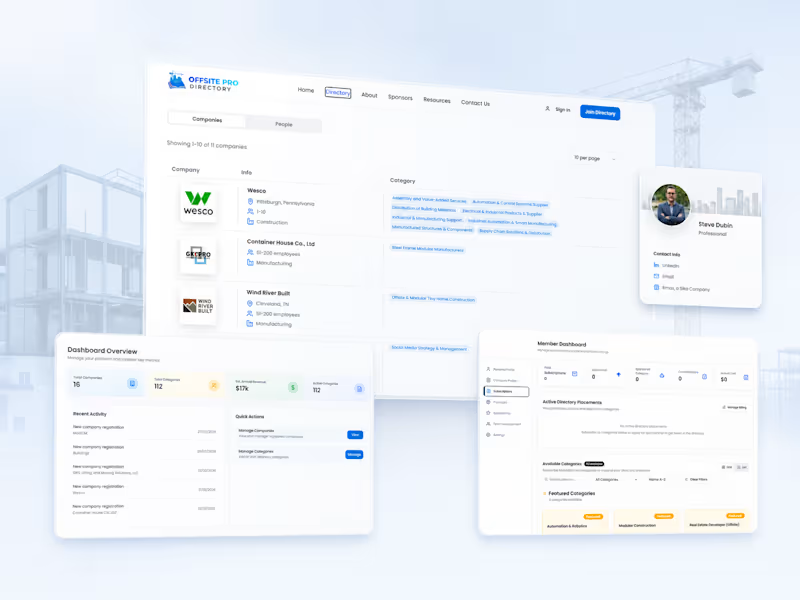
Directory Administration System
1
11
1
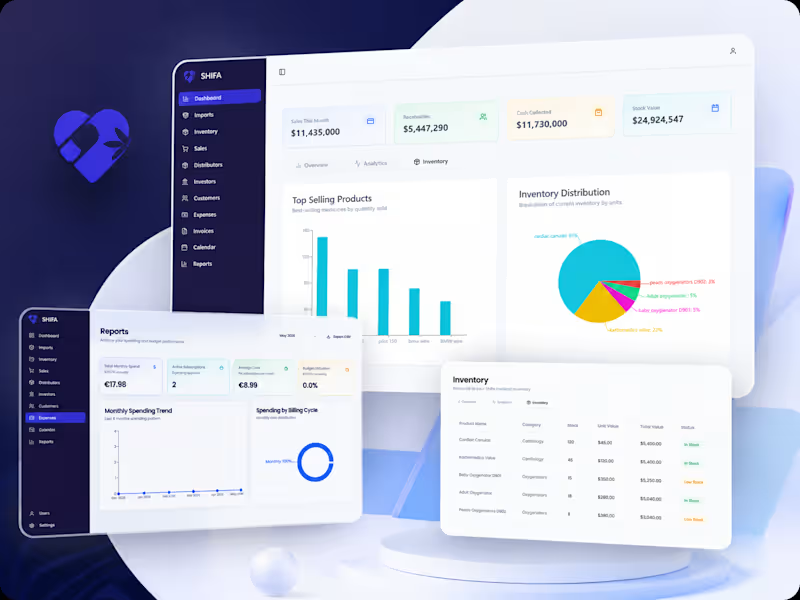
Pharmaceutical Operations Management Platform
1
10
DevOps Engineer
(3)
Follow
Message
Mohammad Ayaz
Islamabad, Pakistan
Software Engineer
Follow
Message
Software Engineer
0
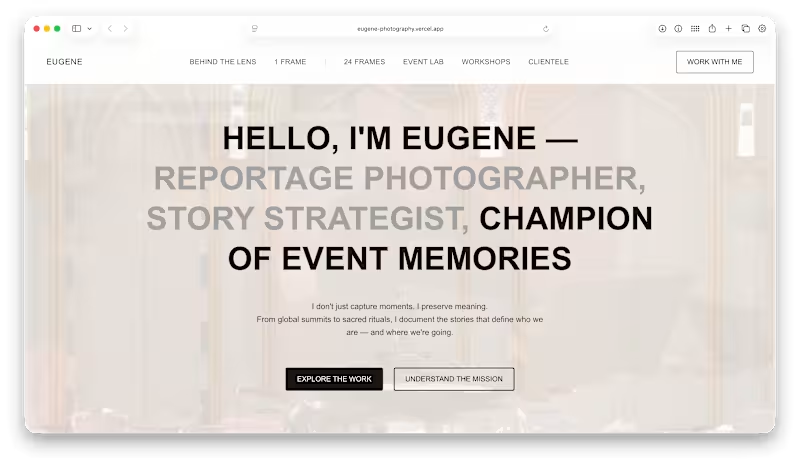
Eugene Photography – Portfolio Photography Website Developed a modern and visually engaging photography portfolio website for Eugene using Next.js, focused on showcasing photography work with a clean, elegant, and responsive design. The website was built to deliver a smooth browsing experience while highlighting high-quality visual content and professional branding. Key highlights of the project include: • Responsive and premium portfolio design • Optimized image loading and performance • Modern UI/UX for photography presentation • SEO-friendly Next.js architecture • Fast and scalable deployment on Vercel • Smooth navigation and mobile-friendly experience The project was successfully deployed on Vercel with performance optimization and scalable frontend architecture. Live URL: https://eugene-photography.vercel.app
0
14
0
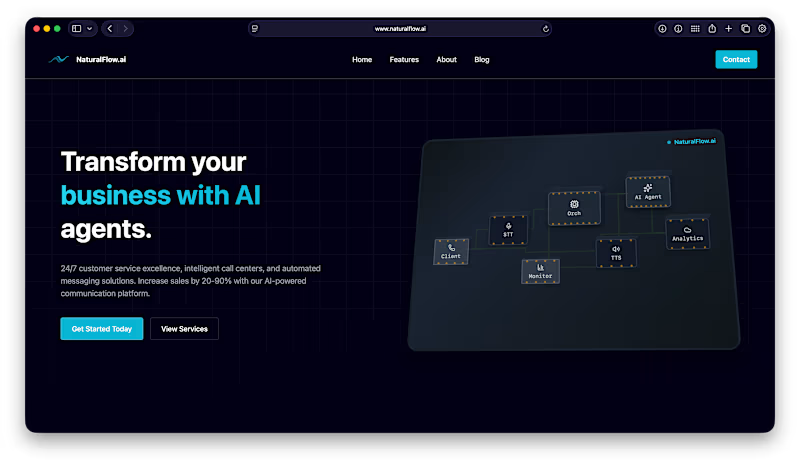
NaturalFlow.ai (https://www.naturalflow.ai) – AI Product Website Development Developed a modern and responsive company product website for NaturalFlow.ai (https://www.naturalflow.ai) using Next.js with a strong focus on performance, scalability, SEO optimization, and premium user experience. The website was designed to effectively showcase the company’s AI-powered product offerings with a clean and professional interface. Key highlights of the project include: • Responsive and modern UI/UX design • High-performance frontend built with Next.js • SEO-friendly architecture and optimization • Fast deployment and hosting on Vercel • Optimized loading speed and smooth navigation • Scalable and maintainable codebase The project was successfully deployed on Vercel with seamless production integration and performance optimization. Live URL: https://www.naturalflow.ai
0
22
0
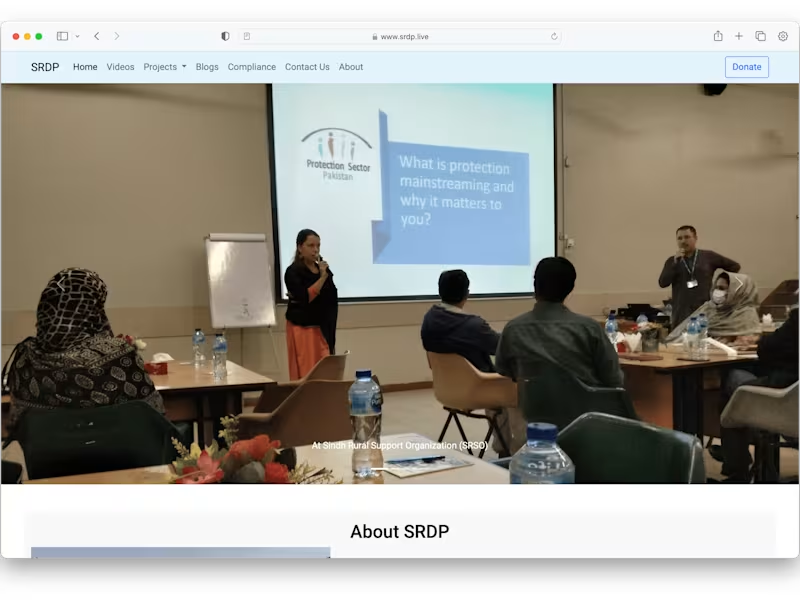
Sahara Rural Development Program
0
19
0
Portfolio Website
0
13
DevOps Engineer
(2)
Follow
Message
Vector xdev
Islamabad, Pakistan
AI Software Engineer | Building Production AI SaaS |AI Agent
$1k+
Earned
57x
Hired
4.9
Rating
11
Followers
Expert
Follow
Message
AI Software Engineer | Building Production AI SaaS |AI Agent
0
FoodShop.ai Meal Planning Features Development
0
94
1
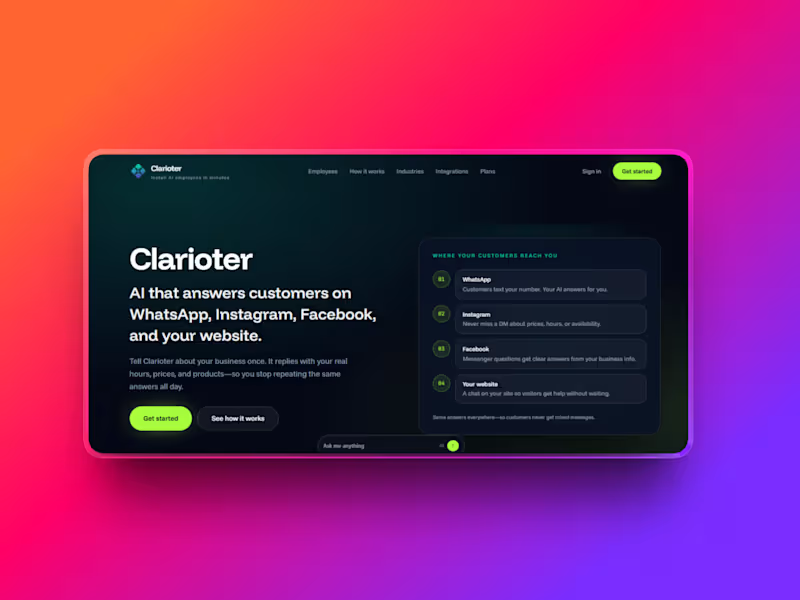
Introducing Clarioter! Customers message you on WhatsApp, Instagram, Facebook, and your website. You reply to maybe one of those in real time. Clarioter is one AI that answers all of them
2
1
62
2
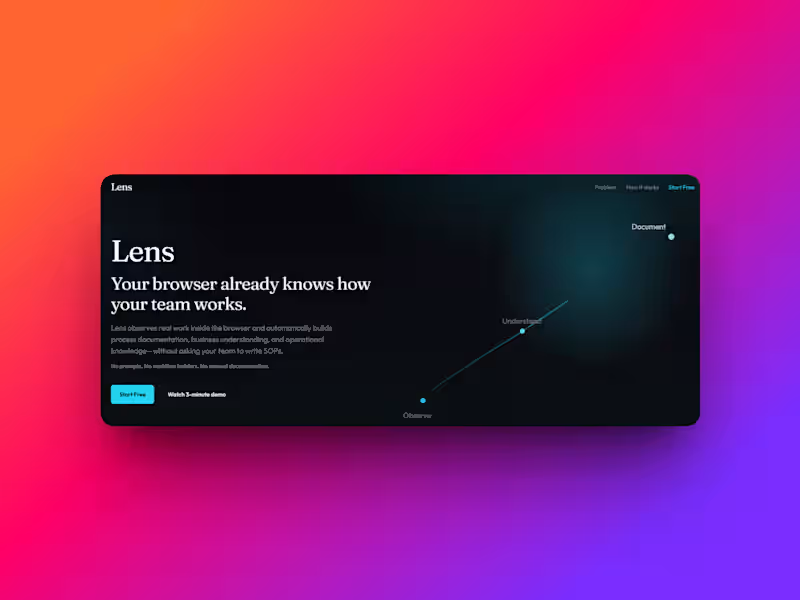
Most AI agents start with a prompt. What if they started with understanding instead? A browser session already contains how work actually gets done: the pages opened the decisions made the information copied the context behind every action Instead of asking people to document workflows or build automations first, imagine software that observes work, understands the business process, identifies gaps, and generates living documentation automatically. Automation comes later. Understanding comes first.
2
61
0
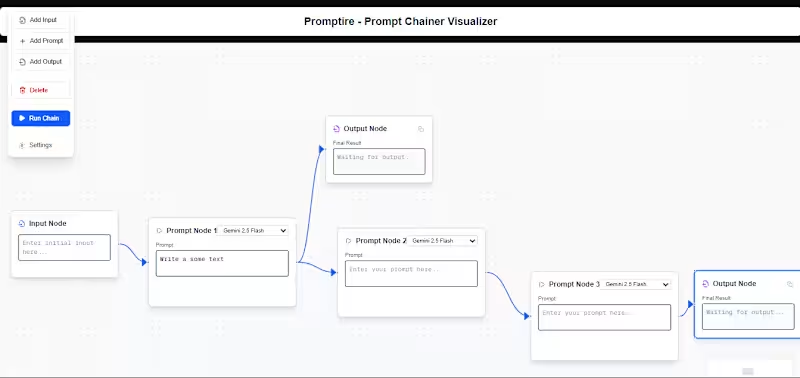
It’s a tool for developers or power users who want to design sophisticated, multi-step AI interactions through a visual flow chart interface.
0
47
DevOps Engineer
(1)
Follow
Message
Muhammad Saifullah
Islamabad, Pakistan
Flutter Developer | AI & Web Solution | AD Designer
9
Followers
Follow
Message
Flutter Developer | AI & Web Solution | AD Designer
0
🖤 Velaro — Technical Architecture 🔗 Live Website https://saif-velaro-clothing-brand.netlify.app 📌 Overview Velaro is a single-page application (SPA) for a fashion/clothing brand, built with React + TypeScript, bundled by Vite, and styled with Tailwind CSS. The entire UI renders on one HTML page and updates dynamically as the user scrolls, searches, or interacts with the cart — no full page reloads. The architecture follows a standard modern frontend pattern: a single entry point boots the app, a root App component composes independent section components, and a global context manages shared state (the shopping cart) across all of them. ⚙️ Build & Tooling Layer These files configure how the project compiles, lints, and runs — they aren't part of the visible website, but control everything behind it. vite.config.ts — Configures Vite, the build tool/dev server. Defines how .tsx/.ts files are compiled, how the dev server runs (npm run dev), and how the production bundle is generated (npm run build). tsconfig.json — Root TypeScript config — points to the two more specific configs below via project references. tsconfig.app (http://tsconfig.app).json — TypeScript rules specifically for the application code in src/ (JSX handling, module resolution, strictness, the @/ path alias). tsconfig.node.json — TypeScript rules for Node-context files (like vite.config.ts itself), since those run outside the browser. tailwind.config.js — Configures Tailwind CSS — defines the design system (colors, spacing, fonts) and which files Tailwind scans to generate only the CSS classes actually used. postcss.config.js — Configures PostCSS, the tool that processes Tailwind's output and applies vendor prefixing/optimization during build. eslint.config.js — Defines linting rules — catches code-quality issues, unused variables, and React/TypeScript best-practice violations during development. package.json — Lists all dependencies (React, Vite, Tailwind, etc.) and defines the npm scripts (dev, build, preview). package-lock.json — Locks exact dependency versions so the build is reproducible across machines. .gitignore — Tells Git which files/folders to exclude from version control (e.g. node_modules, dist). index.html — The single real HTML file. Contains a root <div> that React mounts into — everything else is injected by JavaScript. dist/ — Auto-generated production build output (plain HTML/CSS/JS) created by npm run build. This is the folder actually deployed to Netlify. node_modules/ — Auto-generated folder holding all installed dependencies (created by npm install, never edited manually). 🚪 Application Entry & Root src/main.tsx — The true entry point of the app. Imports React, imports App.tsx, and mounts it into the <div> inside index.html. This is the first application code that runs. src/App.tsx — The root component. Doesn't contain page content itself — instead it imports and arranges every section component (Navbar, Hero, About, etc.) in order, and wraps everything in the CartProvider so cart state is available app-wide. src/index.css — Global stylesheet — imports Tailwind's base/utility layers, applied once at the root so every component can use Tailwind classes. src/vite-env.d.ts — TypeScript type declarations for Vite-specific features (like importing images/CSS as modules) — lets TypeScript understand syntax that isn't standard JavaScript. 🛒 State Management src/cart.tsx — Implements the CartProvider, a React Context that holds global cart state (items, quantities, totals) and exposes functions to add/remove items. Any component wrapped inside it (via App.tsx) can read or update the cart without prop-drilling. src/data.ts — Static data module — likely product listings, collection info, or other content consumed by components like FeaturedCollection and Showcase, kept separate from UI logic. 🧱 Component Layer (src/components/) Each file is a self-contained, single-responsibility UI section. App.tsx stacks them vertically to form the full page. Navbar.tsx — Persistent top navigation — branding, menu links, and likely triggers for search/cart. Hero.tsx — The primary landing banner — headline, tagline, and call-to-action (e.g. "Shop Collection"). HeroCanvas.tsx — A visual/animated layer paired with Hero.tsx — likely a canvas-based or decorative background effect behind the hero text. FeaturedCollection.tsx — Renders a curated set of products, pulling structured data from data.ts. About.tsx — Brand-story section — static content describing the label's identity. Lookbook.tsx — A style/editorial gallery — visually presents outfits or campaign imagery. Showcase.tsx — An additional highlight section, likely for a specific collection, drop, or promotional content. Testimonials.tsx — Displays customer reviews/social proof. Newsletter.tsx — Email capture form/section for marketing signups. SearchOverlay.tsx — A modal/overlay component for in-site product search, toggled from the Navbar. CartDrawer.tsx — A slide-out panel UI that reads from the CartProvider (cart.tsx) to display current cart items and totals. Footer.tsx — Bottom-of-page section — links, contact details, social icons. 🔄 How It All Connects (Data Flow) The browser loads index.html, which pulls in the compiled JS bundle. main.tsx runs first and mounts App.tsx into the page. App.tsx wraps all sections in CartProvider, so cart state is shared without passing props down manually through every component. Each section component renders independently — some are purely static/presentational (About, Footer), while others are interactive and tied into shared state (CartDrawer, SearchOverlay). Tailwind classes used throughout every component are compiled once into index.css based on what's scanned via tailwind.config.js. On npm run build, Vite compiles and bundles all of this into optimized static files inside dist/ — which is what gets deployed to Netlify and served to visitors. 🧠 Why This Structure Works Separation of concerns — each component owns one visual section; layout composition happens only in App.tsx. Centralized state — cart logic lives in one file (cart.tsx) instead of being duplicated across components. Data/UI separation — data.ts keeps content separate from rendering logic, making it easy to update products without touching component code. Type safety — TypeScript configs enforce consistent typing across the whole src/ folder, catching errors before runtime. Optimized output — the dev-only tooling (Vite, Tailwind, ESLint, TS configs) never ships to production; only the final compiled dist/ bundle is deployed.
0
8
0
StreamPro — Brand Website for a Live Event Broadcasting Studio Live Website: saif-stream-pro-website.netlify.app (http://saif-stream-pro-website.netlify.app) What I built😍 A fully responsive, mobile and web based single-page marketing website for StreamPro, a Brisbane-based live-streaming production studio that broadcasts memorial services, weddings, sports events, and community occasions. The site was designed and developed from scratch to establish a premium, trustworthy brand presence and convert visitors into booking inquiries — working seamlessly whether accessed from a phone, tablet, or desktop. What it does🙌 The website guides visitors through a structured narrative — introducing the brand, building credibility, showcasing services, explaining the booking process, displaying social proof, and closing with a direct contact/quote form. It's built to load fast, adapt fluidly across mobile and web based environments, and feel as polished and reliable as the broadcast service it's selling. Core concepts & techniques applied💯 Semantic document structure — content organized into meaningful, accessible sections rather than generic divs, improving both SEO and screen-reader usability. Design system / design tokens — a centralized set of reusable variables (colors, gradients, typography, spacing) so the entire visual identity stays consistent and can be updated globally from one place. Responsive, mobile-first layout design — fluid grids and breakpoints so the layout adapts smoothly across mobile and web based screens without needing separate versions. Scroll-based interactivity — dynamic navbar states, scrollspy navigation (highlighting the active section as the user scrolls), and progressive scroll-reveal animations for content. DOM manipulation & event handling — mobile menu toggling, animated statistic counters, and form interaction logic, all built with vanilla JavaScript (no frameworks). Accessibility considerations — visible focus states, reduced-motion support for users sensitive to animation, and descriptive alt text on all imagery. Brand identity integration — a custom 3D gradient logo mark and supporting visual graphics applied consistently across the navigation, hero section, and footer to reinforce brand recognition. Conversion-focused UX — strategic placement of trust signals (stats, testimonials, direct phone contact) and a structured lead-capture form to turn visitors into inquiries. Outcome🚀 A performant, framework-free static website that's lightweight, cheap to host, easy to maintain, fully mobile and web based responsive, and built entirely around fundamental web development principles — structure, styling systems, interactivity, accessibility, and conversion design.
0
23
1
📐 BRAND STRATEGY — CASE STUDY ⚙️ Koia Objects: Making the Photography Match the Positioning Goal: Closing the gap between what Koia Objects makes and how it is seen — using photography as the proving ground for the brand's design logic. 📸✨ 1. 🎯 The Brief Koia Objects is a Swedish stainless steel tableware and serving brand, two years in, with a design sensibility that sits deliberately between two traditions: 🏛️ Bauhaus Rationalism (Mies van der Rohe): Form follows function & industrial precision. 🌿 Nordic Warmth (Alvar Aalto): Human-centric design that keeps precision warm rather than cold. 💰 The Positioning: Accessible Premium — not luxury, not budget, but a fair price for genuine material quality and craftsmanship. ⚡ The Challenge: This positioning has to be felt, not stated. It must be built into every decision the brand makes, starting with how the product is photographed. 2. 🔍 The Diagnosis Most young premium tableware brands drift into one of two failure modes: 🚫 The Catalog Trap (Current State): Flat white backgrounds, even front-on lighting, centered objects. It looks like a cheap e-commerce listing and flattens the way light moves across brushed steel. 🚫 The Overcorrection (To Avoid): Dark moody backdrops, heavy gold rim-lighting, and fake luxury marble. It looks like an imitation of luxury watch ads and ignores both Bauhaus and Nordic roots. 💡 The Fix: Build a third direction grounded in Koia’s true design lineage rather than borrowed conventions. 3. ⚖️ The Design Logic Translating "Bauhaus Rationalism + Nordic Warmth" into 5 concrete photographic principles: 🏷️ Principle🖼️, What It Means in a Photograph🛠️ Function, Visible Show the object doing its job (pouring, serving, being held). Function is the whole premise.✨ Material Honesty Real ,directional light on real steel. Let reflections show weight and precision without over-retouching.🪵 Restraint in Styling Few, purposeful props (raw wood, linen, stone). Nothing on set unless it earns its place.☀️ Warm Directional Light .Soft daylight or a single warm key light instead of flat, cold studio flashes.🏡 Grounded Negative Space, Generous breathing room on a real surface (table, hand, counter) — never a void. 4. 🎬 The Direction, Made Concrete 📋 Shot List 🖼️ Hero Shot: The object alone on a real surface (oiled wood, honed stone) with soft single-direction daylight. 💧 In-Use Shot: The object mid-function (pouring water, serving food, lifted by a hand). 🔍 Material Macro: A tight crop on an edge, weld line, or brushed surface to prove craftsmanship. 🍽️ Grounded Flat Lay: The product with 2–3 purposeful props (linen, raw ceramic, cut citrus) and generous breathing room. 5. 🔄 Before / After — Case Study 🏺 Object: Stainless Steel Serving Pitcher ❌ BEFORE (Catalog Default): Shot dead-on against a white seamless background with flat lighting. The steel looks flat, generic, and cheap. ✅ AFTER (Koia Direction): Shot at a slight angle on an oiled walnut counter, lit by soft side daylight. Highlights catch the spout, shadows add depth, and water is captured mid-pour into a glass. 🌟 Why It Works: Highlights prove the metalwork quality, the pour proves function, and the warm wood adds Nordic cozy vibes without clutter! 6. 📈 Why This Matters Commercially 🏷️ Shifts Value Perception: Replaces price comparison with craftsmanship appreciation ("This is clearly better made"). 📦 Scalable Framework: The 5 principles extend directly to packaging, website UI, and social content as the brand scales. Prepared as an example project — Koia Objects Brand Strategy Engagement. 🚀
1
53
1
Synapse — Designing an AI Assistant People Actually Want to Open A personal case study on building an AI-powered product, from idea to interface What This Project Is Synapse is a concept landing page for an AI-powered assistant app — the kind of tool that can chat with you, write content, help with code, generate images, and even listen through voice mode. Think of it as one AI brain that switches roles depending on what you need that day: writer, designer, developer, or thinking partner. I didn't build the actual AI behind it (that needs a real backend and a language model). What I built is the front door — the website that would greet a new user, explain what the product does, and convince them to try it. It's coded by hand using HTML, CSS, and JavaScript, and it's designed to feel like a real, funded, 2026-era AI startup — not a template. Why I Made It AI products are one of the most in-demand niches for designers and developers right now. Every week, a new AI tool launches, and every one of them needs the same three things: a website that explains it, an interface that's easy to trust, and a visual identity that doesn't look like everyone else's chatbot page. I built Synapse for three reasons: To learn by doing. Reading about animations and 3D CSS is one thing — actually building a rotating 3D orb, scroll reveals, and a typewriter chat demo forced me to understand how these effects really work under the hood. To build a strong portfolio piece. Clients hiring for AI-product design want to see that you can design for AI — chat interfaces, live-typing states, "thinking" animations — not just static pages. To practice going from brief to finished product, the same way a real freelance or agency project would run: picking a name, a color story, a tone of voice, and carrying it consistently across every section. What's Inside Section Purpose Hero Introduces Synapse in one glance — headline, floating 3D orb, live chat bubbles Marquee strip Builds trust by showing "who uses it" Stats Numbers that count up on scroll, for quick credibility Features grid Explains the 6 things Synapse can do How it works A simple 3-step flow: ask → Synapse reasons → get result Live demo A fake but realistic chat window that types out an answer, showing how the product feels in use Voices (testimonials) Social proof from "users," scrolling infinitely CTA band The final push to get someone to try the product Footer Quick links and closing brand mark Skills I Practiced UI/UX design thinking — deciding what a first-time visitor needs to see first, second, and last Visual design & branding — building a color palette (violet, cyan, magenta, amber) and pairing three fonts (Space Grotesk, Inter, JetBrains Mono) that feel techy but warm Responsive layout — making sure the page holds up on mobile, tablet, and desktop Motion & interaction design — deciding where animation adds meaning (a "thinking" AI deserves movement) instead of adding effects just because I could Front-end development — writing real, working HTML/CSS/JS instead of just designing static mockups Copywriting — writing headlines and feature text that sound like a real product, not placeholder "Lorem ipsum" text Problem-solving / debugging — like the navigation bug we just fixed, which taught me how a small JavaScript mistake can break a whole page's usability Tools Used HTML5 / CSS3 — structure and all visual styling, including 3D transforms and keyframe animations Vanilla JavaScript — scroll reveals, cursor glow, orb parallax, counters, typewriter effect, mobile menu Google Fonts — Space Grotesk, Inter, JetBrains Mono Unsplash — free stock photography for avatars and testimonial faces What I'll Build On Next (Future Contributions) This version is the front door only. Here's where it can grow: A working chat interface — connect it to a real AI API so the "demo" becomes a real conversation A pricing page — since every SaaS/AI product needs a clear plan comparison A dashboard / product screens — the inside of the app, not just the marketing page Dark/light mode toggle — a common expectation in 2026 products Accessibility pass — screen reader labels, better color contrast checks, keyboard navigation testing Case study presentation — turning this into a polished Behance/Dribbble post with before/after and process shots Closing Thoughts Synapse started as a way to practice one skill — building an AI-product landing page — but it ended up teaching me design decisions, real front-end code, and debugging, all in one project. Link to see my whole project: https://saifullah-ai-assistant.netlify.app
2
1
81
DevOps Engineer
(1)
Follow
Message
Explore people