
Abdur Rehman
DevOps | DevSecOps | MLOps | Multi-Cloud Infrastructure
New to Contra
Abdur is ready for their next project!


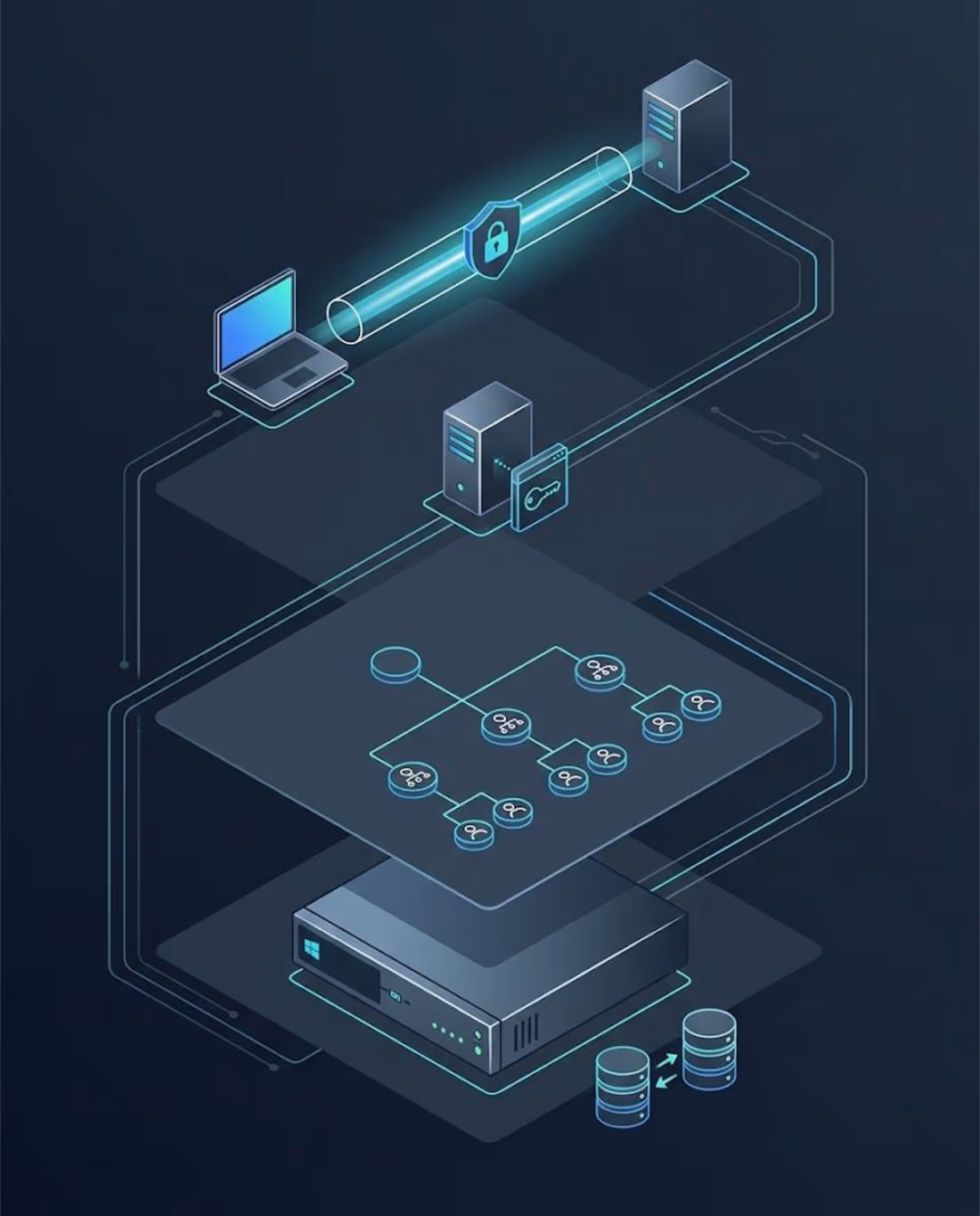
Recently took on a hands-on infrastructure challenge building an Active Directory environment from the ground up on a dedicated server.
From configuring RAID and installing Windows Server, to setting up the Forest/Domain, AD user accounts, Group Policies, a print server, and a RADIUS server for secure VPN authentication every layer had to be planned and tested carefully.
Along the way, we hit a snag: MikroTik wasn't authenticating properly against our RADIUS setup. We worked around it using WireGuard as an interim fix, before eventually moving to a paid VPN solution for the company's long-term needs.
Shortly after, I configured a second AD environment for a US-based client smooth deployment, lessons applied.
A great reminder that in DevOps and Cloud, the "boring" foundational infra work (networking, auth, domain services) is often what makes everything else run reliably.
#DevOps (https://www.linkedin.com/search/results/all/?keywords=%23devops&origin=HASH_TAG_FROM_FEED) #ActiveDirectory (https://www.linkedin.com/search/results/all/?keywords=%23activedirectory&origin=HASH_TAG_FROM_FEED) #Networking (https://www.linkedin.com/search/results/all/?keywords=%23networking&origin=HASH_TAG_FROM_FEED) #Cybersecurity (https://www.linkedin.com/search/results/all/?keywords=%23cybersecurity&origin=HASH_TAG_FROM_FEED) #CloudEngineering (https://www.linkedin.com/search/results/all/?keywords=%23cloudengineering&origin=HASH_TAG_FROM_FEED) #Infrastructure (https://www.linkedin.com/search/results/all/?keywords=%23infrastructure&origin=HASH_TAG_FROM_FEED) #WireGuard (https://www.linkedin.com/search/results/all/?keywords=%23wireguard&origin=HASH_TAG_FROM_FEED) #VPN (https://www.linkedin.com/search/results/all/?keywords=%23vpn&origin=HASH_TAG_FROM_FEED)
1
52
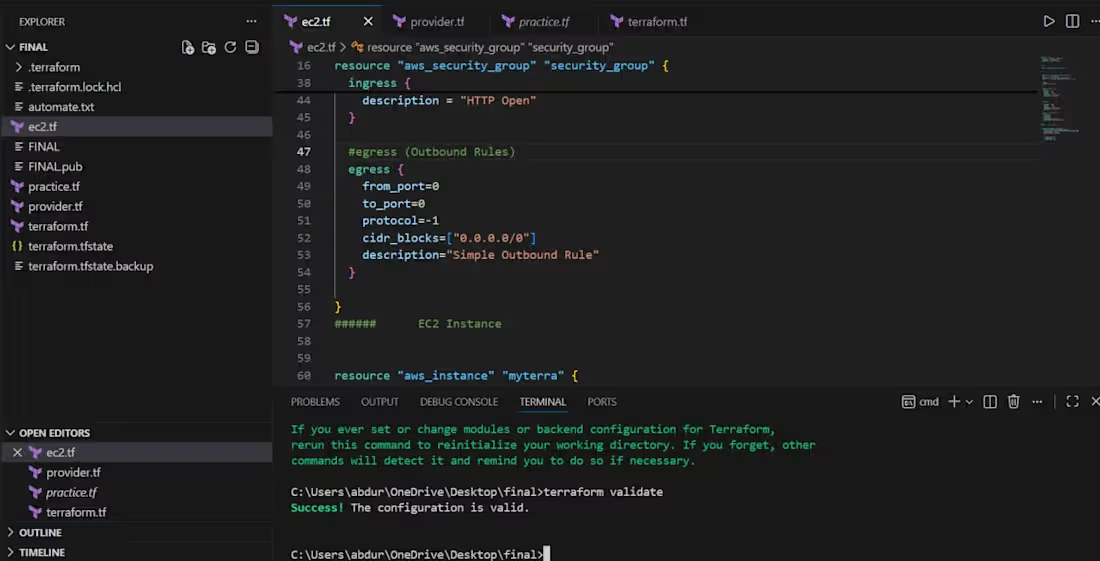
Just finished diving into Terraform and hands-on building infrastructure as code. Learned a lot along the way, including:
Setting up resources and variables
Using outputs to see what’s happening in my infra
Playing with interpolation, for_each, and conditional logic
Debugging and figuring out why things break
I’ve been building small projects to get comfortable with writing clean, reusable Terraform code. Feels good to see everything come together and actually work in AWS.
Excited to keep leveling up and move into more advanced Terraform stuff like modules, remote backends, and production ready infrastructure.
Github Link:https://github.com/abdur-rehman-tech/terraform-complete
#Terraform (https://www.linkedin.com/search/results/all/?keywords=%23terraform&origin=HASH_TAG_FROM_FEED) #DevOps (https://www.linkedin.com/search/results/all/?keywords=%23devops&origin=HASH_TAG_FROM_FEED) #InfrastructureAsCode (https://www.linkedin.com/search/results/all/?keywords=%23infrastructureascode&origin=HASH_TAG_FROM_FEED) #AWS (https://www.linkedin.com/search/results/all/?keywords=%23aws&origin=HASH_TAG_FROM_FEED) #Cloud (https://www.linkedin.com/search/results/all/?keywords=%23cloud&origin=HASH_TAG_FROM_FEED) #LearningByDoing (https://www.linkedin.com/search/results/all/?keywords=%23learningbydoing&origin=HASH_TAG_FROM_FEED)
0
62
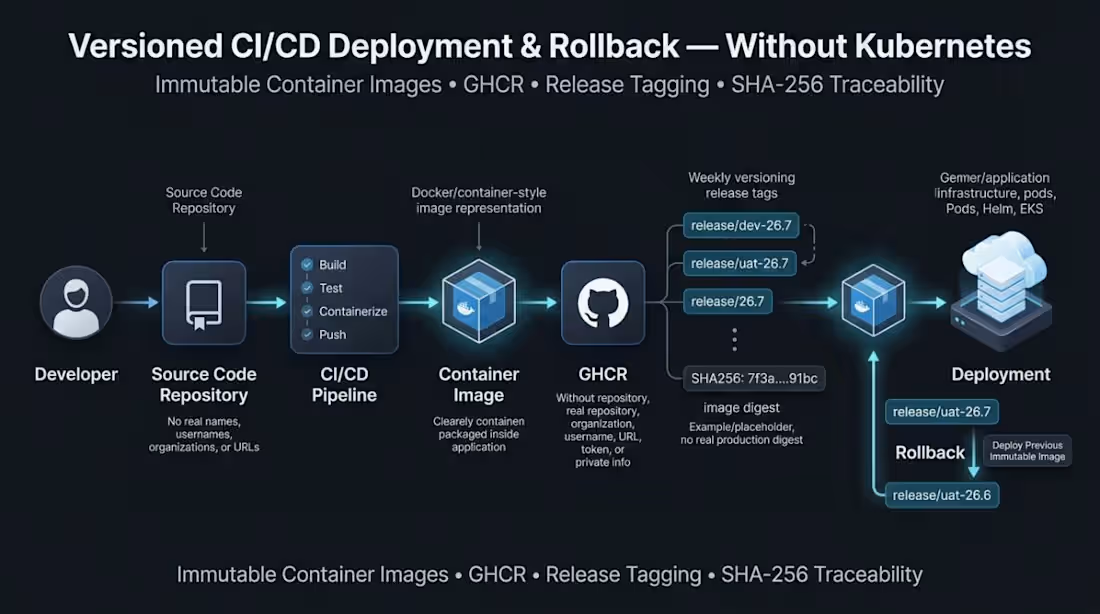
Case Study: Versioned Deployment & Rollback Pipeline (Without Kubernetes)
The Problem:
Many teams struggle with deployments that aren't traceable or reversible. Using latest tags creates ambiguity, you never know exactly which image is running, and rollbacks often mean rebuilding from scratch. This is costly and risky.
The Solution:
I designed a CI/CD pipeline that brings versioning, traceability, and fast rollback to a non-Kubernetes environment, proving that strong DevOps practices don't require heavy orchestration.
What I Built:
* Automated Image Pipeline
Application images are built and pushed to GitHub Container Registry (GHCR) automatically on every release.
* Structured Release Tags
Instead of latest, I used environment and release-based tagging:
release/dev-26.7
release/uat-26.7
Where 26 = year, 7 = month. Weekly versioning can be layered in when needed.
* Immutable Image Identification
Every deployment is tied to a SHA-256 image digest, an immutable reference to the exact image running in that environment. No more guessing what's deployed.
* Fast, Reliable Rollbacks
Since each release maps to a specific digest, rollback is instant, no rebuild required. Just point the deployment back to the previously verified image:
text
The Result:
A lightweight, production-grade deployment system with:
✅ Automated CI/CD
✅ Full deployment traceability
✅ Immutable image references
✅ Predictable, fast rollbacks
✅ No unnecessary orchestration overhead
Key Takeaway:
Reliable deployments aren't exclusive to Kubernetes. With the right container lifecycle design, even simple infrastructure can have versioning, traceability, and rollback, without the complexity.
Need a similar pipeline for your team?
I build secure, traceable CI/CD systems for teams that want reliability without over-engineering. Let's talk.
0
66
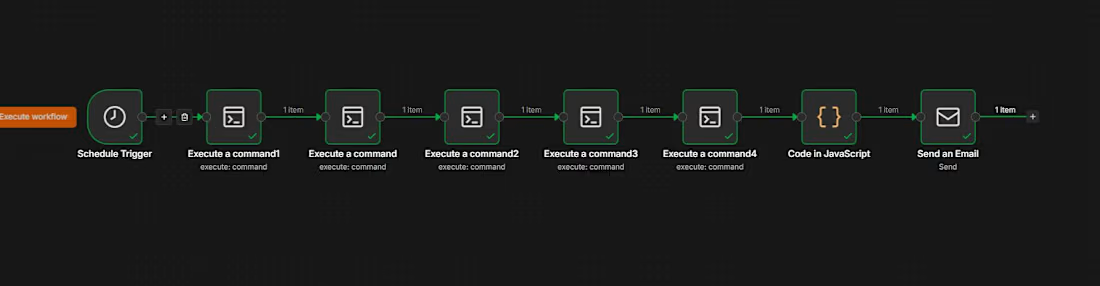
Just wrapped up testing an automated VM monitoring setup using n8n on my local machine.
It SSHs into all 5 local servers every morning at 9 AM PKT and sends a color coded health report (CPU, RAM, Disk, Uptime, Services) to the team via email.
Everything's been verified against live terminal output, Data is accurate.
0
66