Transform Your Fantasy Ideas into Fantastic Design


Transform Your Fantasy Ideas into Fantastic Design

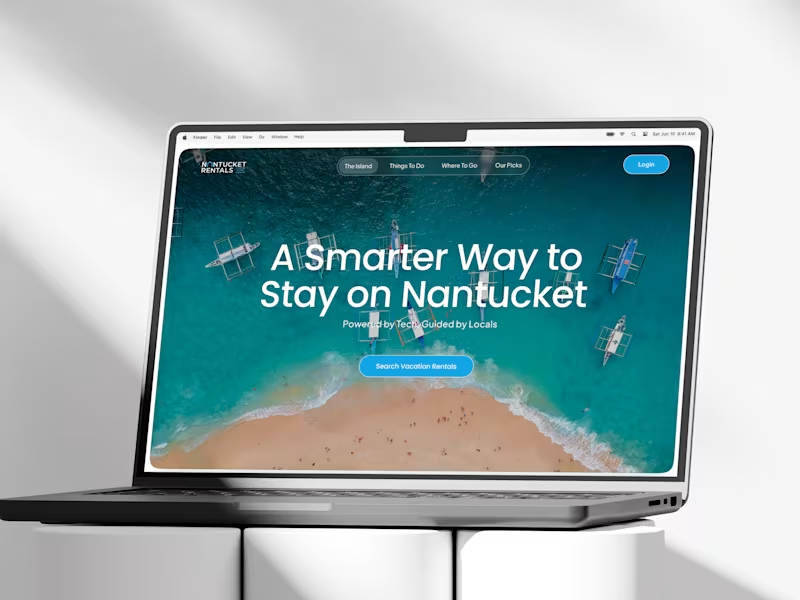


Nextjs, Astro, Shopify, Clickfunnels Web Designer
Nextjs, Astro, Shopify, Clickfunnels Web Designer
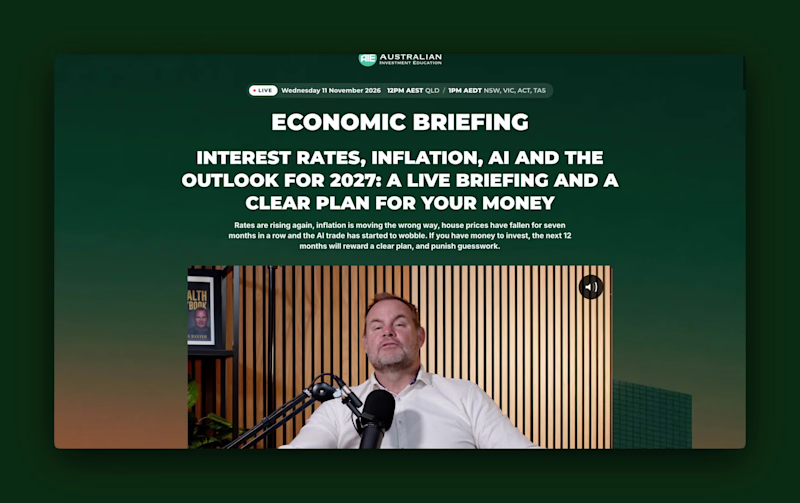
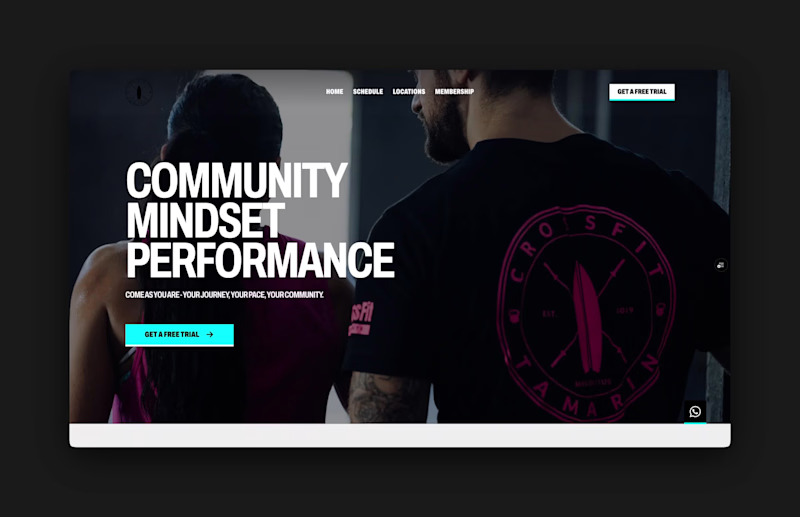
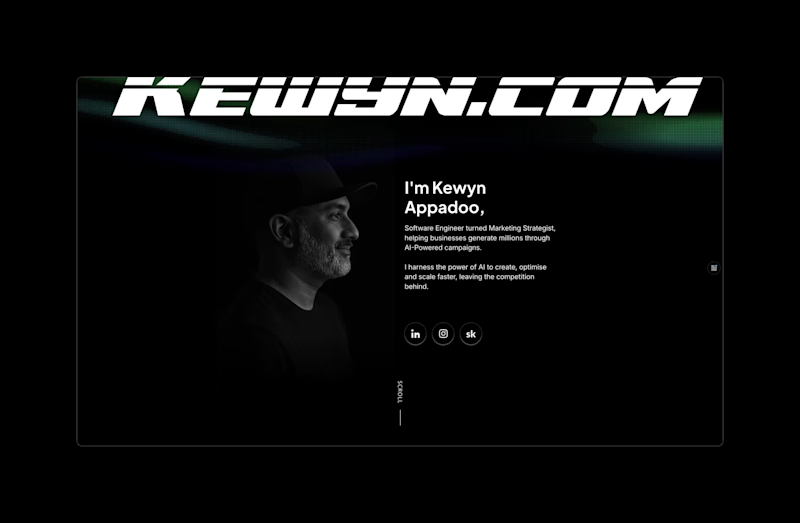

Mind of an engineer and the heart of an entrepreneur.
- $50k+
- Earned
- 1x
- Hired
- 15
- Followers
Mind of an engineer and the heart of an entrepreneur.

For every feature I shipped with an AI agent, I shipped more than two fixes.
1,000+ PRs. 84 days. Solo. The throughput was real — but 360 of those PRs were fixes against 150 features. That ratio is the part nobody puts in their recap post.
The core problem: the agent is a 20× author, not a 20× reviewer. I had no leverage on verification — just guards built from past failures, useless against anything new.
What I'd change: second agent for adversarial review only, and changes small enough that being wrong is cheap.
Agentic engineering doesn't remove the hard part. It moves it.
1
146

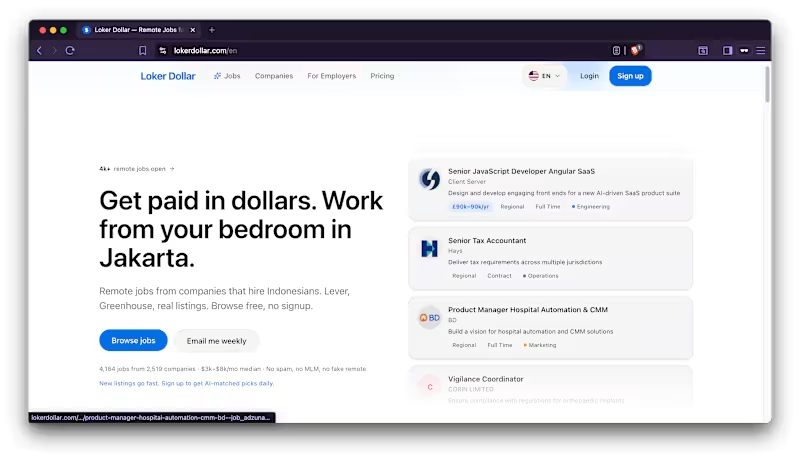
Built a RAG job-hunting agent for Indonesian developers applying to remote USD jobs.
28 days of real usage. Here's what I learned.
The problem: applying to 50+ remote jobs manually is exhausting. Wrong roles, no resume tailoring, hours wasted per application.
The workflow now:
One message → agent retrieves relevant jobs → ranks them → generates tailored resume + cover letter → user approves or skips.
Stack (still running $0 free tier):
· Embeddings: Cloudflare Workers AI qwen3-embedding-0.6b
· Vector search: Cloudflare Vectorize, cosine similarity
· Database: Cloudflare D1 / SQLite, one batched query
· Semantic cache: Cloudflare KV, cosine ≥0.92 threshold
· LLM: JSON-mode slot extraction + reply
Only variable cost: ~$0.002/turn LLM usage
28-day numbers:
· 235 sessions
· 329 return visits
· 743 agent turns
· 357 job cards surfaced → 46 approved applications
~20 approvals per 100 sessions (target was 10–15)
Total LLM cost: ~$1–4
Example matches from one natural-language query:
Linear — 96/100 · DatAds — 95/100 · Spotify — 100/100
Two decisions I'd make again:
· The scorer is deterministic — pure function, 7 weighted components, 0–100. No model drift. Users see exactly why a job scored highly. I didn't trust LLM ranking for something this consequential.
· There's a regex fallback behind every LLM extraction. If the model fails or times out, the conversation continues. Users never hit a dead end.
What's next:
· Tracking downstream outcomes — recruiter replies, interviews Detecting expired/duplicate posts more aggressively Calibrating scoring weights from real approval behavior
· The pipeline runs cheaply and generates real approvals. The next challenge is proving it improves actual job outcomes — not just application volume.
This is the kind of system I enjoy building: AI-native product on constrained infra, with real users and measurable north-star metrics.
If you're working on something similar — hiring pipelines, talent matching, AI agents for job seekers — I'd enjoy comparing notes. And if you're an Indonesian dev hunting remote USD roles, the product is live at lokerdollar.com (http://lokerdollar.com).
What would you build differently? 👇
#RAG (https://www.linkedin.com/search/results/all/?keywords=%23rag&origin=HASH_TAG_FROM_FEED) #CloudflareWorkers (https://www.linkedin.com/search/results/all/?keywords=%23cloudflareworkers&origin=HASH_TAG_FROM_FEED) #BuildInPublic (https://www.linkedin.com/search/results/all/?keywords=%23buildinpublic&origin=HASH_TAG_FROM_FEED) #AIEngineering (https://www.linkedin.com/search/results/all/?keywords=%23aiengineering&origin=HASH_TAG_FROM_FEED) #RemoteJobs (https://www.linkedin.com/search/results/all/?keywords=%23remotejobs&origin=HASH_TAG_FROM_FEED) #IndonesianDevelopers (https://www.linkedin.com/search/results/all/?keywords=%23indonesiandevelopers&origin=HASH_TAG_FROM_FEED)
3
174
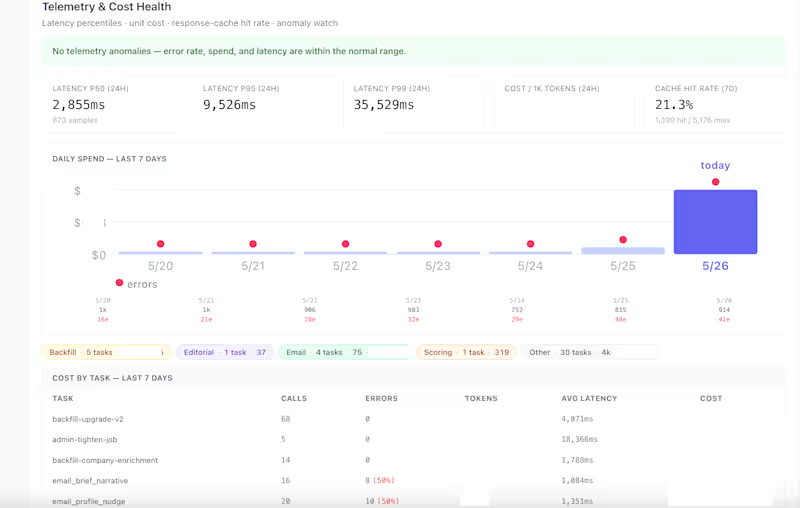
Most LLM telemetry posts brag about what they monitor. Here's mine — including what I'm still missing.
Built this for lokerdollar.com (http://lokerdollar.com), solo, in production:
Covered:
— p50 / p95 / p99 latency per task
— cost per 1k tokens + daily burn + per-task spend
— provider success rates + circuit breaker state
— cache hit rate, quota / rate limit tracking
— model leaderboard scored on live traffic
Gaps I'm still chasing:
— prompt versioning tied to quality signals
— TTFT for streaming UX (matters for chat tasks)
— per-user cost attribution
— semantic error taxonomy, not just HTTP codes
— push-based degradation alerts (today's playbook is reactive)
The lesson from running this solo: observability is never "done." It's a backlog that evolves with the product — and the gap list is more honest signal than the green checkmarks.
→ Open for AI platform / full-stack work. If you want this layer for your team, my DMs are open.
1
88

Frontend & Fullstack Engineer | React, Next.js, Tanstack
- 6
- Followers
Frontend & Fullstack Engineer | React, Next.js, Tanstack
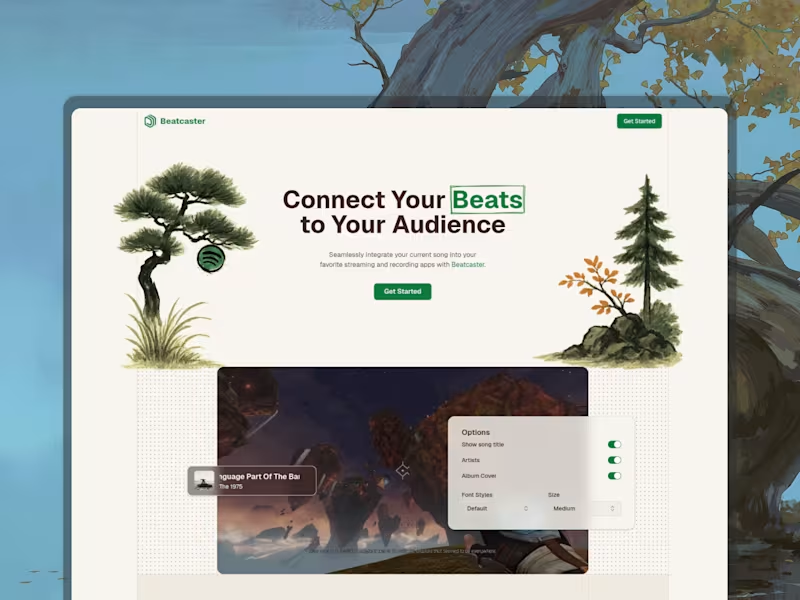


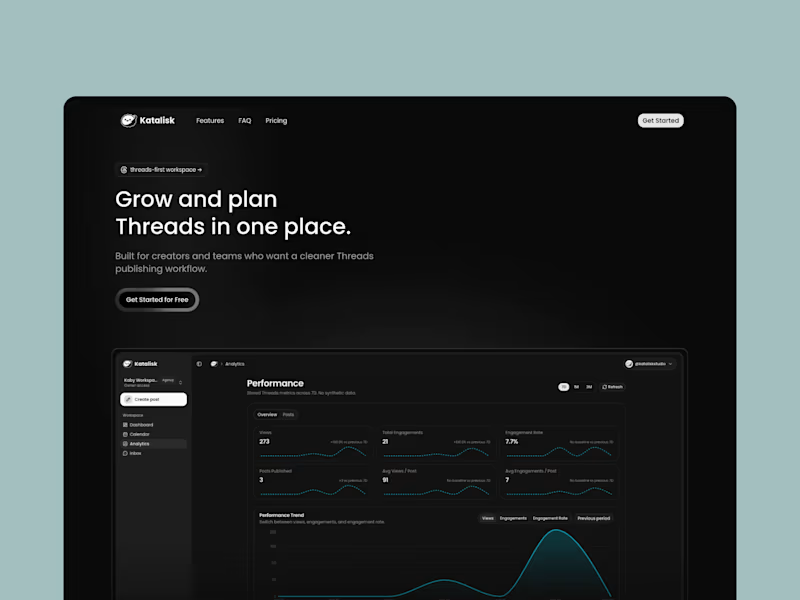
Katalisk is a creator workspace for writing, scheduling, and analyzing social content.
the first version is focused on Threads, with a clean post builder, drafts, scheduling, calendar planning, multi account support, and analytics in one place.
designed and built with Next.js, TypeScript, PostgreSQL, Prisma, Tailwind CSS, and Cloudflare R2.
0
202

Full-Stack Web Developer & Designers


Web Designer & Frontend Developer

I've been paying attention to how architecture firms present their work online, and one thing I kept coming back to was how much the first few seconds matter.
Large project photography, minimal distraction, strong project information, and recognition placed close to the work itself.
I kept those ideas in mind while designing Kingsley Architects.
The homepage opens with a project slideshow where the imagery, project name, location and recognition change together, so each project gets its own moment rather than feeling like another item in a grid.
I approached motion the same way.
Using GSAP, I focused on transitions that guide attention, create hierarchy and give the architectural photography enough room to carry the experience.
But I also wanted Kingsley to work beyond the initial launch.
Architecture practices keep evolving. New projects are completed, photography gets updated, awards are received, and the portfolio grows.
So I built a content management system behind the website that allows the studio to add projects, replace imagery and update content without touching the code.
That was an important part of the concept for me.
A studio website shouldn't only look good when it launches. It should be something the practice can continue building on as its body of work grows.
Kingsley is a fictional architecture practice, but the design decisions came from patterns I found while studying real architecture firms and how they present projects, recognition and studio credibility online.
I designed and developed the full experience with Next.js, Tailwind CSS, GSAP and CMS, covering visual direction, responsive development, motion, project presentation and content management.
🔗 Live site:
https://kingsley-architecture.vercel.app/
For architects and studio teams, how important is it for your team to be able to update your portfolio without relying on a developer?
0
60
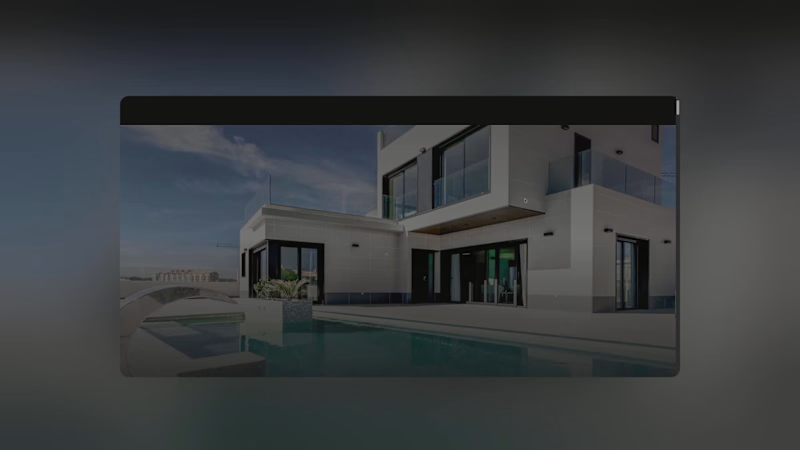
I wanted VELA to feel less like a conventional portfolio and more like a quiet introduction to a studio’s way of thinking.
The starting point was simple:
Can a website communicate the character of an architecture practice before someone reads much at all?
For VELA, I built the visual language around a restrained palette, oversized imagery, measured typography and generous spacing.
Rather than showing everything immediately, the site reveals the studio gradually through projects, interiors, process, materials and smaller editorial moments.
The photography does most of the talking.
The interface stays intentionally understated so the architecture can remain the focus.
I also spent a lot of time on rhythm.
Some sections are almost completely visual, while others slow things down with smaller images, text and details about the studio’s approach.
Motion follows the same idea.
I used GSAP to connect sections and give the page a natural flow, while keeping the interactions subtle enough that they never compete with the work.
VELA is a fictional architecture and interiors studio, but the project was shaped by a lot of research into how design-led practices communicate atmosphere, materiality and identity online.
I designed and developed the complete experience with Next.js, Tailwind CSS and GSAP, including the visual direction, responsive layouts, motion and project presentation.
🔗 Live site:
https://vela-studio-eight.vercel.app/
For architects and interior designers, when someone lands on your website for the first time, what do you want them to understand about your practice before anything else?
0
70
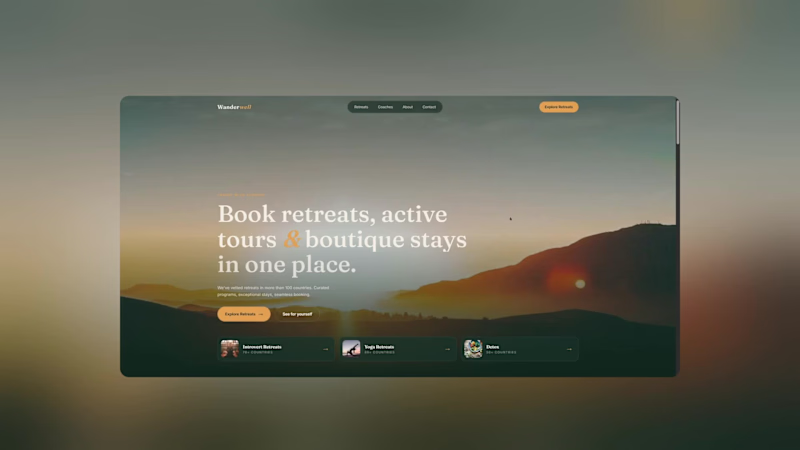
You don't usually decide to travel because a website had a good CTA.
You decide because you started imagining yourself there.
That's the feeling I wanted to capture with Wanderwell.
Instead of treating the experience like a traditional booking platform, I approached it more like an editorial travel experience.
Large imagery.
Spacious layouts.
Curated destinations.
Stories before transactions.
Then, once the visitor is inspired, the booking journey becomes the natural next step.
🔗 Live website:
https://wanderwell-five.vercel.app/
Built with Next.js, Tailwind CSS & GSAP
Would you rather book from a website that's optimized for speed or one that makes you want to pack your bags?
0
244
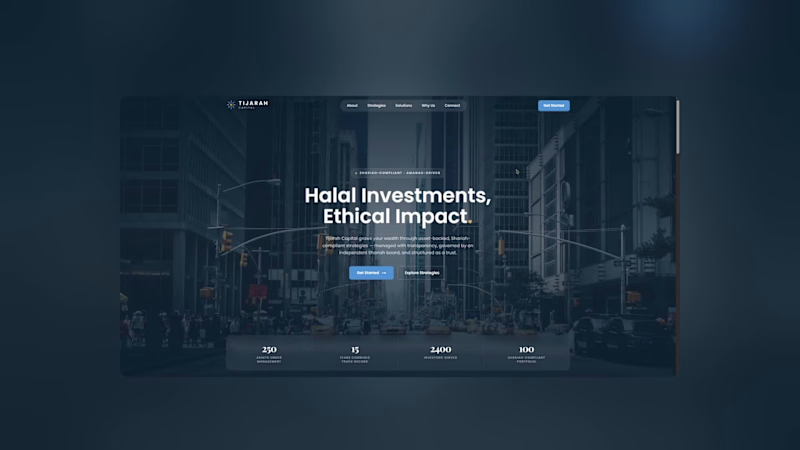
First impressions matter. Especially when money is involved.
For this Tijarah Capital concept, I wanted to explore what a financial website could feel like when the priority isn't just "looking premium", but actually communicating trust and clarity.
I kept the visual language restrained:
• Strong typography
• Structured information
• Editorial layouts
• Subtle motion
• Plenty of breathing room
Nothing too flashy.
Because sometimes the most convincing design is the one that knows when to stop.
🔗 Live website:
https://tijarahcapital.vercel.app/
Built with Next.js, Tailwind CSS & GSAP
What makes you trust a financial website within the first 10 seconds?
0
225

Full-Stack Developer · Web Apps, AI & Web3
- 46
- Followers
Full-Stack Developer · Web Apps, AI & Web3
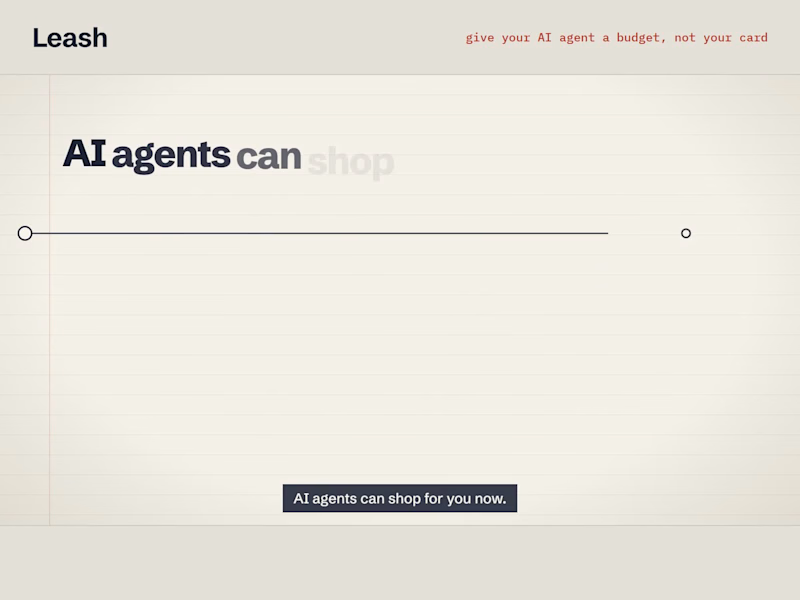
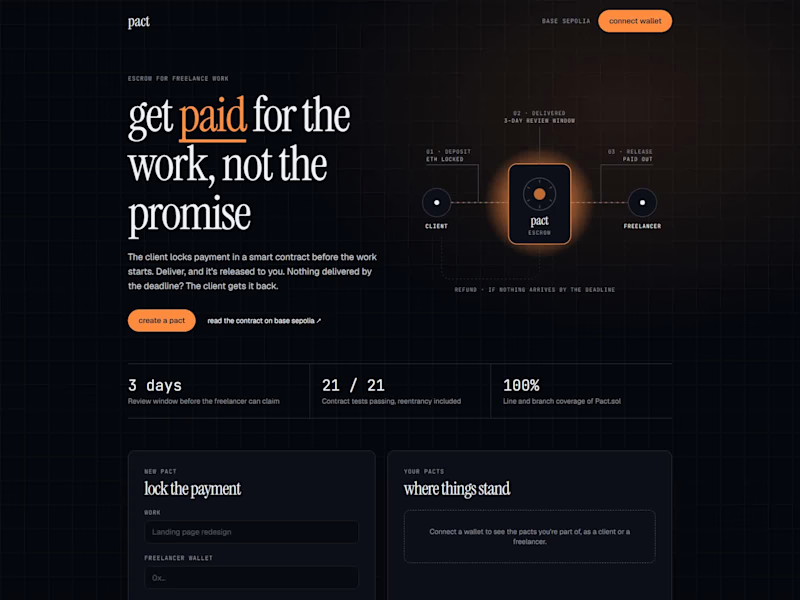
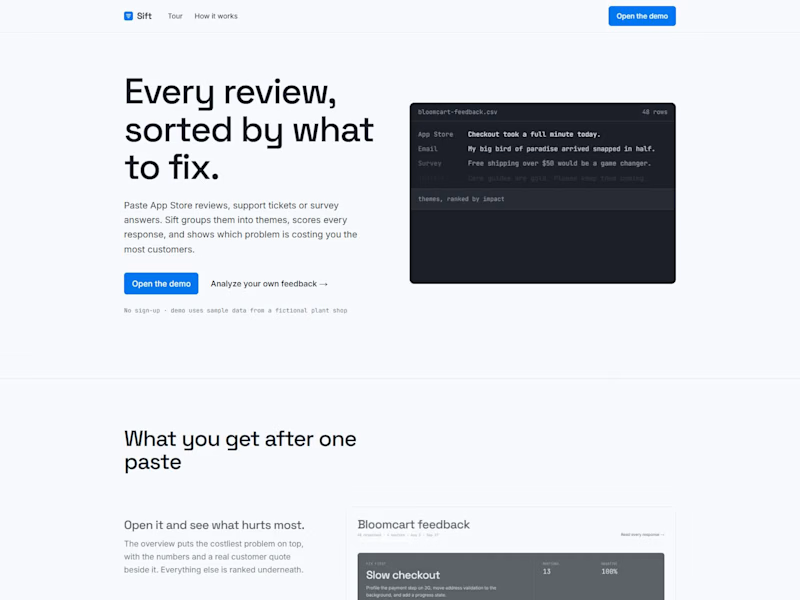
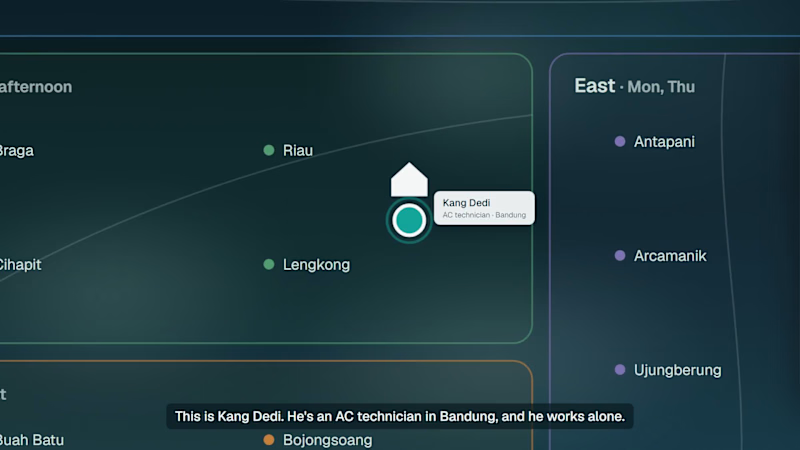
Built a booking app for Kang Dedi, a one-man AC technician in Bandung (fictional client, very real problem).
Every booking used to be a WhatsApp marathon: "how much?", "which day?", "what time?", "send your location". Around 10 messages per job, answered at night after work. Then his days zig-zag across the city, and sometimes he shows up to an empty house because the customer forgot.
So I turned the whole chat into one link:
✅ Pick your neighborhood, you only see days he's already around (mornings in your area, afternoons in the center)
✅ Price and time on site show up instantly, only slots where the whole job actually fits
✅ Booked in about a minute, with a ticket and the exact WhatsApp confirmation
✅ Reminder the evening before: still on, or reschedule? No reply gets flagged for him
✅ Someone cancels? The slot goes straight to the next person on that area's waitlist
✅ Review request goes out after the job, on its own
✅ His whole day on one map, plus the week, the waitlist and every message sent
Ngl the fun part was the scheduling rule. My first version literally put him in two places at once, took a couple of rounds to get it right (the process video shows the whole thing, bugs included).
Try it: ademservice.lovable.app
(http://ademservice.lovable.app)Owner view, no login: ademservice.lovable.app/demo
(Messages are simulat:ed in the demo, production would go through the WhatsApp Business API.)
4
427

Creative Developer | Fullstack | 3D Product Config
Creative Developer | Fullstack | 3D Product Config