Freelancers using LangChain in IndiaFreelancers using LangChain in India
Technical Writer (1.5M+ reads) & Open Source Developer
$10k+
Earned
23x
Hired
53
Followers
Technical Writer (1.5M+ reads) & Open Source Developer
Building Production-Grade AI Agents & RAG Systems
14
Followers
Building Production-Grade AI Agents & RAG Systems
I’m an AI & Machine Learning engineer with expertise in deve
Cover image for Everyone's talking about quantum computing.
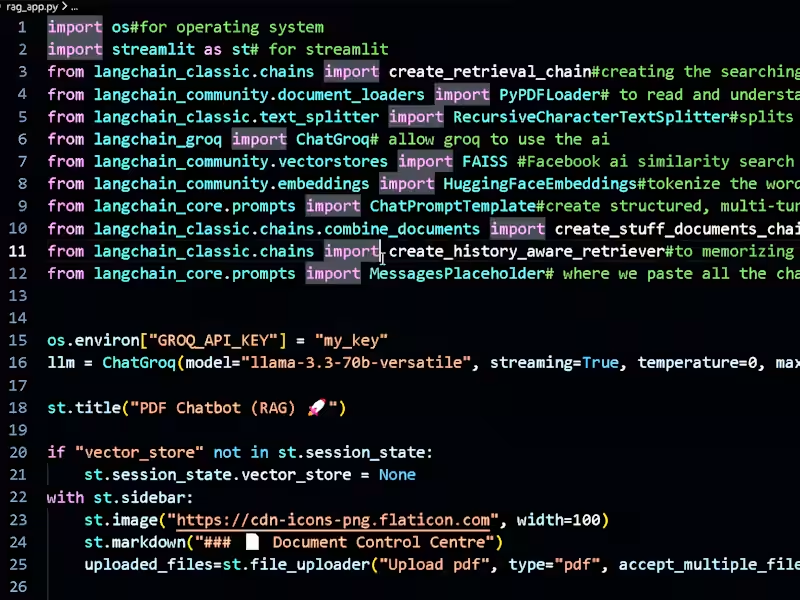
Everyone's talking about quantum computing. Nobody's using it to feed farmers. India loses 20–30% of its crop yield every year to diseases and pests. Not because farmers don't care — but because early detection is hard, expensive, and inaccessible to the people who need it most. The existing solutions? Either a basic image classifier trained on lab-perfect photos that fail in real field conditions, or an agronomist visit that costs time and money most small farmers don't have. So I built QuantumEdge AgriGuard — a hybrid Quantum Neural Network app where a farmer can photograph a diseased leaf on their phone and get an instant diagnosis in under 5 seconds. Here's what makes it different from just another plant disease detector: Instead of a pure classical CNN, I built a hybrid architecture — a ResNet/EfficientNet backbone extracts visual features, then passes them into a Variational Quantum Circuit (VQC) for the final classification. The quantum layer uses angle embedding + StronglyEntanglingLayers, which gives it a measurable edge on small, noisy datasets — exactly the kind of data you get from Indian field conditions. The app doesn't just tell you what disease it is. It gives you: → Confidence score → Organic + chemical remedies (India-specific) → Yield impact estimate → A live classical vs quantum accuracy comparison so you can see the difference yourself I tested the quantum advantage claim honestly — ran both models on the same downsampled PlantVillage dataset and tracked accuracy, F1-score, and inference time side by side. The results are on the dashboard. No hand-waving. Built with PennyLane + PyTorch + Plotly Dash. Designed to run on simulators today and on QpiAI-Indus 25-qubit hardware tomorrow.
1
0
18
Design, Build, AI, Automation
$50k+
Earned
17x
Hired
5.0
Rating
59
Followers
Design, Build, AI, Automation
Cover image for DailyCue — AI-Powered Decision Support
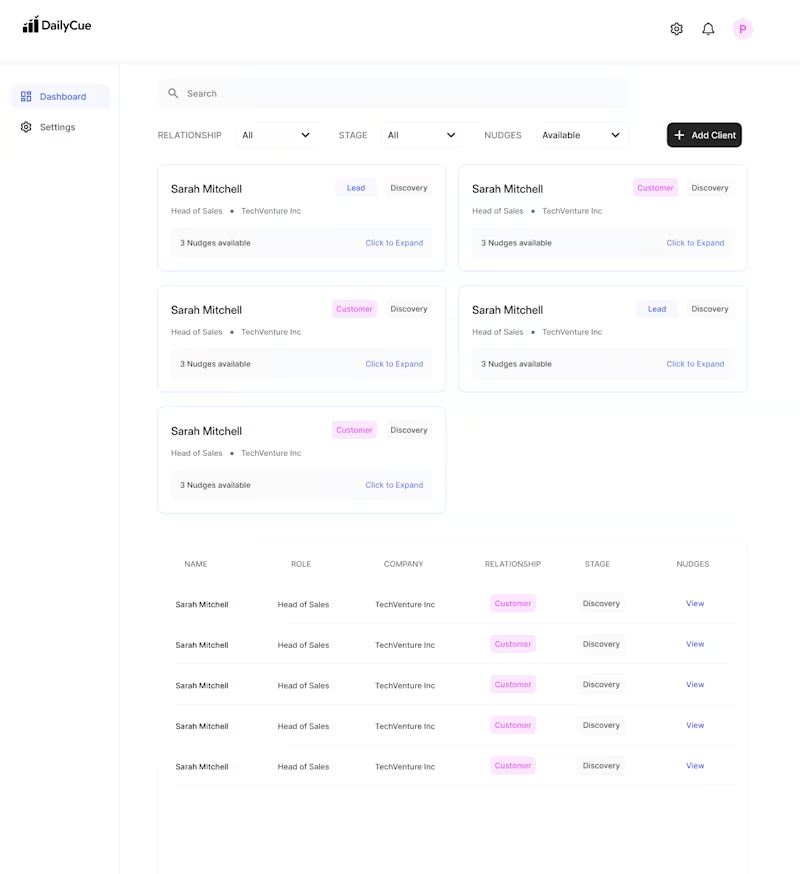
DailyCue — AI-Powered Decision Support for Recruitment Teams URL: https://dailycue.tech One-liner Shipped a recruitment SaaS MVP in 3 days — AI that tells recruiters exactly who to call today, and why. Project Overview Most recruitment teams don't have a lead problem. They have a prioritisation problem. CRMs are full, but consultants still rely on gut feel to decide where to focus each day — which means high-value opportunities get buried and revenue stays unpredictable. DailyCue connects to a recruitment CRM and uses AI to surface daily, prioritised actions for each consultant: who to contact, what the context is, and why now. It replaces the daily morning scramble with a clear, data-driven cue. What I Built CRM data ingestion pipeline with normalisation and deduplication AI prompt layer (GPT-4) generating personalised daily action lists per consultant Tiered Stripe billing in GBP with seat-based pricing JobAdder marketplace OAuth integration for one-click CRM connection Serverless architecture on Vercel with Inngest for background job processing Landing page, onboarding flow, and trial signup How I Shipped It Initial version went live in 3 days. I then iterated directly with real recruitment users, refining the AI prompts based on actual usage feedback until the output matched how experienced consultants naturally think about their pipeline. The product continued to evolve through multiple rounds of user testing and positioning pivots. Tech Stack Next.js · Supabase · PostgreSQL · OpenAI API · Stripe · Inngest · Vercel · JobAdder API
1
2
72
Cover image for Converc — Turn Website Visitors
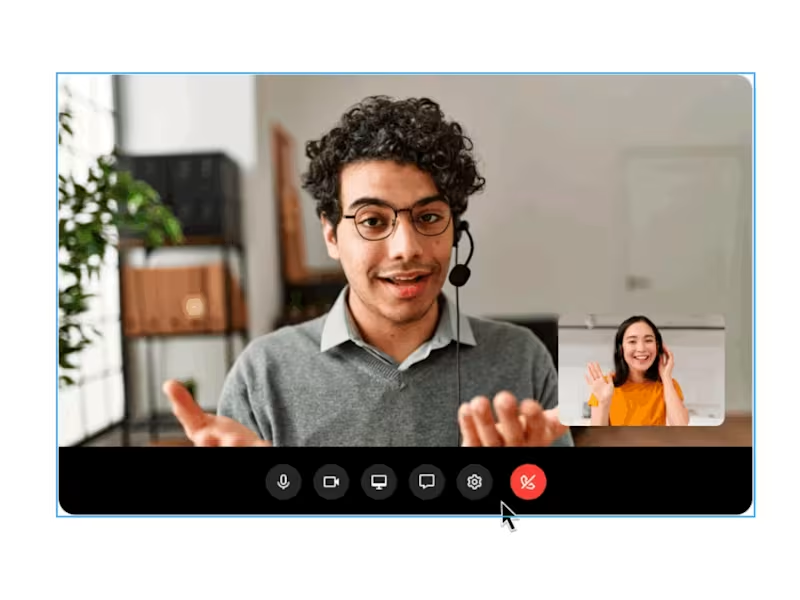
Converc — Turn Website Visitors Into Live Conversations URL: https://converc.com One-liner Built a real-time browser-based calling platform from scratch — MVP live in 5 days. Project Overview Converc solves a problem that costs B2B companies revenue every day: high-intent visitors land on your site, can't get a human immediately, and leave. It embeds a call widget that connects visitors to sales reps in real time — no booking links, no forms, no friction. I architected and built the full product: a Next.js frontend, Supabase backend with Row Level Security, and WebRTC-powered peer-to-peer audio calling that works entirely in the browser with no native app required. The stack was chosen for performance, low latency, and the ability to ship fast without sacrificing production quality. What I Built WebRTC call engine with real-time signalling via Supabase Realtime Embeddable call widget (drop-in script for any website) Agent dashboard with live call status, queue management, and session history Webhook integration layer for CRM and Slack notifications on call events OAuth-based authentication with Google and dev/prod environment separation Supabase RLS policies enforcing strict data isolation between workspaces How I Shipped It The core MVP — widget, signalling, agent dashboard, and working calls — was shipped in 5 days using Cursor with Claude as the AI pair programmer. Post-MVP work covered Google Safe Browsing clearance, Slack App submission, analytics scoping, and hardening the auth and security model for production. Tech Stack Next.js · Supabase · PostgreSQL · WebRTC · Vercel · Tailwind CSS
0
49
Full Stack Developer | AI Tool, Web App, MVP & SaaS Products
$10k+
Earned
4x
Hired
4.9
Rating
21
Followers
Full Stack Developer | AI Tool, Web App, MVP & SaaS Products