Freelancers in Florissant
Sign Up
Post a job
Sign Up
Log In
Filters
1
Projects
People
Marina Mironer
pro
St. Louis, USA
🚀 Product & Project Consultant | Tech, AI, and Healthcare
$10k+
Earned
2x
Hired
5.0
Rating
167
Followers
Top
Follow
Message
🚀 Product & Project Consultant | Tech, AI, and Healthcare
5
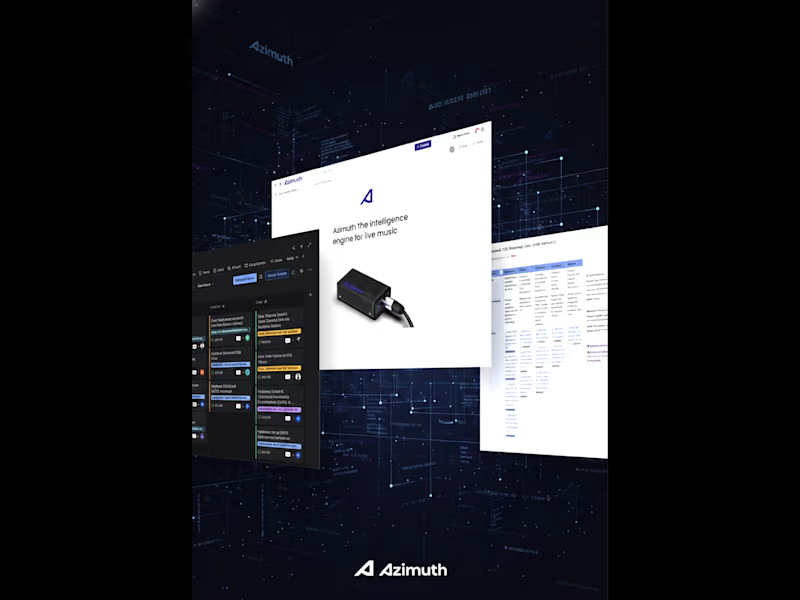
Azimuth - the intelligence engine for live music
5
125
5
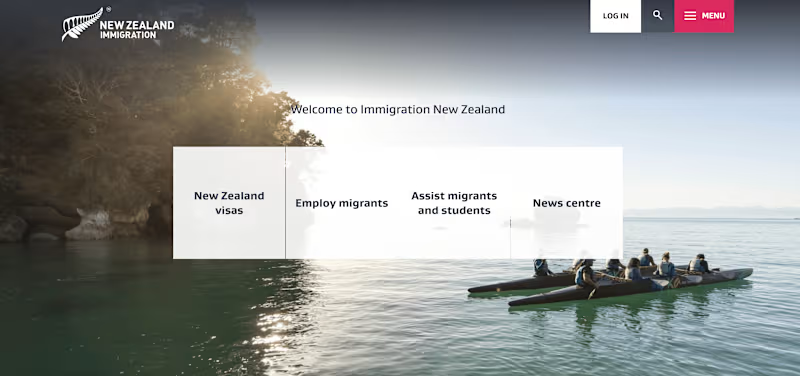
New Zealand Immigration Global Management System (IGMS)
5
72
4
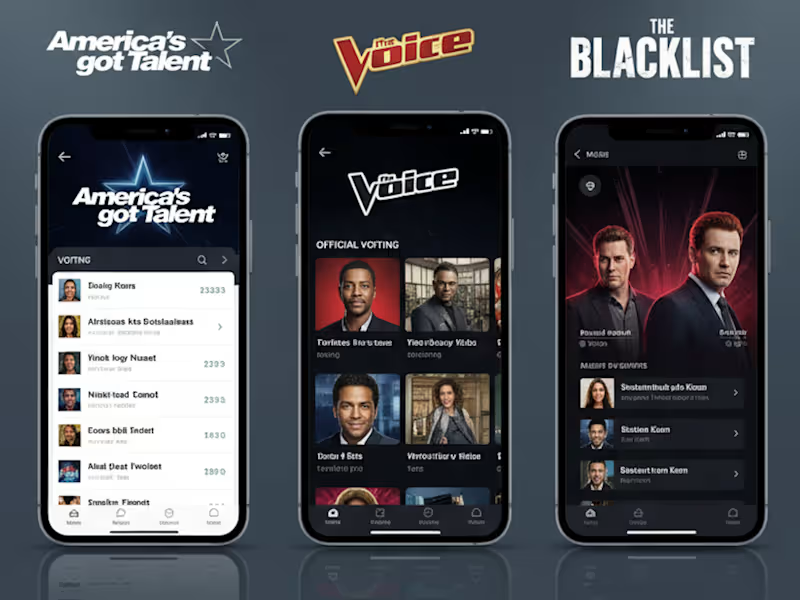
America's Got Talent, Voice, Blacklist websites, games, & apps
4
66
5
Securing the Future: Redesigning Crypto Hardware Wallets
5
45
Follow
Message
Riley Jones
St. Louis, USA
Brand identity nourishment and development for startups..
1x
Hired
8
Followers
Follow
Message
Brand identity nourishment and development for startups..
1
Sending my submission in. A fun little passport app that you can add images/destinations/notes etc in a fun drag and drop canvas. https://flee-basil-80419237.figma.site #figmamakeathon
1
88
0
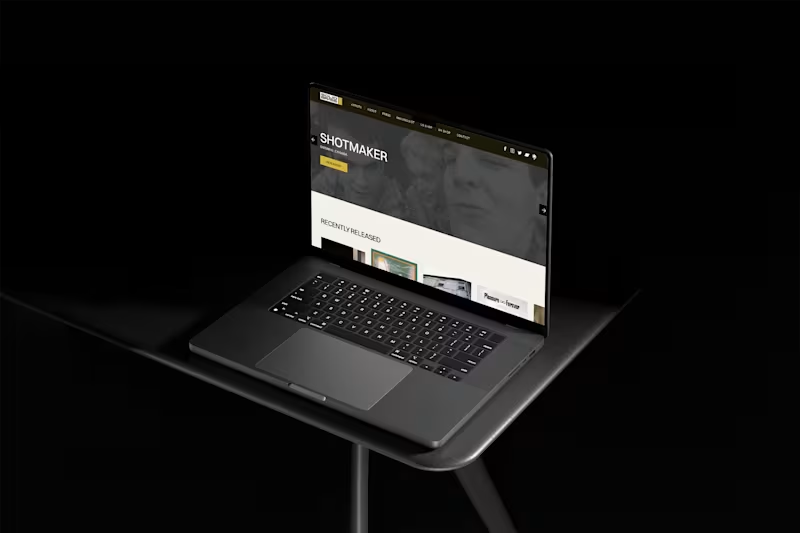
Webflow redesign for an indie record label
0
7
0
Website Redesign for A Nocode Startup
0
57
0
Solar Company Identity Design
0
39
Follow
Message
JetDesigns Studio
St. Louis, USA
We don't change product, instead how users experience it!
16
Followers
Follow
Message
We don't change product, instead how users experience it!
14
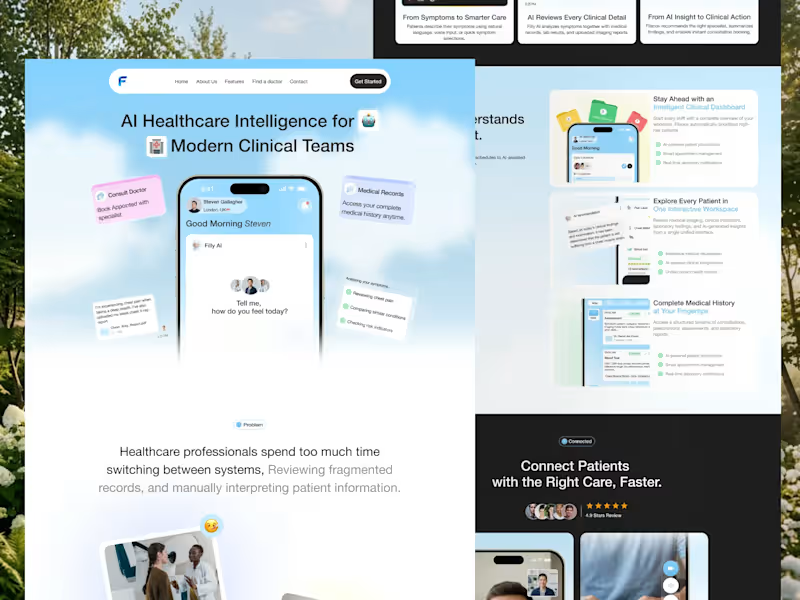
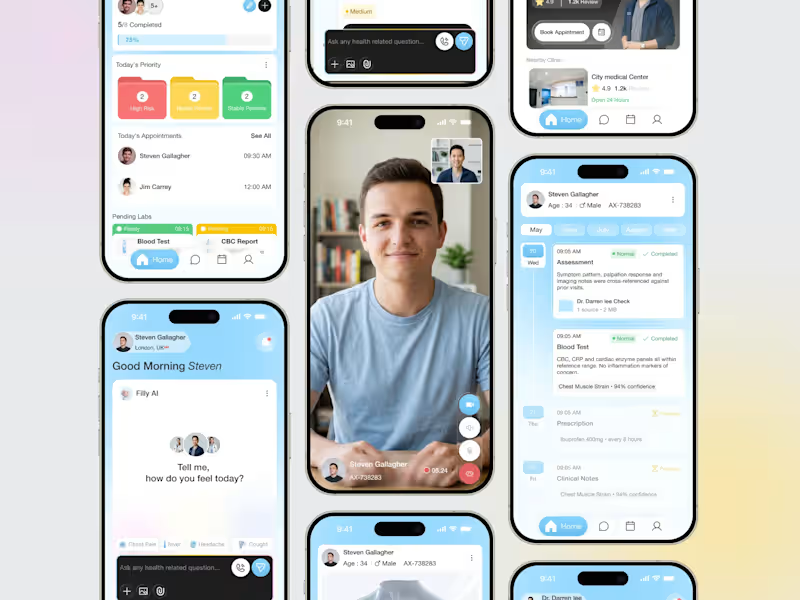
If you saw our previous Filanov Care (https://contra.com/community/RDDf5wJx-filanov-care-hospital-management-dashboard-or) post, here’s a closer look This time, we’re diving into the AI healthcare intelligence platform we designed at JetDesigns. We brought together AI-powered insights, patient context, and clinical workflows into one focused experience — making complex healthcare information easier to navigate and act on. Less searching. More understanding. Better decisions! #HealthTech #AI #SaaS #ProductDesign #UXDesign #UIUX #HealthcareInnovation
5
14
141
3
Filanov Care: Hospital Management Dashboard | SaaS UI Design
4
3
109
16
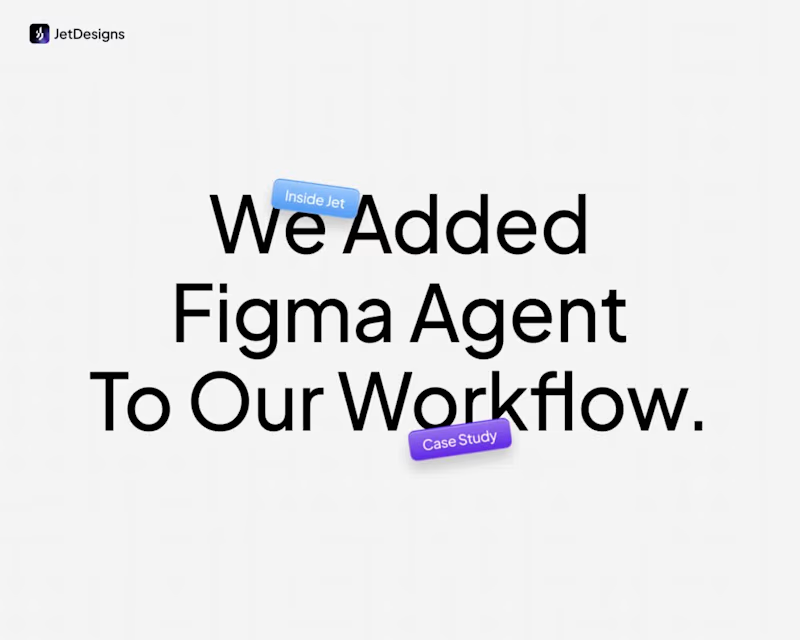
We tested Figma's new AI agent on a real page for an actual Settings screen, not a demo. It reads as literally an assistant: clean file, clear prompt, and it helps with UX enhancements and autolayout. We didn't accept the output as-is. Some of it broke. So we audited what worked, what didn't & why AI didn't replace the design process, it just moved where our attention needed to go!
7
16
736
2
ÉLARA — Born From Celestial Elegance
2
79
Follow
Message
Manideep racharla
Overland, USA
Data Analyst turning Data insights into business impact.
5.0
Rating
2
Followers
Follow
Message
Data Analyst turning Data insights into business impact.
2
Parking Lot Utilization Analysis Dashboard
2
42
0
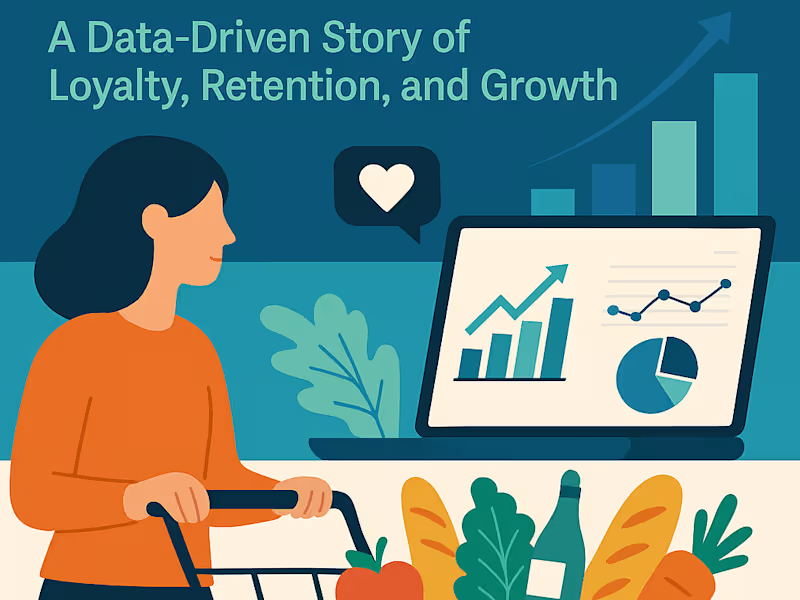
Optimizing Home Delivery in Small Grocery Stores
0
6
0
Predictive Analysis of Airline Delays Using Machine Learning
0
7
0
Stock Price and Trading Indicators Analysis
0
4
Follow
Message
Matt Carvalho
pro
St. Louis, USA
Brand + Interface Design
15
Followers
Follow
Message
Brand + Interface Design
3
Artificial Material™ | Brand Identity
3
131
11
AI-Driven Brand Identity for Yikoshi™
11
230
6
Nuro | Web Design
6
47
0
Revair | Brand Design
0
31
Follow
Message
hannah halpern
St. Louis, USA
Graphic Designer with a passion for packaging experiences
1x
Hired
2
Followers
expert
Follow
Message
Graphic Designer with a passion for packaging experiences
0
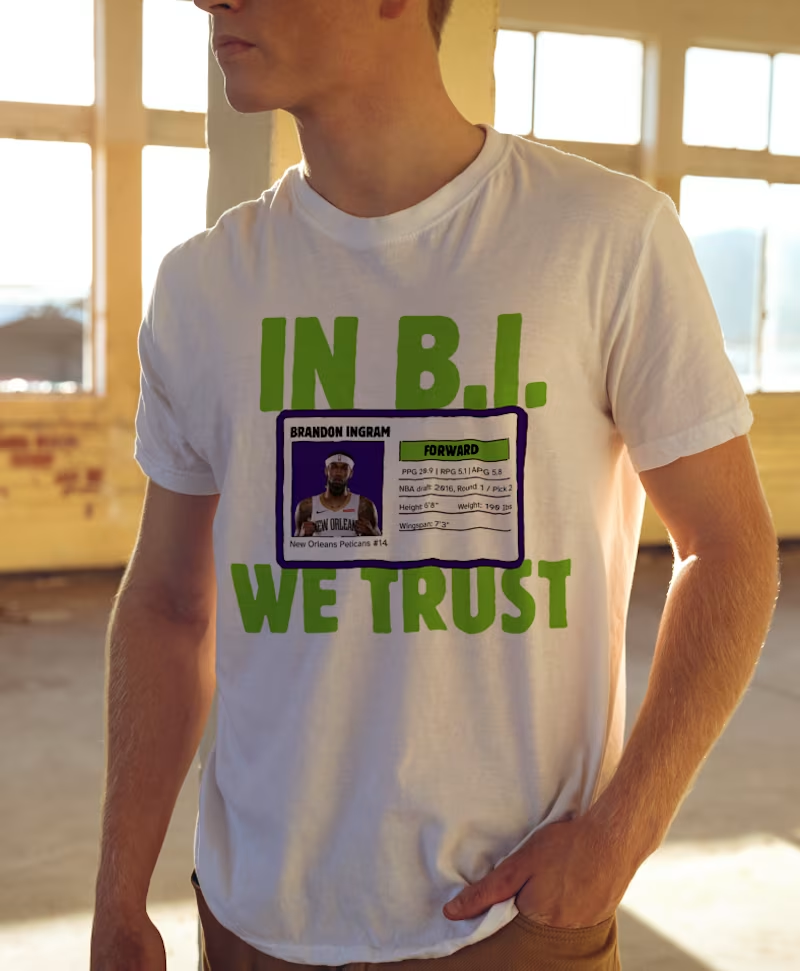
NBA Merchandise Design
0
65
0
Condo Hotel Rebranding
0
64
0
"American Safety" Branding + Marketing
0
70
0
"Cocktails & Classics" Package Design
0
92
Follow
Message
April Fletcher
St. Louis, USA
Entertainment Operations & AI Product Builder
New to Contra
Follow
Message
Entertainment Operations & AI Product Builder
1
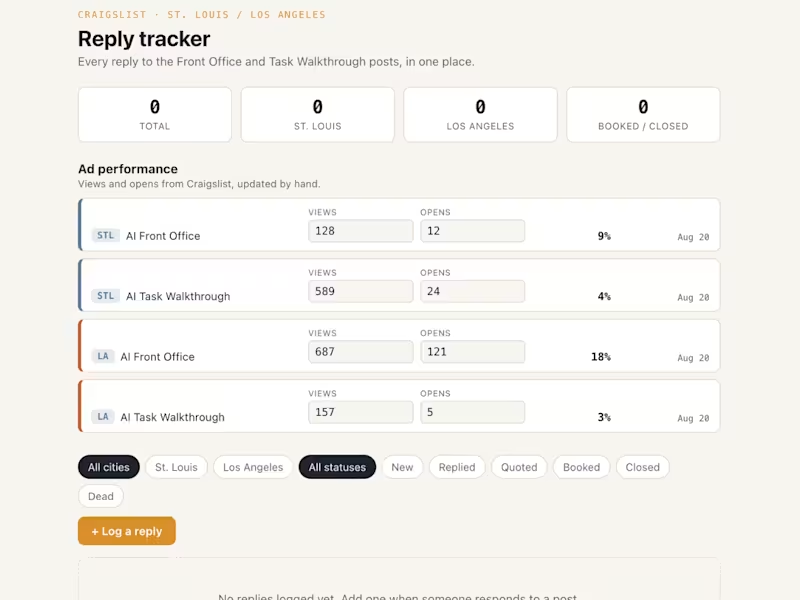
I built this after realizing I needed to track two ad types across two cities entirely in my head. Four live Craigslist posts, different pricing per city, no way to see reply status or quoted price without scrolling back through memory. And my memory is not all that reliable. The tool splits into two parts. Ad performance holds the numbers Craigslist already reports: views and opens per ad, entered by hand since Craigslist doesn't expose that data any other way. Reply tracking holds what only I know: what someone asked for, what I quoted and where that conversation stands. Keeping those separate was deliberate. One section is Craigslist's data, the other is mine, and mixing them would have buried the thing I actually needed: which conversations to follow up on. I still wanted the Craigslist numbers close at hand though, and since it's just views and opens, a simple visual section next to the replies does the job. It runs as a single file in the browser, no login or server. Status updates from a dropdown right on the card. Color coding by city and status means I can scan the whole list without reading every line. It's a small tool that answers three questions I keep asking myself: which city and ad combination is actually converting, whether a price point is landing and whether a weak ad is a reach problem or a conversion problem. Craigslist has been a low-key experiment for me, one I've tried once before without really tracking what happened. This is what makes the results actually visible this time.
1
188
1
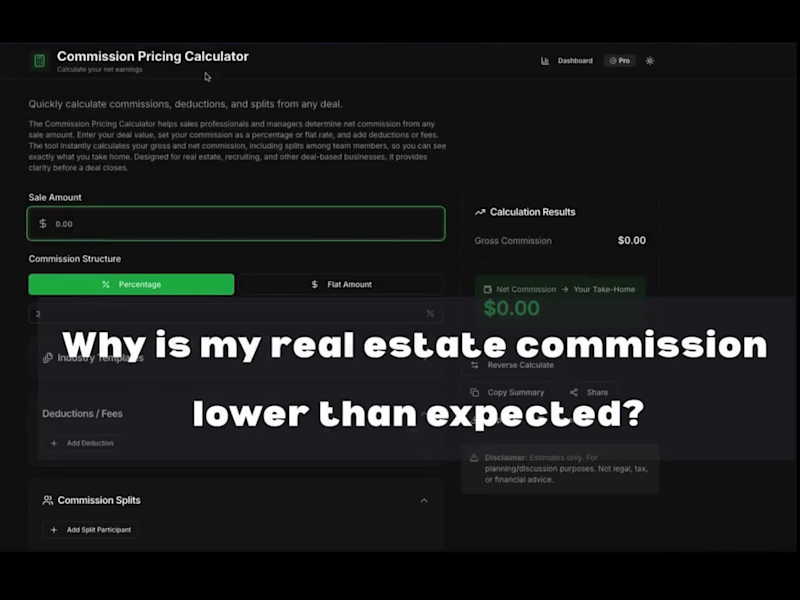
I have a friend who’s a business broker and has been in real estate for many years. Over the years, I’ve worked with him on an off with several of his projects. Additionally, a while back, I tipped my toe into the real estate investing area, so I have a good idea of some of the things the need to know. The Commission Pricing Calculator was designed to help someone answer a more useful question than simply, “What is my commission?” It helps them determine: What will I actually take home from this deal after splits, fees, and deductions — and what needs to change if that number is too low? The calculator supports both forward and reverse decision-making. In forward mode, the user can model a deal and immediately see how changes in sale price, commission percentage, brokerage or partner splits, and fees affect the final net amount. In reverse mode, the user can start with a target take-home amount and work backward to determine the deal size or pricing required to reach that goal. The goal was to turn commission math from a static calculation into a practical scenario-planning tool. Input/output structure The calculator was structured around the pieces of information that materially change the outcome of a commission-based deal. Inputs Users can enter: Sale or deal amount Commission as either a percentage or flat amount Multiple labeled fees or deductions Fees as either percentages or fixed amounts Multiple commission split participants Splits as either percentages or fixed amounts A target net commission when using reverse calculation The inputs were designed to accommodate real-world deal structures rather than assume a single simple percentage calculation. Outputs The calculator returns: Gross commission Itemized fees and deductions Itemized commission splits Net commission / estimated take-home amount Required sale or deal amount when reverse calculation is used Saved scenario data for later comparison A shareable or exportable calculation summary The net result was intentionally given the strongest visual emphasis because it is the number the user is ultimately making the decision around. The system also included validation so invalid percentages, negative values, or impossible split structures would not silently produce misleading results. Everything recalculates in real time as inputs change, so the agent sees net commission move as they adjust the split or add a fee, rather than running the numbers once and reading a static result.
1
89
0
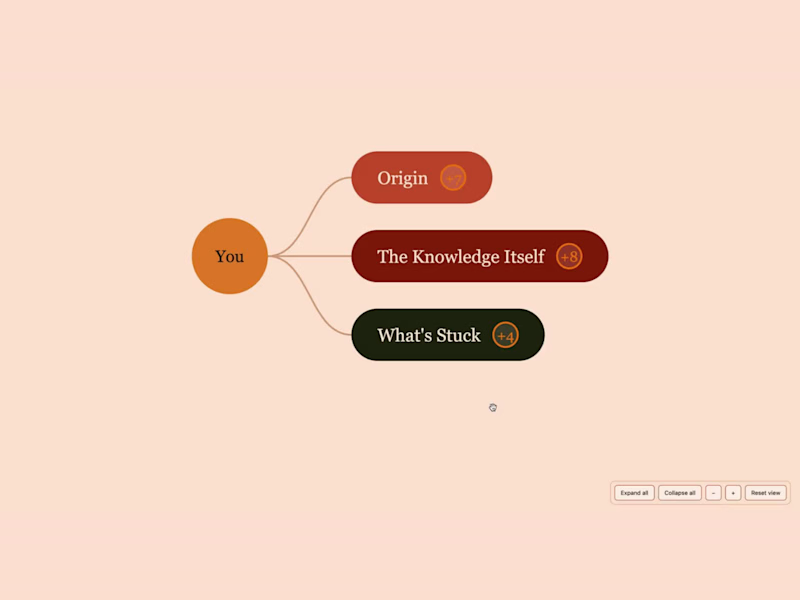
I build a lot of things to solve a problem I have first. The offer usually comes after, almost as a by-product — if I have this problem, maybe others do too. Body of Knowledge followed the same pattern. It evolved out of several other offers I'd already built, and it started because I wanted to be interviewed. I find casually talking about my work helpful because I reach for the things in the back of the cabinet of my mind. The interview itself isn't something I run — Claude conducted it, one question at a time, following whatever thread flows instead of working down a fixed script. I designed how that whole process works. I knew from the start I wanted the output to be a mindmap because I find this type of visual layout super helpful. A written version seemed worth including too, for anyone who might get more out of reading it, so that's part of the deliverable as well. From there it was mostly solving smaller problems one at a time. Audio intake needed guardrails: a time range so people aren't guessing how long to talk, permission for the first take to be the only take, and a concrete first line for each prompt so nobody has to sit there trying to figure out where to start. The interview needed to skip the kind of questions that assume someone's expertise has already been noticed by a room, because a lot of real expertise never gets that kind of audience. And the review step needed a clear line between "this needs one more question" and "this needs to be reopened entirely." Before I offered any of this to someone else, I ran myself through it. Twice so far, and I'll probably do it again. The first time, I dug into what musicians call "the pocket" — how a group locks into a shared feel together. The second time was about production, and that's the map you're looking at here. Running it twice, on two completely different pieces of my own experience, is the clearest way I know to show this actually works. I have the MVP up and available, but the interview version is still being built — coming soon!
0
63
0
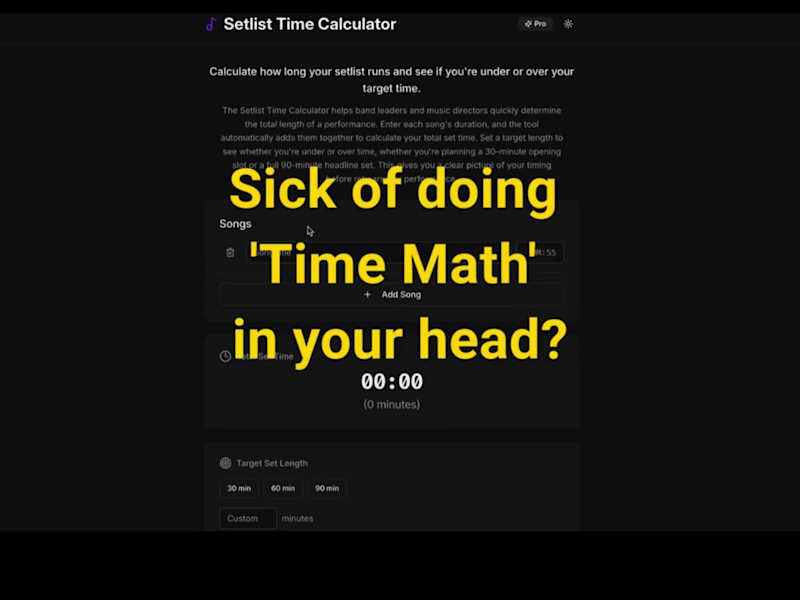
I don't recall ever playing a gig without a setlist, and I know how tedious they can be to put together. Some gigs are casual, but others require much more precise timing — especially when you need to fit a specific number of songs into a set, account for breaks or make sure the entire show stays within its allotted time. I originally built the Setlist Time Calculator with musicians in mind, but it’s useful for any performer who needs to organize and time a set. Instead of adding up song lengths manually, you enter each song or performance segment and the calculator keeps track of the running time for you. You can adjust the order, build the complete set and see how the timing changes as you work. Once the setlist is finished, it can be saved and exported as a PDF in just a few clicks, making it easy to send copies to bandmates, performers, crew or anyone else who needs the final running order. It’s a simple tool built around a very familiar production problem: making setlist planning faster, clearer and a lot less tedious.
0
36
Follow
Message
승현 이
St Charles, USA
Brand Strategist & Marketing PM
Follow
Message
Brand Strategist & Marketing PM
10
[adidas: Instagram + Activations] adidas Korea: Turning Offline Energy into Social Stories For the past few seasons, I’ve been leading social for two adidas Korea Instagram channels — one for performance, one for Originals. My sweet spot is where brand, content, and operations meet: translating global assets and live events into local stories that actually resonate with people in Korea. From marathons and product launches to private community events, I plan how each moment will live online before it happens offline. That means one-take interviews, story formats that fans love to tap through, and wrap-up content that keeps the buzz going long after the event is over. This work has been about more than just posting: it’s about building a system that keeps a global brand human, local, and consistent over time.
10
180
21
[Café & Bakery Visual Branding Series] Café & Bakery Visual Branding: Turning “Nice Places” into Recognizable Brands I’ve had the chance to work with three independent cafés and bakeries to shape how they show up visually — not just on social media, but at the counter where people order and decide what to try. Each space had its own personality: a wine-friendly café, a cozy bakery, and a local neighborhood spot. My role was to translate that feeling into tangible visuals — photos, menus, posters, signage — so that customers could feel the brand the moment they walked in, even before taking the first sip or bite.
21
220
15
[Airbnb: 2 Listings] Designing Stays That Guests Actually Want to Rebook Before working with big brands, I learned a lot about “experience design” by hosting. I launched and managed two Airbnb listings from scratch — and treated them like tiny, living brands. I handled everything from interior styling and photography to listing copy, pricing, and social media promotion. The goal was simple: make each stay feel so considered and warm that guests would both leave a great review and tell their friends. Over time, both listings reached Superhost status and maintained an average occupancy of over 90% per month. It was a small operation, but it taught me something I still use every day: details matter, and hospitality is one of the strongest forms of branding.
15
180
20
[Christmas House: Character Brand Seasonal Pop-up] Christmas House: From First Product Line to Full Seasonal Experience “Christmas House” was a seasonal pop-up built to launch a production company’s first-ever global character product line. Instead of just placing products on shelves, we turned the space into a cozy, story-driven house that made people want to linger, browse, and collect. I led the campaign end-to-end as PM — from concept and customer flow to merchandising and staffing. The activation not only achieved strong daily sales and steady visitor numbers, but also generated enough buzz to secure a sequel proposal for “Christmas House 2.”
20
202
Follow
Message
Explore people