Results that are similar to your search
Similar results

Experienced Drupal Developer

Experienced Drupal Developer




Linux VPS SysAdmin AWS & Oracle Cloud Architect | Terraform
- $•••••
- Earned
- 1x
- Hired
- 5.0
- Rating
- 14
- Followers
Linux VPS SysAdmin AWS & Oracle Cloud Architect | Terraform


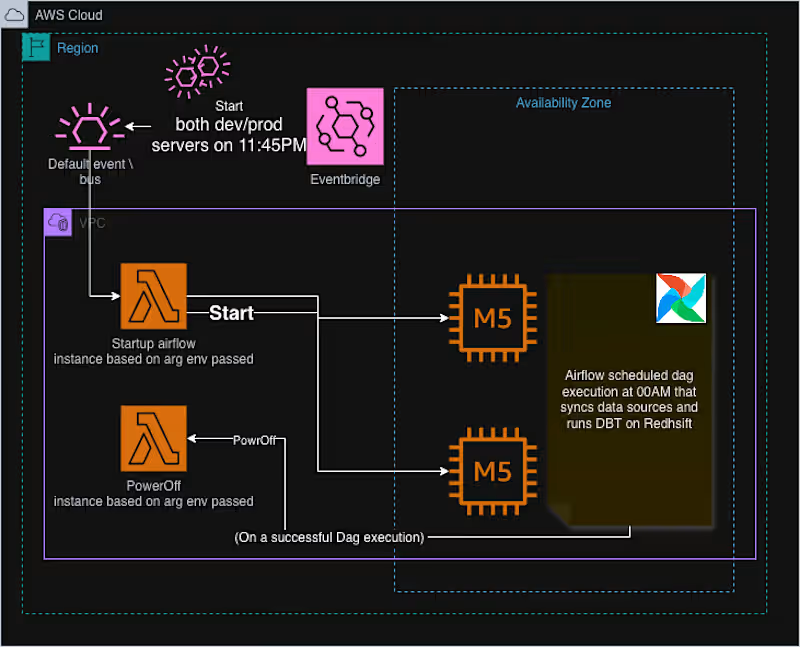
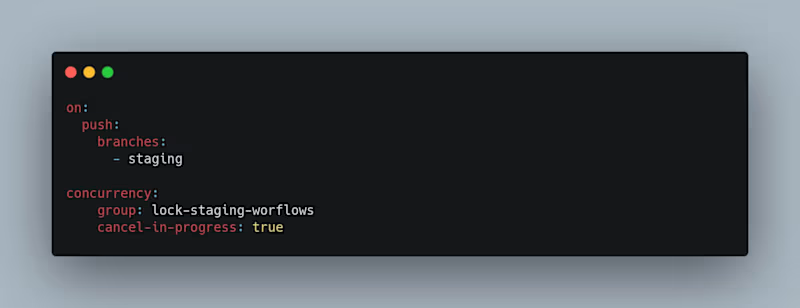
🛠️ DevOps Tips 🛠️ If your GitHub workflows or jobs are failing due to jobs concurrently accessing and/or modifying shared resources, You can control execution at the workflow or job levels using the concurrency.
Jobs/Workflows in the same are prohibited from running at the same time, and you can cancel any jobs/workflow if you trigger another one.
Groups let you define compartments in which you don't want concurrent workflows running. They can be organized however you like. I find that using them in separate environments is a great practice.
Cancel-in-progress: specifies if the old running job/workflow needs to shut down.
Read more in docs: https://docs.github.com/en/actions/how-tos/write-workflows/choose-when-workflows-run/control-workflow-concurrency
2
3
665


AI Automation & API Integrations for CRM and Operations
- 1x
- Hired
- 5.0
- Rating
- 5
- Followers
AI Automation & API Integrations for CRM and Operations
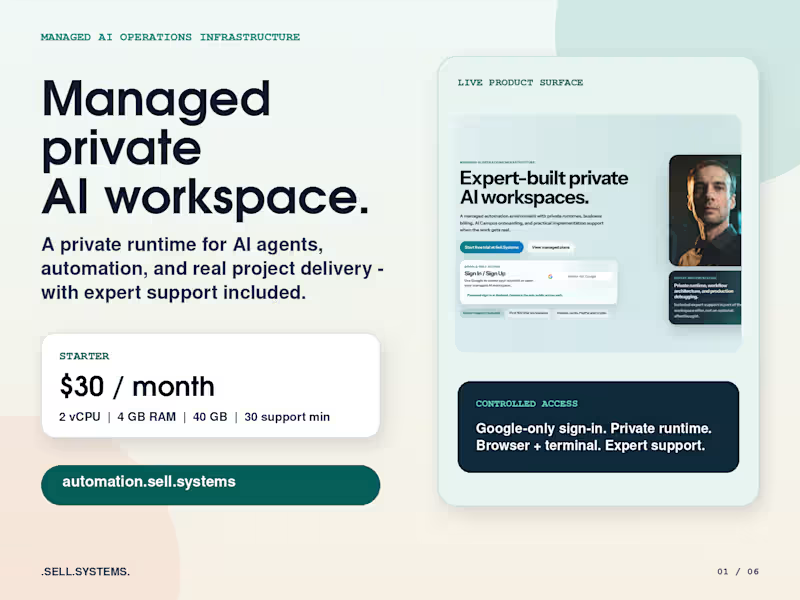
An AI agent becomes much more useful when it has somewhere real to work.
Not another disposable chat. A private Linux workspace where it can keep project context, use browser and terminal tools, run automations, and leave behind inspectable files, logs, and deployed systems.
This is the operating model behind two recent builds:
InterviewCoach: Android/Compose + FastAPI/LangGraph, a public APK, and 111,723 deterministic load-test requests with 0 failures.
An omnichannel agent: one LangGraph-controlled brain, PostgreSQL/pgvector state, and active Instagram, Telegram, and WhatsApp adapters.
I have now made the same managed environment available as a Contra product. Starter is $30/month: 2 vCPU, 4 GB RAM, 40 GB storage, automation runtime, controlled Google sign-in, and 30 minutes of expert support.
The boundary is explicit: the subscription covers the workspace and its support allocation. Custom integrations, migration, and production hardening are scoped separately.
https://contra.com/products/l68ei2Zz-managed-private-ai-workspace-expert-support
If you are a founder or operator with one real workflow to prove before committing to a larger build, this is the entry point.
1
186
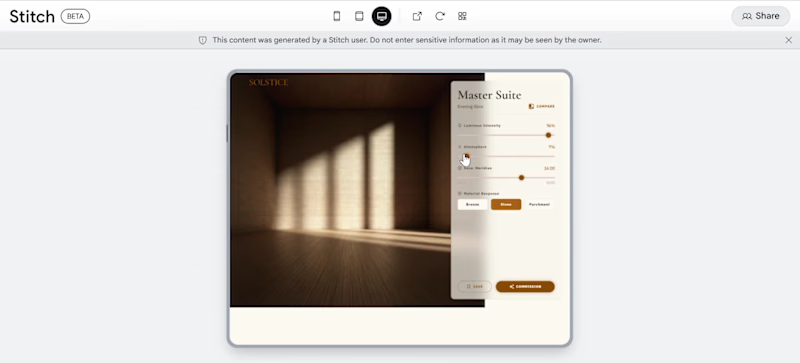
I designed it as a premium application for shaping the emotional quality of a private interior through light. Instead of treating lighting like a smart-home settings panel, the concept treats light as an architectural material.
From a single responsive surface, the user can:
adjust luminous intensity
tune atmosphere / bloom
scrub the solar meridian across the day
switch material emphasis
compare states
save a preset
open a commission summary
Prototype:
https://stitch.withgoogle.com/preview/11025185860304544382?node-id=d326bee735504c7382712f3311866d8a
I used Stitch inside a multi-agent workflow orchestrated through Codex CLI + MCP. Stitch handled the interface generation and iterative design passes, while the agent workflow helped pressure-test directions, validate interaction states, and keep the concept moving toward a working product surface instead of a static mockup.
What I especially liked:
fast concept generation
strong visual exploration
quick iteration on layout and interaction direction
What I’d still like to improve:
stronger material-response differences
a more ownable room identity
even richer visual transitions between light states
Built for the Google Stitch Challenge on Contra.
2
2
180

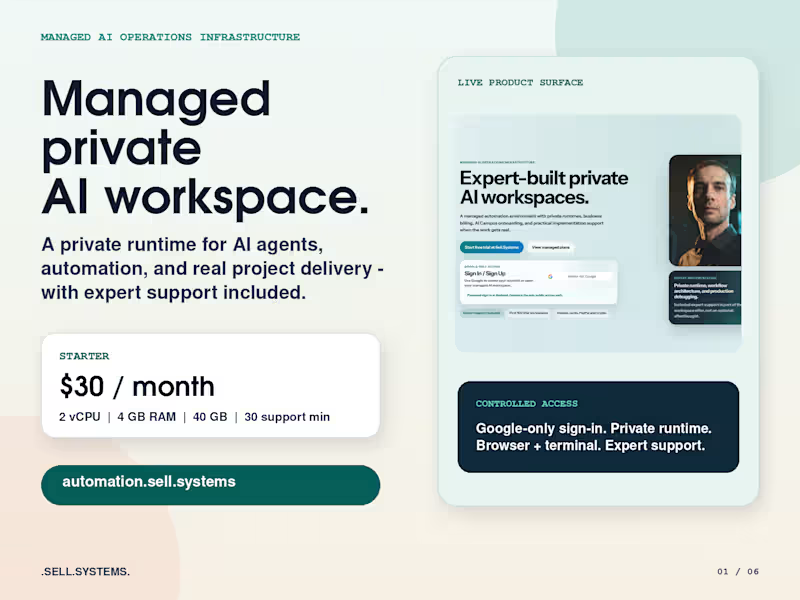
I made this short video in ElevenLabs to show one small part of what I’m building at Sell.Systems (http://Sell.Systems).
The idea is simple:
too much work still disappears in handoffs.
research → planning → building → testing → delivery
every step protects quality, but it also leaks context.
So I’m building a different setup:
a private AI workspace with a web terminal,
separate execution lanes for different jobs,
and one protected core that stays under control.
One lane can handle web work.
Another can test ideas.
Another can do lead research, content, or reporting.
They can connect when needed.
They can stay isolated when they should.
The goal is not “more AI everywhere.”
The goal is better architecture:
clear boundaries,
controlled execution,
and a system that gets more useful after every run.
Sell.Systems (http://Sell.Systems) is the build layer.
Automation.Sell.Systems (http://Automation.Sell.Systems) is the managed layer.
Not another chatbot.
More like a private operating layer for real AI work.
Which workflow in your business still has too many handoffs?
1
114

Principal Cloud Architect | OpenStack, KVM & SRE | RHCE
New to Contra
Principal Cloud Architect | OpenStack, KVM & SRE | RHCE




STRATEGY | TREASURY | COMPLIANCE
STRATEGY | TREASURY | COMPLIANCE

Quant Systems Architect
Quant Systems Architect
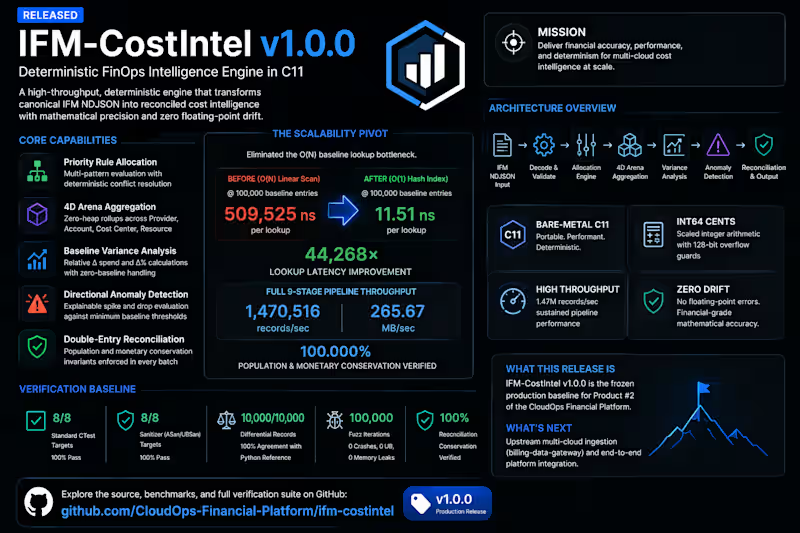
⚡ IFM-CostIntel — Deterministic FinOps & Cloud Cost Intelligence Engine
I’ve built and released IFM-CostIntel v1.0.0, a production-grade C11 financial intelligence engine designed to process normalized cloud billing data and transform it into deterministic, reconciled cost intelligence.
What it does
IFM-CostIntel provides:
Cost allocation with deterministic rule resolution
4D cost aggregation across provider, account, cost center, and resource
Baseline variance analysis
Directional anomaly detection
Financial reconciliation and conservation checks
Structured NDJSON output and audit telemetry
High-throughput processing designed for large billing workloads
Why it matters
Financial pipelines cannot afford silent rounding errors, inconsistent allocation, or unexplained reconciliation differences.
The engine therefore uses fixed-point integer financial arithmetic rather than floating-point calculations and enforces mathematical conservation throughout processing.
During scalability engineering, I also replaced an O(N) baseline lookup with an O(1) FNV-1a open-addressing hash index.
The measured improvement at 100,000 baseline entries:
509,525 ns → 11.51 ns per lookup
≈ 44,268× lower lookup latency
The complete pipeline benchmark reached:
1.47M records/sec
265.67 MB/sec
Verification
The v1.0.0 release has been validated through:
✅ 8/8 standard tests passing
✅ 8/8 ASan/UBSan tests passing
✅ 10,000/10,000 differential records matching the reference oracle
✅ 100,000 adversarial fuzz iterations
✅ 100% financial reconciliation conservation
What I can build with this capability
I can apply this systems-engineering stack to projects involving:
Cloud FinOps • Billing Infrastructure • Financial Data Pipelines • C/C++ Performance Engineering • Data Normalization • Cost Allocation • Reconciliation Systems • High-throughput Processing
The engine is available as an open-source reference implementation, and I’m interested in applying the same engineering principles to custom financial-data and cloud-cost infrastructure projects.
🔗 GitHub:
IFM-CostIntel Repository (https://github.com/CloudOps-Financial-Platform/ifm-costintel?utm_source=chatgpt.com)
🔖 v1.0.0 Release:
IFM-CostIntel v1.0.0 (https://github.com/CloudOps-Financial-Platform/ifm-costintel/releases/tag/v1.0.0?utm_source=chatgpt.com)
Need a high-performance financial or cloud-cost data pipeline? Let's talk.
1
2
307

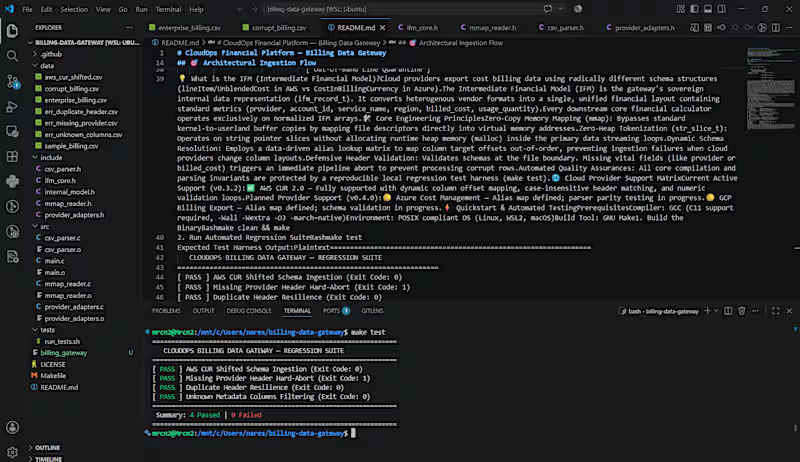
Building reliable software means designing for imperfect real-world data—not perfect demos.
This week, I upgraded our open-source cloud billing ingestion engine to handle unpredictable CSV data drift automatically through dynamic header resolution and defensive validation.
Instead of assuming fixed column layouts, the parser dynamically adapts to changing vendor schemas while protecting downstream financial pipelines from malformed or incomplete records.
The result? Software that is more maintainable, resilient, and built for production environments where data rarely arrives in a perfect format.
The same engineering principles apply to client systems involving:
• Automated Data Pipelines & ETL
• Custom Business & Financial Tools
• Low-Latency Backend Infrastructure
• System Resiliency & Input Validation
I enjoy solving complex problems where software needs to be dependable, scalable, and engineered for long-term maintainability.
Sovereign Code Repository:
https://github.com/CloudOps-Financial-Platform/billing-data-gateway
#CustomSoftwareDevelopment #DataEngineering #Automation #BackendDevelopment #OpenSource
1
332

Shattering the system call tax: 1.19 BILLION records processed natively at 6.8M OPS. 🛠️⚡
Most modern backend data layers choke under heavy load because traditional IPC mechanics (like network sockets or standard streams) force the CPU to constantly context-switch between user space and kernel privileged space.
To prove what's possible when you design with mechanical sympathy, I spent today engineering "forge-core"—a custom, single-producer single-consumer (SPSC) data transport plane running completely in user space.
The Architecture Stack:
• Shared Memory Fabric: POSIX raw descriptors (shm_open + mmap) project memory pages directly into independent virtual addresses. Zero-copy data paths.
• Synchronization Guard: A lockless ring buffer relying entirely on C11 atomic fences (memory_order_release/acquire) to eliminate thread locks.
• Hardware Core Isolation: CPU affinity pinning (sched_setaffinity) permanently locks the ingress stream to Core 0 and the metrics processing to Core 1.
The Telemetry Metrics (WSL2 Profile):
📈 Total Volume: 1,190,000,000 continuous records handled with absolute memory stability.
⚡ Local Throughput: ~6.80 Million Operations Per Second (MIOPS) sustained natively.
🔬 Core Isolation Win: Bypassing the OS thread scheduler lag dropped transport latency by ~3,000ns per record transaction.
True infrastructure depth beats high-level framework wrappers every single day.
The codebase and profiling documentation are public on GitHub under the Forge Systems Lab namespace: https://github.com/Forge-Systems-Lab/forge-core
💡 I build high-throughput data scrapers, custom backend pipelines, and lag-free AI automation systems. If your startup needs hyper-efficient infrastructure that saves massive cloud overhead, send an inquiry straight to my profile. Let's scale it.
1
234

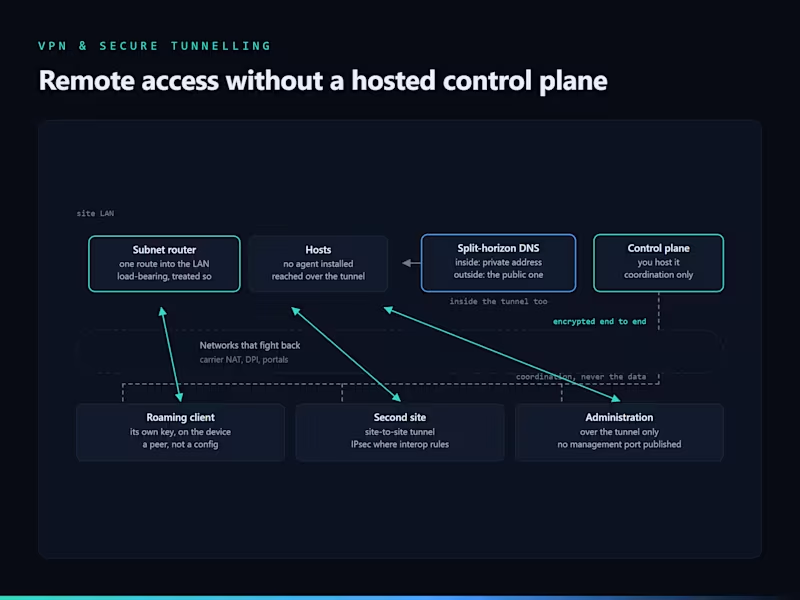
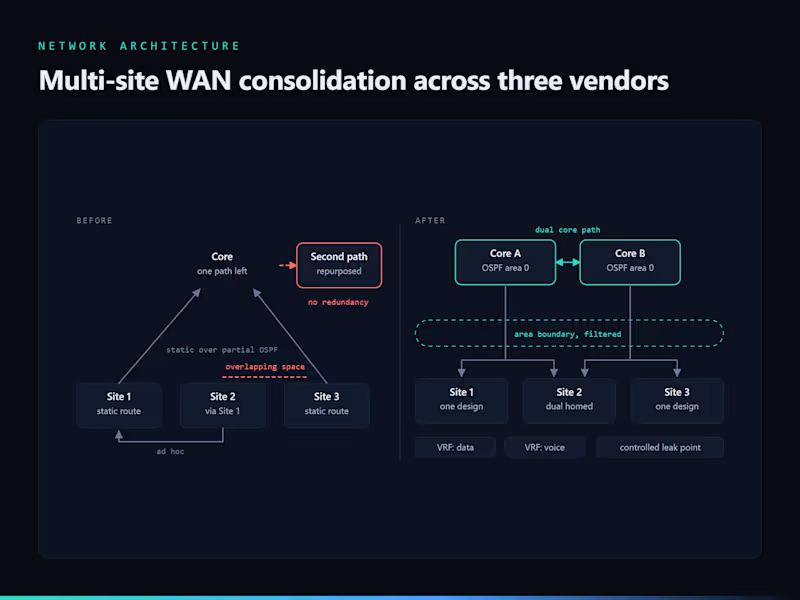
Network, VPN & Linux infrastructure engineer (15+ years)

Python Developer | Data Protection & Security Tools
New to Contra
Python Developer | Data Protection & Security Tools
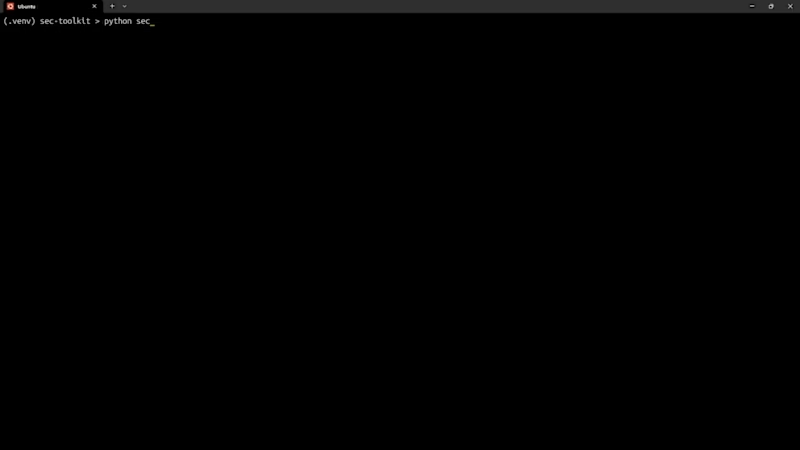
Security in motion and at rest — built in Python 🛡️
I built Sec-Toolkit, a two-layer security tool designed to keep data
safe everywhere it goes:
🔹In-Transit:
Verifies request signatures, validates user tokens, and checks web
security headers.
🔹At-Rest:
Encrypts sensitive files using AES and creates SHA-256 fingerprints
to ensure nothing has been tampered with.
It also includes automated checks using local AI, built with a clean
terminal interface for a smooth developer experience.
#Python (https://www.linkedin.com/search/results/all/?keywords=%23python&origin=HASH_TAG_FROM_FEED) | #CyberSecurity (https://www.linkedin.com/search/results/all/?keywords=%23cybersecurity&origin=HASH_TAG_FROM_FEED) | #Coding
(https://www.linkedin.com/search/results/all/?keywords=%23coding&origin=HASH_TAG_FROM_FEED)| #SoftwareEngineering (https://www.linkedin.com/search/results/all/?keywords=%23softwareengineering&origin=HASH_TAG_FROM_FEED) | #DataProtection (https://www.linkedin.com/search/results/all/?keywords=%23dataprotection&origin=HASH_TAG_FROM_FEED) |#AppSec (https://www.linkedin.com/search/results/all/?keywords=%23appsec&origin=HASH_TAG_FROM_FEED) | #DevTools (https://www.linkedin.com/search/results/all/?keywords=%23devtools&origin=HASH_TAG_FROM_FEED)
1
196
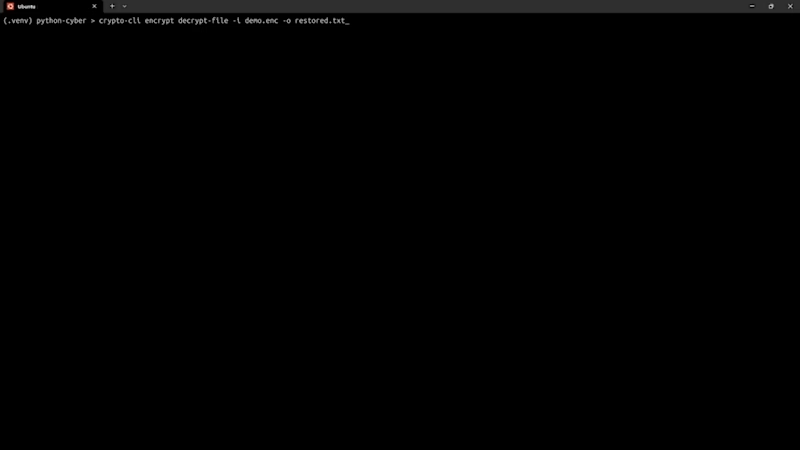
I developed a Python CLI focused on applied cryptography (Applied Cryptography Toolkit v0.2.0).
Demonstration of the security pipeline in action:
° File encryption and decryption using AES-256-GCM
° Preservation of original file integrity
° State validation via SHA-256 Hash verification
The project's focus is to ensure a simple, fast, and secure workflow for data manipulation via the command line.
#Python | #Cybersecurity | #Cryptography | #AES256 | #CLI | #SoftwareEngineering | #PythonProgramming | #InfoSec | #Dev | #Freelance
0
84
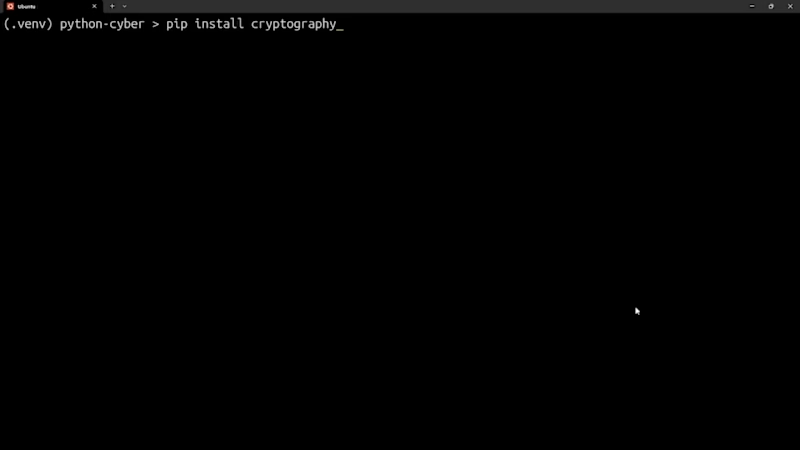
Built a CLI Python tool (sanitizer.py (http://sanitizer.py)) to sanitize sensitive data in logs and datasets before storage or analytics pipelines.
Highlights:
° Speed: Processed 82k+ lines (~10MB) in 2.2s in masking mode (~37k lines/sec).
° Security: Native Fernet encryption using Python’s cryptography library with auto key generation.
° Flexibility: Easily switch between field masking and full encryption.
Fast PII protection without slowing down processing pipelines.
#Python #DataProtection #Cybersecurity #Cryptography #DevOps
0
82
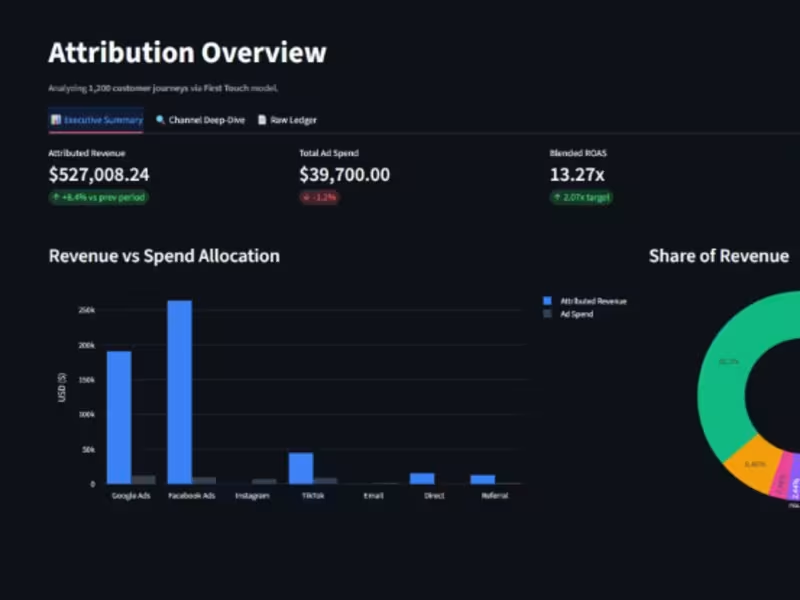
🚀 Built a Multi-Touch Attribution Engine & Dashboard
Measuring marketing impact across multi-touch customer journeys is a tough data challenge. I built Vectra Analytics to solve this—a platform that models cross-channel performance using statistical attribution models.
Tech Stack:
Frontend: Streamlit (dark mode UI)
Processing & Viz: Python, Pandas, NumPy, Plotly
Database: SQLAlchemy Async (aiosqlite)
Data Quality: Pydantic v2 validation
Core Features:
Flexible Attribution Models: Switch instantly between First/Last Touch, Linear, Time Decay, and Markov Chains.
Core Metrics: Tracks Attributed Revenue, Spend, Net Profit, and ROAS.
Executive Decision Matrix: Scatter plots mapping Spend vs. Revenue vs. ROAS for fast insights.
#Python (https://www.linkedin.com/search/results/all/?keywords=%23python) | #DataEngineering (https://www.linkedin.com/search/results/all/?keywords=%23dataengineering) | #Streamlit (https://www.linkedin.com/search/results/all/?keywords=%23streamlit) | #Analytics (https://www.linkedin.com/search/results/all/?keywords=%23analytics) | #SoftwareEngineering (https://www.linkedin.com/search/results/all/?keywords=%23softwareengineering) | #DataScience (https://www.linkedin.com/search/results/all/?keywords=%23datascience) | #GrowthAnalytics (https://www.linkedin.com/search/results/all/?keywords=%23growthanalytics)
0
53