

Versatile Fullstack Engineer | Web & Mobile Expert

Versatile Fullstack Engineer | Web & Mobile Expert


Full Stack Developer | React & MERN | Modern, Responsive Web
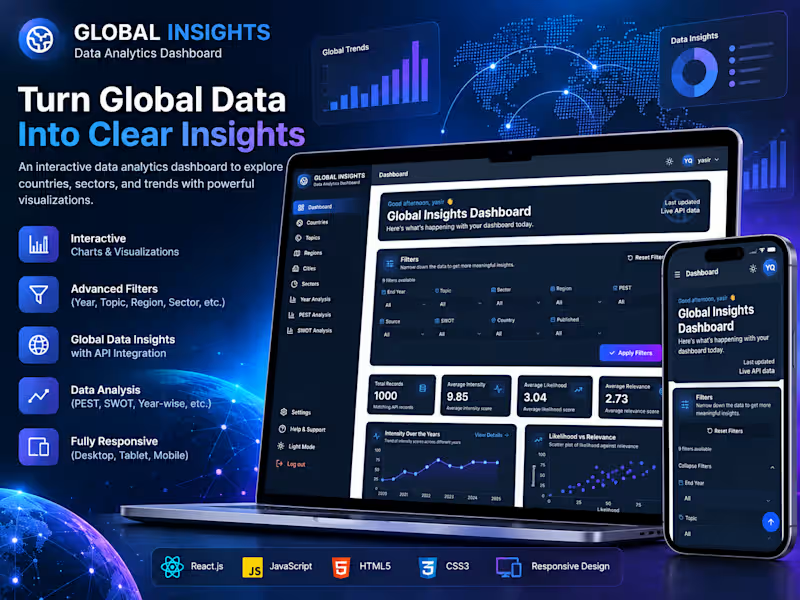
Global Insights — Data Analytics Dashboard
Global Insights is a modern, responsive data analytics dashboard built to transform complex datasets into a clear and interactive experience. The project focuses on helping users explore global data through structured filters, key performance indicators, and visual analytics.
I designed and developed the frontend with a strong focus on clean UI, usability, responsive layouts, and data-driven components. The dashboard includes a central overview with KPI cards, advanced filtering, interactive charts, and multiple analysis sections for exploring different dimensions of the data.
Key Features
Interactive Dashboard — Centralized view of important data and insights.
Advanced Filters — Filter data by End Year, Topic, Sector, Region, PEST, Source, SWOT, Country, and Published date.
KPI Cards — Display key metrics such as total records, average intensity, likelihood, and relevance.
Interactive Data Visualization — Charts for analyzing trends, comparisons, and relationships within the dataset.
Year Analysis — Explore how data and trends change over different years.
PEST Analysis — Analyze Political, Economic, Social, and Technological factors.
SWOT Analysis — Explore strengths, weaknesses, opportunities, and threats within the data.
Country & Regional Insights — Explore data across different countries, regions, cities, and sectors.
REST API Integration — Fetch and display dynamic data from an external API.
Dark & Light Mode — Theme switching for a more personalized experience.
Responsive Design — Optimized for desktop, tablet, and mobile screens.
Reusable Components — Structured the interface into reusable React components for easier maintenance and scalability. Technologies Used React.js • JavaScript • Tailwind CSS • Recharts • REST APIs • HTML5 • CSS3 • Responsive Web Design.
Project Goal The main goal was to build a practical analytics platform that combines data, visualization, filtering, and user-friendly design into one cohesive interface while strengthening my skills in React development, data visualization, API integration, and responsive UI/UX.
0
26
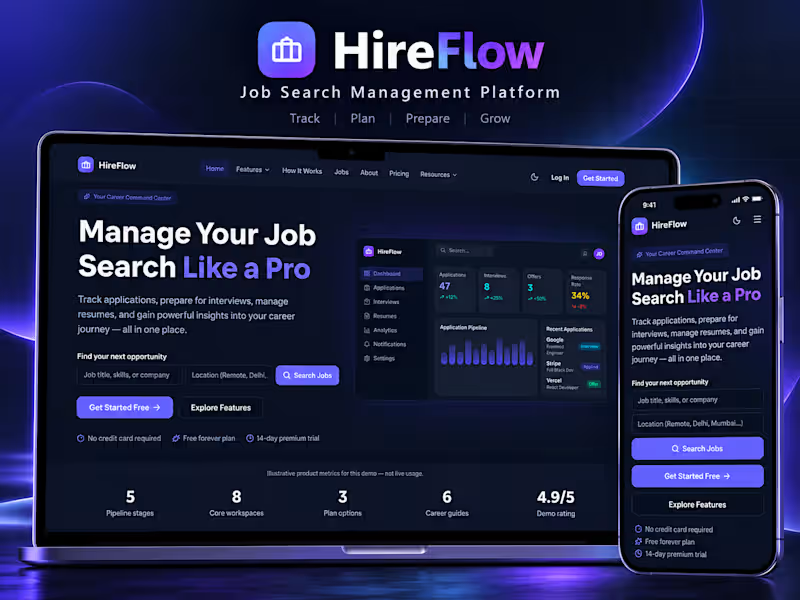
HireFlow — Job Search Management Platform
HireFlow is a modern frontend platform designed to help users manage their entire job search in one place.
I built the frontend with a focus on clean UI, responsive design, intuitive navigation, and practical user experience. The platform brings job applications, interviews, job discovery, resume analysis, notifications, and analytics together in a single dashboard.
Key Features
Job search dashboard with application progress
Application tracking with job status
Interview management and preparation
AI Resume Analyzer UI with resume score, ATS score, skills matching, and suggestions
Job marketplace with search and filtering
Notifications and analytics
User profile and settings
Fully responsive design for desktop, tablet, and mobile
Modern dark UI with purple/blue gradients
Technologies
React.js • JavaScript • HTML5 • CSS3 • Responsive Design
I used Cursor AI as a development assistant to help with coding, debugging, improving, and organizing the project while planning the features, structure, and overall UI myself.
The project helped me strengthen my skills in React development, responsive design, UI/UX, component-based development, and building practical web applications.
HireFlow is an ongoing project, and I plan to continue improving it with additional features and enhancements.
0
32
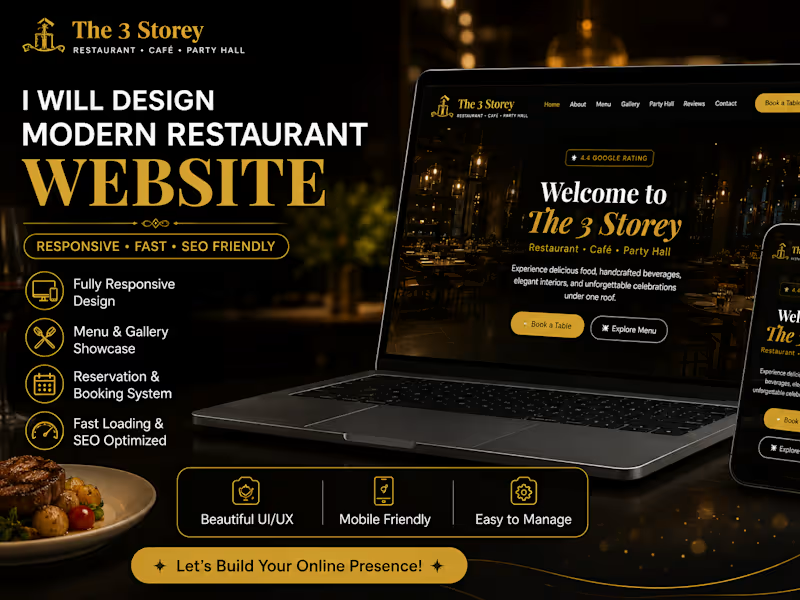
The 3 Story — Restaurant, Café & Party Hall Website
A modern, responsive restaurant website designed to showcase The 3 Story restaurant, café, and party hall with an attractive and user-friendly experience.
I focused on creating a premium visual design with smooth navigation, responsive layouts, engaging sections, and clear calls-to-action so visitors can easily explore the restaurant, services, menu, and event facilities.
Key Features:
Modern and premium restaurant UI
Fully responsive design for mobile, tablet, and desktop
Restaurant, café, and party hall sections
Menu and service presentation
Attractive hero section with strong CTA
Smooth scrolling and interactive UI elements
WhatsApp integration for quick customer inquiries
Clean navigation and user-friendly layout
Optimized spacing, typography, and visual hierarchy
Cross-device compatible design
Technologies Used:
HTML5, CSS3, JavaScript, Responsive Web Design, WhatsApp Integration
The goal was to create a professional online presence that helps the restaurant showcase its services and makes it easy for customers to connect.
0
43
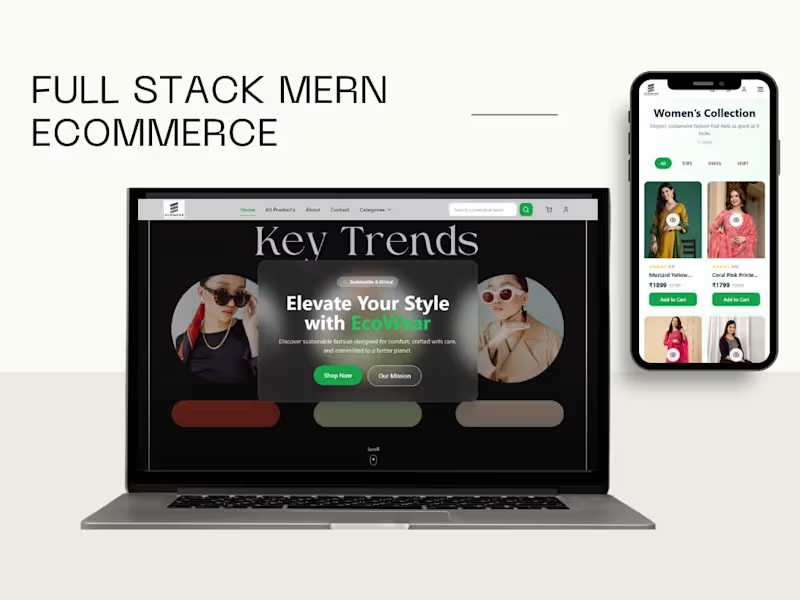
EcoWear is a modern e-commerce web application that I built using the MERN Stack.
✨ Features
✅ User Authentication (OTP/Login)
✅ Product Search & Categories
✅ Wishlist & Shopping Cart
✅ Responsive Design
✅ Clean and Modern UI
✅ Secure Backend APIs
✅ MongoDB Database Integration
🛠️ Tech Stack
React.js
Node.js
Express.js
MongoDB
Tailwind CSS
Redux Toolkit
Building this project helped me understand how frontend and backend work together to create a complete web application. It also improved my problem-solving skills while working on authentication, state management, API integration, and deployment.
0
46

Full Stack Engineer building Fast Websites and Web Apps



Python & Django developer for web apps and APIs
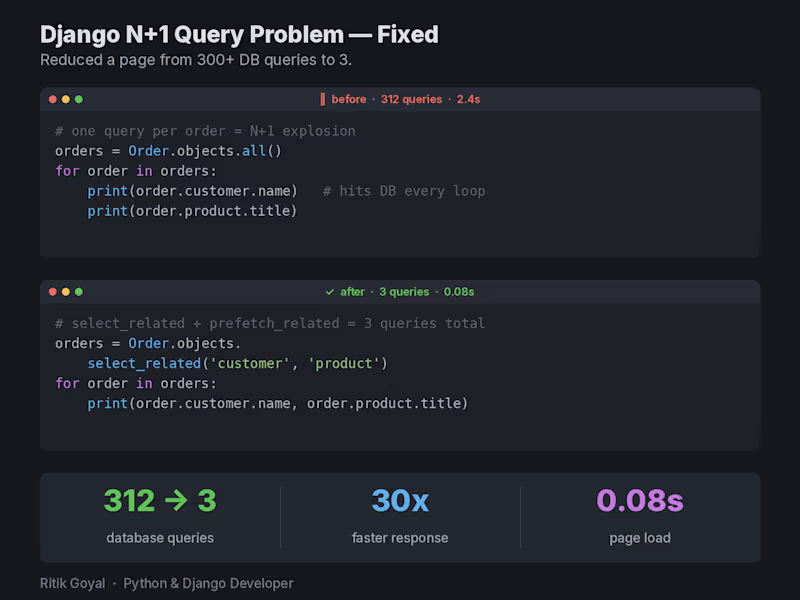
Spent an afternoon this week chasing down why a client's order dashboard took around 2.5s to load.
Turned out the page was firing 300+ database queries. Classic N+1 problem. Every order in the loop was making its own separate trip to the DB just to grab the customer and product.
One line fixed it. select_related() tells Django to pull the related rows in a single JOIN instead of querying them one at a time.
312 queries down to 3. Page load went from 2.4s to 0.08s.
The annoying part is this never shows up on small datasets in dev. It only bites you in production once the table grows. So now I always check the query count in Django Debug Toolbar before shipping any list view.
What's the worst N+1 you've run into?
0
154
Hit a classic Django trap this week and figured it's worth sharing since so many people are running into it now.
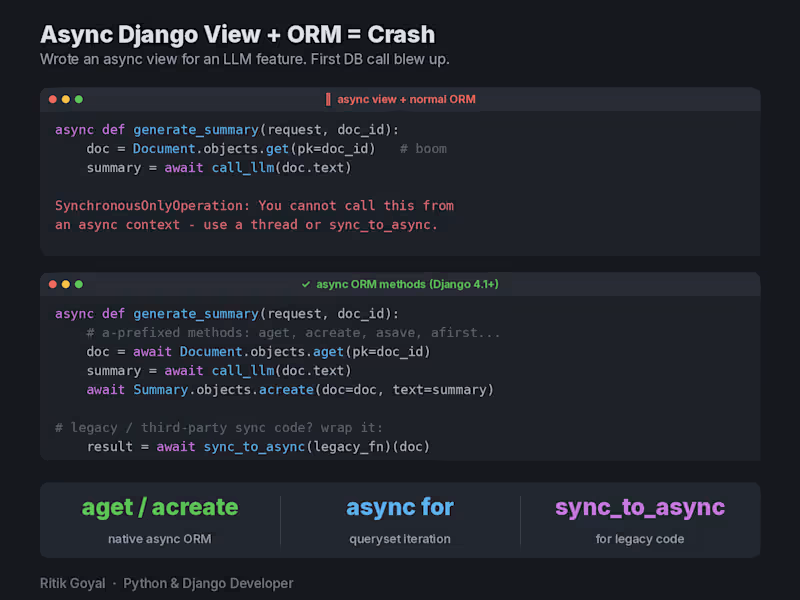
I was adding an LLM feature to a Django app. The AI call takes a few seconds, so naturally I made the view async so it doesn't block a worker while waiting. Wrote the async view, called the ORM like I always do, and boom:
SynchronousOnlyOperation: You cannot call this from an async context.
Turns out Django's ORM can't just be called normally inside async code. The classic sync API isn't safe in an event loop, so Django protects it and throws this error instead.
The fix is simpler than most people think. Since Django 4.1 the ORM has async versions of everything, same names with an "a" prefix. So objects.get() becomes await objects.aget(), create() becomes acreate(), save() becomes asave(). For loops over querysets, async for works directly. And for old sync code or third party libraries you can't change, wrap them with sync_to_async().
Why this matters right now: everyone is bolting AI features onto Django apps, and LLM calls are exactly the slow I/O that async is made for. Which means a lot of devs who never touched async Django are suddenly hitting this error for the first time.
One honest caveat: transactions still don't fully work in async mode, so if you need atomic blocks, keep that path sync and wrap it.
Anyone else made the jump to async views yet, or still happily on WSGI?
0
163
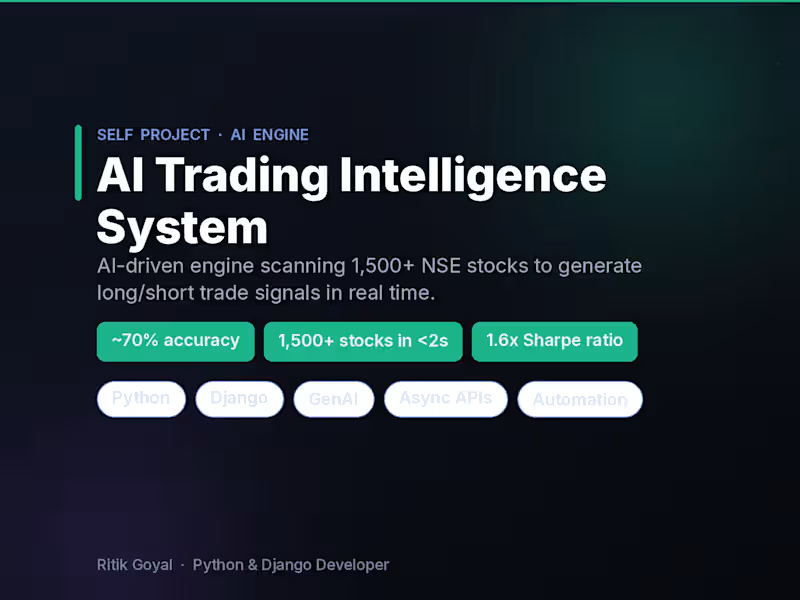
An AI-driven trading engine that analyzes 200-DMA breakouts and real-time market sentiment to generate long/short recommendations. It scans 1,500+ NSE stocks in under 2 seconds and uses generative AI to build option strategies, delivering event-driven trade signals end-to-end. I built the full Django backend, async APIs, and the signal-generation logic.
Accomplishments and responsibilities:
Built an AI-driven trading engine analyzing 200-DMA breakouts and market sentiment, generating long/short signals with ~70% directional accuracy — outperforming baseline strategies by 35%;
Integrated generative-AI insights for automated option-strategy creation (spreads, straddles, condors), improving Sharpe ratio by 1.6× and cutting manual analysis time by 60%;
Developed a Django backend with async APIs scanning 1,500+ NSE stocks in under 2 seconds, achieving 40% lower latency with event-driven alerts.
0
95
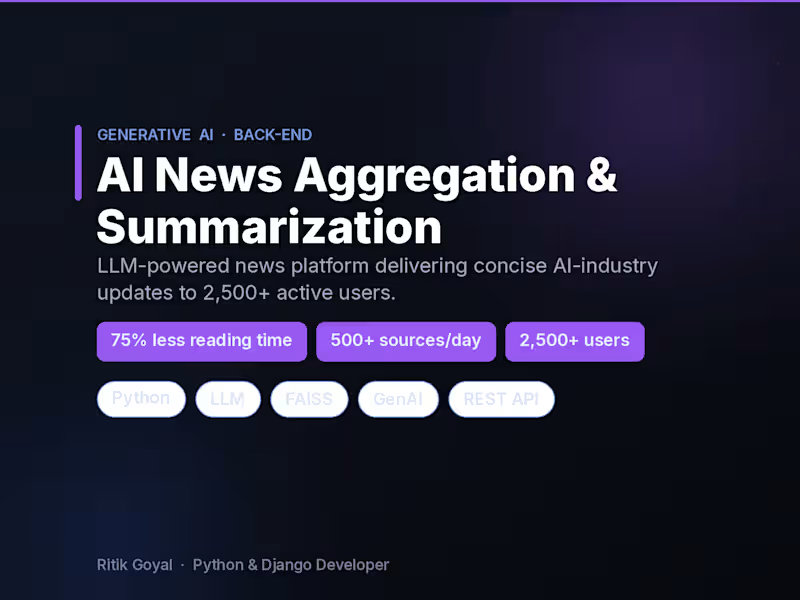
An AI-powered news platform that delivers concise, real-time AI-industry updates to 2,500+ active users. It scrapes and aggregates 500+ sources daily, removes duplicates, and uses generative-AI summarization to cut reading time significantly while surfacing the most relevant stories. I built the backend responsible for scraping, deduplication, and the LLM summarization pipeline.
0
97

I build production AI agents that automate real workflows
I build production AI agents that automate real workflows
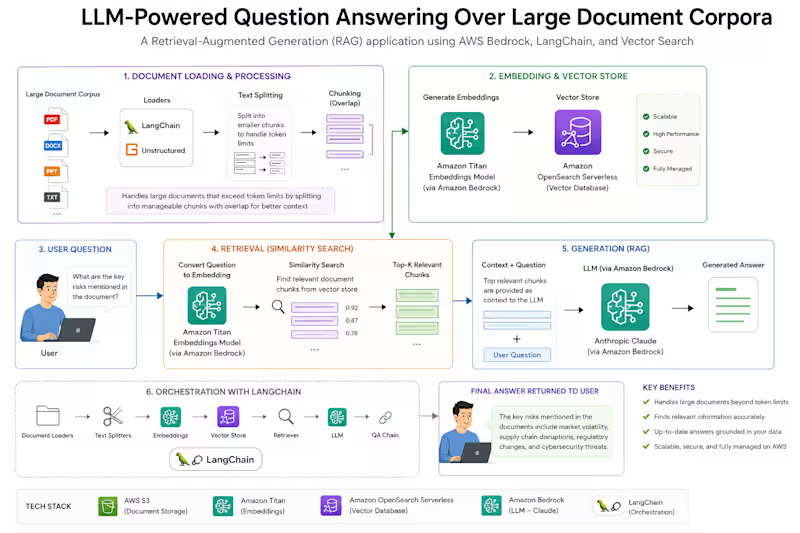
Built an LLM-powered question-answering application that lets users ask natural-language questions over large document corpora and get accurate, grounded answers, instead of manually searching through documents for the right section.
Designed and built the full RAG pipeline independently, from document ingestion through to answer generation, as a technical demonstration of production-grade retrieval-augmented generation using AWS-native tooling.
Key Challenges:
Documents exceeding token limits: Large source documents couldn't be fed directly into the LLM's context window, so they had to be broken down without losing meaning or context across chunks.
Finding the right context: With a large corpus, the system needed to reliably surface the specific chunks relevant to a given question, not just the most textually similar ones.
Grounded, accurate answers: Answers had to be based on the actual retrieved content, not the model's general knowledge, to avoid confidently wrong responses.
Working within a managed AWS ecosystem: Embeddings, storage, and generation all needed to work together cleanly using Bedrock-native models rather than a patchwork of external services.
Approach:
Document loading and chunking
Processed large documents into manageable chunks sized to stay within model token limits while preserving enough context for coherent retrieval.
Vector embeddings with Amazon Titan
Generated vector embeddings for each document chunk using Amazon Titan, capturing semantic meaning rather than just keyword overlap.
Vector storage and retrieval
Stored the embeddings in a vector database, enabling fast similarity search to pull the most relevant chunks for any given question.
RAG-based answer generation with Claude on Bedrock
When a question comes in, the system retrieves the relevant chunks and passes them as context to Anthropic Claude via Amazon Bedrock, which generates an answer grounded in the retrieved content rather than relying on parametric memory alone.
Results & Impact:
Accurate, source-grounded answers over document corpora too large to fit in a single context window.
A scalable retrieval architecture that separates document processing, embedding, and generation, so any of the three can be swapped or scaled independently.
A fully AWS-native RAG pipeline, demonstrating fluency with Bedrock's embedding and generation models working together in production patterns.
Tech Stack
Python · LangChain · AWS Bedrock · Amazon Titan · Anthropic Claude · FAISS DB
1
149
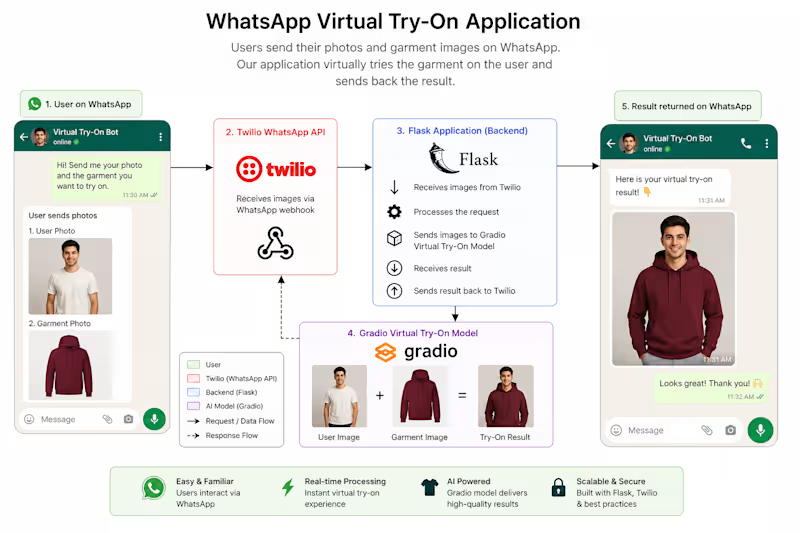
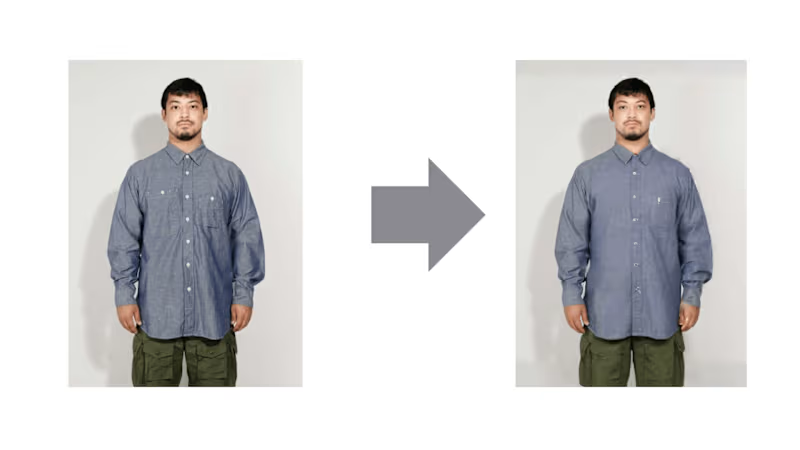
Built a virtual try-on application that lets users try on garments over WhatsApp. A user sends a photo through WhatsApp, and the app returns a realistic image of them wearing the selected garment, no app download or website visit required.
Designed and built the system end-to-end, from the WhatsApp messaging integration through to the try-on generation pipeline, as a self-contained product demonstrating conversational commerce for fashion/retail use cases.
Key Challenges:
- Frictionless UX over a messaging app: WhatsApp isn't built for structured app interactions, so the flow had to feel natural through simple image and text messages, not clunky commands.
- Reliable image handling: Incoming photos vary wildly in quality, lighting, and pose, and had to be received, processed, and matched with garment images reliably.
- Fast turnaround: Users expect a near-instant reply on a messaging app, so the backend had to handle image processing and model inference without long delays.
- Stitching third-party services together: Twilio's WhatsApp API and Gradio's try-on model weren't built to talk to each other, so the app had to bridge them cleanly.
Approach:
WhatsApp integration via Twilio
-Set up Twilio's WhatsApp API to receive incoming user images and send outgoing try-on results, handling the messaging layer end-to-end.
Flask backend as the orchestration layer
-Built a Flask application to receive Twilio webhooks, manage the request flow, and coordinate between incoming user images and the try-on model.
Virtual try-on generation with Gradio
- Integrated Gradio's virtual try-on model to generate the final garment-on-user image, returning a realistic composite result.
End-to-end flow design
- Connected the pieces so a user's WhatsApp message triggers the full pipeline automatically: receive image → process → generate try-on → send result back, all within a single conversation.
Results & Impact
- A working conversational shopping experience built entirely on a messaging app users already have open every day.
- Zero-download, zero-signup try-on flow — removes the biggest friction point in getting users to try a new AI-powered feature.
- A reusable integration pattern connecting Twilio, Flask, and a generative vision model, applicable to other WhatsApp-based commerce or personalization tools.
Provided Services & Solutions
📌 Conversational App Development
📌 WhatsApp API Integration (Twilio)
📌 Backend Development (Flask)
📌 Generative AI Integration (Gradio virtual try-on model)
📌 Third-Party API Orchestration
Tech Stack: Python · Flask · Twilio WhatsApp API · Gradio
If you want an AI-powered experience built directly into a channel your customers already use, like WhatsApp, let's talk.
1
71
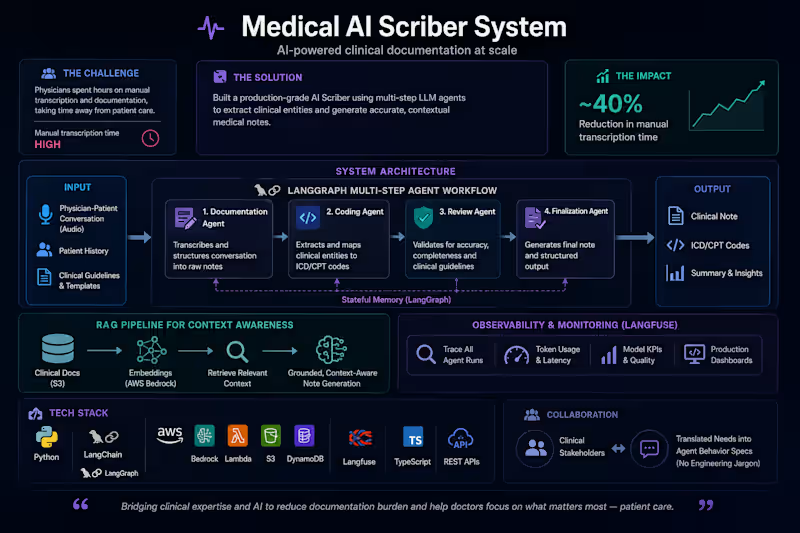
Built and maintained a HIPAA compliant production medical AI scribe system that uses multi-step LLM agents to extract clinical entities directly from physician-patient conversations and turn them into structured medical notes, cutting down the manual transcription work clinicians used to do after every visit.
Multi-stage clinical workflow: Documentation, coding, and review each have different logic and conditional paths, and the system needed to branch correctly between them without losing context.
Clinical accuracy: Generated notes had to be grounded in real patient history and clinical guidelines, not just plausible-sounding text.
Production reliability: As a live system handling real conversations, every agent run needed to be observable, debuggable, and monitored for cost and latency in real time.
Non-technical requirements gathering: Clinical needs had to be captured accurately from stakeholders without a technical background and translated into precise agent logic.
Approach:
Stateful agent orchestration with LangGraph
Designed LangGraph-based agent workflows with conditional branching, allowing the system to move correctly across documentation, coding, and review stages based on conversation content.
Context-grounded note generation with RAG
Built a RAG pipeline on AWS Bedrock with embeddings, so every generated note is grounded in the patient's actual history and relevant clinical guidelines rather than generic output.
Full production observability
Integrated Langfuse across all agent runs to track token usage, latency, and model KPIs, giving the team visibility into system health and cost in production, not just at build time.
Clinical stakeholder collaboration
Ran requirements sessions directly with clinical staff, converting their documentation needs into concrete agent behavior specs and validation criteria.
Results & Impact:
~40% reduction in manual transcription time for clinicians using the system.
Clinically grounded output, with notes tied to real patient history and guidelines instead of unsupported generation.
Full production observability, with token usage, latency, and model performance tracked continuously.
A workflow clinicians could trust, built through direct collaboration rather than a black-box handoff.
Provided Services & Solutions:
📌 AI Agent Development (LangGraph)
📌 RAG Pipeline Development (AWS Bedrock)
📌 LLM Observability (Langfuse)
📌 Cloud Infrastructure (AWS Lambda, S3, DynamoDB)
📌 Stakeholder Requirements Translation
📌 Production ML Systems
Tech Stack
Python · LangChain · LangGraph · AWS (Bedrock, Lambda, S3, DynamoDB) · Langfuse · TypeScript · REST APIs
2
104
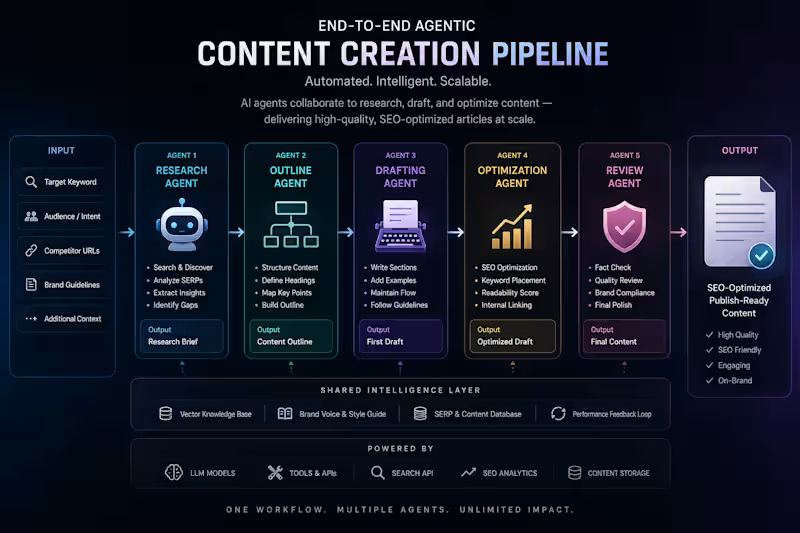
Overview 📖
Built an end-to-end agentic content creation pipeline for a fast-growing AI-powered SEO platform. The system chains multiple LLM agents together to research, draft, and optimize content automatically, replacing what used to be a manual, multi-step editorial process with a single automated workflow.
Collaboration 🤝
Partnered directly with the platform's engineering team to design and ship the automation layer that now sits at the core of their content operations, turning a bottlenecked manual process into a scalable, always-on pipeline.
Key Challenges 🤔
Multi-step content logic: Research, drafting, and optimization each require different context and tone, but had to feel like one coherent pipeline, not three disconnected tools.
Consistency at scale: Every piece of generated content had to match brand voice and pass compliance checks, without a human reviewing each one manually.
Orchestration complexity: Content jobs needed to trigger reliably from webhooks and third-party APIs, run through multiple agents in sequence, and fail gracefully without stalling the whole pipeline.
Performance under load: The backend had to stay fast and stable as content throughput scaled up.
Approach 🔍
Agentic content pipeline design
Designed a multi-step LangChain agent chain with tool-calling, where each agent (research, drafting, optimization) has a clearly scoped role and hands off structured output to the next.
Workflow orchestration with n8n
Built n8n automation workflows to handle webhook triggers, third-party API integrations, and job routing, removing the need for manual intervention at almost every stage.
Brand voice & compliance enforcement
Layered in structured prompting and validation steps so generated content stays on-brand and passes compliance checks automatically, at scale.
Backend performance tuning
Optimized FastAPI endpoints and managed Azure-hosted PostgreSQL databases to keep latency low under high content-throughput conditions.
Results & Impact ✨
~60% reduction in manual intervention across the content pipeline, freeing the team to focus on strategy instead of babysitting workflows.
Consistent brand voice at scale, with compliance checks running automatically instead of manually.
Reliable, low-latency infrastructure validated under real content-throughput loads.
A reusable agentic architecture the platform can extend to new content types without rebuilding the pipeline.
Provided Services & Solutions ✅
📌 AI Agent Development (LangChain)
📌 Workflow Automation (n8n)
📌 LLM Integration (GPT-4, Claude)
📌 API Development (FastAPI)
📌 Cloud Database Management (Azure, PostgreSQL)
📌 Architecture Design & Consulting
Tech Stack
Python · FastAPI · LangChain · n8n · GPT-4 · Claude · Azure · PostgreSQL
2
103

A Professional Full Stack Developer
A Professional Full Stack Developer

View more →

SaaS MVP Expert | 3 MVPs Shipped | Full-Stack Developer
SaaS MVP Expert | 3 MVPs Shipped | Full-Stack Developer

AI & ML Solutions for Real-World Impact 🌐
AI & ML Solutions for Real-World Impact 🌐

View more →