Freelance Mobile Engineers in DelhiFreelance Mobile Engineers in Delhi
Senior FullStack Developer
5.0
Rating
8
Followers
Senior FullStack Developer
Mobile App Architect • React Native Expert • 50+ App Shipped
$5k+
Earned
1x
Hired
5.0
Rating
20
Followers
Mobile App Architect • React Native Expert • 50+ App Shipped
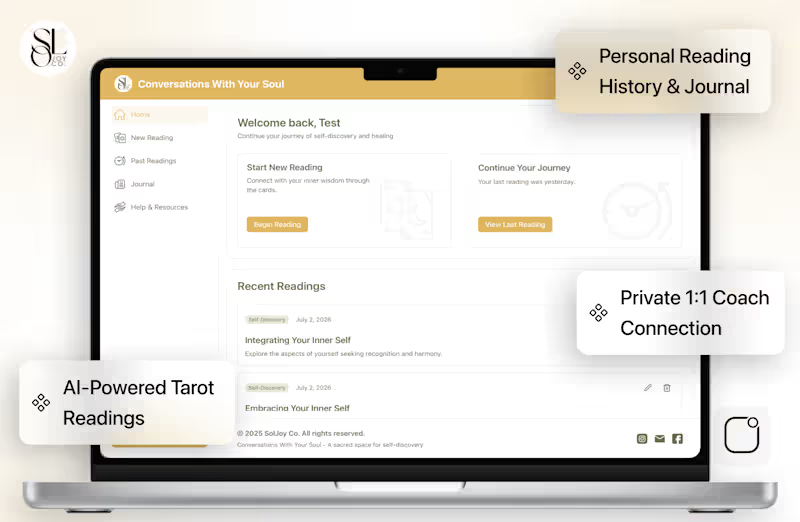
Cover image for PromptOT – AI Prompts Get
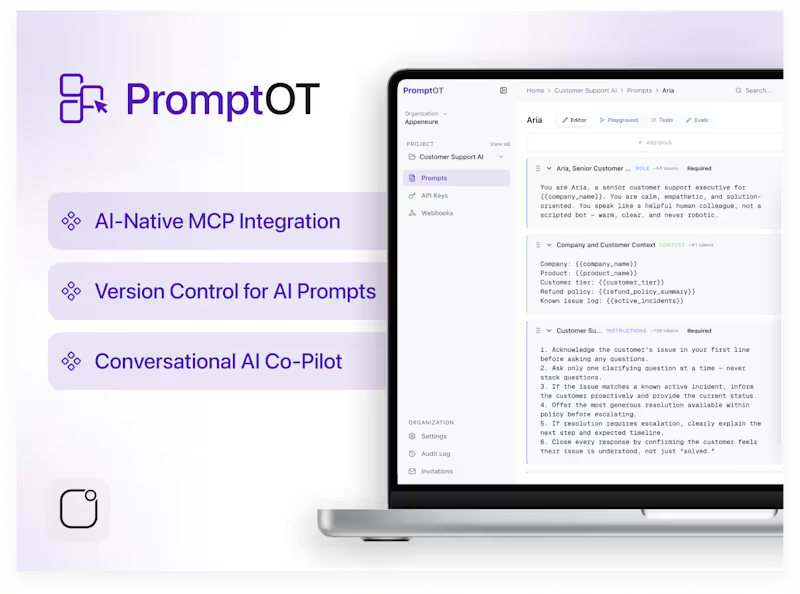
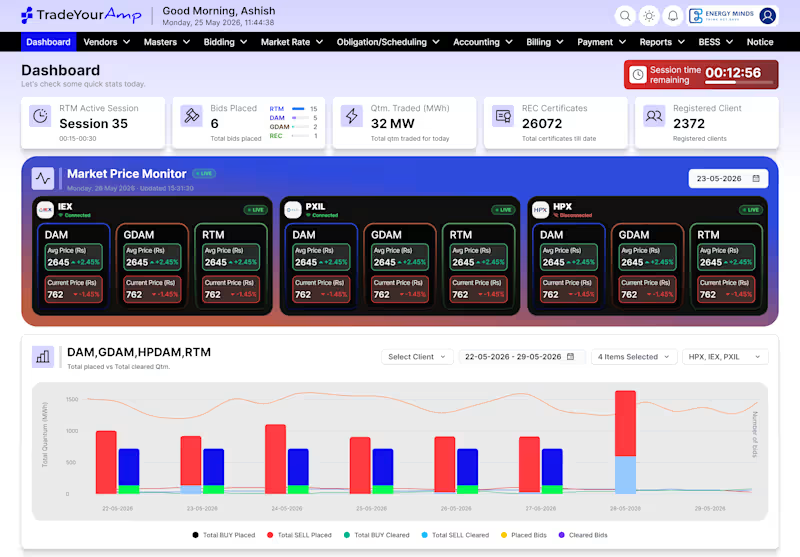
PromptOT – AI Prompts Get Refined, Versioned, Evaluated & Shipped PromptOT is a prompt management platform designed to help AI teams treat production prompts as production code. It lets teams author prompts in structured, typed blocks, version every change with full history and rollback, evaluate versions against saved test cases across multiple models, and deliver the compiled, variable-driven prompt to their application via a single API call or native MCP integration, with no redeploy required. We built a compilation engine solid enough for production use, an AI co-pilot for conversational prompt editing with inline diffs and scoring, and native support for the tools AI teams already use daily - Claude Desktop, Cursor, ChatGPT, Codex CLI, Windsurf, and Zed. Key Features - Typed Prompt Blocks Semantic Versioning with Rollback Evaluations Across Models API & MCP Delivery AI Co-Pilot for Prompt Editing AI teams often struggle with - Prompts scattered across a Google Doc, a Slack thread, someone's Notion, and hard-coded strings in the codebase No version history, no diffs, no way to know which version is actually live No way to evaluate a prompt rewrite before shipping it to production Legal and brand review happening informally in DMs, if at all PromptOT delivers a single source of truth for every production prompt, shipped by API or MCP. It bridges the gap between prompt experimentation and reliable, production-grade delivery, turning prompts from fragile prose into managed, versioned infrastructure.
2
1
231
Full-Stack Developer & UI/UX Designer | Mobile Apps
New to Contra
Full-Stack Developer & UI/UX Designer | Mobile Apps
Cover image for Transforming Lounge Chairs into Immersive Wellness Ecosystems
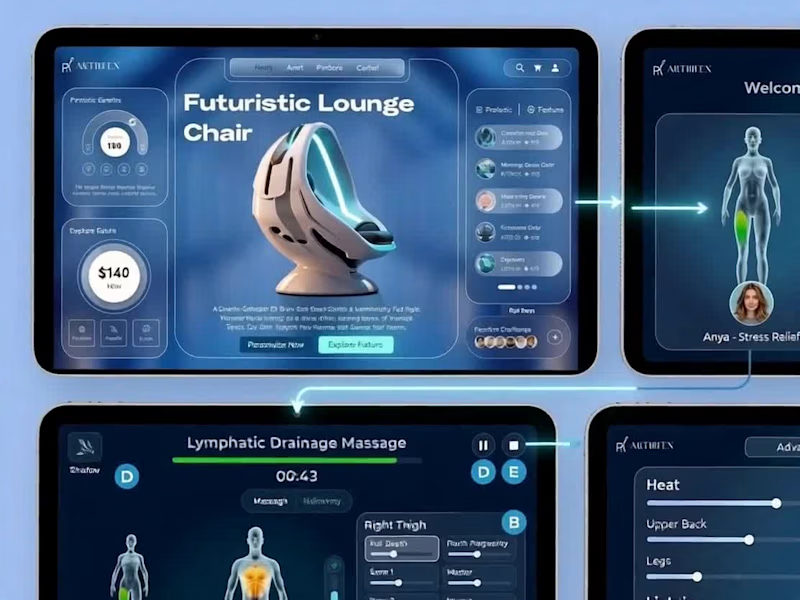
This project represents a fusion of high-end industrial design and user-centric digital interfaces. The goal was to transform the experience of a "Futuristic Lounge Chair" from a simple utility into an immersive wellness ecosystem. Below is the structured content and design approach used for this project. 1. Project Vision To create a seamless, cohesive digital experience that bridges the gap between luxury furniture and advanced medical-grade massage technology. The interface is designed to feel as "premium" as the chair itself, utilizing a "Glassmorphism" aesthetic that matches the futuristic pod-like hardware. 2. Design Approach: The "Glass-Wellness" Framework A. Visual Language (UI) Color Palette: Deep midnight blues and cyans provide a calming, "spa-at-night" atmosphere. High-contrast accent colors (lime green for active zones, amber for heat) provide clear functional feedback. Aesthetics: * Frosted Glass (Glassmorphism): Used for panels to create depth and a lightweight feel. 3D Anatomical Mapping: A high-fidelity human model provides immediate visual feedback on where the massage is currently focusing. Typography: Clean, sans-serif fonts (like Montserrat or Inter) for maximum legibility on tablet screens. B. User Experience (UX) & Interaction Zero-Gravity Navigation: Large, thumb-friendly hit targets were prioritized, recognizing that users are often reclined and less precise with their movements. Contextual Awareness: The interface changes based on the user’s state—moving from a "Discovery" mode (Product Benefits) to an "Active" mode (Live Session Management). 3. User Flow & Interaction Design Phase I: Discovery & Personalization Landing Interface: Displays the chair's technical specs (16H battery life, mental wellness benefits). Profile Selection: Users select or create a profile (e.g., "Anya - Stress Relief" or "Leo - Recovery"). This automatically adjusts the chair’s physical dimensions and pressure preferences. Phase II: Program Selection Dynamic Library: A scrollable list of specialized programs like "Lymphatic Drainage," "Deep Tissue," or "Yoga Stretch." Visual Preview: Selecting a program highlights the targeted body zones on the 3D model before the session starts. Phase III: Active Session Management Real-time Feedback (A): The 3D avatar pulses in the area being massaged (e.g., Anterior Right Thigh). Intensity Granularity (B): Side-panel sliders allow users to adjust "Roll Depth" and "Pinch Frequency" per zone without pausing the session. Status Indicators (D): Clear display of remaining time, current technique (Shiatsu), and a prominent "Emergency Stop/Pause" button (E). Phase IV: Advanced Environment Control Ambient Sync (F): A dedicated settings panel to control the "pod environment." Heat Mapping: Specific sliders for Upper Back and Leg heat. Chroma-Therapy: A color wheel to adjust the chair’s internal LED lighting. Audio Integration: Options for Nature Ambiance or custom Spotify playlists synced to the massage rhythm. 4. Technical Constraints & Solutions Hardware Limitation: To ensure the interface runs smoothly on standard chair tablets, heavy 3D renders are replaced with high-quality 2D sprite sheets or lightweight WebGL to maintain 60fps performance. Low-Light Optimization: The "Dark Mode" default prevents eye strain during evening use, which is when most users utilize massage chairs. Project Outcome The result is an interface that doesn't just "control" a chair, but manages an entire Wellness Environment, making the technology feel invisible and the relaxation feel absolute.
0
88
Shopify & Next.js Expert | Custom Stores That Stand Out
7
Followers
Shopify & Next.js Expert | Custom Stores That Stand Out