AI Agent Designer Projects in DelhiAI Agent Designer Projects in DelhiAI Agent Tutor Mobile App
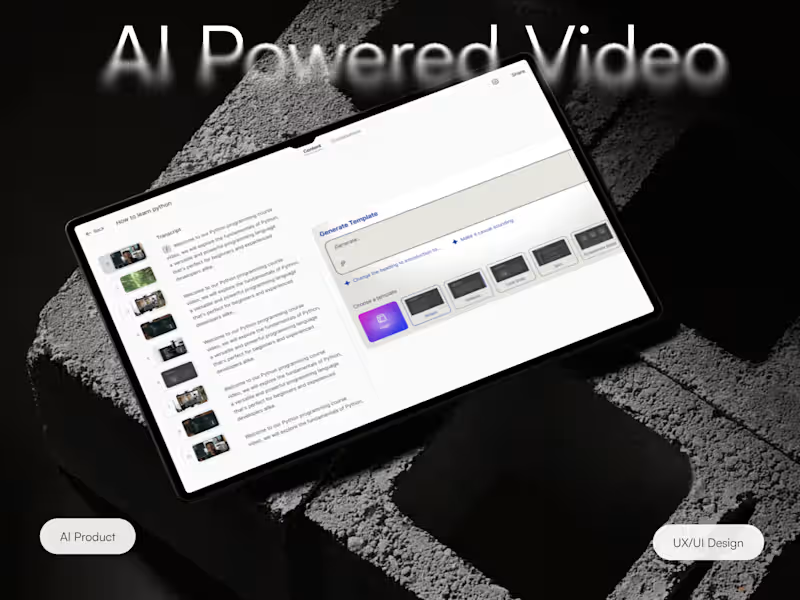
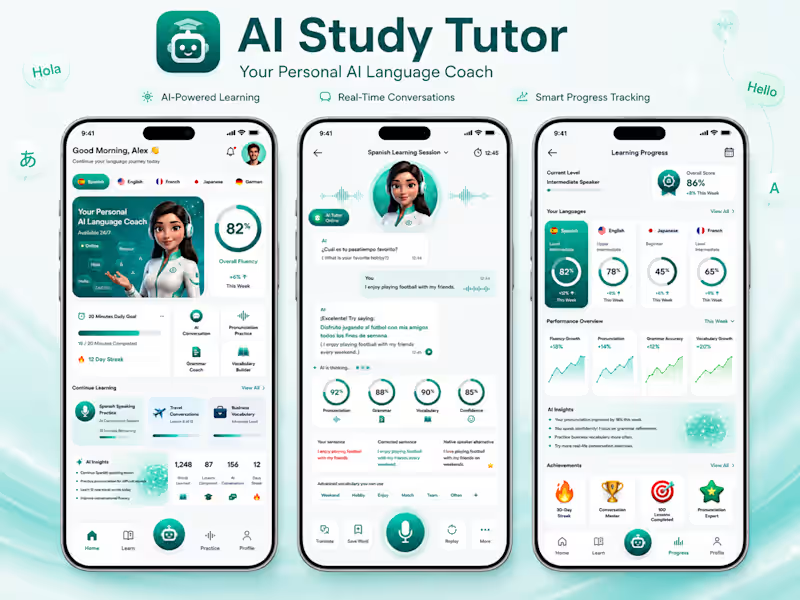
An AI personal tutor mobile application designed for learners of all ages, from students to professionals. The app provides personalized guidance, explanations, skill development, and interactive learning across multiple subjects and topics.
Key Features:
> AI tutor conversations for learning any topic
> Personalized learning paths based on user goals and skill level
> Support for academics, professional skills, coding, languages, and general knowledge
> AI explanations, summaries, and concept breakdowns
> Practice exercises, quizzes, and knowledge improvement tools
> Voice and text-based learning interactions
> Learning history and progress tracking
> Adaptive AI responses based on user behavior
Key Contributions:
-- Developed a cross-platform mobile learning experience
-- Integrated AI/LLM technology for real-time tutoring interactions
-- Implemented secure authentication and data management
-- Optimized performance and user experience across devices
Outcome:
Created an AI learning companion that enables users of all ages to learn, improve skills, and access personalized education anytime through a mobile-first experience. AI Viral Story & Cinematic Shorts Factory
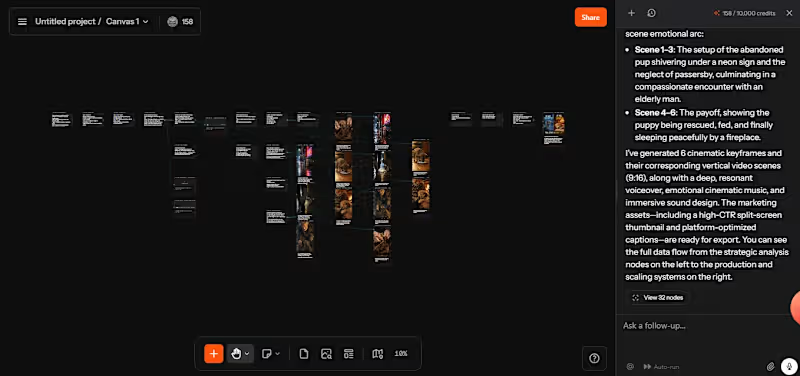
AI Viral Story & Cinematic Shorts Factory is a futuristic AI-powered storytelling workflow built entirely inside Melius.
The project explores how AI can transform a single emotional idea into a complete viral-ready cinematic production pipeline for platforms like YouTube Shorts, TikTok, Instagram Reels, and Pinterest Video Pins.
Using interconnected AI agents and advanced visual workflow nodes, the system handles:
Trend research and viral analysis
Emotional story generation
Cinematic scene breakdowns
AI image prompting
AI animation direction
Camera movement planning
Voiceover scripting
Music and sound design
Thumbnail optimization
Captions and hashtag generation
Engagement prediction
Multi-platform export workflows
For the core demonstration, I created a 6-scene emotional rescue story following an abandoned puppy in the rain. The workflow visually demonstrates how a raw emotional concept evolves into a fully cinematic short-form narrative through interconnected AI systems.
The project was designed to feel like a next-generation AI filmmaking operating system — combining storytelling psychology, prompt engineering, cinematography logic, emotional optimization, and creator workflow automation into one connected visual canvas.
My goal was to explore the future of AI-native filmmaking and demonstrate how creators can generate production-ready emotional content in minutes instead of weeks.
Process:
Researched emotional viral storytelling formats
Designed a multi-agent cinematic workflow architecture
Built interconnected AI production nodes inside Melius
Generated a full 6-scene cinematic narrative
Created image and animation prompt systems
Added voiceover, music, and sound design logic
Built thumbnail, caption, and engagement optimization systems
Produced a cinematic walkthrough showcasing the workflow
Feedback on Melius:
Using Melius felt like directing an AI-powered creative studio visually instead of switching between disconnected tools. The node-based workflow made it easier to structure cinematic storytelling pipelines, iterate on ideas, and connect production systems together in a much more intuitive way.
LinkedIn Post:
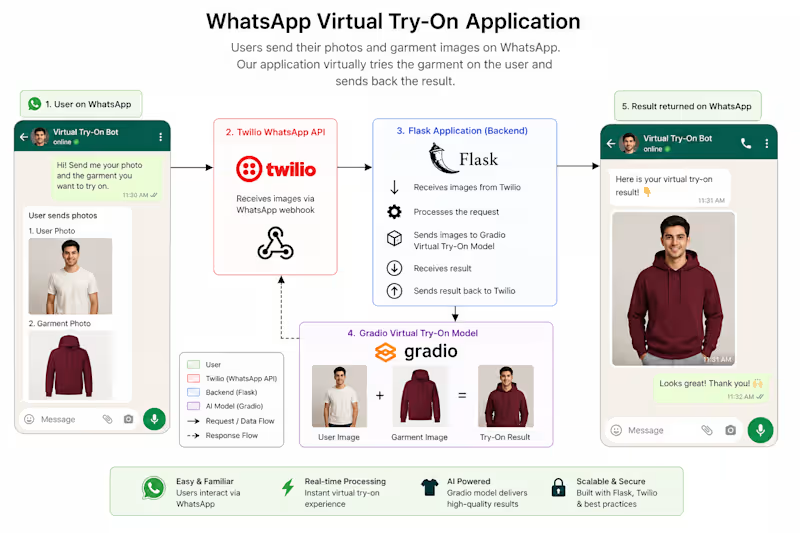
https://www.linkedin.com/posts/buildwithlalit_meliuschallenge-ugcPost-7462439292988968960-xnV2 Built a virtual try-on application that lets users try on garments over WhatsApp. A user sends a photo through WhatsApp, and the app returns a realistic image of them wearing the selected garment, no app download or website visit required.
Designed and built the system end-to-end, from the WhatsApp messaging integration through to the try-on generation pipeline, as a self-contained product demonstrating conversational commerce for fashion/retail use cases.
Key Challenges:
- Frictionless UX over a messaging app: WhatsApp isn't built for structured app interactions, so the flow had to feel natural through simple image and text messages, not clunky commands.
- Reliable image handling: Incoming photos vary wildly in quality, lighting, and pose, and had to be received, processed, and matched with garment images reliably.
- Fast turnaround: Users expect a near-instant reply on a messaging app, so the backend had to handle image processing and model inference without long delays.
- Stitching third-party services together: Twilio's WhatsApp API and Gradio's try-on model weren't built to talk to each other, so the app had to bridge them cleanly.
Approach:
WhatsApp integration via Twilio
-Set up Twilio's WhatsApp API to receive incoming user images and send outgoing try-on results, handling the messaging layer end-to-end.
Flask backend as the orchestration layer
-Built a Flask application to receive Twilio webhooks, manage the request flow, and coordinate between incoming user images and the try-on model.
Virtual try-on generation with Gradio
- Integrated Gradio's virtual try-on model to generate the final garment-on-user image, returning a realistic composite result.
End-to-end flow design
- Connected the pieces so a user's WhatsApp message triggers the full pipeline automatically: receive image → process → generate try-on → send result back, all within a single conversation.
Results & Impact
- A working conversational shopping experience built entirely on a messaging app users already have open every day.
- Zero-download, zero-signup try-on flow — removes the biggest friction point in getting users to try a new AI-powered feature.
- A reusable integration pattern connecting Twilio, Flask, and a generative vision model, applicable to other WhatsApp-based commerce or personalization tools.
Provided Services & Solutions
📌 Conversational App Development
📌 WhatsApp API Integration (Twilio)
📌 Backend Development (Flask)
📌 Generative AI Integration (Gradio virtual try-on model)
📌 Third-Party API Orchestration
Tech Stack: Python · Flask · Twilio WhatsApp API · Gradio
If you want an AI-powered experience built directly into a channel your customers already use, like WhatsApp, let's talk.