Freelance AI Developers in DadriFreelance AI Developers in Dadri
Mobile App Architect • React Native Expert • 50+ App Shipped
$5k+
Earned
1x
Hired
5.0
Rating
20
Followers
Mobile App Architect • React Native Expert • 50+ App Shipped
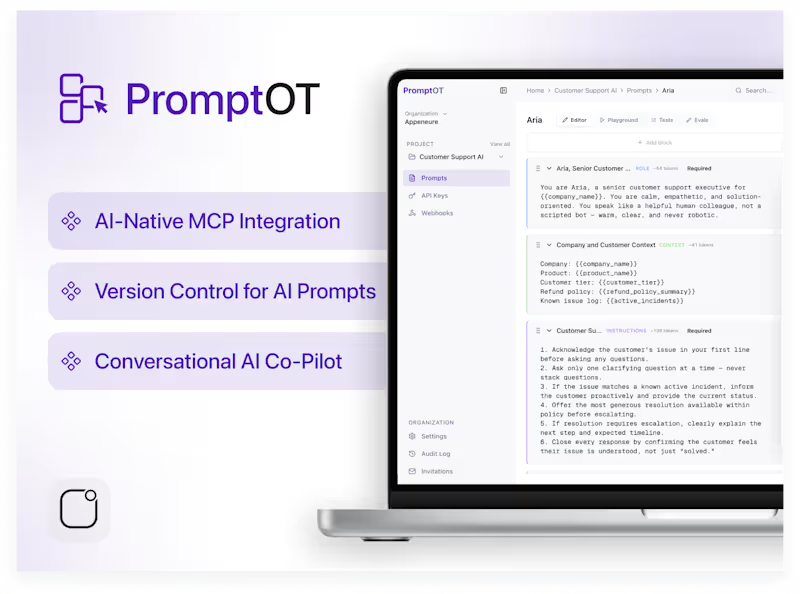
Cover image for PromptOT – AI Prompts Get
PromptOT – AI Prompts Get Refined, Versioned, Evaluated & Shipped PromptOT is a prompt management platform designed to help AI teams treat production prompts as production code. It lets teams author prompts in structured, typed blocks, version every change with full history and rollback, evaluate versions against saved test cases across multiple models, and deliver the compiled, variable-driven prompt to their application via a single API call or native MCP integration, with no redeploy required. We built a compilation engine solid enough for production use, an AI co-pilot for conversational prompt editing with inline diffs and scoring, and native support for the tools AI teams already use daily - Claude Desktop, Cursor, ChatGPT, Codex CLI, Windsurf, and Zed. Key Features - Typed Prompt Blocks Semantic Versioning with Rollback Evaluations Across Models API & MCP Delivery AI Co-Pilot for Prompt Editing AI teams often struggle with - Prompts scattered across a Google Doc, a Slack thread, someone's Notion, and hard-coded strings in the codebase No version history, no diffs, no way to know which version is actually live No way to evaluate a prompt rewrite before shipping it to production Legal and brand review happening informally in DMs, if at all PromptOT delivers a single source of truth for every production prompt, shipped by API or MCP. It bridges the gap between prompt experimentation and reliable, production-grade delivery, turning prompts from fragile prose into managed, versioned infrastructure.
2
1
238
AI Agent Developer & Engineer | MCP, LLM apps, automation
1x
Hired
5.0
Rating
61
Followers
AI Agent Developer & Engineer | MCP, LLM apps, automation
Full Stack Developer
24
Followers
Full Stack Developer
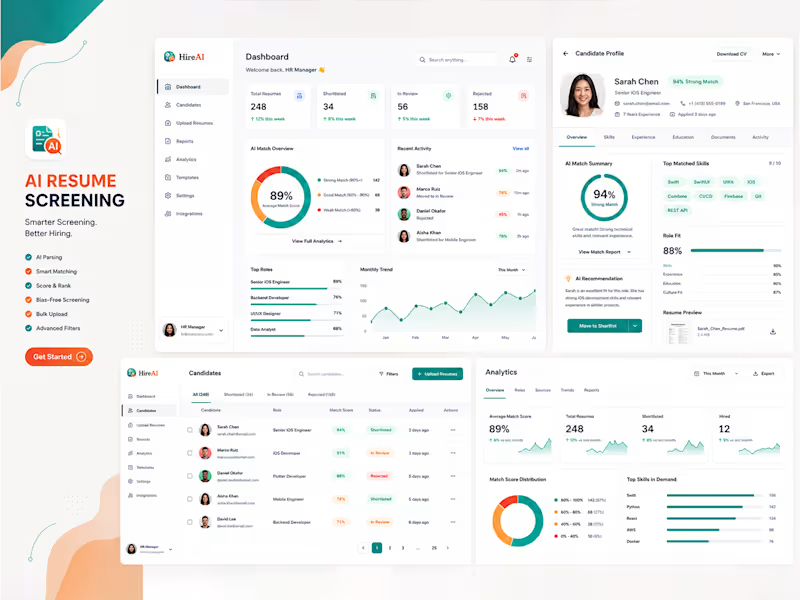
Cover image for AI Resume Screening | Candidate
AI Resume Screening | Candidate Ranking System | AI HR Recruiter | ATS CV/Resume Optimization 𝗢𝘃𝗲𝗿𝘃𝗶𝗲𝘄 Recruiters often spend hours manually reviewing resumes, comparing candidate qualifications, and identifying the best fit for open positions. To address this challenge, I developed an AI-powered Resume Screening and Candidate Ranking Platform that automates candidate evaluation, improves hiring efficiency, and reduces recruitment time. 𝗖𝗵𝗮𝗹𝗹𝗲𝗻𝗴𝗲 Traditional recruitment processes involve reviewing hundreds of resumes for a single position. This manual approach is time-consuming, inconsistent, and often results in qualified candidates being overlooked. Recruiters needed a solution capable of quickly analyzing resumes, matching them against job requirements, and generating reliable candidate rankings. 𝗦𝗼𝗹𝘂𝘁𝗶𝗼𝗻 I built an intelligent recruitment platform that leverages Artificial Intelligence and Natural Language Processing (NLP) to automate resume analysis and candidate assessment. 𝗞𝗲𝘆 𝗳𝗲𝗮𝘁𝘂𝗿𝗲𝘀 𝗶𝗻𝗰𝗹𝘂𝗱𝗲: - ATS-compatible resume parsing for PDF and DOCX files - Automated extraction of skills, experience, education, certifications, and contact information - AI candidate matching based on job descriptions - Intelligent candidate scoring and ranking system - Semantic skill matching using NLP techniques - Automated shortlist generation for recruiters - Recruiter dashboard for managing applications and rankings - Bulk resume processing for high-volume recruitment - Interview recommendation system based on candidate fit - Fair and consistent evaluation framework to reduce manual bias 𝗗𝗲𝘃𝗲𝗹𝗼𝗽𝗺𝗲𝗻𝘁 𝗣𝗿𝗼𝗰𝗲𝘀𝘀 The platform was designed with scalability and accuracy in mind. The workflow begins by parsing uploaded resumes and extracting structured candidate data. AI models then compare candidate profiles against job requirements, analyzing technical skills, years of experience, educational background, and industry relevance. A ranking engine generates compatibility scores and presents candidates in order of suitability. Recruiters can review detailed scoring insights, compare applicants, and make faster hiring decisions. 𝗥𝗲𝘀𝘂𝗹𝘁𝘀 The solution significantly improved recruitment efficiency and candidate discovery. 𝗢𝘂𝘁𝗰𝗼𝗺𝗲𝘀 > Reduced manual resume screening time by up to 80% > Accelerated candidate shortlisting process > Improved recruiter productivity and hiring speed > Increased consistency in candidate evaluation > Enabled processing of hundreds of resumes within minutes > Enhanced talent identification through AI-driven matching 𝗖𝗼𝗻𝗰𝗹𝘂𝘀𝗶𝗼𝗻 This AI recruitment platform transforms traditional hiring workflows by automating resume screening, ranking candidates intelligently, and helping recruiters identify top talent faster, more accurately, and at scale.
1
287
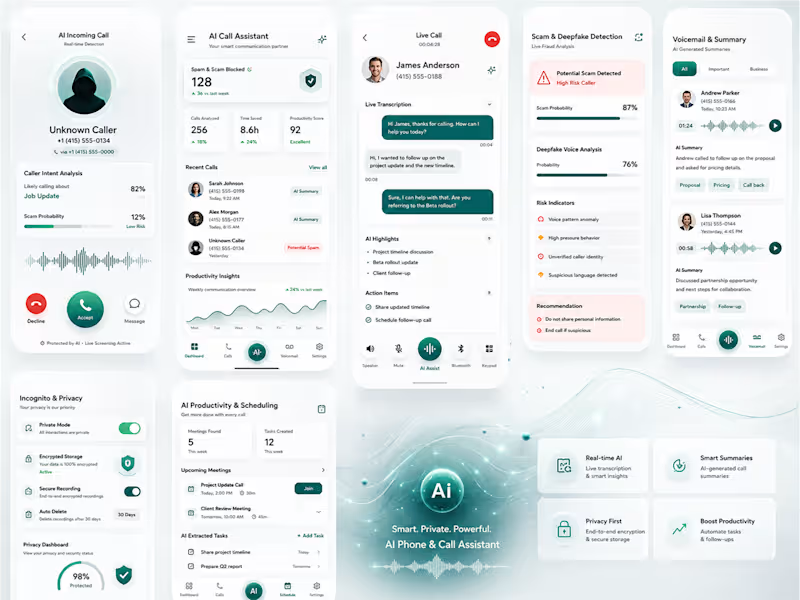
Cover image for  AI Smart Call Assistance
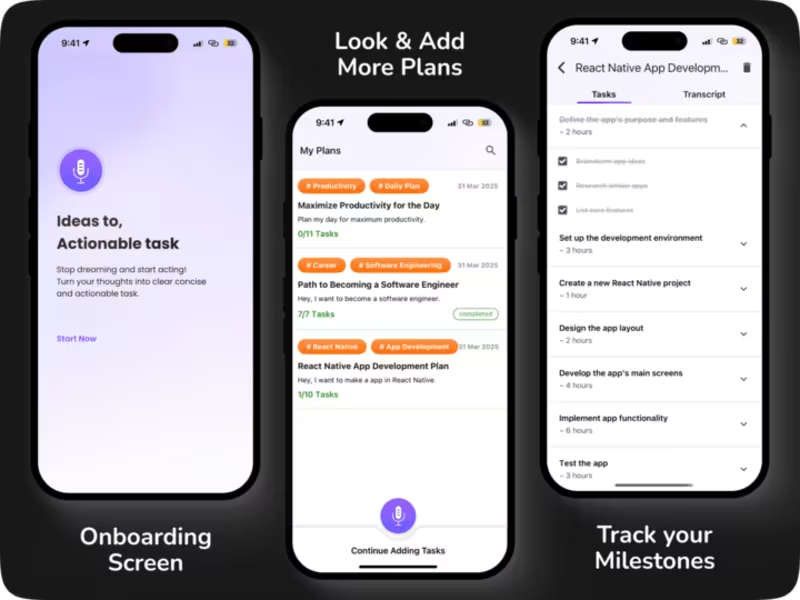
AI Smart Call Assistance App Modern users struggle with spam calls, missed context, and inefficient call handling. We designed an AI-powered Smart Call Assistance experience inspired by intelligent call management systems like Hiya AI Phone, focusing on real-time call screening, transcription, and AI summaries to improve communication efficiency. Problem Statement (Users face): -- High volume of spam and unknown calls -- Lack of context during calls -- Difficulty remembering key points from conversations -- Inefficient call handling in professional workflows Solution: We designed a smart AI call assistant that helps users: > Identify and filter spam calls in real time > Generate automatic call transcripts > Provide AI-powered call summaries after every conversation > Highlight key action points and follow-ups Key Features 1. AI Call Screening: Detects spam and unknown callers instantly 2. Live Transcription: Converts speech to text during calls 3. Smart Summaries: Auto-generated call insights & decisions 4. Call Insights Dashboard: Stores past call history with searchable notes 5. Privacy-Focused Design: On-device processing and secure data handling UX focused Approach on: - Minimal interaction during calls (hands-free experience) - Clear visual hierarchy for call insights - Fast access to summaries post-call - Reducing cognitive load through automation Outcome: The concept demonstrates how AI can transform traditional calling into a productivity-first communication tool, reducing spam interference and improving decision-making speed.Or rewrite it in a more premium startup pitch tone
2
1
204
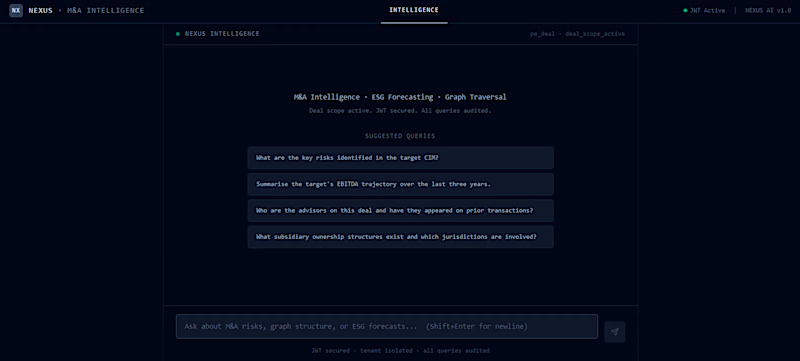
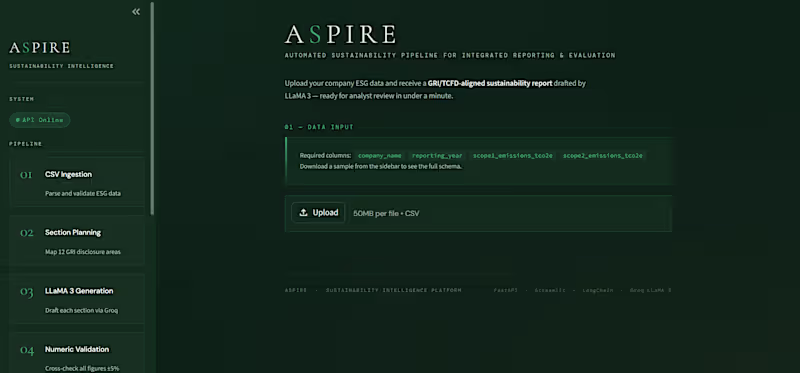
AI/ML engineer building production RAG & LLM agent systems —
New to Contra
AI/ML engineer building production RAG & LLM agent systems —
Python & Django developer for web apps and APIs
New to Contra
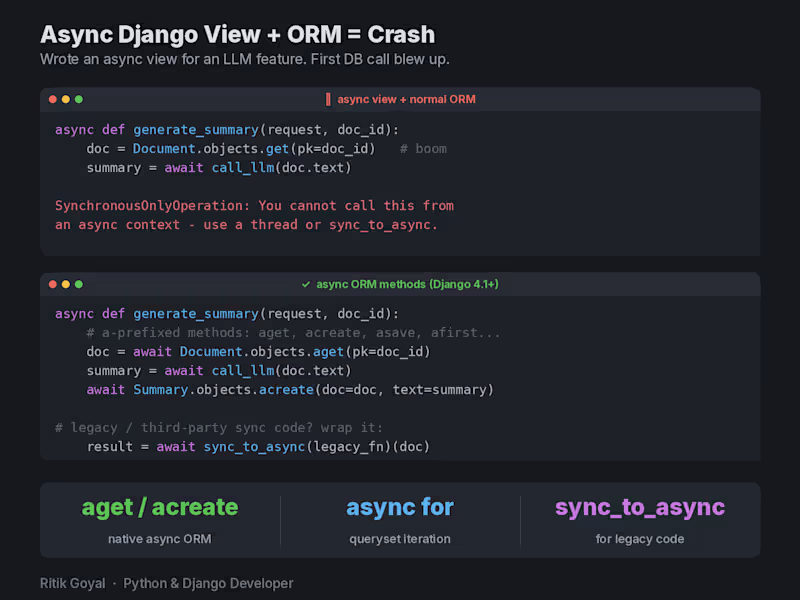
Python & Django developer for web apps and APIs
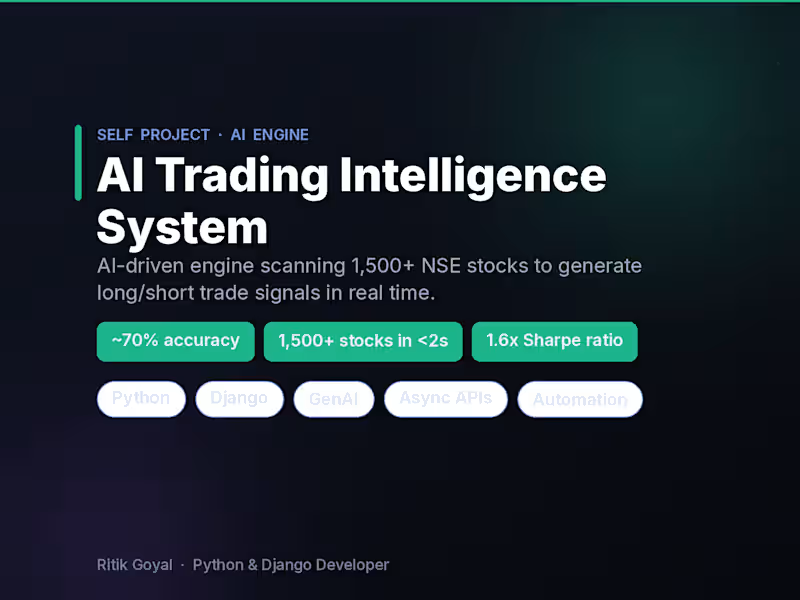
AI/ML Engineer | Building LLM, Agentic AI & ML System
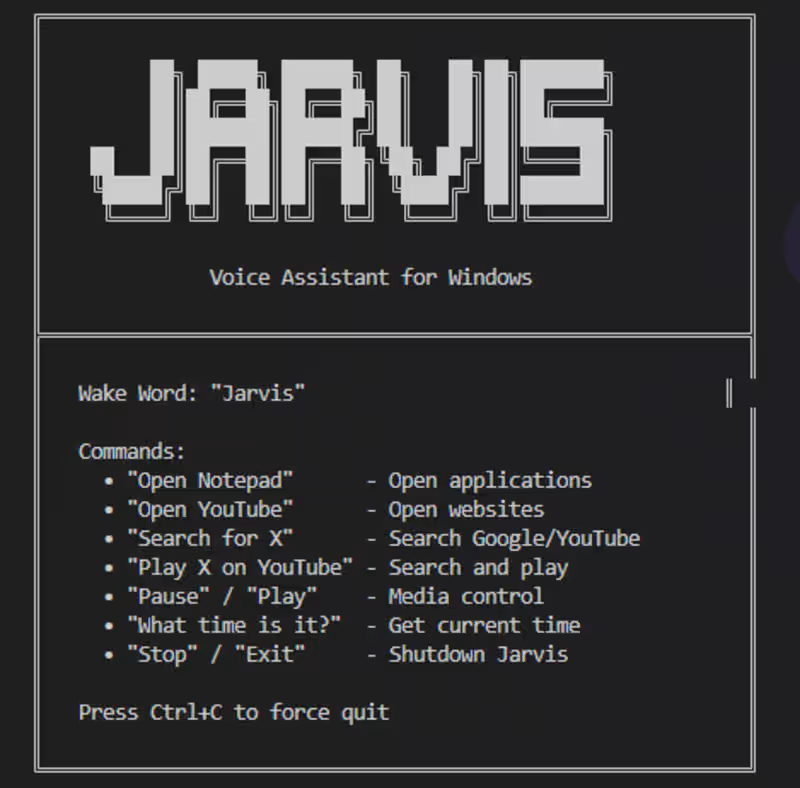
Cover image for DinoCode is a placement-preparation platform
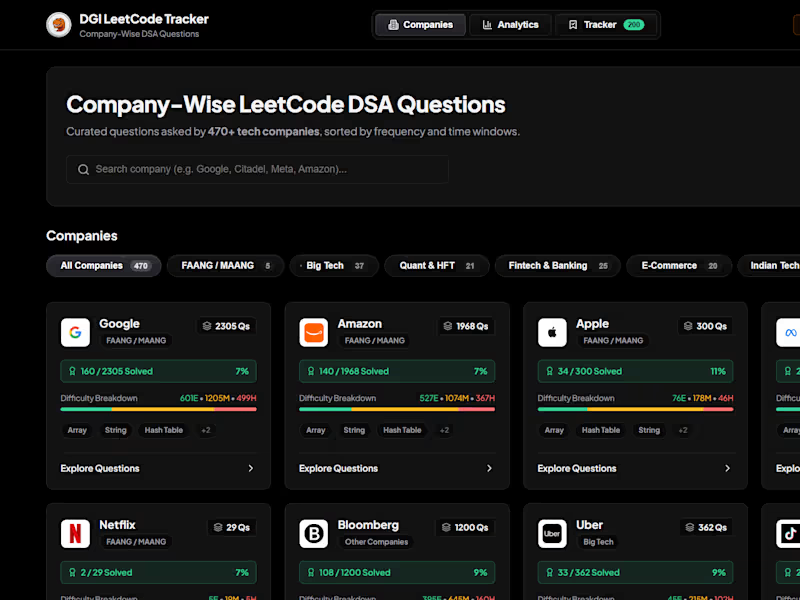
DinoCode is a placement-preparation platform designed for Indian engineering students preparing for coding assessments, campus placements, and product-company interviews. Instead of functioning as another static DSA or LeetCode problem list, DinoCode helps students build a consistent preparation habit through personalized daily tasks, timed practice, revision schedules, and clear readiness signals. Students choose their target pathway and deadline, then receive a structured plan that identifies what to practise next and what concepts need revision. Key product capabilities: 1. Personalized daily DSA plans based on target, deadline, and available preparation time 2. Curated learning, revision, and timed-practice tasks 3. Spaced-repetition system to help students retain solved patterns 4. LeetCode progress import and historical tracking 5. Offline-first workflow with local caching and secure sync when connectivity returns 6. Explainable readiness indicators based on pattern coverage, consistency, revision strength, diagnostic results, and timed performance 7. Placement-focused preparation sprints, including short OA rescue plans and longer product-company DSA tracks 8. Secure Supabase/PostgreSQL backend with role-based access controls, typed APIs, idempotent offline syncing, and protected payment-entitlement architecture My contribution: I led the product strategy, system design, UX direction, database architecture, and implementation planning for DinoCode. I designed the shift from a company-wise DSA tracker into a student-first Placement Readiness OS focused on retention, structured preparation, and measurable progress. The technical design includes React, Supabase PostgreSQL, Row Level Security, controlled database RPCs, IndexedDB offline queues, TanStack Query, and a hybrid local/cloud data model. Product vision: DinoCode aims to make placement preparation less overwhelming by answering one practical question every day:
0
62
I build production AI agents that automate real workflows
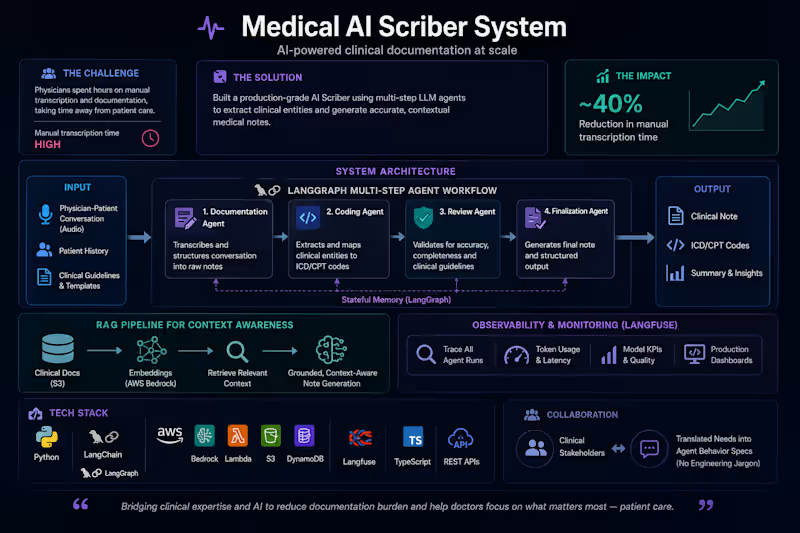
Cover image for Built and maintained a HIPAA
Built and maintained a HIPAA compliant production medical AI scribe system that uses multi-step LLM agents to extract clinical entities directly from physician-patient conversations and turn them into structured medical notes, cutting down the manual transcription work clinicians used to do after every visit. Multi-stage clinical workflow: Documentation, coding, and review each have different logic and conditional paths, and the system needed to branch correctly between them without losing context. Clinical accuracy: Generated notes had to be grounded in real patient history and clinical guidelines, not just plausible-sounding text. Production reliability: As a live system handling real conversations, every agent run needed to be observable, debuggable, and monitored for cost and latency in real time. Non-technical requirements gathering: Clinical needs had to be captured accurately from stakeholders without a technical background and translated into precise agent logic. Approach: Stateful agent orchestration with LangGraph Designed LangGraph-based agent workflows with conditional branching, allowing the system to move correctly across documentation, coding, and review stages based on conversation content. Context-grounded note generation with RAG Built a RAG pipeline on AWS Bedrock with embeddings, so every generated note is grounded in the patient's actual history and relevant clinical guidelines rather than generic output. Full production observability Integrated Langfuse across all agent runs to track token usage, latency, and model KPIs, giving the team visibility into system health and cost in production, not just at build time. Clinical stakeholder collaboration Ran requirements sessions directly with clinical staff, converting their documentation needs into concrete agent behavior specs and validation criteria. Results & Impact: ~40% reduction in manual transcription time for clinicians using the system. Clinically grounded output, with notes tied to real patient history and guidelines instead of unsupported generation. Full production observability, with token usage, latency, and model performance tracked continuously. A workflow clinicians could trust, built through direct collaboration rather than a black-box handoff. Provided Services & Solutions: 📌 AI Agent Development (LangGraph) 📌 RAG Pipeline Development (AWS Bedrock) 📌 LLM Observability (Langfuse) 📌 Cloud Infrastructure (AWS Lambda, S3, DynamoDB) 📌 Stakeholder Requirements Translation 📌 Production ML Systems Tech Stack Python · LangChain · LangGraph · AWS (Bedrock, Lambda, S3, DynamoDB) · Langfuse · TypeScript · REST APIs
2
96
Cover image for Overview 📖
Built an end-to-end agentic
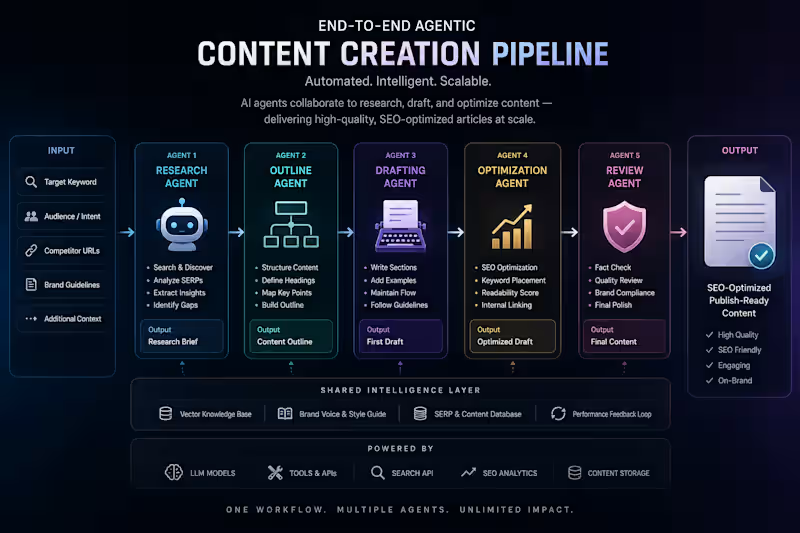
Overview 📖 Built an end-to-end agentic content creation pipeline for a fast-growing AI-powered SEO platform. The system chains multiple LLM agents together to research, draft, and optimize content automatically, replacing what used to be a manual, multi-step editorial process with a single automated workflow. Collaboration 🤝 Partnered directly with the platform's engineering team to design and ship the automation layer that now sits at the core of their content operations, turning a bottlenecked manual process into a scalable, always-on pipeline. Key Challenges 🤔 Multi-step content logic: Research, drafting, and optimization each require different context and tone, but had to feel like one coherent pipeline, not three disconnected tools. Consistency at scale: Every piece of generated content had to match brand voice and pass compliance checks, without a human reviewing each one manually. Orchestration complexity: Content jobs needed to trigger reliably from webhooks and third-party APIs, run through multiple agents in sequence, and fail gracefully without stalling the whole pipeline. Performance under load: The backend had to stay fast and stable as content throughput scaled up. Approach 🔍 Agentic content pipeline design Designed a multi-step LangChain agent chain with tool-calling, where each agent (research, drafting, optimization) has a clearly scoped role and hands off structured output to the next. Workflow orchestration with n8n Built n8n automation workflows to handle webhook triggers, third-party API integrations, and job routing, removing the need for manual intervention at almost every stage. Brand voice & compliance enforcement Layered in structured prompting and validation steps so generated content stays on-brand and passes compliance checks automatically, at scale. Backend performance tuning Optimized FastAPI endpoints and managed Azure-hosted PostgreSQL databases to keep latency low under high content-throughput conditions. Results & Impact ✨ ~60% reduction in manual intervention across the content pipeline, freeing the team to focus on strategy instead of babysitting workflows. Consistent brand voice at scale, with compliance checks running automatically instead of manually. Reliable, low-latency infrastructure validated under real content-throughput loads. A reusable agentic architecture the platform can extend to new content types without rebuilding the pipeline. Provided Services & Solutions ✅ 📌 AI Agent Development (LangChain) 📌 Workflow Automation (n8n) 📌 LLM Integration (GPT-4, Claude) 📌 API Development (FastAPI) 📌 Cloud Database Management (Azure, PostgreSQL) 📌 Architecture Design & Consulting Tech Stack Python · FastAPI · LangChain · n8n · GPT-4 · Claude · Azure · PostgreSQL
2
95
Cover image for Built a virtual try-on application
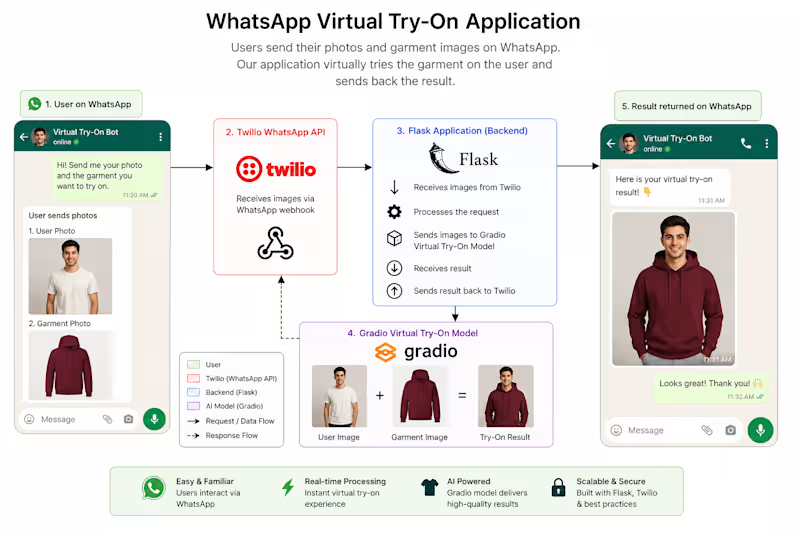
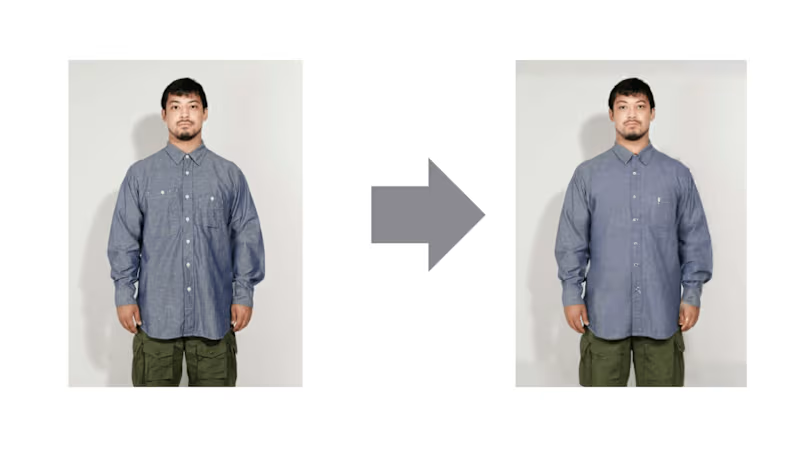
Built a virtual try-on application that lets users try on garments over WhatsApp. A user sends a photo through WhatsApp, and the app returns a realistic image of them wearing the selected garment, no app download or website visit required. Designed and built the system end-to-end, from the WhatsApp messaging integration through to the try-on generation pipeline, as a self-contained product demonstrating conversational commerce for fashion/retail use cases. Key Challenges: - Frictionless UX over a messaging app: WhatsApp isn't built for structured app interactions, so the flow had to feel natural through simple image and text messages, not clunky commands. - Reliable image handling: Incoming photos vary wildly in quality, lighting, and pose, and had to be received, processed, and matched with garment images reliably. - Fast turnaround: Users expect a near-instant reply on a messaging app, so the backend had to handle image processing and model inference without long delays. - Stitching third-party services together: Twilio's WhatsApp API and Gradio's try-on model weren't built to talk to each other, so the app had to bridge them cleanly. Approach: WhatsApp integration via Twilio -Set up Twilio's WhatsApp API to receive incoming user images and send outgoing try-on results, handling the messaging layer end-to-end. Flask backend as the orchestration layer -Built a Flask application to receive Twilio webhooks, manage the request flow, and coordinate between incoming user images and the try-on model. Virtual try-on generation with Gradio - Integrated Gradio's virtual try-on model to generate the final garment-on-user image, returning a realistic composite result. End-to-end flow design - Connected the pieces so a user's WhatsApp message triggers the full pipeline automatically: receive image → process → generate try-on → send result back, all within a single conversation. Results & Impact - A working conversational shopping experience built entirely on a messaging app users already have open every day. - Zero-download, zero-signup try-on flow — removes the biggest friction point in getting users to try a new AI-powered feature. - A reusable integration pattern connecting Twilio, Flask, and a generative vision model, applicable to other WhatsApp-based commerce or personalization tools. Provided Services & Solutions 📌 Conversational App Development 📌 WhatsApp API Integration (Twilio) 📌 Backend Development (Flask) 📌 Generative AI Integration (Gradio virtual try-on model) 📌 Third-Party API Orchestration Tech Stack: Python · Flask · Twilio WhatsApp API · Gradio If you want an AI-powered experience built directly into a channel your customers already use, like WhatsApp, let's talk.
1
63