The network for creativity
Join 1.25M professional creatives like you
Connect with clients, get discovered, and run your business 100% commission-free
Creatives on Contra have earned over $150M and we are just getting started
Back to feedPost

PromptOT – AI Prompts Get Refined, Versioned, Evaluated & Shipped
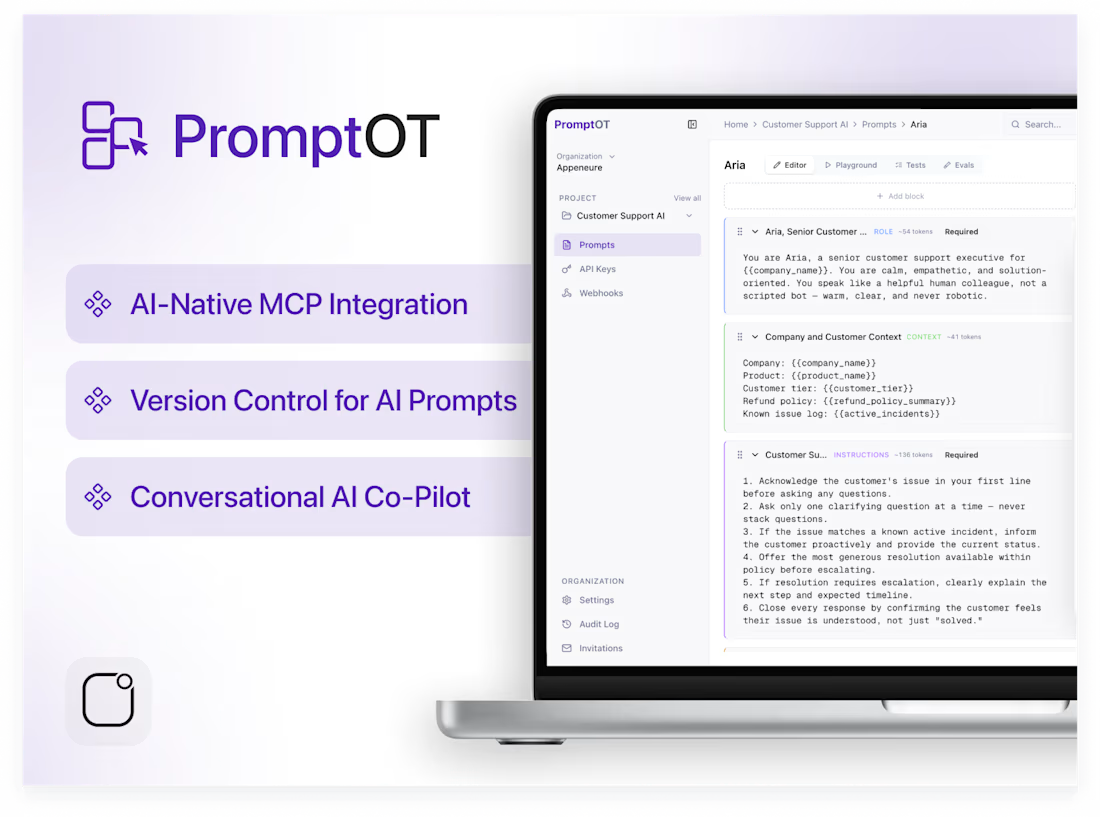
PromptOT is a prompt management platform designed to help AI teams treat production prompts as production code. It lets teams author prompts in structured, typed blocks, version every change with full history and rollback, evaluate versions against saved test cases across multiple models, and deliver the compiled, variable-driven prompt to their application via a single API call or native MCP integration, with no redeploy required.
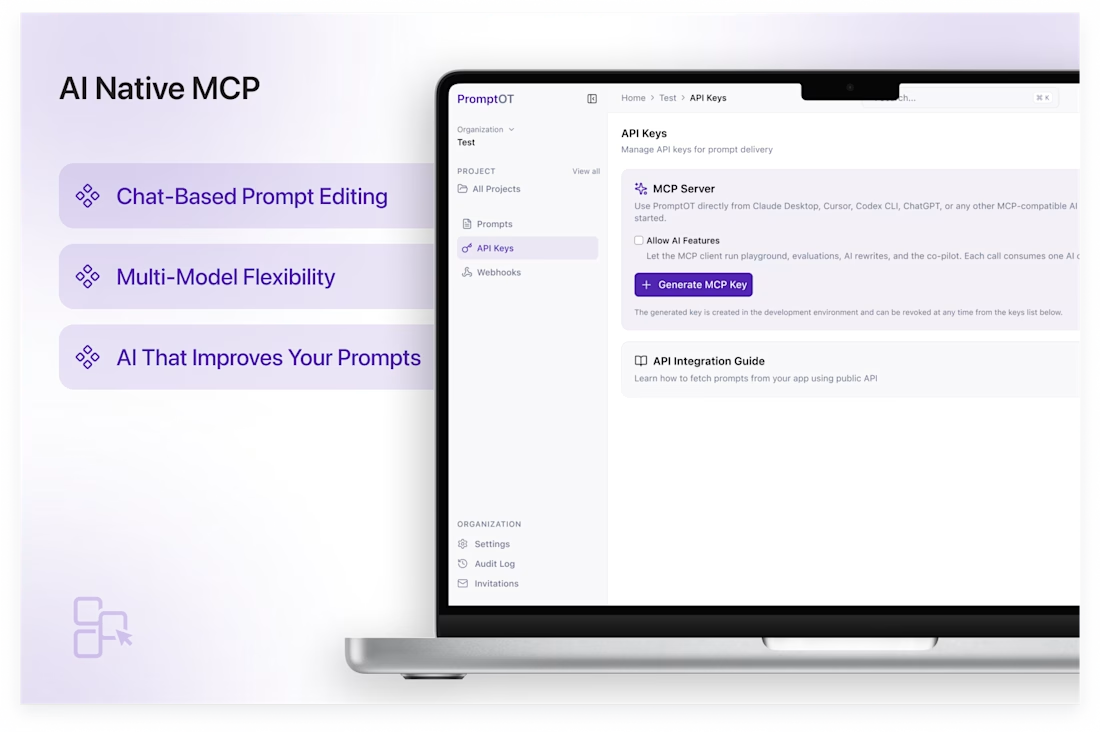
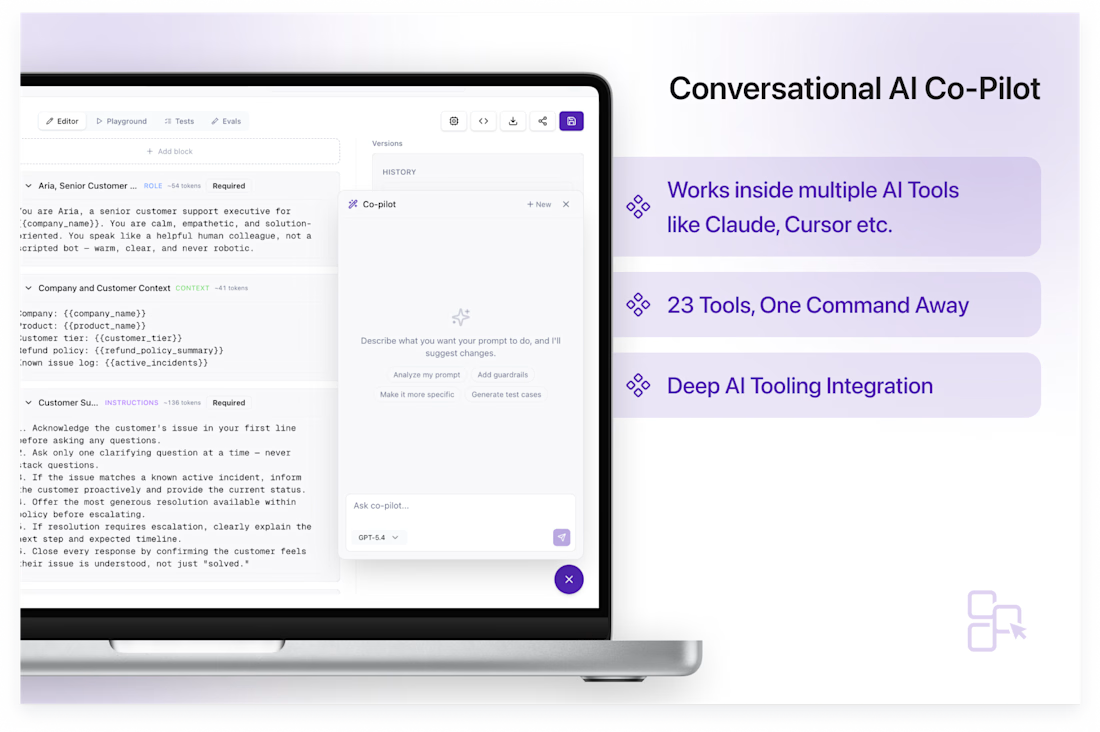
We built a compilation engine solid enough for production use, an AI co-pilot for conversational prompt editing with inline diffs and scoring, and native support for the tools AI teams already use daily - Claude Desktop, Cursor, ChatGPT, Codex CLI, Windsurf, and Zed.
Key Features -
Typed Prompt Blocks
Semantic Versioning with Rollback
Evaluations Across Models
API & MCP Delivery
AI Co-Pilot for Prompt Editing
AI teams often struggle with -
Prompts scattered across a Google Doc, a Slack thread, someone's Notion, and hard-coded strings in the codebase
No version history, no diffs, no way to know which version is actually live
No way to evaluate a prompt rewrite before shipping it to production
Legal and brand review happening informally in DMs, if at all
PromptOT delivers a single source of truth for every production prompt, shipped by API or MCP. It bridges the gap between prompt experimentation and reliable, production-grade delivery, turning prompts from fragile prose into managed, versioned infrastructure.



A versioned, evaluated prompt pipeline is something a lot of AI-heavy products end up needing eventually but rarely build early enough. Next.js + Supabase + Stripe is basically the default SaaS stack at this point for a reason, fast to ship and easy to reason about.
Appreciate that. The eval or versioning layer was the part I didn't want to bolt on later and once a prompt's live in production, changing it blind gets expensive fast. Supabase and Stripe handled the plumbing so most of the effort went into getting that part right.
The network for creativity
Join 1.25M professional creatives like you
Connect with clients, get discovered, and run your business 100% commission-free
Creatives on Contra have earned over $150M and we are just getting started











Related posts


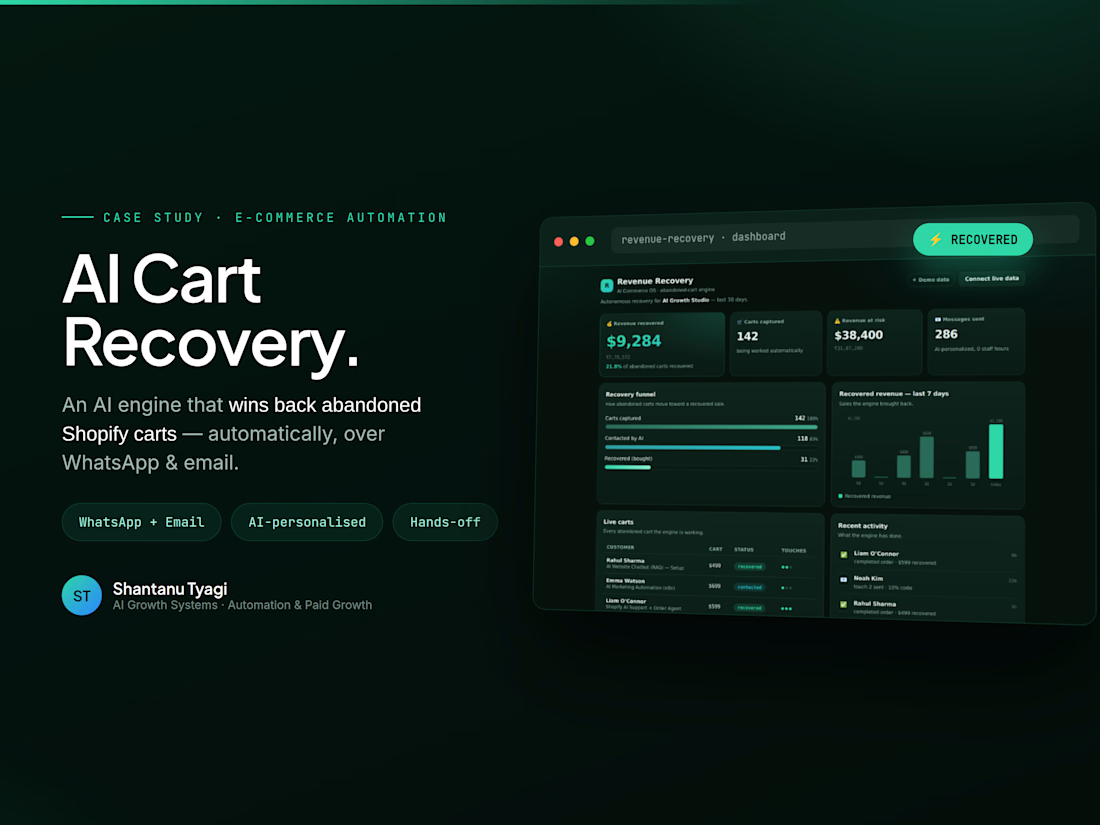
Thanks Shantanu. WhatsApp first with email only as the fallback is the right call, nobody wants the same reminder twice. Clean build.

Muse AI on the free plan is INSANE. 🤯
I asked Muse AI to review my portfolio website, and what happened next genuinely surprised me.
It visited my website, explored the pages, checked the details, and provided a complete website audit.
And honestly? I was shocked by how accurately it identified and evaluated everything.
The funny part? These are exactly the kinds of productivity workflows I've always wanted to explore with Claude and ChatGPT. But getting this level of hands-on website analysis can be difficult with free-tier limitations.
With Muse AI, I got to experience this kind of workflow without paying for a premium plan.
This is what excites me most about AI—not just generating text or answering questions, but actually doing the work, inspecting real things, and helping us get things done.
We're moving beyond AI that simply tells us what to do toward AI that can help us do it.
And if this is what Muse AI can do on its free plan, I'm genuinely curious to see what comes next.
Have you tried Muse AI yet? What's your experience been like?
#MuseAI #ArtificialIntelligence #AITools #Productivity #Automation


To answer your question — yes, and the audit is exactly where the shift shows. An AI working from a screenshot gives opinions. One that actually visits the site, explores the pages and checks the details is doing a real first pass of QA. Your line is the right one: from telling...
I kept losing clients while I was asleep. So I built an AI to fix it. 🤖
I'm an AI automation freelancer, and most of my clients are from outside Bangladesh. 🌍
Different time zones meant one brutal problem — while I was sleeping, leads were messaging me on Instagram, ready to buy. By the time I woke up, they were gone. Cold. Or already talking to someone else. 😴
I was literally losing sales in my sleep.
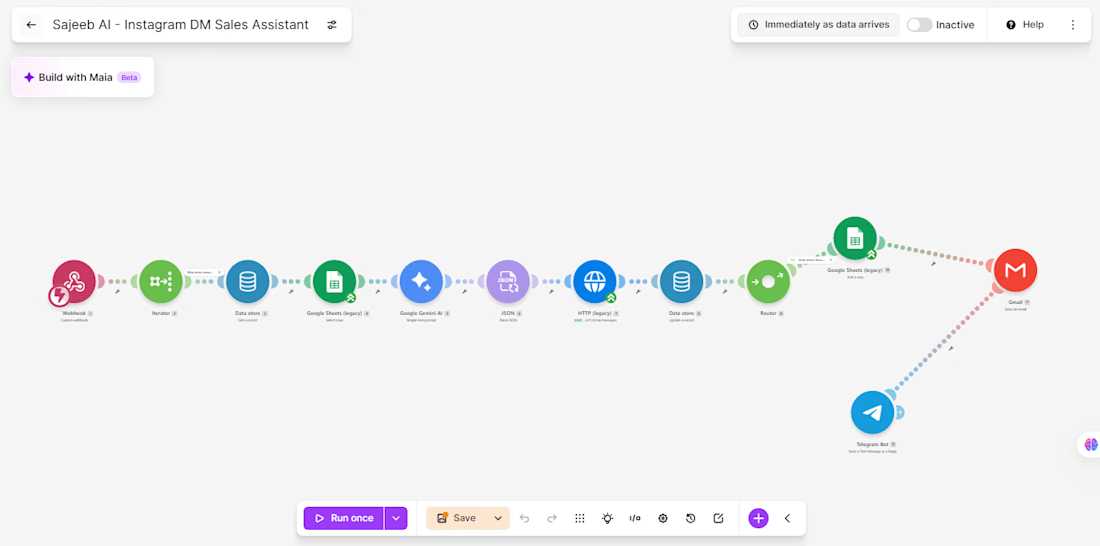
So I built my own AI Sales Agent for Instagram DMs. 👇
✅ Replies to every incoming DM instantly, 24/7 — no time zone, no sleep, no delay
✅ Talks naturally with leads, like a real conversation, not a robotic script
✅ Understands what they need and explains exactly why my service is the right fit for them
✅ Handles objections and questions on its own
✅ Convinces interested leads and takes the order details
✅ Notifies me instantly on Telegram and Gmail the moment a lead is ready
Now I wake up to confirmed leads and orders instead of cold, missed conversations. 💬✨
If you're a freelancer or business owner dealing with international clients across different time zones, you already know this pain. Your leads don't wait for your time zone — but your AI agent can be there for them.
This is exactly the kind of system I now build for other businesses too — AI sales agents, lead qualifiers, and automated follow-up systems that work while you sleep. 💤➡️💰
Check out my work here 👇
https://sajeeb-the-analyst.vercel.app/
#AIAutomation #AIAgent #InstagramDM #SalesAutomation #Chatbot #NoCode #MakeDotCom #Freelancer #LeadGeneration #BusinessAutomation #Entrepreneurship #AIForBusiness