Projects using ArcGIS in China
Projects using ArcGIS in China
Sign Up
Post a job
Sign Up
Log In
Filters
2
Projects
People
Message
2
HONGDAN CHEN
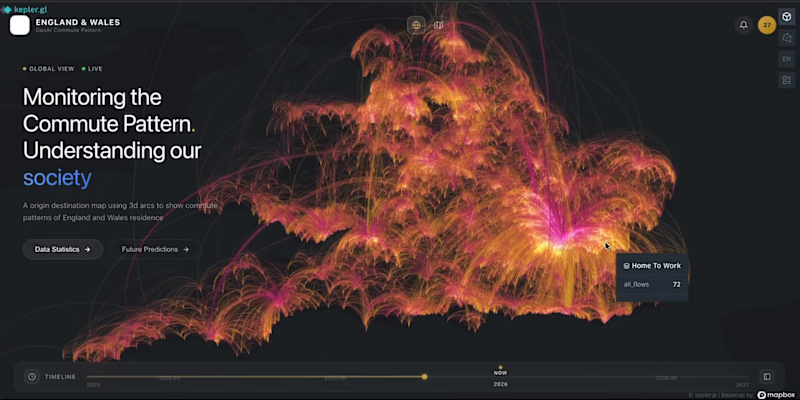
From static maps → interactive spatial experiences. 🚀 Recently experimented with building a Geo-inspired commute dashboard using Vibe Coding + geospatial visualization. The interesting shift for me: Instead of spending days moving between GIS software, frontend development, and UI iteration, ideas can become working interfaces much faster. Still early, but it opens up interesting possibilities: → spatial analytics that feel more accessible → interfaces ready for predictive layers and AI workflows → reducing the barrier between geographic data and end users Curious where GIS + AI + Vibe Coding goes next.
2
114
Message
1
HONGDAN CHEN
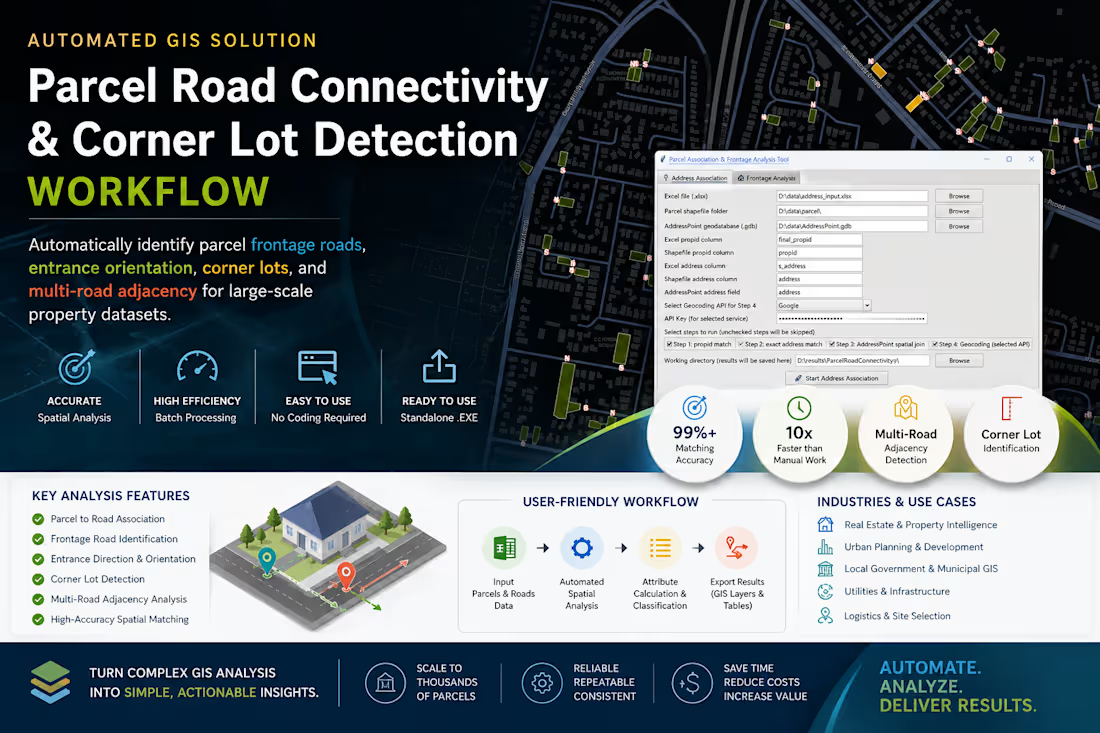
One of the most interesting shifts in AI right now: Real estate AI systems are only as smart as the spatial data behind them. Just wrapped up a GeoAI-oriented automation project for large-scale parcel intelligence in Australia. Built a standalone workflow that automatically detects: → frontage roads → corner lots → parcel orientation → multi-road adjacency → spatial access relationships The interesting part wasn’t the GIS itself. It was converting messy spatial relationships into structured knowledge that downstream AI systems can actually understand. A lot of “AI for real estate” conversations focus on LLMs. But the real bottleneck is often: How do you turn geography into machine-readable reasoning context? Ended up packaging the entire workflow into a production-ready executable app for non-technical teams, with batch processing + configurable spatial rules. Feels like we’re moving from: “mapping data” to “building spatial reasoning infrastructure.” #GeoAI #PropTech #SpatialComputing #Automation #GIS #AIInfrastructure
1
188
Message
2
HONGDAN CHEN
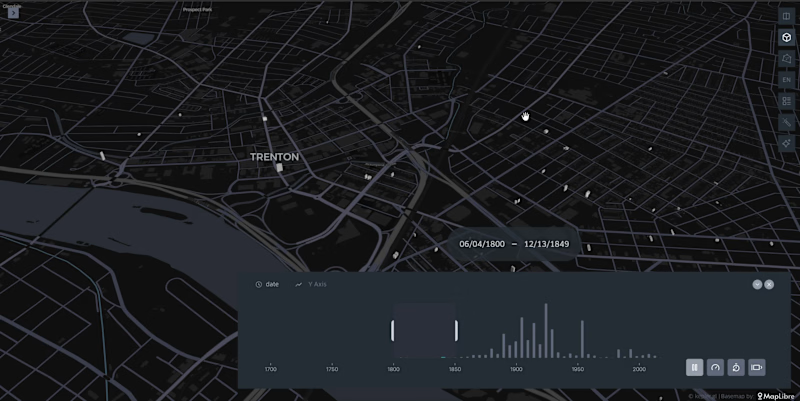
I create interactive 3D city visualizations showing how urban areas evolve over time. Using Kepler.gl (http://Kepler.gl), building footprint data is visualized in 3D with a time slider based on construction year, revealing the growth of a city. Each building is clickable and includes a direct link to street-level imagery in Google Street View, allowing users to explore the real-world view of the building. This visualization is ideal for urban planning, real estate analysis, city storytelling, and digital twin presentations.
2
183
Explore projects