Freelance AI Agent Designers in Chennai
Sign Up
Post a job
Sign Up
Log In
Filters
2
Projects
People
Muthu Raj
Chennai, India
AI Systems & Security Engineer | AI Agents, RAG & Automation
Follow
Message
AI Systems & Security Engineer | AI Agents, RAG & Automation
0
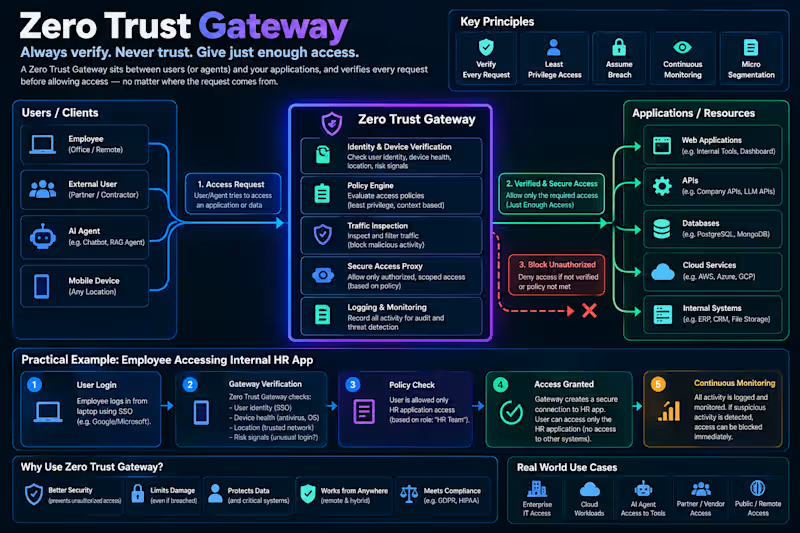
Case Study 2: Zero Trust Gateway Cybersecurity Zero Trust Architecture Project: Zero Trust Gateway — Identity-Aware Access Control and Continuous Verification Problem Traditional network security often relies on trusted internal networks. However, remote access, compromised credentials and vulnerable devices can expose sensitive applications and data. Proposed Solution A Zero Trust Gateway that verifies every access request using identity, device health, contextual information and access policies before granting access to protected resources. System Architecture Access request: An employee, external user or AI agent requests access. Identity verification: Authenticate the user's identity through an identity provider. Device verification: Check device security status and compliance. Policy engine: Evaluate access permissions, location and risk signals. Access control: Grant limited access or deny the request. Continuous monitoring: Log activity and detect suspicious behavior. Technology Stack Python and FastAPI OAuth 2.0 / OpenID Connect PostgreSQL Redis Docker Policy-based access control Key Features Identity-based authentication Least-privilege access Device posture verification Context-aware access policies Centralized audit logs Session monitoring and revocation Practical Example An employee attempts to access an internal HR application from a remote laptop. The gateway verifies the employee's identity. It checks whether the device meets security requirements. The policy engine confirms the employee belongs to the HR team. If all requirements are satisfied, access is granted only to the HR application. Suspicious activity can trigger additional verification or access revocation. Expected Outcome A security gateway that reduces unauthorized access and limits the potential impact of compromised accounts or devices. Real-world applications Enterprise networks Cloud infrastructure Remote employee access API security AI agent access control Project Impact The gateway demonstrates how identity, device trust and access policies can work together to protect modern applications. Conceptual case study; security effectiveness requires implementation, penetration testing and validation.
0
22
0
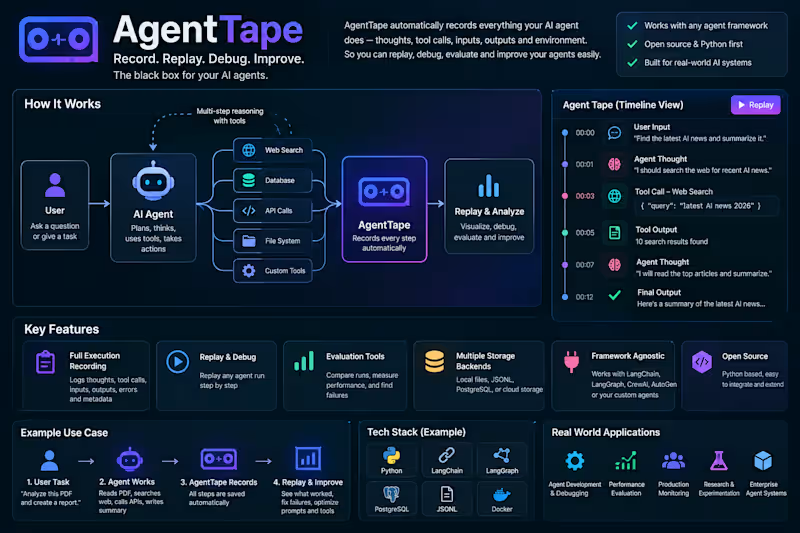
Case Study 1: AgentTape AI Engineering Agent Observability Project: AgentTape — AI Agent Execution Recording, Replay & Debugging System Problem AI agents perform multiple tasks using LLMs, APIs, databases and external tools. When an agent produces an incorrect result or fails, identifying the exact cause can be difficult. Proposed Solution AgentTape is a Python-based observability system that records AI agent executions and allows developers to replay and debug them. System Architecture Input: Receive a task from the user. Agent execution: The AI agent reasons, calls tools and processes data. Recording: AgentTape captures tool calls, inputs, outputs, errors and execution events. Replay: Developers review previous executions step by step. Evaluation: Compare different runs to identify failures and improve performance. Technology Stack Python LangChain and LangGraph PostgreSQL and JSON Docker LLM APIs Key Features Complete execution tracing Step-by-step replay Error detection and debugging Agent performance evaluation Execution history and analytics Expected Outcome A reusable observability layer that helps developers understand agent behavior, troubleshoot failures and improve the reliability of AI applications. Real-world applications AI customer support agents Autonomous research agents AI workflow automation Enterprise AI systems Project Impact AgentTape aims to make complex AI agent workflows more transparent, traceable and easier to maintain. Conceptual case study; performance improvements require implementation and testing.
0
15
0
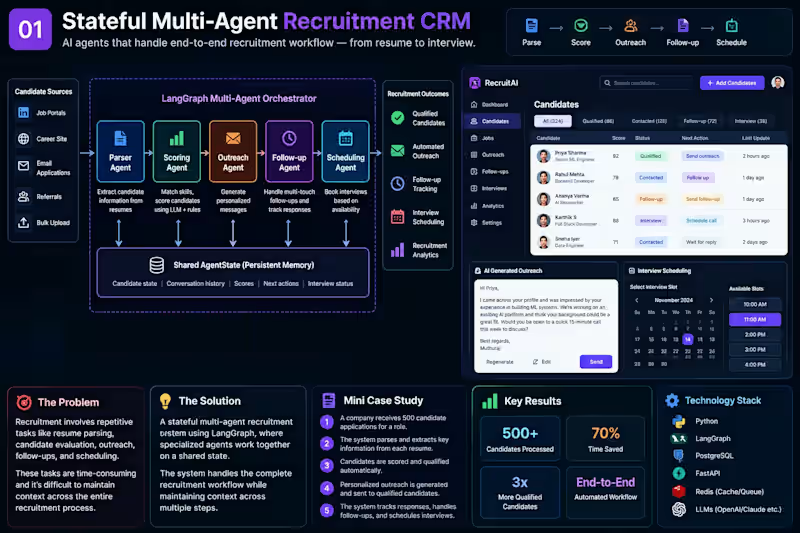
Stateful Multi-Agent Recruitment CRM — Case Study The Challenge Recruitment loses quality through context loss. Resume parsing, scoring, outreach, follow-ups, and scheduling are separate workflows. Agents don't share candidate state → conflicting messages, duplicate follow-ups, missed scheduling windows. The Solution LangGraph multi-agent orchestrator with 5 specialized agents + shared persistent memory. Agent breakdown: Parser Agent → Extract skills, experience, fit signals from resumes Scoring Agent → LLM-based ranking (not rule-based scores) Outreach Agent → Generate personalized LinkedIn/email messages Follow-up Agent → Handle multi-touch cadence, track responses Scheduling Agent → Book interviews, avoid conflicts Critical architecture: Shared AgentState All agents read/write to the same state → no context switching. The Positioning Headline: "AI agents that handle end-to-end recruitment workflow — from resume to interview." Value props: "Stateful" → Agents don't repeat work; they know what happened to each candidate "Multi-Agent" → Specialized agents → better performance than monolithic LLM "End-to-End" → Parse → Score → Outreach → Follow-up → Schedule (no manual handoffs) Metrics They Lead With Metric Result Candidates Processed 500+ Time Saved 70% Qualified Candidates 3x more Workflow Fully Automated Mini case study in the image: Input: 500 candidate applications Parse: Extract info automatically Score: Rank candidates (50% filtered out) Outreach: AI-generated, personalized messages Follow-up: Automated multi-touch Result: 3x more qualified candidates reach interview Dashboard UX Right panel shows: Candidates list with: Score (92, 78, 65), Status (Qualified, Contacted, Follow-up), Next Action, Last Update AI-Generated Outreach sample → Shows quality of personalization (candidate name, specific role match) Interview Scheduling → Visual calendar, slot selection UX insight: Dashboard surfaces actions (Send outreach, Schedule call), not just metrics. Tech Stack (Why It Matters) LangGraph → Agent orchestration + state management (core to stateful workflows) PostgreSQL → Persistent candidate state (not ephemeral) FastAPI → Scalable API layer Redis → Cache for scoring/matching LLMs (OpenAI/Claude) → Parsing, scoring, outreach generation Why this stack wins: Agents can be tested independently (Scoring Agent accuracy measured separately) State persists across failures (retry-safe) Scalable to 1000+ parallel workflows What You Should Copy 1. Architecture Don't build a monolithic "recruitment AI." Build 5 focused agents, each optimized for one task. Let LangGraph manage the handoffs. 2. State Management The shared AgentState is the moat. Without it: Outreach Agent doesn't know candidate was already contacted Scheduling Agent double-books Follow-up Agent sends duplicate messages Action: If building recruitment or SDR automation, design shared state first. Agents second. 3. Positioning Shift RudraStack: "Automate follow-ups" (feature-first) This system: "End-to-end workflow" (outcome-first) + "Stateful agents" (technical credibility) Result: Attracts technical buyers (CTOs, engineering orgs) + recruiters who care about quality. 4. Metrics Hierarchy Output quality (3x more qualified candidates) Time saved (70%) Volume (500+ processed) Most tools lead with volume. This leads with quality first. Competitive Edge for Your Stack vs. RudraStack: RudraStack: Dashboard-first, lead quantity focus This system: Agent-first, candidate quality focus vs. Traditional ATS: Stateful agents = no lost context LLM-driven scoring = learns from outcomes Multi-agent = modular and debuggable Technical Differentiation You Could Build Agent fine-tuning → Specialized models for Parser/Scoring agents (better accuracy than GPT-4 for resume parsing) Feedback loop → Track which outreach messages → interviews → placements. Retrain Outreach Agent. Multi-source orchestration → LinkedIn sources + Career portal sources + Referrals, all in shared state Real-time scoring updates → As follow-up responses come in, re-score candidates (dynamic ranking) Quick Tactical Win for Your AI-SDR Apply this to your staffing agency outreach: Replace your SDR follow-up system with a Follow-up Agent that reads shared candidate state Add a Conversation Analysis Agent that scores email replies (Intent: Interested? Unsubscribe? Dead-end?) Route high-intent replies to Scheduling Agent automatically Result: 3x faster sales cycle because context isn't lost between touch points.
0
24
0
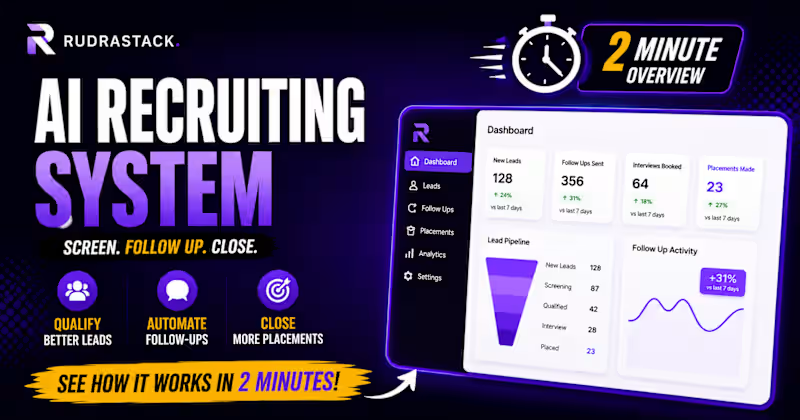
RudraStack AI Recruiting System — Case Study The Challenge Staffing agencies lose placements through manual follow-up bottlenecks. Sales teams qualify 128 leads/week but convert only 18% to interviews and 8% to placements. Each follow-up is friction. The Solution RudraStack automated the qualification → follow-up → placement workflow with a funnel-focused dashboard that surfaces three metrics: Lead quality score (Screen phase) Follow-up cadence (Automate phase) Close velocity (Close phase) The Positioning Tagline: "Screen. Follow Up. Close." Value prop stack: "Qualify Better Leads" (lead scoring, not volume) "Automate Follow-Ups" (remove manual scheduling friction) "Close More Placements" (optimize handoff to sales) Metrics They Led With Week-over-week growth (vs. absolute numbers): New Leads: +24% Follow-Ups Sent: +31% Interviews Booked: +18% Placements Made: +27% Dashboard KPIs: 128 → 87 → 42 → 28 → 23 (transparent funnel decay) Why This Works Funnel transparency — Agencies see where they leak (87→42 is biggest drop = qualification problem) ROI-first messaging — "Placements Made" as headline metric, not efficiency scores Growth narrative — Week-over-week % (not flat counts) creates urgency Speed as trust signal — "2-Minute Overview" reduces time-to-value perception What You Should Copy Lead with the result metric (placements/closes), not the process (leads screened) Show funnel stages visually so clients can diagnose their own bottleneck Use week-over-week %, not absolute numbers, for acquisition copy Dashboard-first positioning (not API/integration first) Competitive Angle for Your Stack If you're building against RudraStack: Differentiate on: LinkedIn-native workflows (vs. dashboard upload), higher qualification accuracy (vs. volume automation), or lower cost Own what they gloss over: What's the actual qualification logic? Why does 87→42 leak? Better LLM-based scoring?
0
30
AI Agent Designer
(4)
Follow
Message
Subash S
Chennai, India
Building scalable Next.js, Flutter & AI applications
New to Contra
Follow
Message
Building scalable Next.js, Flutter & AI applications
1
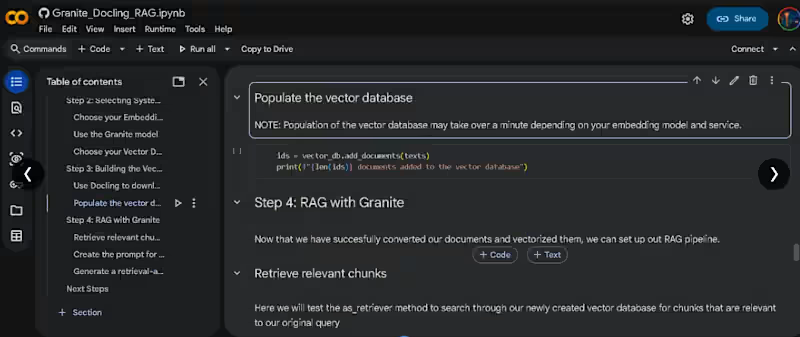
RAG is only as good as the data you feed it. 📄➡️🤖 I am excited to share that I’ve completed the Build an AI-Powered Document Retrieval System with IBM Granite and Docling lab from IBM SkillsBuild! While my previous work focused on the RAG pipeline, this lab went deeper into the most critical step: Document Parsing. We often forget that real-world data isn't clean text—it's locked in complex PDFs and formatted documents. What I built in this hands-on lab: 🔹 Advanced Parsing with Docling: I used Docling to not just "read" text, but to understand the structure of documents, preserving the context for the AI. 🔹 Granite Power: Leveraged IBM Granite models (granite-embedding-30m-english) to create high-quality vector embeddings. 🔹 Seamless Integration: Orchestrated the entire workflow using LangChain to connect the parsed data with the retrieval engine. This skill allows me to build AI agents that don't just "guess" answers but can accurately retrieve information from complex business documents. Technical breakdown of what I built: 🔹 Orchestration: Used LangChain to manage the flow between the user, the database, and the model. 🔹 Embeddings: Leveraged IBM Granite models (granite-embedding-30m-english) to convert text into vector representations. 🔹 Data Processing: Implemented document loading and chunking strategies to optimize context windows. 🔹 Synthesis: Created a system that retrieves relevant data and generates accurate, fact-based summaries. This experience has given me the practical skills to build AI applications that are not just "smart," but also accurate and domain-specific.
1
68
0
VitaCare🚀 1. Immutable Health Records (Blockchain & AES-256 Encryption) I moved beyond standard database storage to build a Tamper-Proof Medical Ledger. I learned how to implement a hybrid storage strategy where sensitive patient data is encrypted via AES-256 at the application layer before being anchored to a blockchain. This taught me how to ensure absolute data integrity, making medical histories immutable while providing a verifiable audit trail for every access request. 2. Privacy-First Consent Logic (Granular Data Sharing) Architecting the "Time-Limited Access" protocol taught me how to handle high-stakes privacy. I engineered a system where patients can issue temporary, scoped decryption keys to doctors via smart contracts. This taught me how to implement a Zero-Trust architecture, ensuring that healthcare providers only see what they need, exactly when they need it, with access automatically revoking after a set TTL (Time-To-Live). 3. Edge-Optimized Backend & Secure Validation By leveraging Supabase Edge Functions, I learned how to move critical business logic closer to the user while maintaining a "Thick-Client, Secure-Server" model. I architected isolated server-side environments for data validation and healthcare-specific compliance checks, which taught me how to drastically reduce latency in high-volume environments without compromising on server-side security. 4. Proactive Health Intelligence (Predictive Monitoring) I leveled up my AI integration skills by building an Advanced Command Center for Disease Surveillance. I learned how to aggregate anonymized, real-time data from disparate sources—including IoT wearable integrations—to generate heatmaps for disease outbreaks. This taught me the complexity of Geospatial Data Engineering and how to turn passive monitoring into proactive healthcare interventions. 5. Multi-Platform Synchronization (Unified Digital Ecosystem) Building a system that bridges Citizens, Doctors, and Government officials taught me the challenges of Cross-Stakeholder State Management. I learned how to maintain a "Single Source of Truth" across a multilingual Next.js web ecosystem and mobile interfaces, ensuring that a life-saving update on a doctor's portal is reflected on a patient's mobile dashboard in near real-time. 6. Inclusive Design & Localized Accessibility To tackle the diversity of the Indian healthcare landscape, I implemented a Multilingual UI Framework. I learned how to architect a scalable localization layer that supports regional languages, ensuring that the platform is accessible to rural citizens. This taught me the importance of Inclusive UX Engineering—where the technical complexity is hidden behind a simple, high-impact interface for non-technical users.
0
47
1
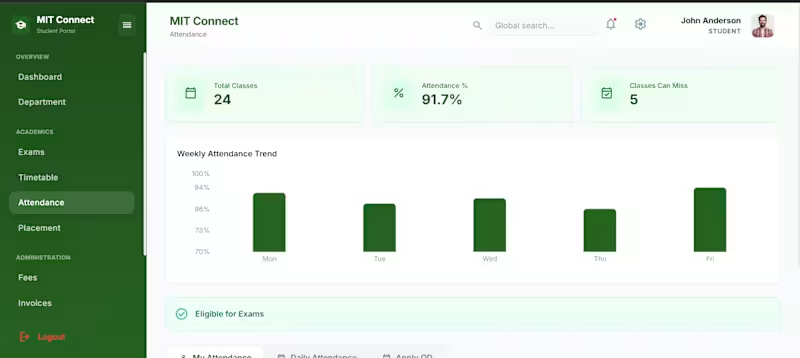
MIT Connect🎉 1. Hierarchical Access Control & Multi-Tenant Architecture I moved beyond basic authentication to implement a granular Role-Based Access Control (RBAC) system. By architecting a "Portal-Switch" logic, I learned how to serve distinct frontend environments (Admin vs. Student) from a unified backend, ensuring that administrative actions like fee management and academic overrides are cryptographically isolated from student-level access. 2. Predictive Academic Logic & Real-time Analytics Instead of static data display, I engineered a Proactive Attendance Engine. I learned how to write complex backend aggregation pipelines that don't just calculate percentages, but run "Safe-Miss" simulations. This taught me how to transform raw timestamped logs into actionable insights, helping users predict eligibility before it becomes a critical failure point. 3. Optimized Grid Scheduling & Sparse Data Handling Building the Dynamic Timetable Matrix taught me how to manage high-density relational data with significant "empty states." I learned how to optimize frontend rendering for a 2D coordinate-based schedule (Time vs. Day), ensuring that the UI remains performant and responsive even when mapping hundreds of unique course-section combinations across a decentralized database. 4. Financial Integrity & Transactional Consistency Handling the Invoices and Fee Administration module taught me the importance of ACID compliance. I learned how to architect transactional workflows in the database to ensure that financial records—from generation to payment status—remain immutable and consistent, preventing data drift in multi-step billing cycles. 5. Component-Driven Design & Scalable UI Systems To maintain consistency across the Analytics and Academic modules, I developed a proprietary library of reusable UI components. I learned how to build "Data-Agnostic" widgets—such as the Stat Cards and the Weekly Trend Bar Charts—that can be hot-swapped across different dashboards, drastically reducing technical debt and ensuring a uniform brand identity. 6. High-Throughput State Management Building the Intelligence & Analytics suite taught me how to manage global state across a complex dashboard ecosystem. I learned how to implement optimized fetching strategies (like SWR or React Query) to ensure that when an Admin updates an event or a student marks an attendance hour, the change propagates across the entire system without requiring manual refreshes or redundant API overhead.
1
100
1
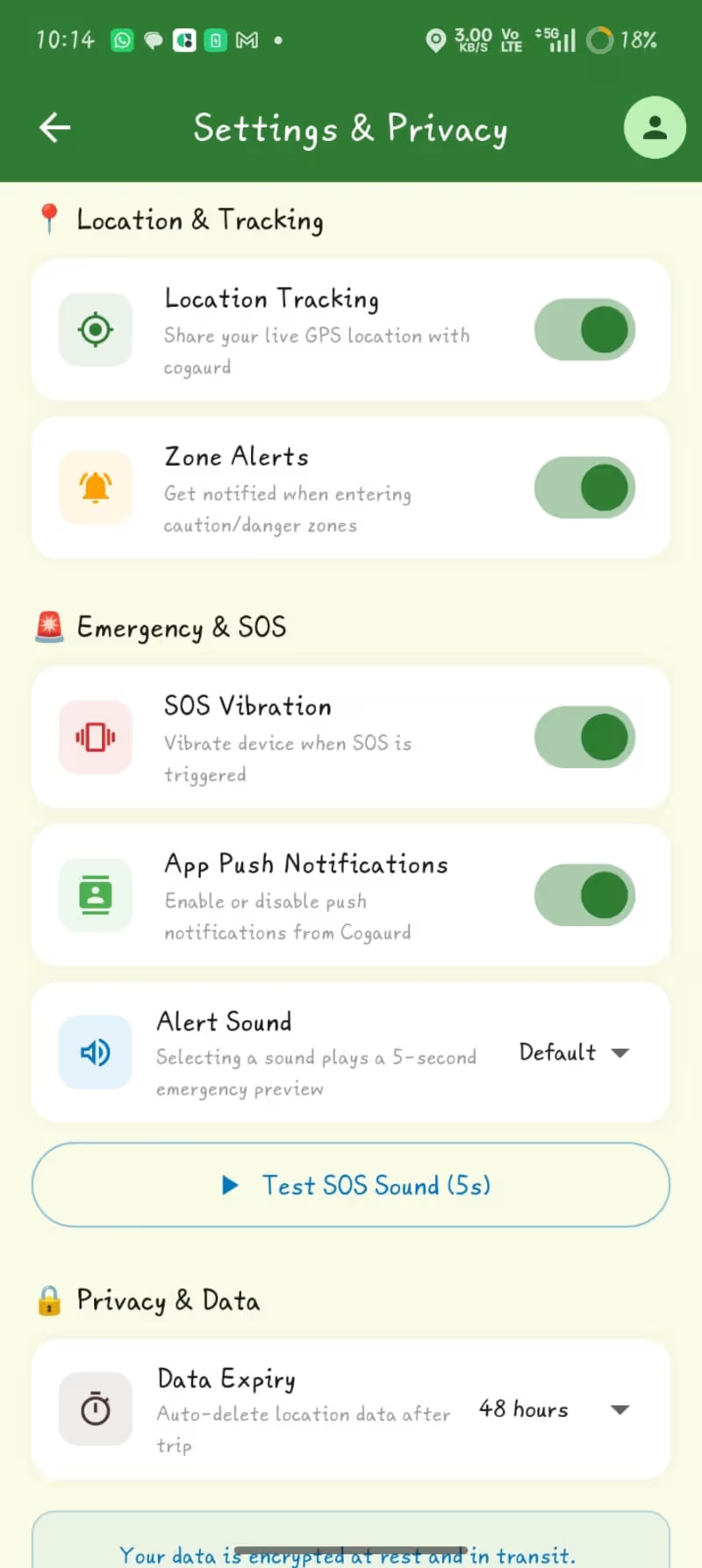
Cognitive Guardian: Building Cognitive Guardian was a massive undertaking that pushed me to bridge the gap between physical hardware and cloud infrastructure. Transitioning this from a conceptual idea to a fully integrated digital tether taught me invaluable lessons in full-stack architecture, IoT, and edge computing. Architecting Resilient Systems (Failover Logic): I learned how to design a system that doesn't just fail gracefully, but adapts. Building the "Offline Handshake" protocol taught me how to seamlessly hand over session logic from a smartphone (Cellular/BLE) to a microcontroller (LoRaWAN) when entering network dead zones. Edge AI & Hardware-Software Integration: Instead of relying on cloud-based machine learning (which introduces latency), I learned how to program Edge AI natively on a microcontroller. Writing C++ state machines to calculate 3D acceleration vector magnitudes (via an MPU6050 sensor) taught me how to achieve zero-latency anomaly detection while operating under strict hardware constraints. Polyglot Database Strategy: I leveled up my data engineering skills by realizing one database doesn't fit all. I learned how to route high-throughput, real-time GPS telemetry into MongoDB (leveraging 2dsphere indexes for geospatial queries), while using PostgreSQL for strict relational state tracking, and Hyperledger Fabric for immutable audit logs. Privacy by Design (Self-Sovereign Identity): Handling sensitive medical data taught me modern compliance and security. I learned how to implement Decentralized Identifiers (DIDs) on a permissioned blockchain, ensuring that user data remains encrypted and is only temporarily accessible to authorities via smart contracts during an active SOS. Mobile Battery Optimization & Background Tasks: On the Flutter side, I learned how to handle intensive background processes without killing the user's device. Implementing dynamic location polling tied to the phone's internal accelerometer taught me deep, native-level power optimization for both Android and iOS. Managing High-Velocity Data Streams: Building the Node.js/Express backend taught me how to handle asynchronous data spikes. I learned to implement rate-limiting and use Socket.IO (http://Socket.IO) to bypass standard HTTP request cycles, successfully pushing critical hardware SOS alerts to a React web dashboard in under two seconds.
1
131
AI Agent Designer
(1)
Follow
Message
vigneshwar L
Pallavaram (Contonment), India
Backend & systems dev — Rust, Go, Python, databases
New to Contra
Follow
Message
Backend & systems dev — Rust, Go, Python, databases
0
AI Agent Skills Workflow Framework Development
0
4
0
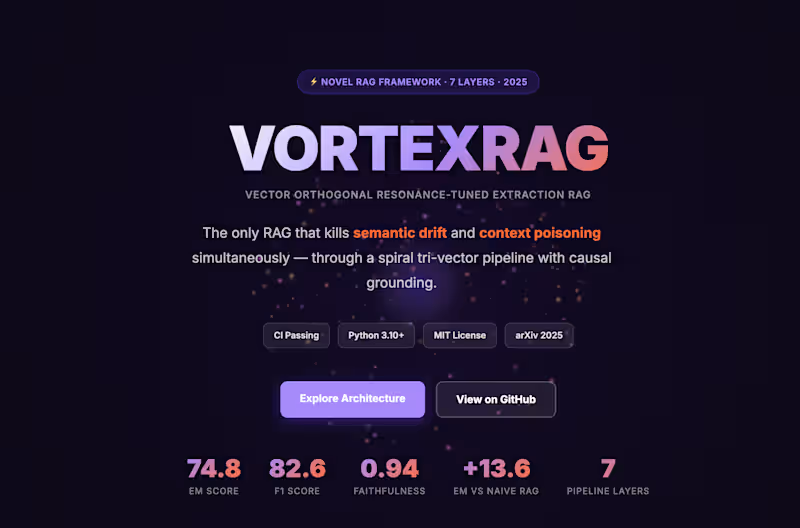
Most RAG systems have two problems that nobody talks about enough. The first is semantic drift — your retriever pulls in chunks that look relevant (high cosine score) but don't actually answer the question causally. Ask "Why did Lehman Brothers collapse?" and you'll get back chunks about the 2008 housing crisis — same vocabulary, but those are the consequences, not the cause. Cosine similarity can't tell the difference. The second is context poisoning — even if each individual chunk is okay, a window full of semi-relevant chunks confuses the LLM. It attends to all of them, averages them out, and hallucinates. VORTEXRAG fixes both. It's a 7-layer pipeline I built specifically around these two failure modes. Each layer has a specific job:
0
23
0
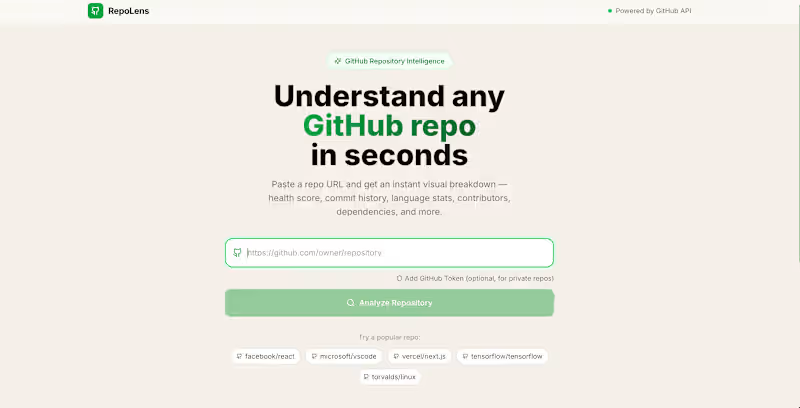
A browser-based tool that turns any GitHub repo into an instant, visual "intelligence report." You paste a GitHub URL and get a full dashboard back — no sign-up, no auth, no friction. It's a developer-tool / analytics product. Core features Health Score (0–100) — production-readiness rating across 7 quality dimensions, with letter grades Language pie chart — interactive breakdown of language composition Commit heatmap — GitHub-style 52-week activity grid Contributor rankings — top 10 contributors with avatars + metrics Smart dependency detection — parses package.json, requirements.txt, Cargo.toml, go.mod, pom.xml, Gemfile File tree browser — collapsible directory viewer with file-type icons README rendering — full GitHub-flavored Markdown with syntax highlighting Share cards — export a PNG summary for social media Tech stack LayerTechFrontendReact 18, Vite, Tailwind CSS, Recharts, react-markdownBackend (optional)Python 3.12, FastAPI, httpx, file-based caching, slowapi rate limitingDeployGitHub Pages (frontend), Railway (backend, optional) How it works The frontend runs entirely in the browser and talks directly to GitHub's REST API — that's why the live demo needs no setup or login (limited to ~60 requests/hour unauthenticated). The FastAPI backend is optional, and only exists to add caching and rate-limit relief when you self-host. Run it locally Or docker compose up --build.
0
25
1
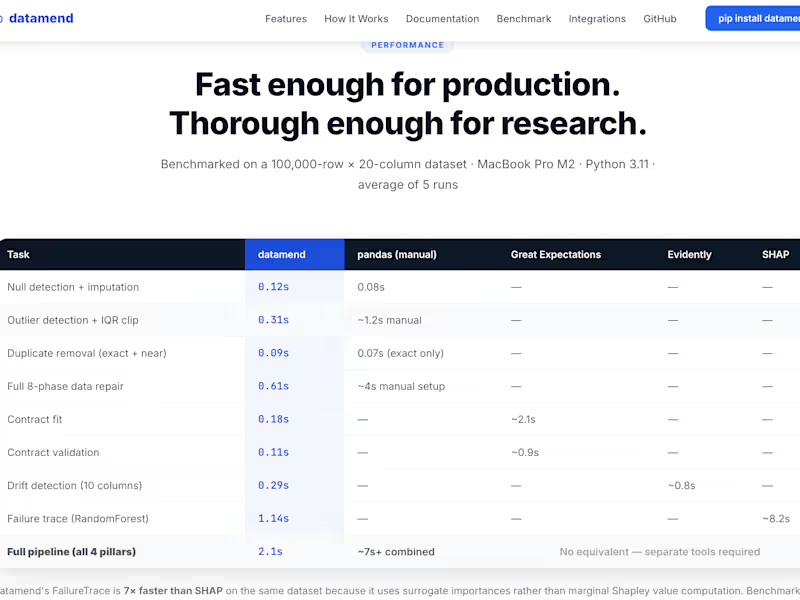
Development of datamend Python Library
1
8
AI Agent Designer
(1)
Follow
Message
SARA SAKEENA
Chennai, India
AI & ML Developer | Smart, Data-Driven Solutions
Follow
Message
AI & ML Developer | Smart, Data-Driven Solutions
0
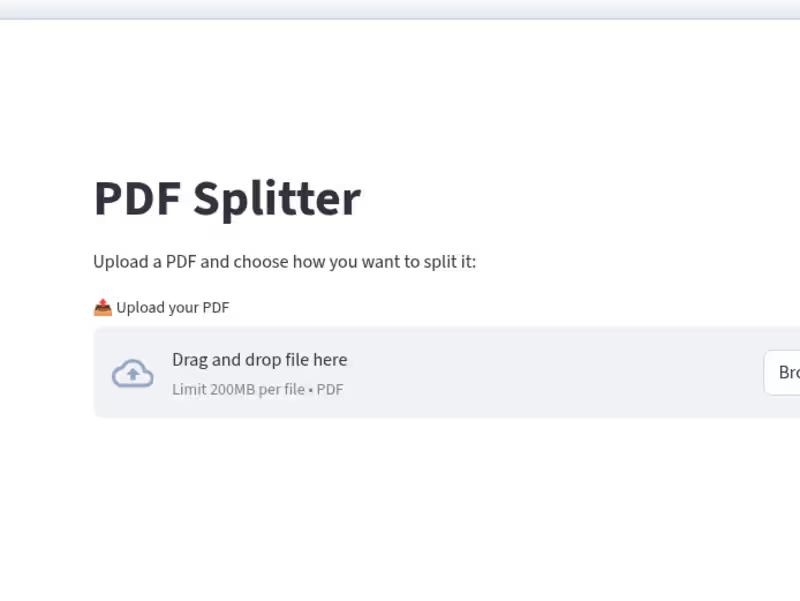
PDF Splitter App
0
2
0
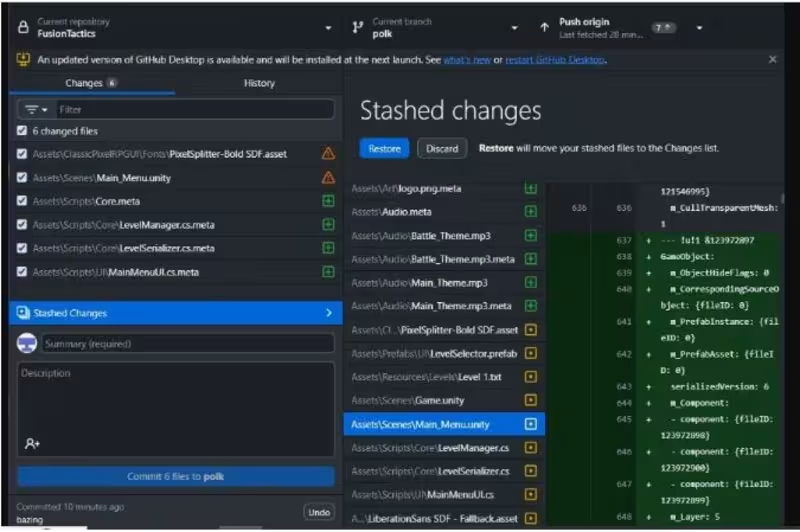
Git Stash Conflict Resolution in GitHub Desktop
0
19
0
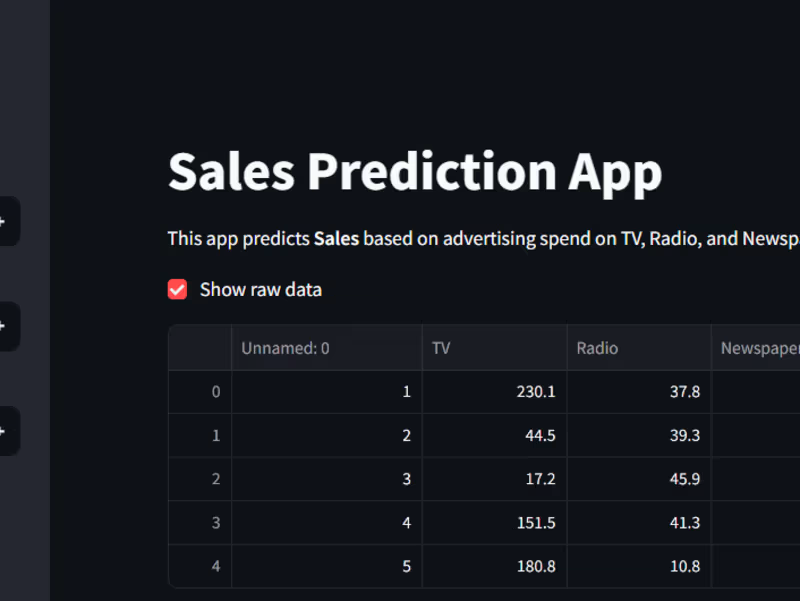
Sales Prediction App
0
1
0
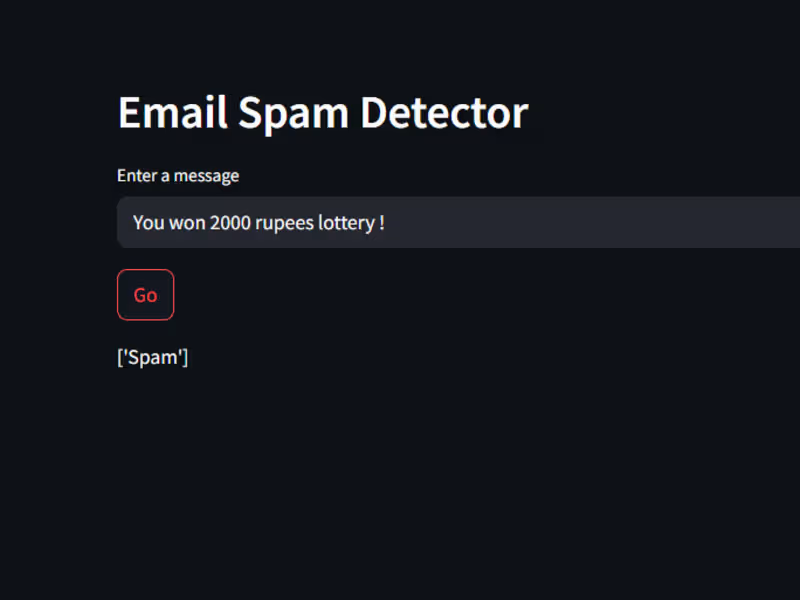
Email Spam Detection Using Machine Learning
0
4
AI Agent Designer
(1)
Follow
Message
Akshay Karthick
Chennai, India
I'm a passionate Django developer and AI developer
Follow
Message
I'm a passionate Django developer and AI developer
0
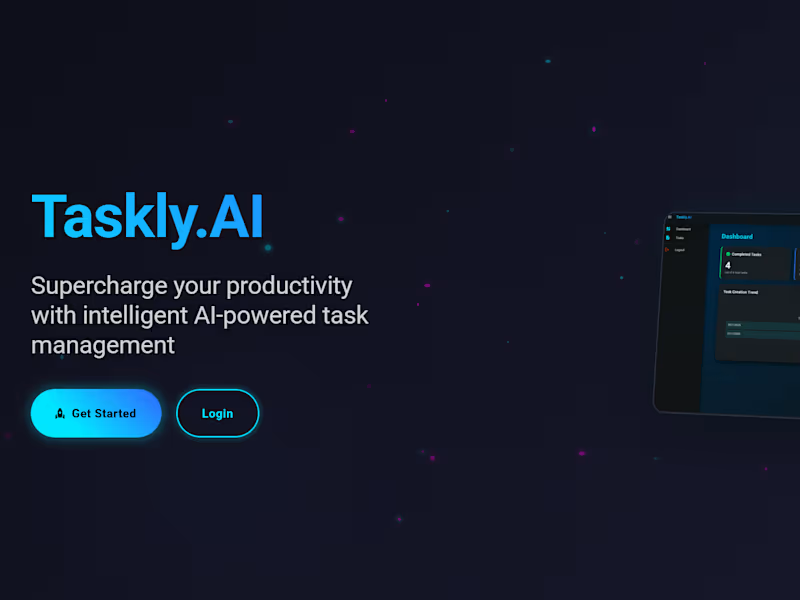
Taskly.AI - Supercharge Your Productivity
0
3
0
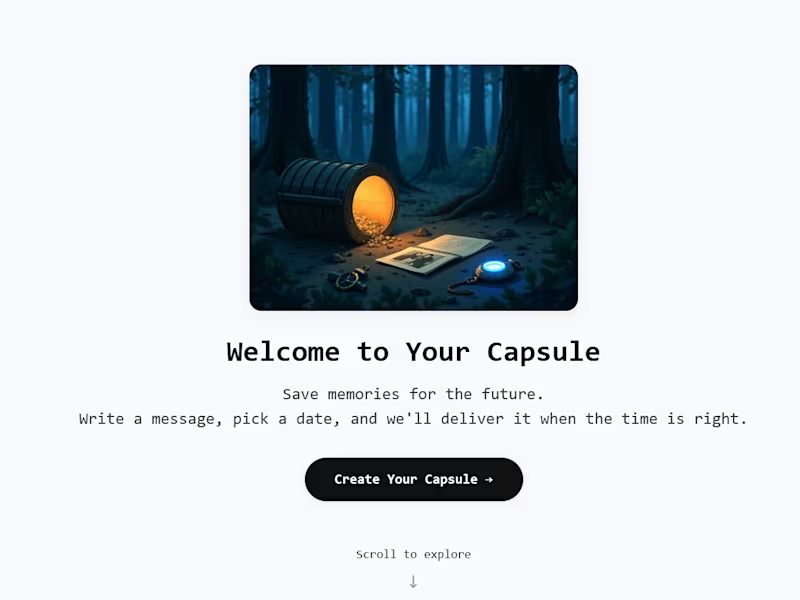
Time Capsule
0
5
0
Habit Tracking System with Social Features
0
3
View more →
AI Agent Designer
(1)
Follow
Message
Explore people