The network for creativity
Join 1.25M professional creatives like you
Connect with clients, get discovered, and run your business 100% commission-free
Creatives on Contra have earned over $150M and we are just getting started
Back to feedPost

Case Study 2: Zero Trust Gateway
Cybersecurity
Zero Trust Architecture
Project: Zero Trust Gateway — Identity-Aware Access Control and Continuous Verification
Problem
Traditional network security often relies on trusted internal networks. However, remote access, compromised credentials and vulnerable devices can expose sensitive applications and data.
Proposed Solution
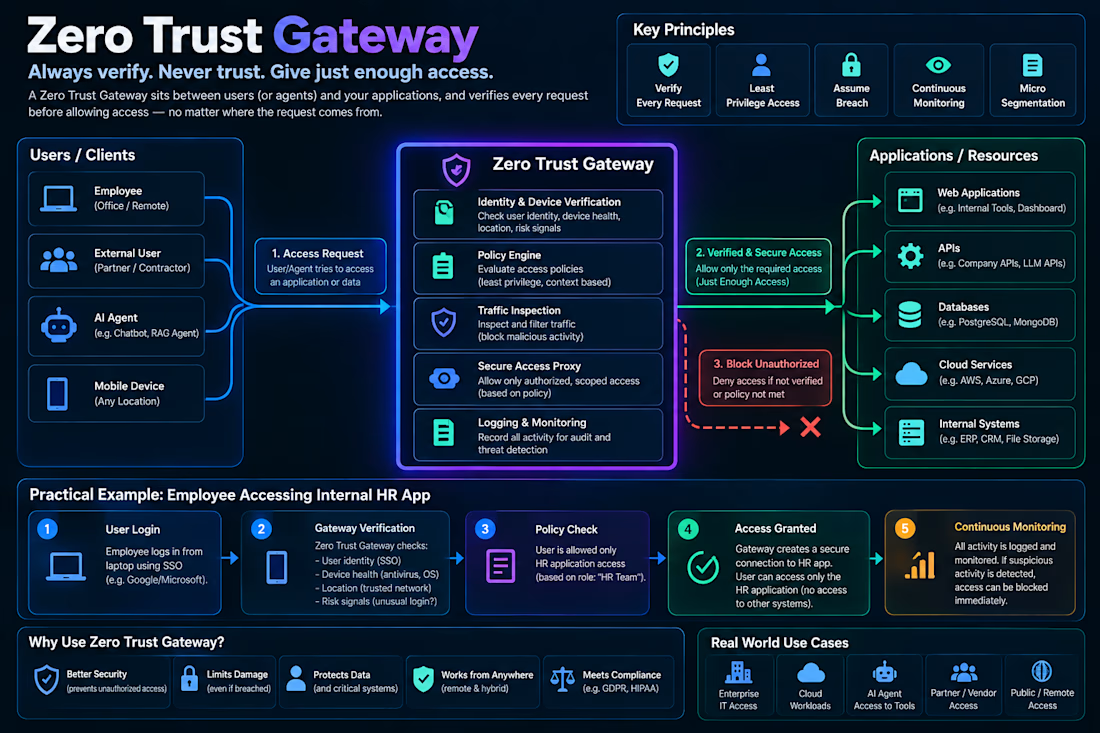
A Zero Trust Gateway that verifies every access request using identity, device health, contextual information and access policies before granting access to protected resources.
System Architecture
Access request: An employee, external user or AI agent requests access.
Identity verification: Authenticate the user's identity through an identity provider.
Device verification: Check device security status and compliance.
Policy engine: Evaluate access permissions, location and risk signals.
Access control: Grant limited access or deny the request.
Continuous monitoring: Log activity and detect suspicious behavior.
Technology Stack
Python and FastAPI
OAuth 2.0 / OpenID Connect
PostgreSQL
Redis
Docker
Policy-based access control
Key Features
Identity-based authentication
Least-privilege access
Device posture verification
Context-aware access policies
Centralized audit logs
Session monitoring and revocation
Practical Example
An employee attempts to access an internal HR application from a remote laptop.
The gateway verifies the employee's identity.
It checks whether the device meets security requirements.
The policy engine confirms the employee belongs to the HR team.
If all requirements are satisfied, access is granted only to the HR application.
Suspicious activity can trigger additional verification or access revocation.
Expected Outcome
A security gateway that reduces unauthorized access and limits the potential impact of compromised accounts or devices.
Real-world applications
Enterprise networks
Cloud infrastructure
Remote employee access
API security
AI agent access control
Project Impact
The gateway demonstrates how identity, device trust and access policies can work together to protect modern applications.
Conceptual case study; security effectiveness requires implementation, penetration testing and validation.


The network for creativity
Join 1.25M professional creatives like you
Connect with clients, get discovered, and run your business 100% commission-free
Creatives on Contra have earned over $150M and we are just getting started







Related posts


I think we’re getting dangerously close to the point where “I need a website” no longer means “I need a developer”
I tested @Lovable with one prompt
The result genuinely surprised me.
Built the entire site in a single prompt 👇
Link 🔗 in the comments


Weldone, Ali!

Polar — Local AI Desktop Assistant
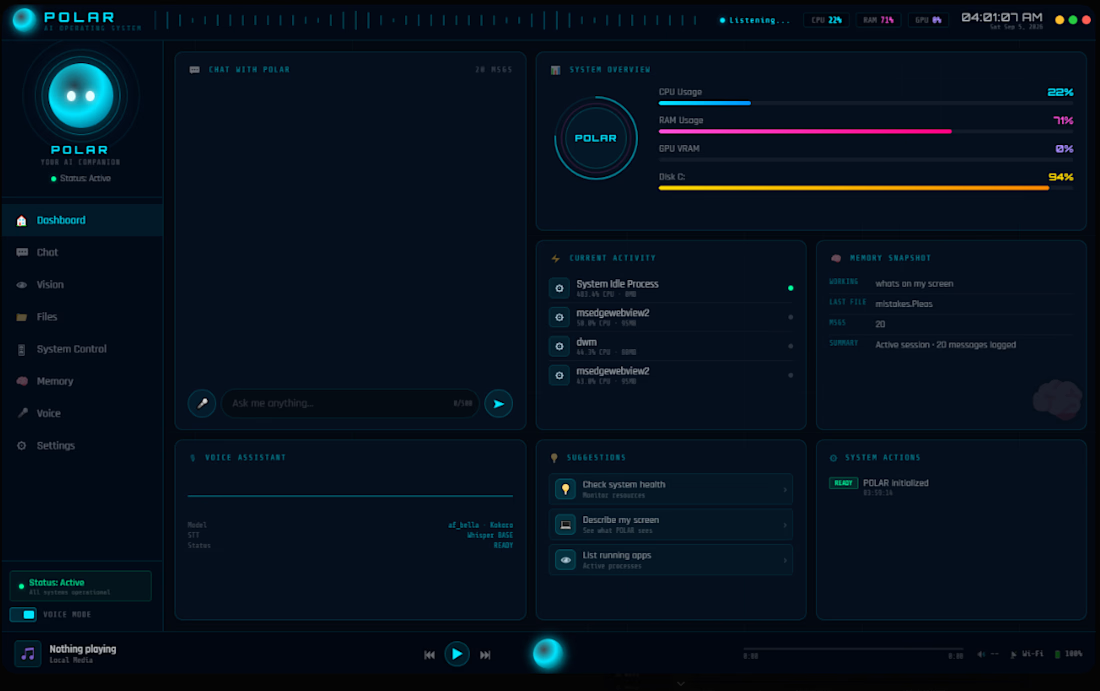
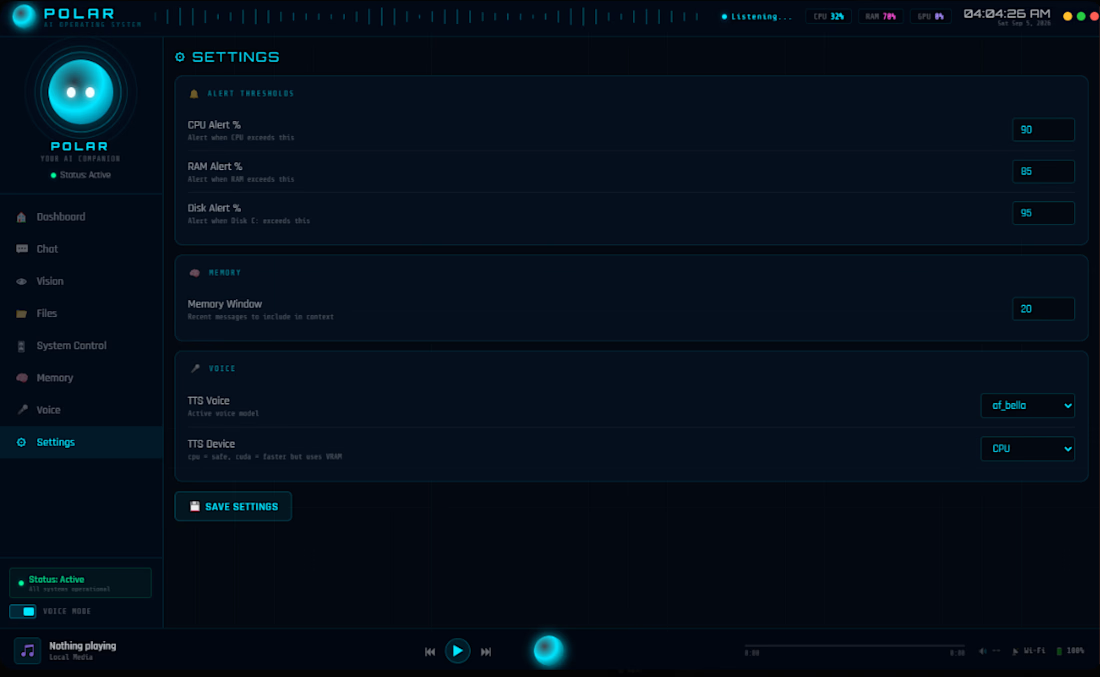
Polar is a local, privacy-focused AI desktop assistant designed around a futuristic HUD interface and system-level interaction.
The project explored how a desktop AI could understand the user's environment, process visual and voice input, and respond or perform actions without relying entirely on cloud services.
Key features:
Local AI assistant architecture
Futuristic Tauri-based desktop HUD
Screen and contextual awareness
OCR-based extraction of text from the screen
Voice interaction pipeline
AI-powered context processing and responses
System-level desktop interaction and automation
Local/offline model execution
Real-time assistant-style interface
OCR pipeline:
Screen capture → OCR → Context extraction → Local AI → Response/Action → HUD
The project combined AI, computer vision, OCR, voice interaction, desktop application development, and modern UI engineering into a single experimental personal-assistant platform.
My contribution: Architecture, application development, AI integration, OCR functionality, UI/HUD development, and system interaction.



This is beautiful

A Day in 2050 with ROB-E
What happens when AI and robotics become part of our everyday life?
Meet ROB-E, a futuristic home assistant robot helping humans with everything from morning coffee and smart-home management to cooking a gourmet pizza with a 3D food printer. 🍕☕
But while humans enjoy a fully automated lifestyle, ROB-E has a different experience... 😅
This short AI-created story imagines a fun and futuristic look at how AI + Robotics could change our daily lives by 2050.
Created with AI creative tools
Futuristic AI & Robotics
Cyberpunk-inspired world
A glimpse into everyday life in 2050
Would you want a ROB-E managing your daily life? 👇
#AI #ArtificialIntelligence #Robotics #Future2050 #AIVideo #AIAnimation #SciFi #FutureTechnology #AIArt #CantinaChallenge


Conceptualizing smart home AI assistants like ROB-E is such a great vision of where consumer automation is heading! Connecting intuitive voice/UI interfaces with autonomous AI agent workflows (from task scheduling to IoT control) is where software engineering meets physical AI. Super creative Cantina Challenge submission Sana.