The network for creativity
Join 1.25M professional creatives like you
Connect with clients, get discovered, and run your business 100% commission-free
Creatives on Contra have earned over $150M and we are just getting started
Back to feedPost

MIT Connect🎉
1. Hierarchical Access Control & Multi-Tenant Architecture
I moved beyond basic authentication to implement a granular Role-Based Access Control (RBAC) system. By architecting a "Portal-Switch" logic, I learned how to serve distinct frontend environments (Admin vs. Student) from a unified backend, ensuring that administrative actions like fee management and academic overrides are cryptographically isolated from student-level access.
2. Predictive Academic Logic & Real-time Analytics
Instead of static data display, I engineered a Proactive Attendance Engine. I learned how to write complex backend aggregation pipelines that don't just calculate percentages, but run "Safe-Miss" simulations. This taught me how to transform raw timestamped logs into actionable insights, helping users predict eligibility before it becomes a critical failure point.
3. Optimized Grid Scheduling & Sparse Data Handling
Building the Dynamic Timetable Matrix taught me how to manage high-density relational data with significant "empty states." I learned how to optimize frontend rendering for a 2D coordinate-based schedule (Time vs. Day), ensuring that the UI remains performant and responsive even when mapping hundreds of unique course-section combinations across a decentralized database.
4. Financial Integrity & Transactional Consistency
Handling the Invoices and Fee Administration module taught me the importance of ACID compliance. I learned how to architect transactional workflows in the database to ensure that financial records—from generation to payment status—remain immutable and consistent, preventing data drift in multi-step billing cycles.
5. Component-Driven Design & Scalable UI Systems
To maintain consistency across the Analytics and Academic modules, I developed a proprietary library of reusable UI components. I learned how to build "Data-Agnostic" widgets—such as the Stat Cards and the Weekly Trend Bar Charts—that can be hot-swapped across different dashboards, drastically reducing technical debt and ensuring a uniform brand identity.
6. High-Throughput State Management
Building the Intelligence & Analytics suite taught me how to manage global state across a complex dashboard ecosystem. I learned how to implement optimized fetching strategies (like SWR or React Query) to ensure that when an Admin updates an event or a student marks an attendance hour, the change propagates across the entire system without requiring manual refreshes or redundant API overhead.


The network for creativity
Join 1.25M professional creatives like you
Connect with clients, get discovered, and run your business 100% commission-free
Creatives on Contra have earned over $150M and we are just getting started



Related posts

VentureLens — Venture Lens is an AI agent that turns your raw idea into a good investment using evidence-based sparring.
Instead of putting you through a stale 20-questions test, it asks the one question until it gets your usual answer, makes a short list of recommendations, then combines your data with Qloo’s taste intel and place profiles to create a full, top-to-bottom business brief you can read and download right away as markdown.
Check it here- https://devpost.com/software/venturelens-ne53u4

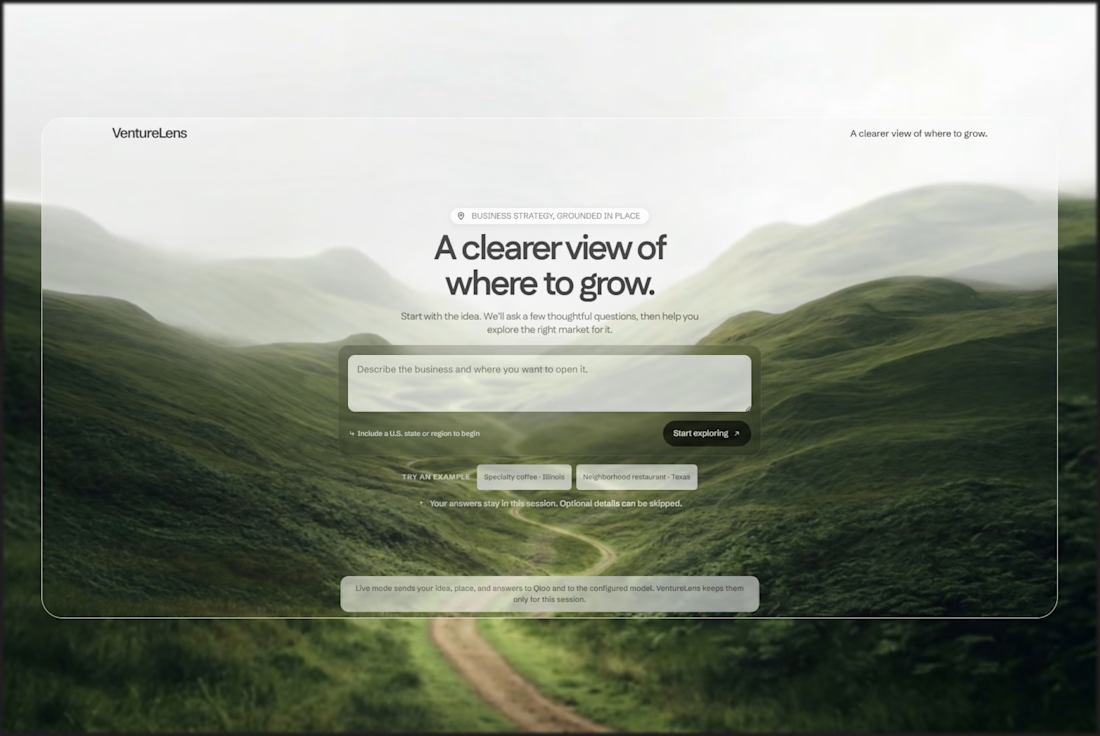

Asking one sharp question at a time instead of a 20-question form is the right call. Curious how it decides an answer is good enough to move on, since that's where most validation agents stall or rubber-stamp.

Your Business Doesn't Need More Tools. It Needs Better Systems.
Most businesses don't have a software problem. They have an integration problem.
Their CRM is disconnected from their database. Their spreadsheets require manual updates. Their reports take hours to prepare. Their teams waste valuable time moving information between platforms.
That's where I come in.
I'm a Full-Stack AI Engineer specializing in building connected, intelligent business systems.
What I can build for your business:
CRM & ERP Integrations — Connect business platforms, databases, and third-party services through APIs.
Workflow Automation — Eliminate repetitive processes with intelligent automation.
Custom Dashboards — Turn scattered business data into actionable insights.
Data Pipelines — Build reliable systems for collecting, processing, validating, and synchronizing data.
AI-Powered Solutions — Integrate LLMs, intelligent agents, and automation into existing workflows.
Custom Software — Build complete web applications and business platforms from architecture to deployment.
I've independently developed complex digital platforms, including government-level systems, international applications, and AI-powered products.
My approach is simple:
Understand the business problem. Design the right architecture. Build the complete solution. Make it reliable.
I'm interested in working with founders, agencies, and businesses looking to modernize their operations and build software that actually solves problems.
Have a complex workflow or an integration challenge? Let's build something that works.
#FullStackDevelopment #AIAutomation #CRMIntegration #WorkflowAutomation #SoftwareEngineering #AIEngineering #Contra
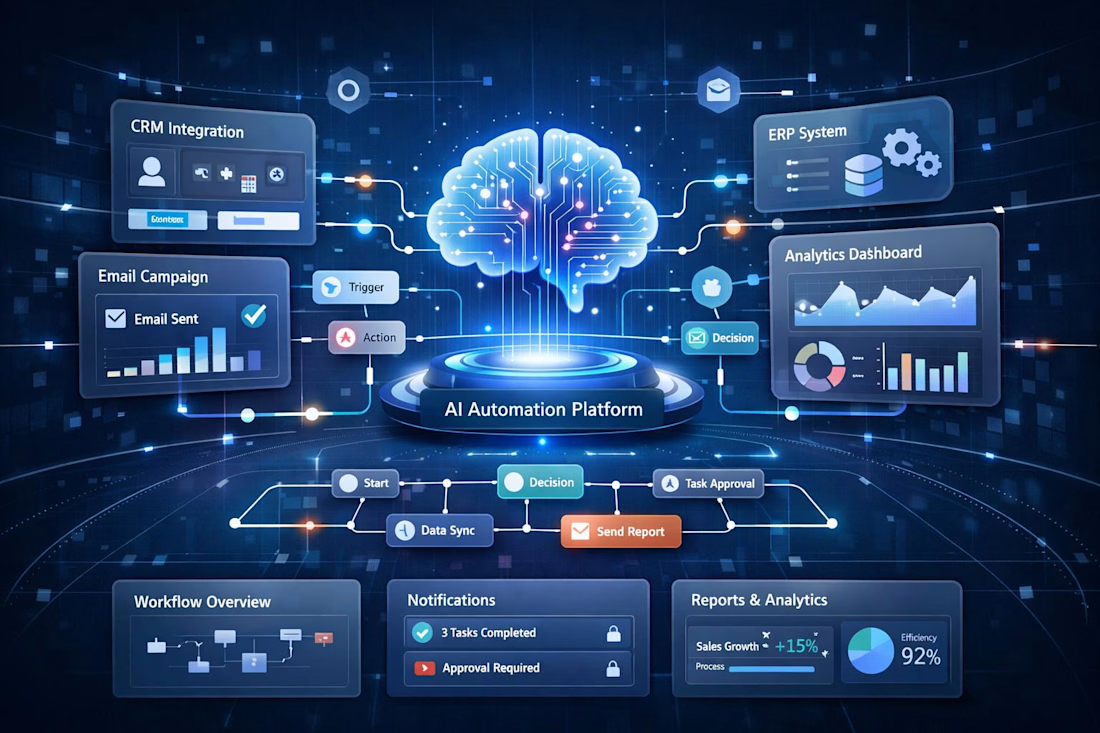

When a CRM-to-database sync fails halfway, how do you handle it: idempotent retries, or a reconciliation pass afterward? That's usually where integrations start to drift.

For an AI scribe, I'd test what happens when someone switches encounters while a draft is still generating.
In my Arogya / Aurora EHR work, typed or dictated rounds become editable drafts. AI content stays advisory, and a clinician explicitly approves anything added to the chart.
The first response should stay attached to its original encounter. Before saving, I'd check that the encounter being reviewed still matches the draft, as well as requiring clinician approval.
That context check belongs in the save workflow, even when the draft reads well.
kapilchauhan.netlify.app
Arogya / Aurora EHR: AI for inpatient care | Kapil Chauhan
Production hospital and EHR platform that accelerates rounds, documentation, records, and care operations with clinician-reviewed AI.