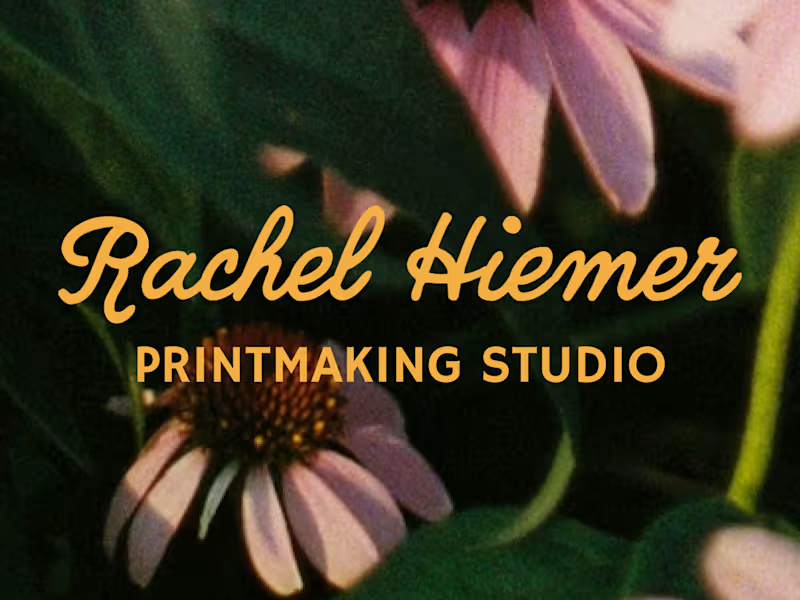
Projects using Adobe Photoshop in CharlotteProjects using Adobe Photoshop in CharlotteRachel Hiemer makes prints that feel like the natural world translated into ink, in a way that feels botanical, hand-cut, and quietly alive. 🌿 An artist herself, Rachel knew exactly what her niche was and how to create art for it, but she was lacking a full visual suite that gave her confidence in what she already knew – her namesake ✨was✨ her brand.
For this project, I built Rachel's brand identity and narrative around the same natives and wild flowers that Rachel found herself always returning to in her work. The primary logo mark centers on an illustrated echinacea, drawn in her own linocut vocabulary, then refined into something that could live at any size, on any surface. A script wordmark moves smoothly alongside it with the same loose energy as her printed line work, and a set of secondary marks give the brand room to breathe across different contexts and tiled backgrounds.
For the color palette, I chose hues that nod to a garden in full bloom: marigold, periwinkle, soft pink, and eucalyptus. I intentially chose colors that feel bright and bold not only by themselves, but belong together the way that wildflowers do.
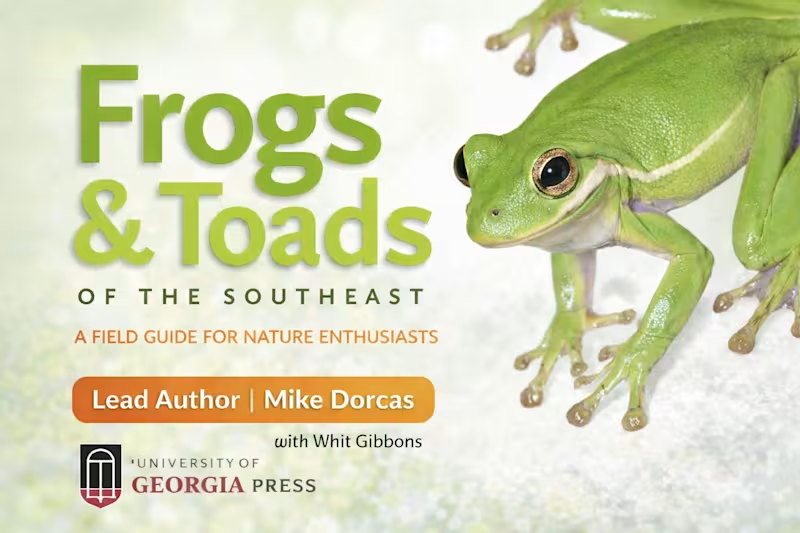
The result was a visual identity for a personal brand that feels grown, not assembled. By using elements from Rachel's own artwork, her brand's logo and identity feels unmistakably hers before you've even read her name. 🎨 As lead author of Frogs & Toads of the Southeast (University of Georgia Press), I headed up the development of a comprehensive, accessible guide covering more than 40 frogs and toads in one of North America’s most biodiverse regions. The book synthesizes scientific research, species ecology, and conservation insights into clear, engaging content for a broad audience, supported by extensive photography and distribution mapping.
I led the organization, writing, and narrative structure of the book, translating complex biological concepts into material that is both scientifically rigorous and accessible to naturalists, students, and professionals alike. This work demonstrates my ability to bridge high-level science and public-facing communication—delivering clarity, accuracy, and strong narrative flow in long-form, publication-quality writing.