
Product Designer for Web3 & Cybersecurity
Product Designer for Web3 & Cybersecurity

Versatile Writer Specializing in Tech and Security
Versatile Writer Specializing in Tech and Security


View more →

Experienced IT Specialist, Writer, Cybersecurity
Experienced IT Specialist, Writer, Cybersecurity



View more →

Interactive Websites & Full-Stack SaaS Builds
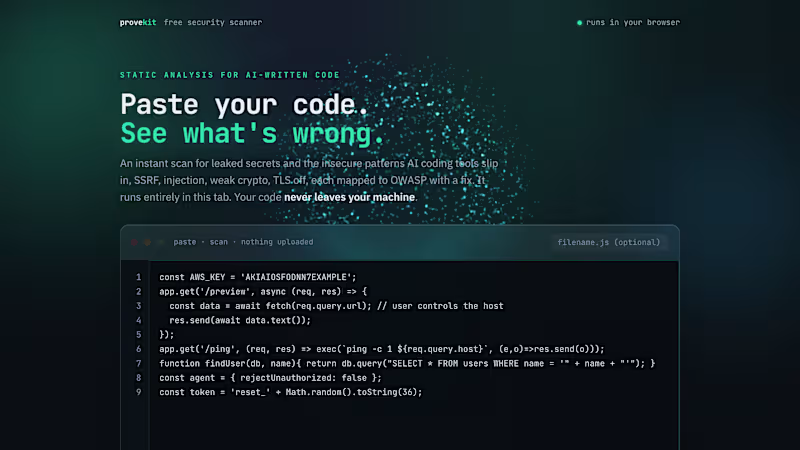
New work: I rebuilt my studio site as a real-time 3D experience, then I attacked it.
The visual layer is hand-written WebGL and GLSL. GPU particle cores that react to your cursor, morphing transitions between pages, adaptive performance that tunes itself to the device. All custom code, no template, no page builder.
But looking expensive is only half the job. I also build and secure the systems behind sites like this: multi-tenant SaaS, Stripe billing, PostgreSQL row-level security. So I wrote an automated red-team loop in Python and ran it against my own live site: attack, triage, patch, verify. It flagged a couple of hardening gaps, I fixed them, and re-ran until it came back clean.
If you want a site that looks like a high-budget trailer and holds up when someone probes it, that is what I build.
Live: xkaii.studio
(http://xkaii.studio)The security work: xkaii.studio/security
2
3
362
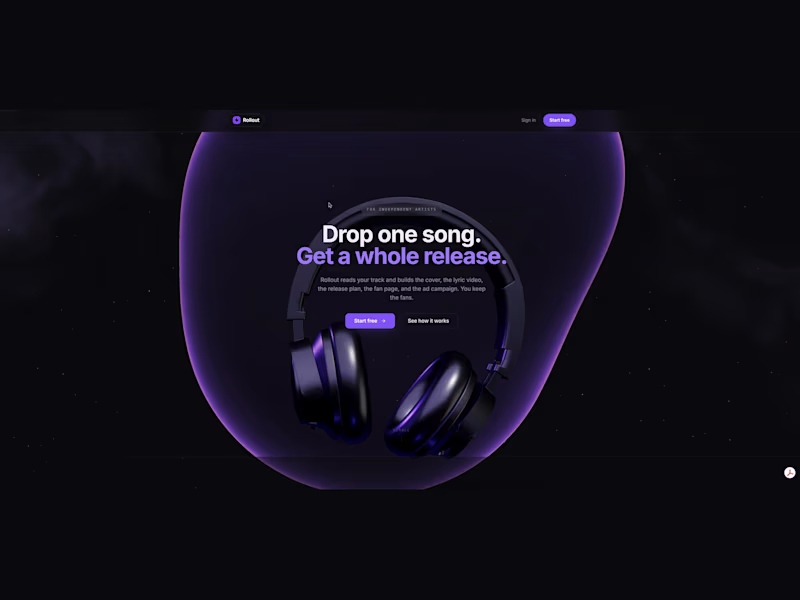
Most sites tell you they're premium. Almost none of them make you feel it.
I spent the last stretch building thirteen concept sites chasing that
difference, and the thing that kept proving itself is that the feeling comes
from motion you control, not motion you watch.
Four are real-time 3D in the browser. A crystalline brand hero turning under
studio lighting, a perfume landing lit entirely by a real HDRI environment, a
neural field of instanced particles for an AI product, an architectural
monolith that reveals itself out of near-black. The other nine are
scroll-scrubbed video, where you drag a whiskey pour or open a box or drive
into a sunrise at whatever pace you want. The visitor is the animator, which
is a very different thing from watching an autoplay loop.
I design it, build it, and ship it myself, so there's no handoff where the
feeling leaks out between the mockup and the browser.
Two things I learned that I'd want someone else to know.
If you light a translucent material without a real environment map, your
scene renders black. Lighting is not polish you add at the end, it's a design
decision you make first, before you have anything to look at.
And if you want video to scrub frame for frame off scroll position with no
stutter, re-encode it all keyframe. Every frame becomes a seek target. Most
people fight that stutter in JavaScript when the fix lives in the encode.
Who it actually serves is anyone selling on craft rather than spec. Fragrance,
architecture, spirits, dev tools. The interaction buys a few more seconds of
attention right where the headline and the call to action live, and those
seconds are usually the whole game.
All thirteen are live and interactive, and labeled as concepts because that's
what they are.
Still chewing on one thing. Where's the line where motion stops serving the
brand and becomes the thing people remember instead of the brand?
https://xkaii.studio/ui-ux-designs/
12
21
680
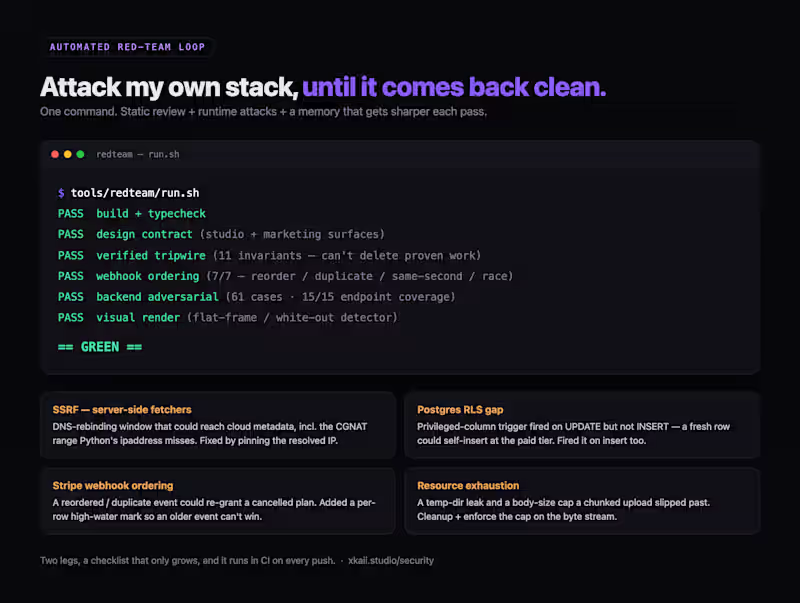
An update on the red-team loop from my last post.
I turned it from a one-off script into a real harness I run with one command against the whole stack. It attacks the backend, replays out-of-order Stripe events to prove a cancelled plan can't come back, and it screenshots the site and fails if the page renders as a flat white frame. That last one is a real bug I hit: the old checks passed because there were no console errors, but the entire hero was painting white on certain GPUs.
I also added a tripwire that fails the build if I ever delete something already built and verified, or reintroduce a mistake I already fixed. Iterating on a live 3D site, the hard part is not breaking the thing that already worked.
It runs in CI now, so every push gets checked.
Live: xkaii.studio
(http://xkaii.studio)Security: xkaii.studio/security
1
269


Founder & AI Automation Systems Architect
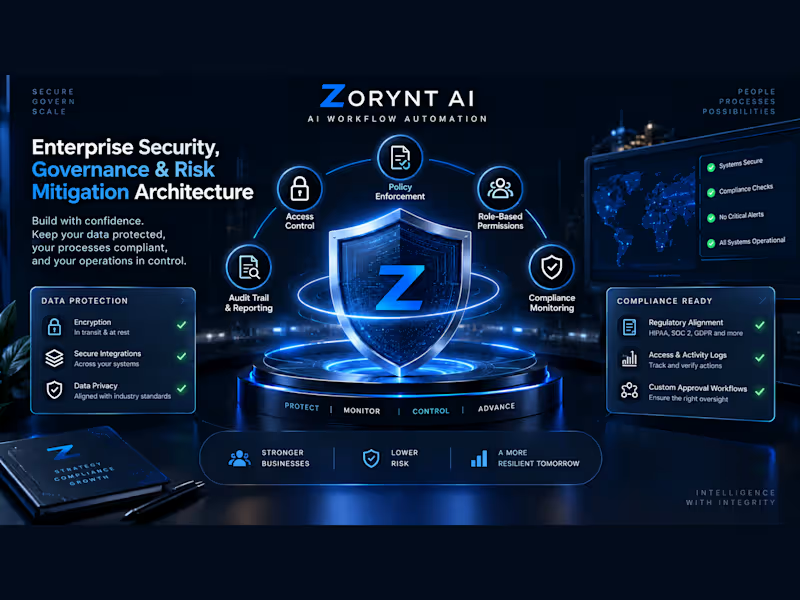
At Zorynt AI, we understand that enterprise automation is meaningless without strong data protection and operational control. This showcase project highlights our comprehensive Security & Governance framework, designed to help ensure custom AI workflow integrations remain compliant, transparent, secure, and controlled.
When architecting custom API integrations, we implement the following core guardrails:
Strict Access Control & Role-Based Permissions to regulate system interactions.
Comprehensive Audit Trails & Reporting to trace automated decisions.
End-to-End Data Encryption, both in transit and at rest, to protect proprietary company data.
Active Compliance Monitoring to support regulatory alignment with applicable industry standards.
0
141
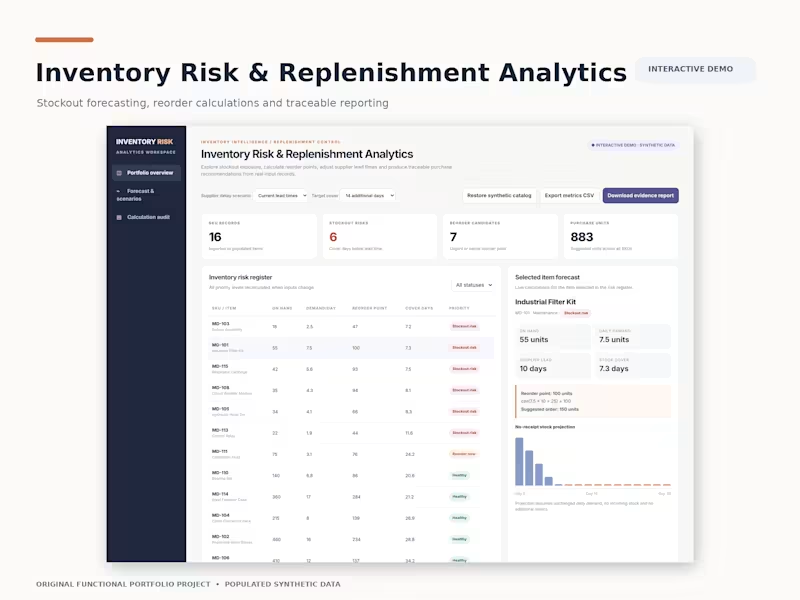
This video demonstrates an interactive inventory analytics application designed to help operations teams monitor stock availability, identify supply shortages, and make informed replenishment decisions.
Using 16 populated synthetic inventory records, the walkthrough demonstrates how changes in stock quantities and supplier lead times automatically update inventory risk calculations.
What the Video Demonstrates
Inventory Dashboard: Displays stock availability, six stockout-risk items, and seven replenishment candidates.
Stockout Risk Detection: Identifies products that may run out before replacement inventory arrives.
Supplier Delay Simulation: Demonstrates how changing lead times affects replenishment calculations and risk exposure.
Interactive Inventory Management: Shows how stock adjustments immediately update dashboard metrics.
Replenishment Analytics: Calculates reorder points using demand, lead time, and safety stock.
Reporting: Provides calculated inventory results and export capabilities.
Technical Implementation
Developed the interactive dashboard, inventory calculation logic, scenario controls, risk filtering, and data import/export functionality using JavaScript, HTML5, and CSS3.
The demonstration showcases a functional inventory management analytics application with reproducible calculations and clearly identified synthetic data.
2
0
153
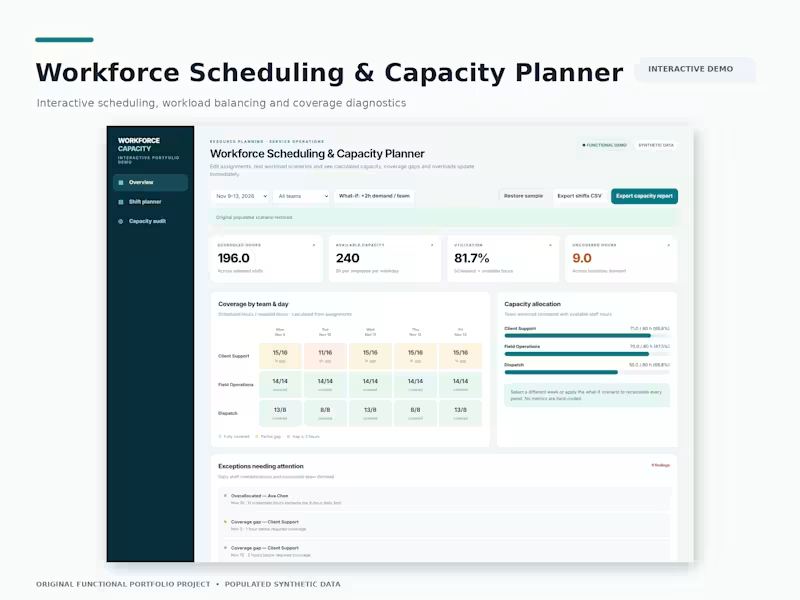
Workforce Scheduling & Capacity Planner | Interactive Demo
This video demonstrates a desktop-optimized workforce scheduling application designed to help operations teams manage staff assignments, monitor capacity, and identify coverage gaps.
Using populated synthetic workforce data, the walkthrough shows how scheduling changes automatically recalculate staffing availability and operational performance metrics.
What the Video Demonstrates
Workforce Capacity Dashboard: Displays 196 scheduled hours, 240 available hours, and 81.7% workforce utilization.
Interactive Shift Management: Demonstrates adding staff assignments and automatically recalculating capacity metrics.
What-If Scenario Planning: Simulates increased staffing demand, raising uncovered hours from 9 to 33.
Multi-Dimensional Coverage Analysis: Displays staffing requirements across departments and weekdays using interactive coverage grids.
Capacity Auditing: Identifies staffing shortages, employee overallocations, and operational exceptions requiring attention.
Technical Implementation
Application Logic: Developed interactive state management that updates dashboard calculations when assignments, reporting periods, or staffing requirements change.
Data Processing: Implemented calculations comparing scheduled staffing hours against available capacity and departmental demand.
Data Management: Built CSV import/export functionality, input validation, and downloadable capacity reports.
Technology: JavaScript, HTML5, and CSS3.
The demonstration showcases a functional workforce planning application with traceable calculations and interactive scenario analysis.
0
46

Fullstack Dev: Expert in Ruby on Rails & Laravel
Fullstack Dev: Expert in Ruby on Rails & Laravel




I make complicated shit interesting.

Good ghostwriting shouldn’t sound like the ghostwriter.
I ghostwrote this AI thought-leadership piece for an insurance executive, translating their expertise into an accessible story about balancing AI adoption with the human side of the business.
Their expertise. Their voice. My keyboard.
1
301

AI is not your problem.
Vague prompting is.
Corporate sludge is.
Stakeholders requesting "more thought leadership" without defining thought leadership are.
This is a premium prompt playbook for content strategists, marketers, writers, freelancers, editorial operators, and professionals who work inside corporate systems but would prefer to keep their personality intact during stakeholder review.
This is not anti-work.
This is a survival guide.
1
179

Insurance is boring. Alien abduction insurance is considerably less so.
I created this piece as part of a Stranger Things… About Insurance series, using weird-but-real policies to make insurance content entertaining while naturally connecting the story back to actual products and coverage.
The idea: get their attention first. Sell second.
1
199

Taxes aren’t exactly known for their entertainment value.
I wrote this TurboTax newsroom piece around its Super Bowl LX campaign featuring Adrien Brody, turning a major brand moment into a quick, entertaining story without losing the product message.
Timely and culturally relevant—not a press release wearing a football jersey.
1
139