Freelancers using MATLAB in Auburn
Freelancers using MATLAB in Auburn
Sign Up
Post a job
Sign Up
Log In
Filters
2
Projects
People
Results that are similar to your search
Similar results
Message
0
Chandan Roy
ANN Model Development for High-Frequency Structure Design
0
17
Message
0
Antonio Armenta
Outlier AI - AI Model Critique & Prompt Engineering Expert
0
10
Message
3
Muhammad Usman
pro
Website for Workflow AI Artificial Intelligence Company
3
3
281
Message
0
Adeagbo AbdulJeleel
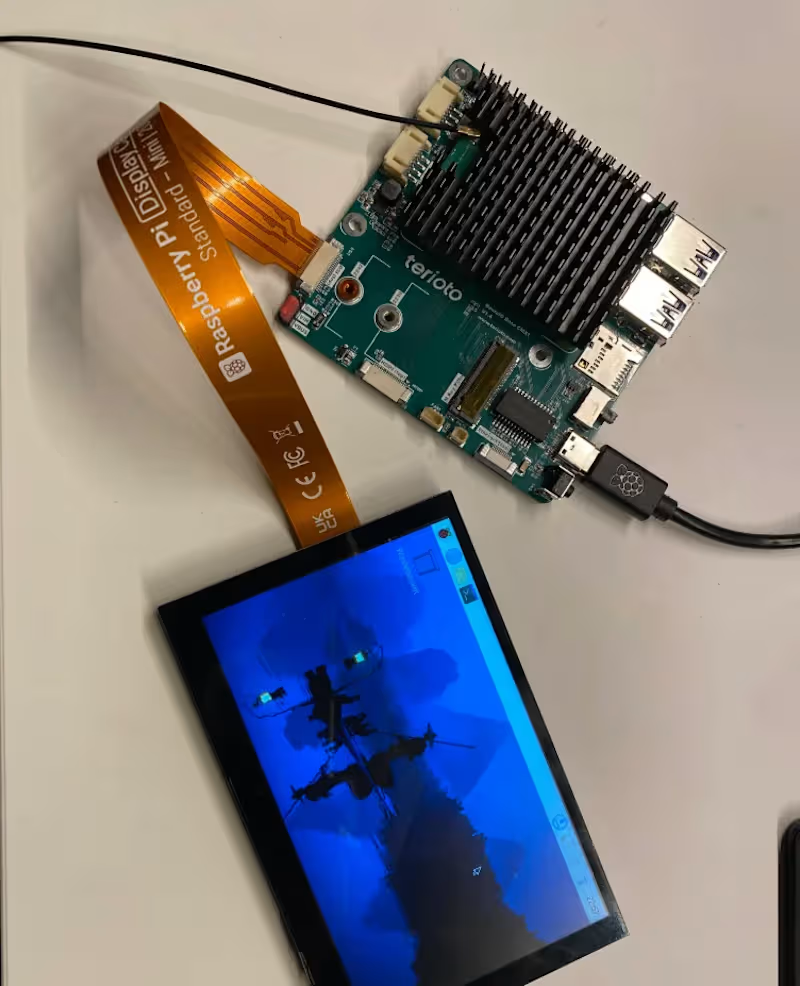
Raspberry Pi CM5 IO Board with USB 2.0 OTG The official Raspberry Pi Compute Module 5 IO board doesn’t include the USB 2.0 path switch IC, which was in its elder brother CM4 IO board. Also, it uses CM5’s own CC control pins for USB Type C port. To make my design compatible with both CM4 and CM5, I integrated an USB 2.0 switch IC in the similar way, but with a little bit different configuration. The board need to have 2 x USB 2.0 ports. So I needed to add an USB 2.0 hub IC and an USB path switch chip, similar to the official Raspberry Pi CM4 IO board. But I needed to modify it to use an USB Type-C port and use CC control pins of CM5. The elder CM4 series modules didn’t have CC control pins. Thus, I also added DNP resistors, where I can solder 5.1K resistors for using CM4 on this board. The official Raspberry CM4 IO board used VBUS to automatically switch the OTG config via USB_OTG_ID pin. But on my design, +5V line may be supplied from external power source. It means I should use 5A rated ideal diode. But the requirements was only using USB 2.0 as normal Host, instead of standard USB OTG compatible port. As we anyway need BOOT button to set the compute module into flashing mode, I decided to use a DPDT slide switch instead of tactile boot button. In this way, I could manage setting BOOT and OTG_ID flags using a single switch sliding.
0
47
Message
0
Mohammed Alsamdani
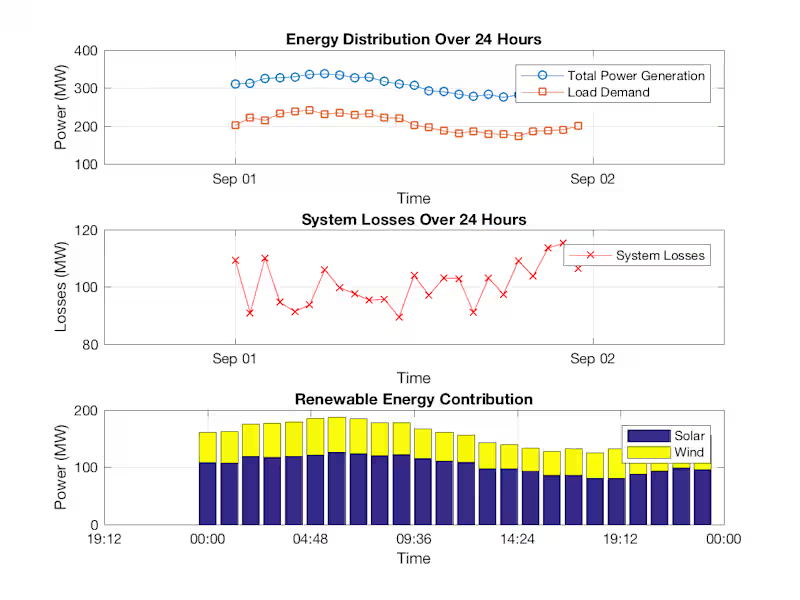
Power Systems Optimization using Data Science
0
30
Message
0
Ahmad Ali
Homework writing services for usa and arab country students
0
82
Message
0
Matthew Reniva
Our project focused on making a computer program better at telling the difference between real photos and fake ones made by AI. We took an existing program and changed it to make it much more accurate. Now, it can correctly identify fake images about 95% of the time, which is a big improvement from its original 70% accuracy. With AI now able to create very convincing fake images quickly (Khadatkar, 2024), our work is important for spotting these fakes. 1 Our research paper explains how we made these improvements using a special kind of computer learning. This work can help address the challenges that come with the rise of AI-generated images.
0
59
Message
0
Farhan Khan
Automated Video Dehazing & Atmospheric Haze Simulation System 🚀 Project Overview This advanced Computer Vision project is designed to address visibility challenges in adverse weather conditions. The system features a dual-module architecture: it can synthetically inject realistic atmospheric fog/haze into crystal-clear video streams for dataset generation, and conversely, restore heavily degraded, foggy videos into crisp, high-visibility outputs in real-time. 🛠️ Core Functionality & Modules Module 1: Atmospheric Haze Simulation Purpose: Generates synthetic datasets to train and benchmark object detection models (like YOLO) for bad weather conditions. How it works: Implements mathematical scattering models to calculate depth maps and overlay a realistic layer of dense fog or smoke over clean video frames. Module 2: Real-Time Video Dehazing Purpose: Restores clarity and vivid color to video streams captured in low-visibility environments. How it works: Leverages physics-based Computer Vision algorithms (such as Dark Channel Prior - DCP) or Deep Learning frameworks to estimate atmospheric light, eliminate transmission noise, and reconstruct the scene's original contrast. 🎯 Use Cases & Applications Autonomous Vehicles: Enhances the sight and reliability of self-driving car sensors in dense fog. Smart Surveillance (CCTV): Improves security monitoring and facial recognition accuracy under harsh outdoor weather. Drone Navigation: Aids aerial drones in safely navigating through smoke, dust storms, or low-lying clouds. 💻 Tech Stack Used Language: Python Libraries: OpenCV, NumPy, Matplotlib, PyTorch / TensorFlow (if deep learning was applied) Concepts: Image Processing, Atmospheric Scattering Models, Feature Restoration, Video Pipeline Optimization
0
55
Message
0
Shiki Nobuhisa
StylerCV
0
47
Message
1
Navaneetha Krishnan Kamalakannan
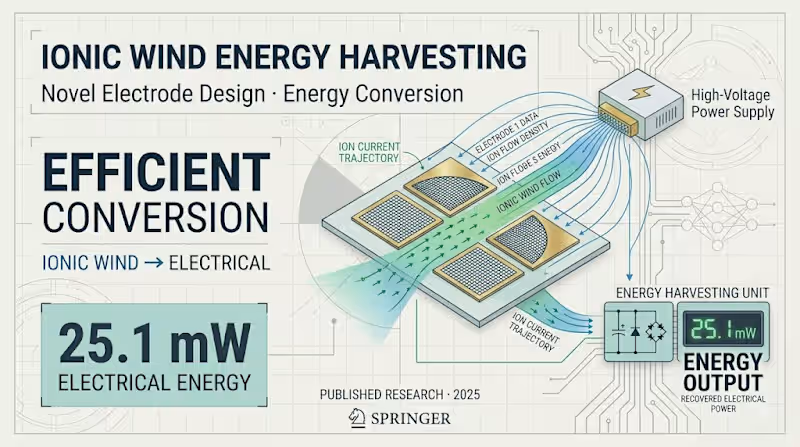
Ionic Wind Energy Harvesting for Microscale Devices: Investigated a novel ionic-wind electrode design for improving energy-harvesting efficiency in microscale devices, with comparison against piezoelectric energy harvesting. The research was published by Springer in Lecture Notes in Networks and Systems in 2025.
1
70
Message
0
Zahoor Ahmad
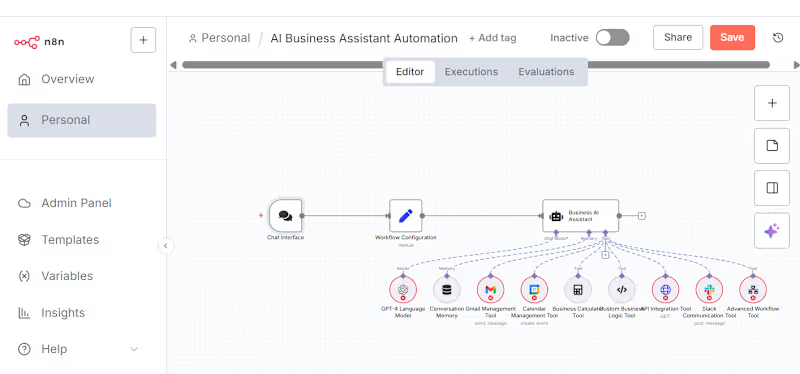
AI business Assistant automation
0
11
Message
0
Andoni Bretón
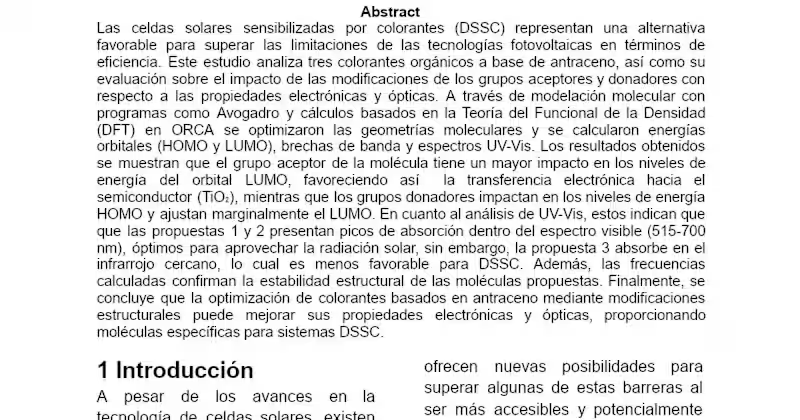
Molecular Analysis of Anthracene-Based Dyes for DSSC
0
9
Message
0
Jean-Luc Maurel
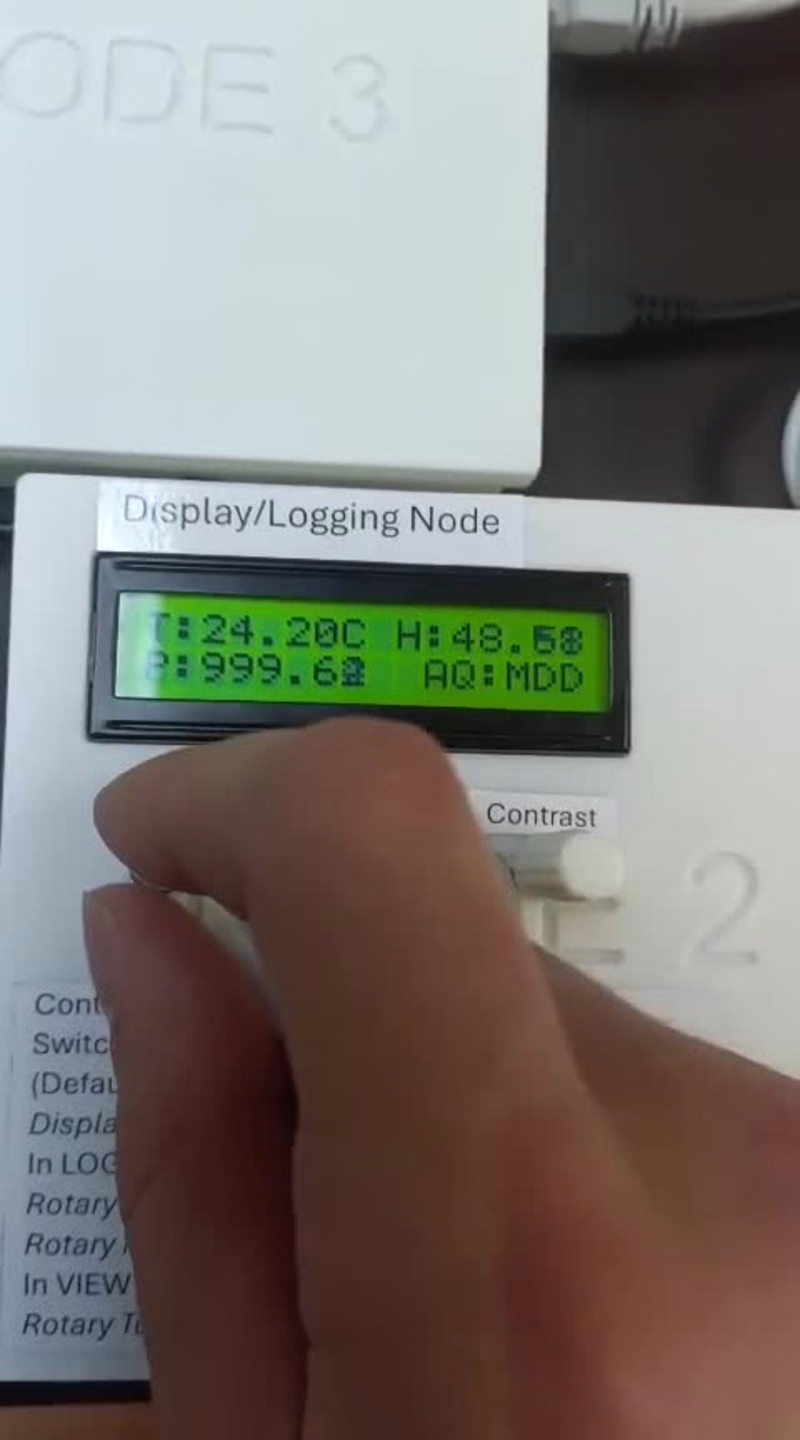
Multi node CAN Bus network environmental monitoring
0
33
Message
0
Amir Azam
Child Safeguard Training - UNICEF
0
177
Message
0
Cory Hisey
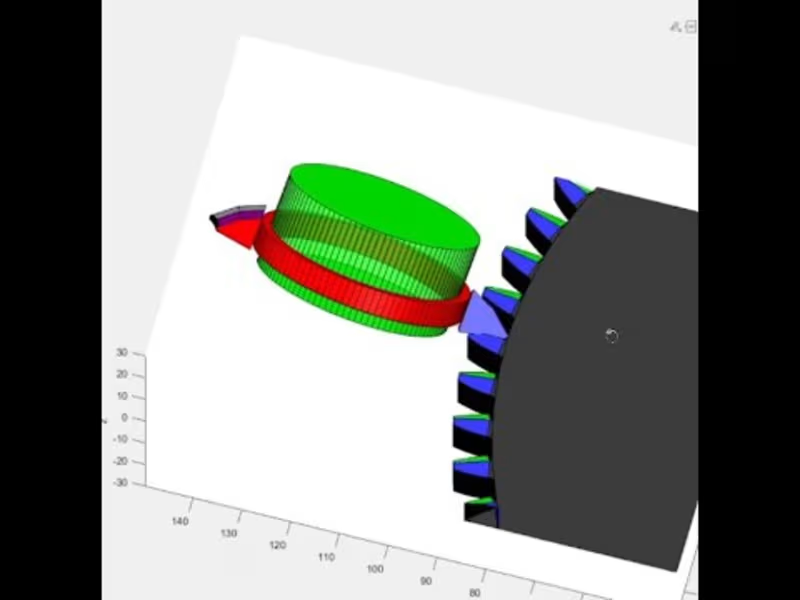
Creating a gear manufacturing process using Matlab - YouTube
0
20
Message
0
Burhanuddin Ali Asghar
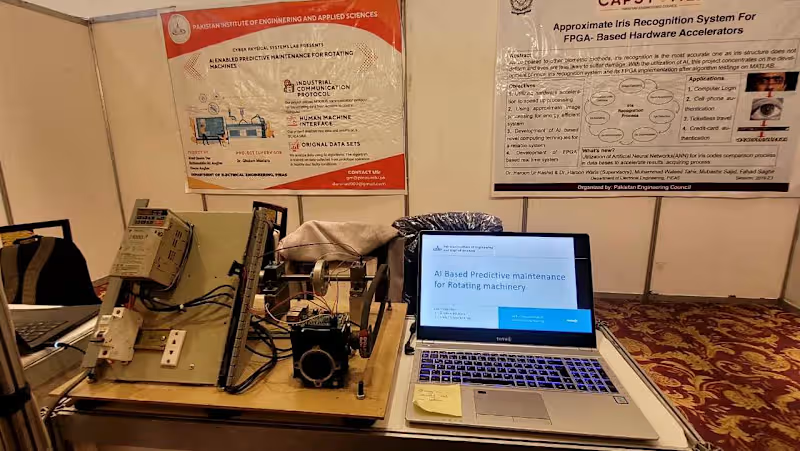
AI Enabled Predictive Machinery Of Rotating Motors
0
32
Explore projects