Freelance Digital Marketers in AgegeFreelance Digital Marketers in Agege
Facebook(Meta) & Google Ads Expert | AI Automation
5.0
Rating
11
Followers
Facebook(Meta) & Google Ads Expert | AI Automation
Cover image for Okay so I need to
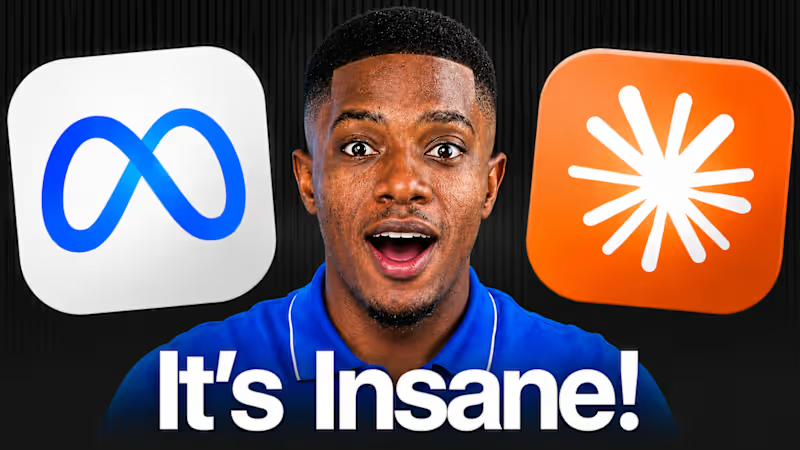
Okay so I need to talk about how I'm making UGC ads now, because it's honestly kind of ridiculous how easy this has gotten. If you've ever tried to get UGC ads made, you know the pain. Booking actors, briefing agencies, waiting days, paying way more than you wanted to. I used to think that was just... the cost of doing business. Turns out it's not anymore. Here's what I've been doing instead, the whole thing runs inside one Claude conversation. No creative tools, agency, or ten tabs open at once. Just two connections: Meta and Arcads. Let me break down how it works. Step 1: Research first, always Before generating a single ad, I use Claude and other Premium tools to pull my top performing ads from the last 30 days, then search the web for what's currently working best in my product category. What creative formats are getting impressions, what hooks are driving engagement, and what patterns keep showing up in winning ads. And this is the step almost everyone skips. It's exactly why so many AI-generated ads flop, people jump straight to generation with zero signal on what actually converts. Research first means your first test isn't a guess. It's informed. Step 2: Turn research into scripts Once I've got the research, I hand it to Claude with a specific brief: act as a senior performance marketer, here's my product, here's who it's for, here's the platform. Then I ask for scripts built around real pain points, hook, problem, solution, proof, CTA, all timed out. And I get Claude to score each one and only keep the ones that actually hit. This part used to take me hours of back and forth with a copywriter. Now it's minutes. Step 3: Generate the actual creative So this is where Arcads comes in, it's basically got every major AI video/image model in one place, so I'm not paying for five different subscriptions. I generate an actor image first (with my product reference attached so nothing gets weird or off-brand), approve it, then turn it into a video with the script from step 2 dropped straight in. Small tip that saved me a lot of wasted spend: always fix issues at the image stage, before it becomes a video. It's way cheaper, and way faster. Step 4: Launch without leaving the chat Once the videos are ready, I'll upload them straight to my Meta account through the same conversation. Then I just tell Claude what I want, campaign objective, budget, targeting, in plain language. No Ads Manager or manual setup. And here's the part that actually changes how you test: after a few days, I just ask Claude which ad is performing best and to show me why. It pulls the live data and explains it in plain English. No exporting reports, no spreadsheets. Step 5: Double down Once I know the winner, I ask for more variations of it, same actor, new scripts and the loop just keeps going. Every single round gets a little smarter than the last. The honest truth is this doesn't just save time, it changes the economics entirely. You're not paying agency rates, you're not waiting on turnaround times, and you're testing with actual data. If you're not at a scale where an agency makes sense yet, this is genuinely one of the best ways to get high output without needing a big team or a big budget. Don't forget to hit follow, I'm breaking down a new ad strategy or workflow every week, and you don't want this to be the last one you catch. 👀
1
137
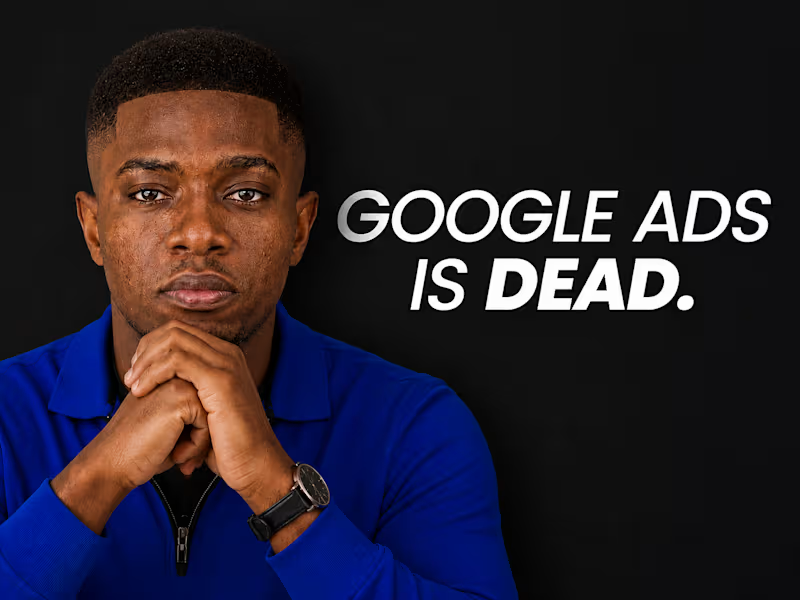
Cover image for Okay so let's talk about
Okay so let's talk about something painfully simple that a lot of Google Ads accounts get wrong, nobody's clicking your ads. Doesn't matter how good your product is, how great your deal is, how well-optimized your campaign structure is. If people aren't clicking, none of it matters. So let's break down why this happens and how to actually fix it. 1. Your ad copy might be the problem Most beginners write ad copy ABOUT their business instead of about what the customer actually wants. If your headline reads like a company brochure, nobody's stopping to click. Lead with the benefit, not the feature, "save 2 hours a day" beats "advanced scheduling software" every time. And try to mirror the actual language people are typing into Google. If your headline echoes their exact search, it instantly feels more relevant. 2. You might be targeting the wrong keywords Showing up for more searches isn't automatically good, if those searches aren't actually relevant to your offer, you're just burning impressions with zero clicks. A bakery running ads that show up for "cake recipes" is wasting money on people who were never going to buy a cake, they wanted a recipe. This is where negative keywords come in. Adding even 10 well-chosen ones can dramatically clean up who actually sees your ad, which directly improves CTR. 3. Your offer might just not be compelling enough Sometimes the copy's fine, the keywords are right, but the offer itself doesn't give anyone a reason to choose you over the next ad. Go Google your own product category right now and screenshot the top 3 competitor ads. What are they offering that you're not? A free trial, a guarantee, faster delivery, no contract, even small differentiators can tip a click in your favor. Fix this before touching your budget or your bids. 4. You're probably not using ad extensions (and you should be) This one's honestly a bit of a cheat code. Sitelinks, callouts, structured snippets, call and location extensions, they're free, and they make your ad physically bigger and more informative. Google actually rewards ads using extensions with better ad rank, even with an identical bid to an ad without them. More space = more visibility = more clicks. Set it up once and it just works in the background. 5. Wrong place, wrong time Even a great ad won't get clicked if it's shown at 3am to someone who was never going to buy right then. Look at what days/hours actually convert and shift spend accordingly. Check your location targeting, too broad wastes budget, too narrow limits reach. And don't forget device performance, mobile and desktop CTR can look completely different, so check both. Quick benchmark for you: average CTR across Google Ads in 2024 was 6.42%, probably higher than you'd guess. Arts & entertainment topped out around 13%, while legal services sat closer to 5.3%. Worth knowing where your industry typically lands before you panic over your own numbers. None of these fixes cost extra ad spend. They just require you to actually look at what's happening and adjust. Small, unglamorous changes, but they compound fast. Follow along, more of these breakdowns coming your way. 👀
0
18
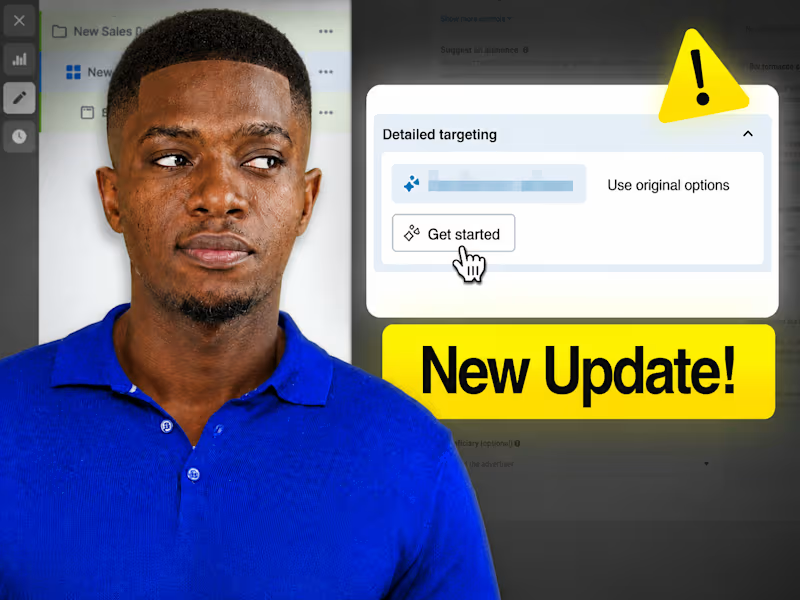
Cover image for This is not about a
This is not about a targeting fix or a bidding hack, it's about something a lot of advertisers refuse to consider. Let me tell you about a client I took on. This business had ads that used to work really well. Solid return on ad spend, consistent sales, all built around one product, a bestseller that was great for bringing in new customers. Then slowly, over time, results just... died. Not overnight. Just a steady decline until they were unprofitable across the board. The obvious answer would be "ad fatigue, right? Just refresh the creative." Except they'd already done that. New ads, new angles, tested regularly. Still declining. So something else was going on. Here's what I found when I actually dug in: the reviews for that hero product weren't great. Not terrible, just... "fine." "A bit disappointing." "There are better alternatives." And they had direct competitors selling something very similar, with better reviews. That gap was quietly killing their ability to acquire customers, no matter how good the ad creative was. So here's the uncomfortable truth in this: your ads don't operate in a vacuum. People don't just click and buy blindly anymore. They check reviews, they ask a friend, increasingly they'll even ask ChatGPT "is this actually good, or is there something better?" And your ad is only as strong as what happens when someone goes looking for a second opinion. There's also a compounding effect most people don't think about, negative word of mouth spreads faster and harder than positive word of mouth. One bad experience gets told to friends, who tell their friends. It snowballs quietly in the background while you're staring at your ad account trying to figure out why performance dropped. The real question isn't "is my product good?" It's "is my product better than the alternative someone can find in 30 seconds of searching?" That's the actual bar. So what do you actually do if this is happening to you? → Go straight to your reviews; the bad ones AND the good ones. Bad reviews tell you exactly what to fix. Good reviews tell you what to lean into and emphasize more. → Don't scale spend on a product with mediocre feedback. It just accelerates the negative word of mouth. Fix the product experience first, then pour fuel on it. → If one part of your range has strong reviews and another doesn't, consider shifting your ad budget toward what's actually earning trust, rather than what's just good at grabbing initial attention. In this case, the fix wasn't a new campaign structure or a smarter bid strategy. It was telling the client to stop aggressively pushing the one product with weak reviews and shift toward products people were actually raving about. Painful short-term call. Completely turned the account around. Sometimes the biggest lever in your ad account isn't in your ad account at all. Follow along, more real breakdowns like this coming. 👀
1
77
SEO & Social Media Marketing Expert
Visual Designer turning bold ideas into impactful visuals.
Experienced Copywriter & Social Media Manager
Creative graphic designer specializing in impactful branding
Content Writer & Social Media Manager✨