
Debarun Bhattacharya
SEO Content Writer & Editor
New to Contra
Debarun is ready for their next project!
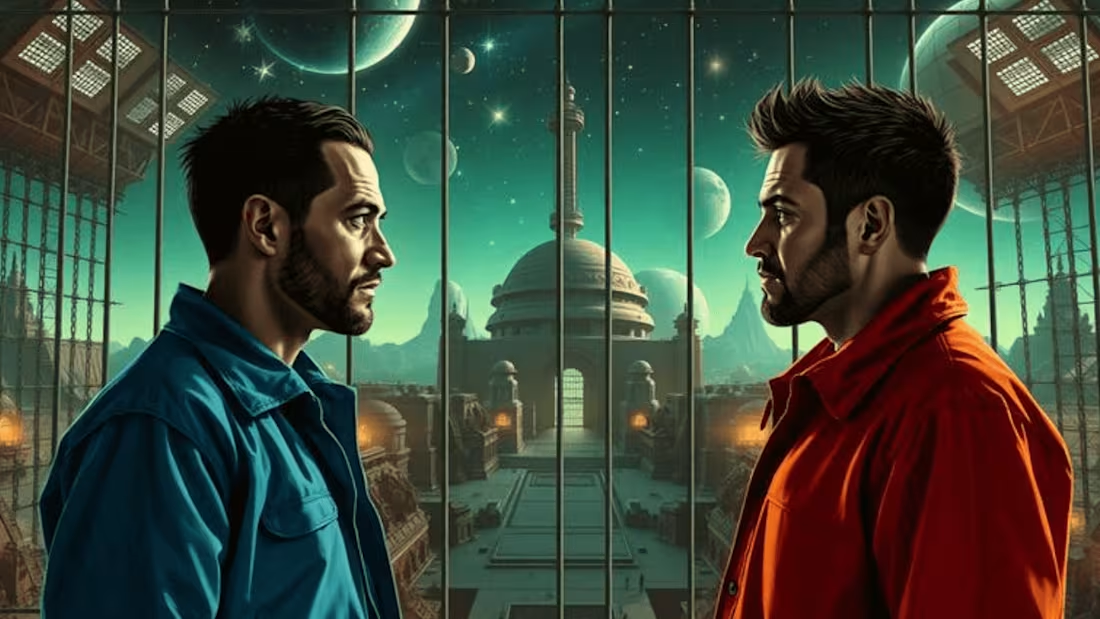
Why do rational people make decisions that seem irrational?
Game Theory helps explain it.
In the Prisoner’s Dilemma, two people acting in self-interest both end up worse off. In the Stag Hunt, trust determines success. In the Game of Chicken, risk becomes strategy.
These models aren’t just academic; they mirror real negotiations, partnerships, and everyday trade-offs.
Once you understand incentives and equilibrium, human behavior starts making sense.
I recently broke down four classic games in simple terms.
You can read the full piece here:
[https://writerdebarun.com/game-theory-and-its-powerful-impact-on-strategic-thinking/]
0
19
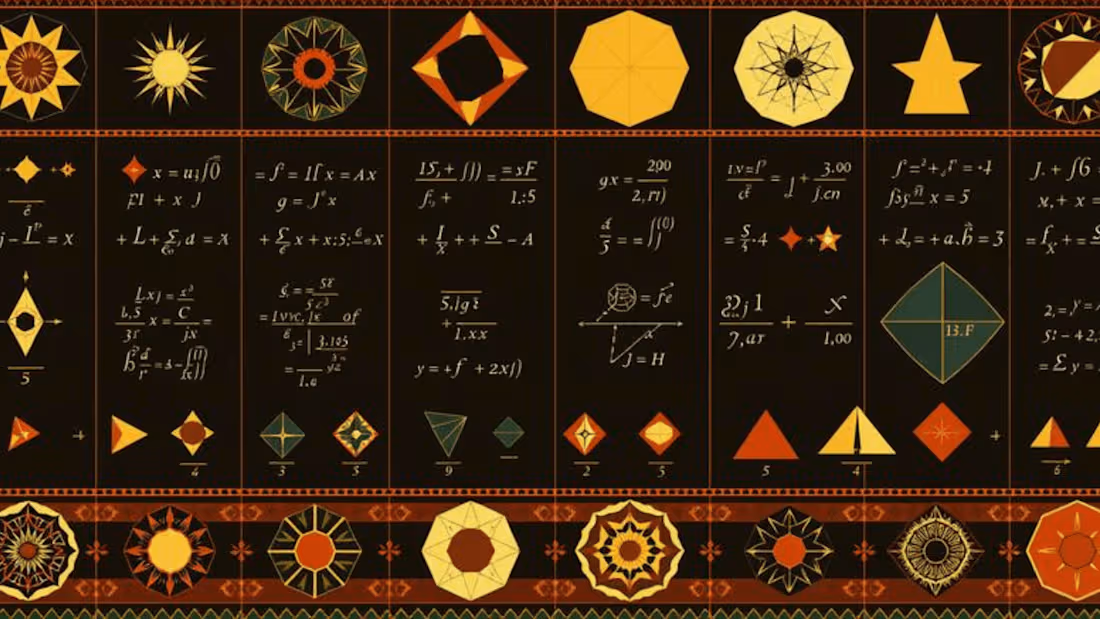
Mathematics isn’t the product of one culture; it’s a global story.
From African tally bones to Babylonian astronomy, from Indian zero to Islamic algebra, from Greek geometry to Newton’s calculus, each civilization added a layer.
Even calculus didn’t appear overnight. It was built on centuries of ideas about infinity, motion, and measurement.
What we study today is the result of thousands of years of shared intellectual effort.
I recently wrote a simple historical overview tracing this journey.
You can read the full article here:
[ https://writerdebarun.com/a-short-simple-and-exciting-history-of-mathematics/ ]
1
68

Is the universe just matter and energy?
Or does reality depend on observation?
Could we be inside a simulation?
Or one universe among many?
Or part of a larger consciousness?
From Materialism to the Multiverse, different models try to explain what “reality” really means.
Each one shifts how we think about existence, science, and even identity.
I recently wrote a simplified breakdown of five popular models of the universe.
You can read the full piece here:
[ https://writerdebarun.com/five-popular-models-of-the-universe-explained-simply/ ]
0
31

What happens if you go back in time and prevent your own birth?
Or if an all-powerful being creates something, it cannot lift?
Paradoxes like the Grandfather paradox, the Heap paradox, or the Paradox of Tolerance aren’t just thought experiments—they stretch logic to its limits.
They reveal how fragile our assumptions about causality, identity, and power really are.
I recently explored six fascinating paradoxes that continue to challenge philosophers and scientists.
You can read the full breakdown here:
[ https://writerdebarun.com/a-brief-study-of-six-unique-mind-bending-paradoxes/ ]
0
45
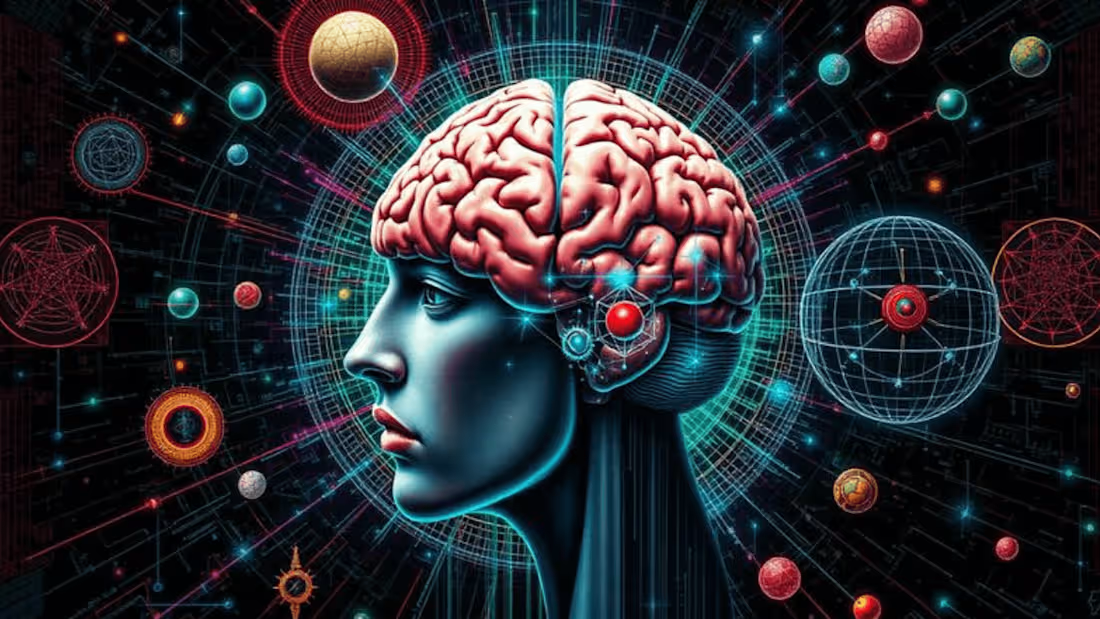
Ever noticed how smart people still make irrational decisions?
It’s not a lack of intelligence; it’s mental shortcuts.
We attack people instead of arguments. We prefer familiar ideas over better ones. We search for evidence that confirms what we already believe.
These are logical fallacies and cognitive biases at work.
From confirmation bias to false dilemmas, these patterns quietly shape how we think and decide.
I recently wrote a simple guide breaking them down clearly and practically.
You can read the full piece here:
[https://writerdebarun.com/understanding-popular-fallacies-and-biases-in-a-simplistic-way/]
2
79

We usually think encryption started with computers.
It didn’t.
Ancient scribes in Mesopotamia altered words to hide trade secrets. Sparta used leather strips to conceal military messages. Kautilya discussed secret writing centuries before modern cryptography.
Later came Caesar shifts, frequency analysis, the Enigma machine, and now quantum key distribution.
The technology changes. The goal stays the same: protect information.
I recently wrote a concise history tracing this evolution from clay tablets to quantum cryptography.
You can read the full piece here:
[ https://writerdebarun.com/a-short-history-of-secret-codes-and-encryptions/ ]
5
1
110

I have written a long-form blog exploring how certain ancient languages never truly died, but continued shaping civilizations through ideas, religion, and culture.
The piece examines seven influential languages: Sanskrit, Chinese, Greek, Persian, Aramaic, Latin, and Arabic, looking at their origins, cultural reach, religious roles, and modern transformations, rather than treating them as merely “dead” or “living.”
Here's the full content: [ https://theindicscholar.com/2026/01/27/from-sanskrit-to-arabic-the-enduring-influence-of-the-worlds-oldest-languages/ ]
If you’re looking for well-researched content writing, proofreading, or structural editing, especially in history, culture, science, technology, philosophy, or long-form nonfiction, I’d be happy to collaborate.
0
79
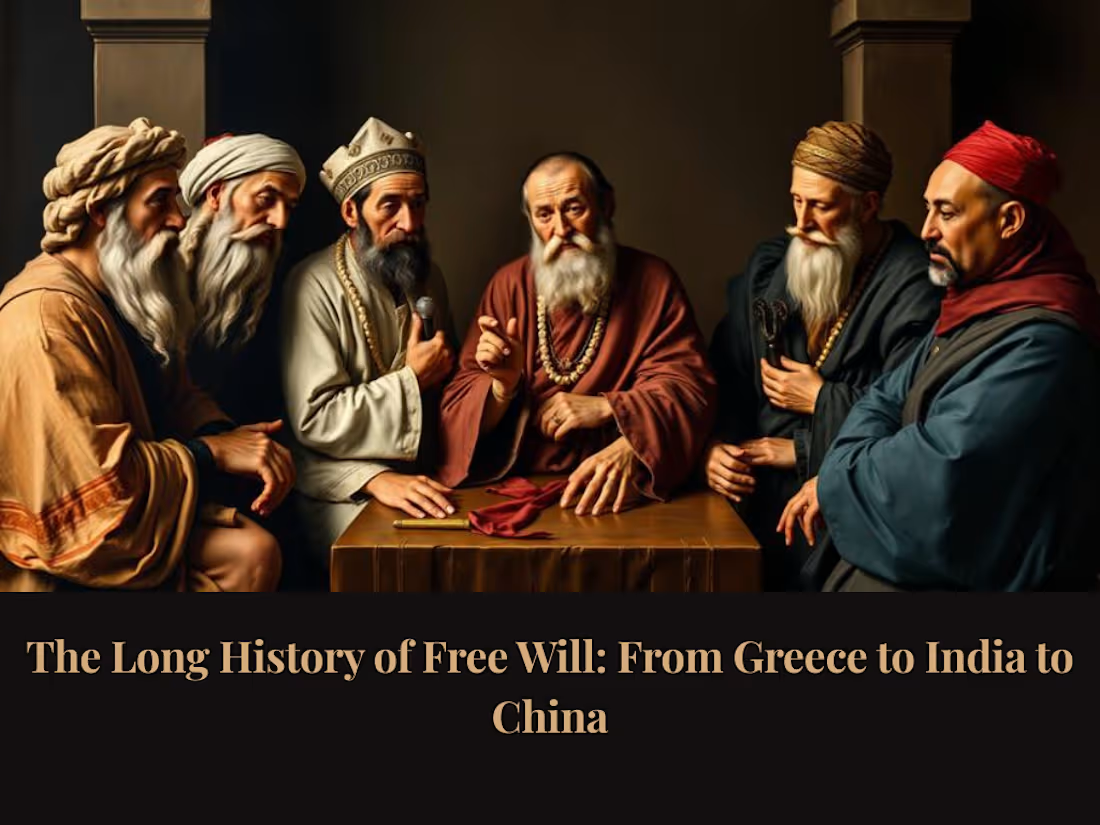
I’ve published a long-form, research-driven blog examining how ancient philosophies approached free will long before modern psychology and neuroscience.
The article compares Greek, Indian, and Chinese traditions—such as Stoicism, Buddhism, Advaita Vedānta, Confucianism, and Aristotelian thought—showing how agency was understood through ethics, metaphysics, and epistemology rather than as a simple yes/no problem.
Read the full blog here: [ https://theindicscholar.com/2026/01/20/the-long-history-of-free-will-from-greece-to-india-to-china/ ]
This piece represents my style of clear, well-structured writing on complex ideas, and my attention to conceptual accuracy—useful for blogging, research content, and professional proofreading.
3
126
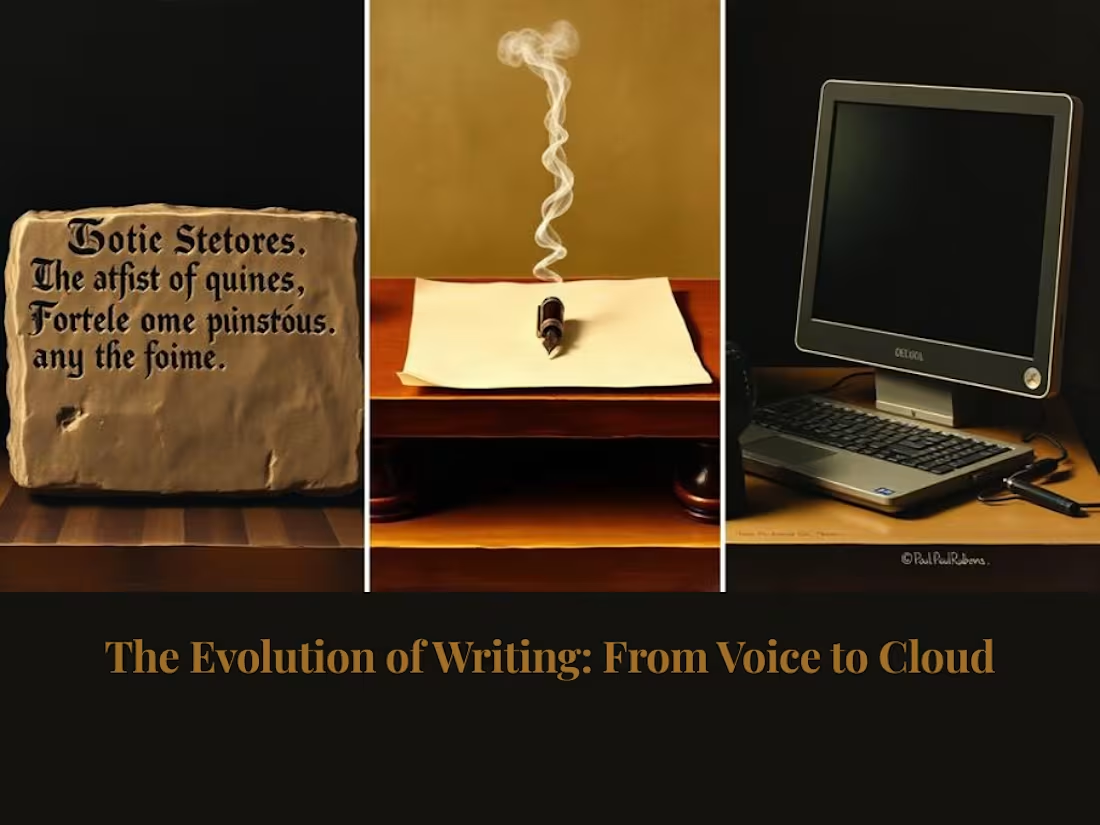
I am a writer interested in history, technology, and the evolution of human knowledge. I explore how civilizations invent, adapt, and transmit ideas through tools and media.
Recently, I wrote about the evolution of writing: from oral memory to stone, clay, palm leaves, papyrus, codices, printing, and digital documents. I examined both the media and instruments and the civilizations that shaped them, showing how environmental, social, and technological factors influenced how humans record and share knowledge.
Through research-driven essays like this, I aim to uncover patterns behind human innovation and present complex developments clearly and engagingly.
Please read it here: https://theindicscholar.com/2026/01/16/the-evolution-of-writing-from-voice-to-cloud/
2
149
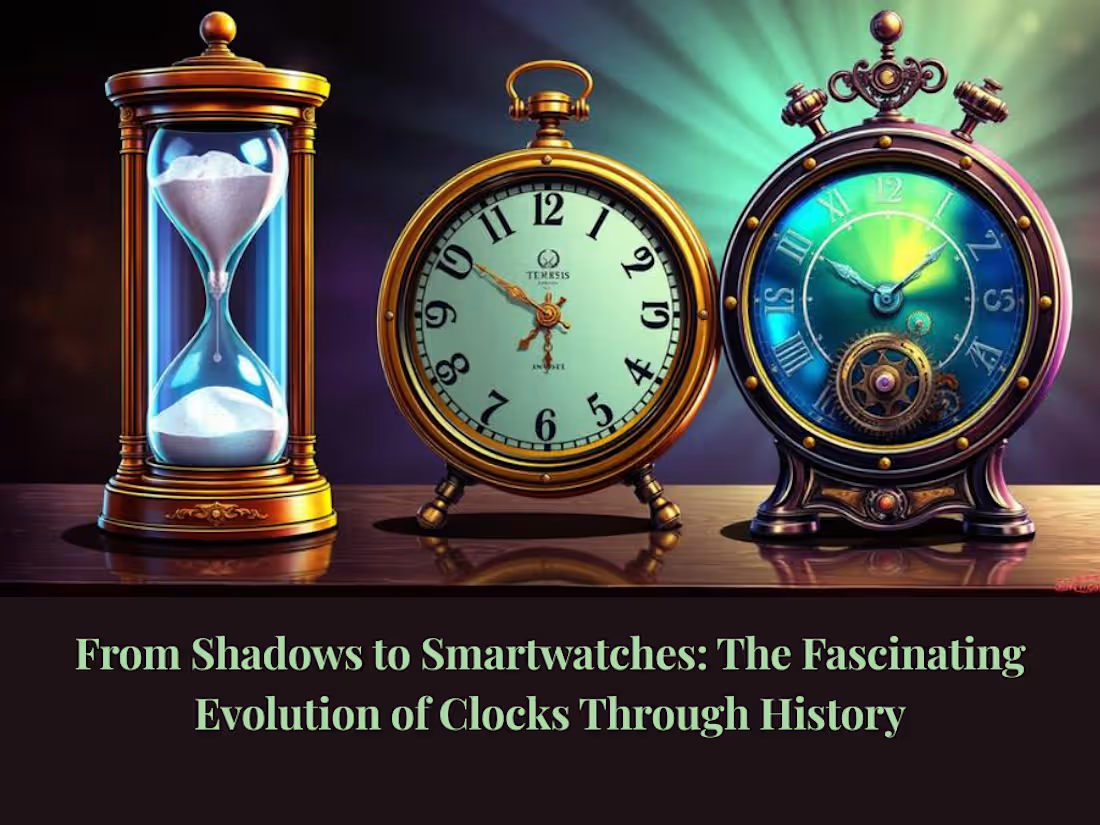
I'm a research-oriented writer working at the intersection of history, science, and technology. This blog explores how humans have measured time across civilizations.
The article traces the evolution of clocks: from sundials and water clocks to atomic clocks and smartwatches, explaining not just when they appeared, but how they worked. Each section breaks down details like the power source, gear train, and regulator, showing how timekeeping evolved mechanically and scientifically over centuries.
The piece is written as an informative, long-term explainer, blending historical context with a clear technical understanding.
Please read it here: https://theindicscholar.com/2026/01/11/from-shadows-to-smartwatches-the-fascinating-evolution-of-clocks-through-history/
0
109
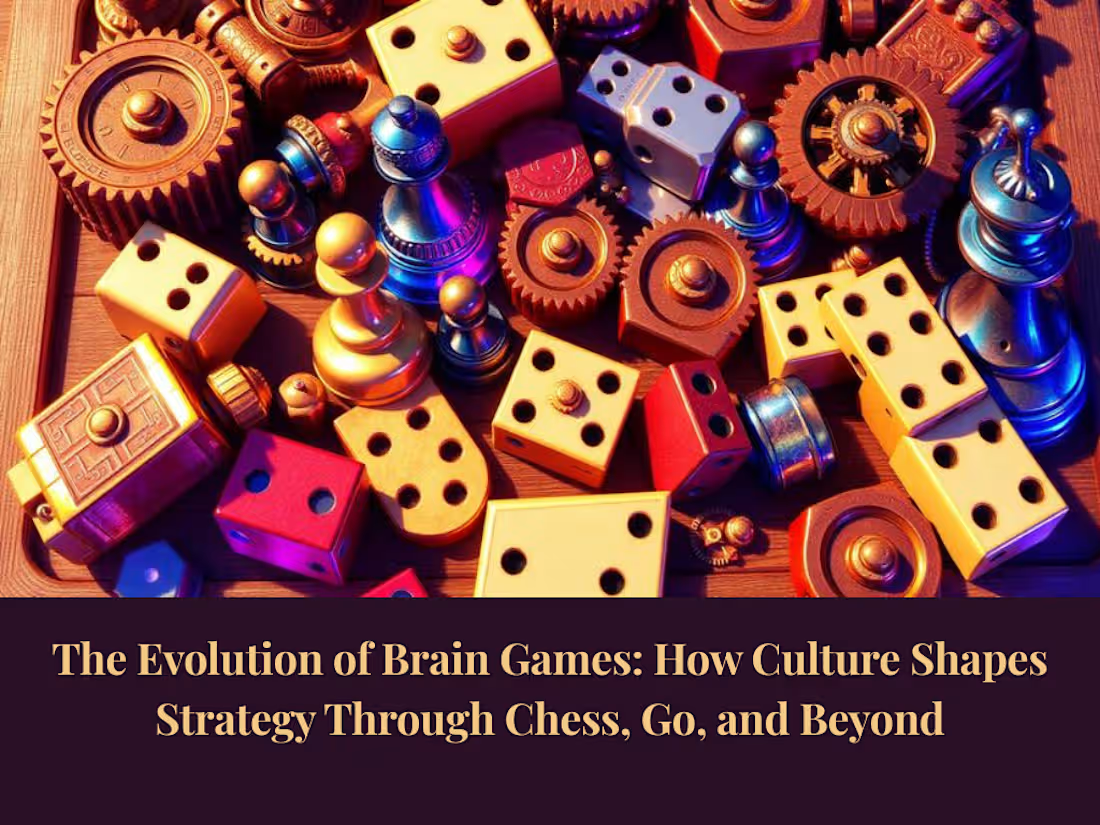
I'm a research-oriented writer interested in how culture, history, and cognition intersect.
This blog explores the evolution of brain games across civilizations: how strategy, chance, and social values shaped games like Chess, Go, and Mancala over centuries.
Through seven board games, I trace their origins, cultural roles, transformations, and present-day relevance, showing how games quietly mirror how societies think.
Please read it here: https://theindicscholar.com/2026/01/06/the-evolution-of-brain-games-how-culture-shapes-strategy-through-chess-go-and-beyond/
0
101

I'm a research-oriented writer specializing in science, history, and philosophy. I recently explored 5 classic game theory models: Prisoner's Dilemma, Game of Chicken, Stag Hunt, Battle of the Sexes, and Zero-Sum Game, and how they influenced major historical decisions, from the Battle of Salamis to the Kargil War.
The blog breaks down each model with clear examples from geopolitics and history, highlighting how strategic logic has shaped real-world events. It's designed to be both informative and engaging, suitable for anyone curious about history, strategy, or decision-making.
Please read it here: https://theindicscholar.com/2026/01/02/5-game-theory-models-in-action-historical-decisions-that-follow-logic/
0
88