
Daniram Nishad
Senior Product Designer (AI Products) | UX Research
- 8
- Followers


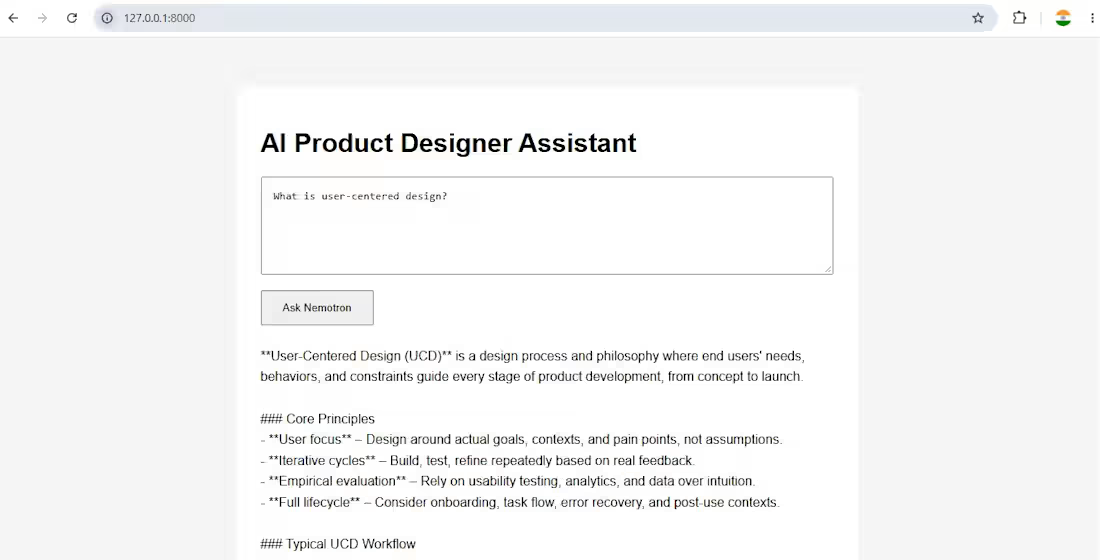
🚀 Building My Own AI Assistant with NVIDIA Nemotron + Python + Django!
Today, I successfully integrated NVIDIA Nemotron API with Python and Django to build an AI-powered Product Designer Assistant.
💻 Tech Stack:
Python & Django
NVIDIA Nemotron API
HTML, CSS & JavaScript
REST API integration
💡 The interesting part? I built it on my existing Windows laptop without a dedicated NVIDIA GPU by using cloud-based AI inference.
🎯 My goal is to explore how AI can support UX research, user personas, journey mapping, pain-point analysis, and product design decisions. Every project is a new learning opportunity. Excited to keep exploring the intersection of AI, UX, and Product Design!#ArtificialIntelligence (https://www.linkedin.com/search/results/all/?keywords=%23artificialintelligence&origin=HASH_TAG_FROM_FEED) #NVIDIA (https://www.linkedin.com/search/results/all/?keywords=%23nvidia&origin=HASH_TAG_FROM_FEED) #Nemotron (https://www.linkedin.com/search/results/all/?keywords=%23nemotron&origin=HASH_TAG_FROM_FEED) #Python (https://www.linkedin.com/search/results/all/?keywords=%23python&origin=HASH_TAG_FROM_FEED) #Django (https://www.linkedin.com/search/results/all/?keywords=%23django&origin=HASH_TAG_FROM_FEED) #UXDesign (https://www.linkedin.com/search/results/all/?keywords=%23uxdesign&origin=HASH_TAG_FROM_FEED) #ProductDesign (https://www.linkedin.com/search/results/all/?keywords=%23productdesign&origin=HASH_TAG_FROM_FEED) #GenerativeAI (https://www.linkedin.com/search/results/all/?keywords=%23generativeai&origin=HASH_TAG_FROM_FEED) #LearningByBuilding (https://www.linkedin.com/search/results/all/?keywords=%23learningbybuilding&origin=HASH_TAG_FROM_FEED) #AIInnovation (https://www.linkedin.com/search/results/all/?keywords=%23aiinnovation&origin=HASH_TAG_FROM_FEED)
0
44
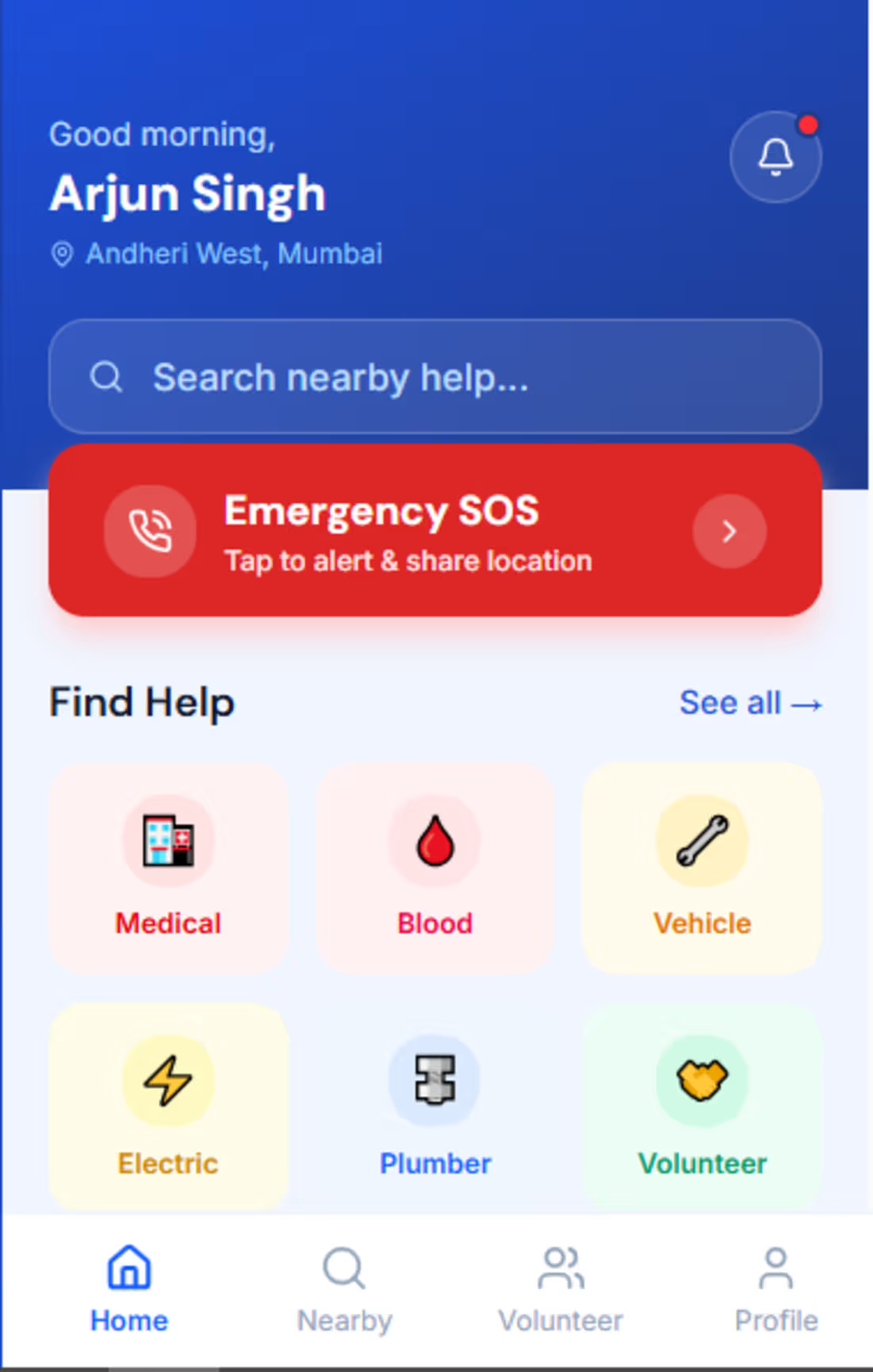
HelpNow — Instant Local Emergency & Community Assistance
Mobile-first app that helps people quickly find trusted emergency or urgent local support nearby.
In emergencies or urgent situations, people often waste valuable time searching through Google, WhatsApp groups, contacts, or unreliable listings.
Link - https://www.figma.com/make/HtjWZqaqS6PjN3VRychBAD/Create-app-from-file?fullscreen=1&t=c5EE3I9rbz4i0r4K-1&code-node-id=0-9
(https://www.figma.com/make/HtjWZqaqS6PjN3VRychBAD/Create-app-from-file?fullscreen=1&t=c5EE3I9rbz4i0r4K-1&code-node-id=0-9)
0
54

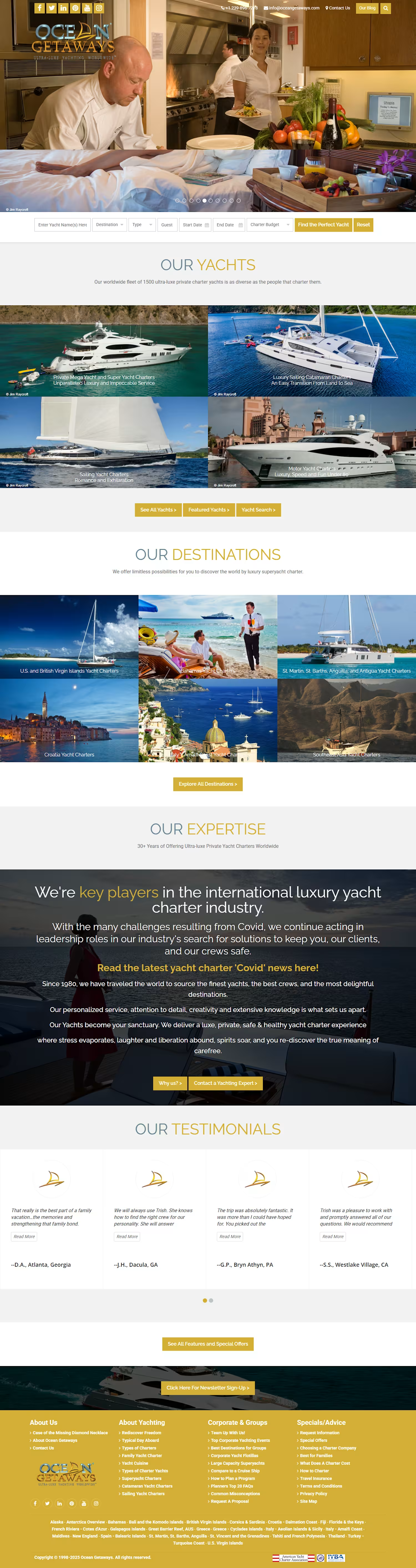
Luxury Yacht Travel
Role
Product Designer / UX Designer / UI Developer (End-to-End Ownership)
Led the design and implementation of a luxury yacht booking experience by integrating a paid yacht search API into the Ocean Getaways platform. Responsible for:
UX strategy and information architecture for yacht discovery
Designing intuitive search, filtering, and booking flows
API integration planning with developers
Creating responsive UI for web experience
Ensuring seamless data visualization (specs, availability, pricing, crew details)
Improving conversion-focused user journeys
Challenge
The primary challenge was integrating a complex paid yacht search API into a high-end luxury travel website while maintaining a seamless and premium user experience.
Key challenges included:
Complex Data Structure: API returned large datasets (yacht specs, crew info, deck plans, pricing, availability, etc.) that needed to be simplified for users
Real-Time Availability: Ensuring users could view up-to-date yacht availability without delays
Luxury UX Expectations: Balancing data-heavy interfaces with a clean, elegant, high-end design aesthetic
Search & Discovery: Designing intuitive filters (destination, budget, yacht type, group size) for diverse user needs
Performance Optimization: Handling API latency and ensuring fast page load times
User Trust: Communicating reliability, exclusivity, and premium service through the interface
Results & Impact
Improved User Engagement: Users spent more time exploring yachts due to rich, interactive listings (photo tours, deck plans, crew profiles)
Higher Conversion Rate: Simplified booking flow and real-time availability reduced friction in decision-making
Faster Decision-Making: Instant access to pricing and availability empowered users to book without back-and-forth communication
Global Accessibility: Users could explore worldwide yacht options seamlessly in one platform
Enhanced Travel Agent Efficiency: Agents could quickly find and recommend yachts, reducing manual effort
Premium Brand Experience: Maintained a luxury feel while handling complex backend data
Key Takeaways
Data Simplification is Critical: Complex API data must be transformed into digestible, user-friendly content
Design for Trust in Luxury Products: Visual storytelling (images, crew profiles, testimonials) builds confidence
Speed = Conversions: Real-time data significantly improves booking intent
Collaboration is Key: Close coordination between design, backend, and API providers ensures smooth integration
Progressive Disclosure Works Best: Show essential info first, allow users to explore deeper details (specs, deck plans)
Scalability Matters: Designing a flexible system helps accommodate new destinations, yachts, and features
2
63
AI-powered logistics platform.
Role
Led end-to-end product design and UX strategy for Hefson’s AI-powered logistics platform and IoT-integrated monitoring system.
Collaborated with cross-functional teams including engineering, data science, and operations to design intuitive dashboards and workflows for carriers, brokers, and shippers.
Focused on simplifying complex AI-driven data analytics and real-time tracking into user-friendly interfaces.
Challenge
Hefson aimed to revolutionize supply chain logistics through AI and automation, but faced several key challenges:
Complex Data Overload: Large volumes of logistics, sensor, and shipment data needed to be processed and visualized clearly.
Lack of Real-Time Visibility: Existing systems did not provide seamless real-time monitoring for temperature-sensitive shipments.
Fragmented User Experience: Multiple stakeholders (carriers, brokers, shippers) had different needs but no unified platform.
IoT Integration Complexity: Ensuring smooth integration of the Series F20 Temperature Anomaly Detection GPS Sensor with the platform.
Operational Inefficiencies: Manual processes slowed down decision-making and increased the risk of errors.
Results & Impact
Designed a centralized AI-powered dashboard that reduced manual data analysis and improved decision-making speed.
Enabled real-time monitoring of reefer containers using Series F20 sensors, improving shipment safety and compliance.
Streamlined workflows across stakeholders, leading to faster coordination between carriers, brokers, and shippers.
Improved anomaly detection with AI, helping reduce temperature-related losses in sensitive shipments.
Enhanced operational efficiency, contributing to cost reduction and increased productivity across the supply chain.
Key Takeaways
AI + UX synergy is critical: Advanced technology only delivers value when paired with intuitive user experience.
Real-time data drives trust: Live monitoring significantly improves transparency and decision-making in logistics.
Design for multiple stakeholders: A unified platform must balance diverse user needs without increasing complexity.
IoT + Platform integration is powerful: Combining hardware (sensors) with software unlocks deeper insights.
Continuous innovation matters: Iterative improvements and user feedback are key to staying ahead in supply chain tech.
1
69