The network for creativity
Join 1.25M professional creatives like you
Connect with clients, get discovered, and run your business 100% commission-free
Creatives on Contra have earned over $150M and we are just getting started
Back to feedPost

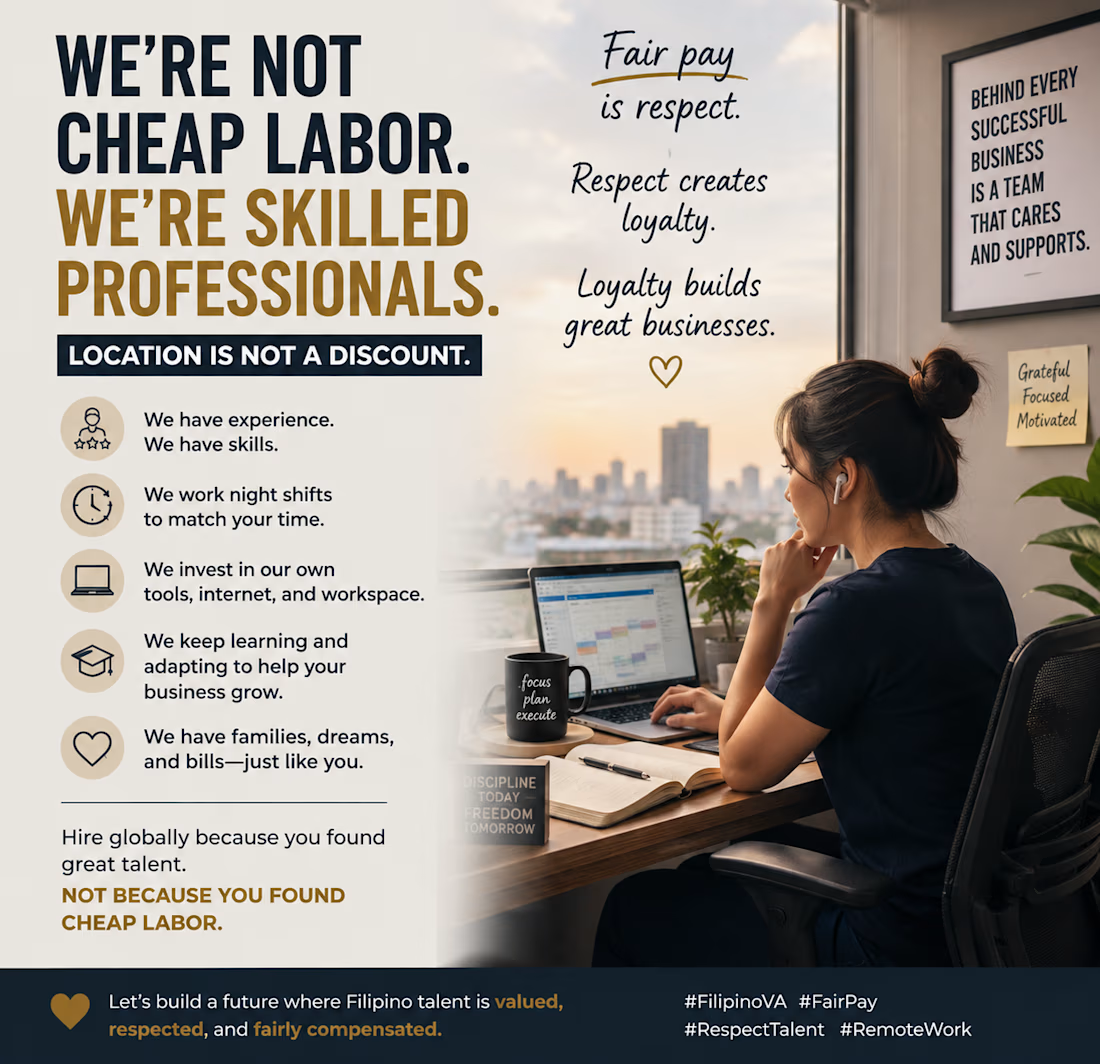
“But you’re working from the Philippines.”
Sometimes, that sentence becomes the reason why a skilled professional is offered significantly less.
And I think we need to talk about that.
The Philippines has become one of the go-to places for Virtual Assistants and remote professionals—and there’s a good reason for it.
We have talented people working in customer service, executive assistance, recruitment, sales, bookkeeping, marketing, operations, and many other fields.
Many of them bring years of experience.
They work night shifts to match their client’s timezone.
They invest in their own equipment, internet, backup connections, and workspace.
They learn new tools and adapt to different industries.
And yes, the cost of living may be different here.
But location should not automatically determine the value of someone’s skills.
There’s a difference between hiring globally because it makes financial sense and hiring someone simply because you believe they’ll accept almost anything.
Fair compensation doesn’t necessarily mean paying everyone the exact same rate regardless of location.
It means looking at the skills, experience, responsibilities, workload, and value a person actually brings to the business.
As someone working in HR and recruitment, I understand that businesses have budgets.
But I also understand the other side of the table.
Behind every “affordable offshore talent” is still a professional trying to build a career, support a family, and create a better future.
Hire globally because you found great talent.
Not because you found cheap labor.
There’s a big difference.
#VirtualAssistant #FilipinoVA #RemoteWork #Recruitment #HumanResources #FairPay #FilipinoProfessionals #FutureOfWork


The network for creativity
Join 1.25M professional creatives like you
Connect with clients, get discovered, and run your business 100% commission-free
Creatives on Contra have earned over $150M and we are just getting started





Related posts

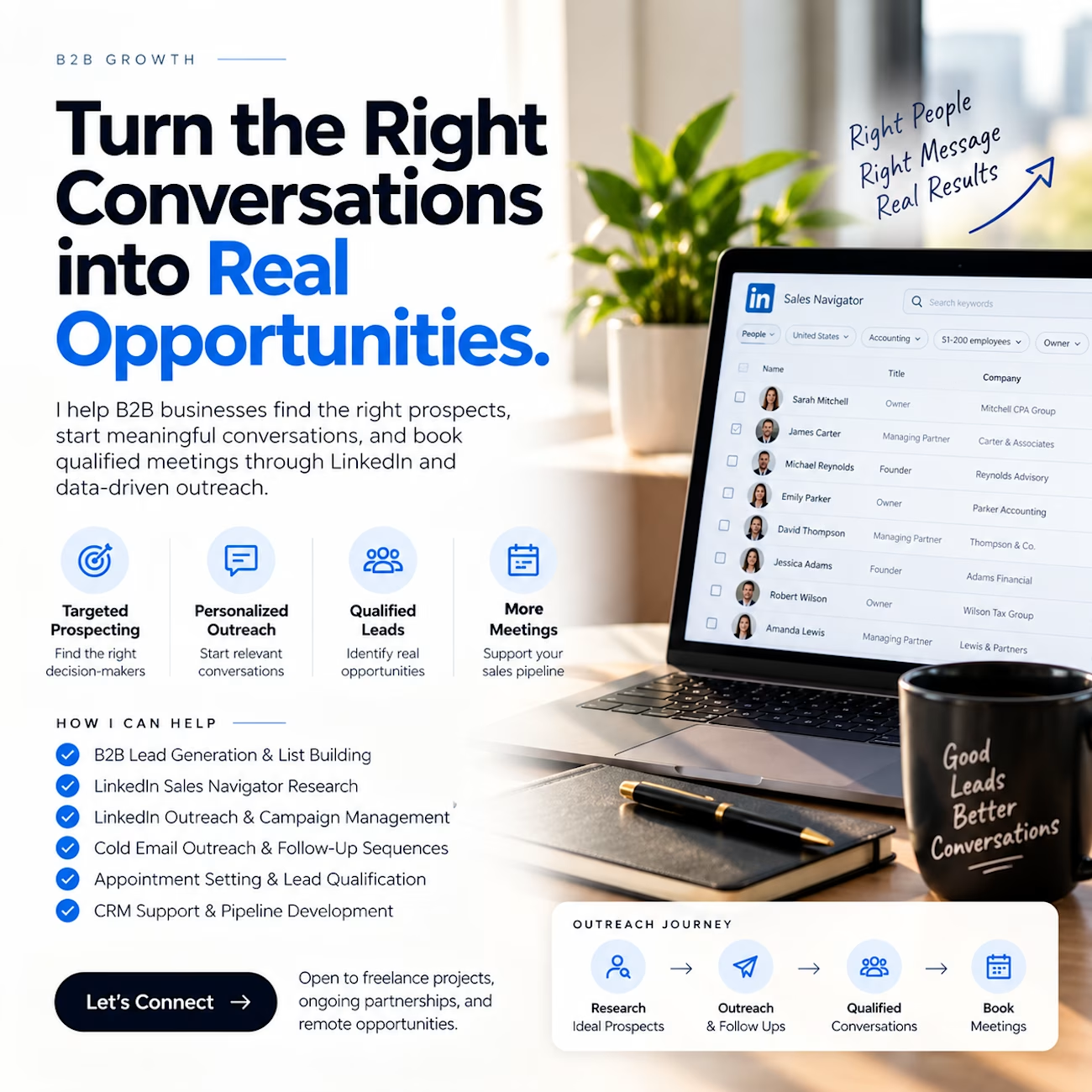
𝐘𝐨𝐮𝐫 𝐍𝐞𝐱𝐭 𝐁𝟐𝐁 𝐂𝐥𝐢𝐞𝐧𝐭 𝐌𝐢𝐠𝐡𝐭 𝐀𝐥𝐫𝐞𝐚𝐝𝐲 𝐁𝐞 𝐨𝐧 𝐋𝐢𝐧𝐤𝐞𝐝𝐈𝐧. 𝐓𝐡𝐞 𝐐𝐮𝐞𝐬𝐭𝐢𝐨𝐧 𝐈𝐬: 𝐀𝐫𝐞 𝐘𝐨𝐮 𝐑𝐞𝐚𝐜𝐡𝐢𝐧𝐠 𝐭𝐡𝐞 𝐑𝐢𝐠𝐡𝐭 𝐏𝐞𝐫𝐬𝐨𝐧?
Most businesses don't struggle because their potential customers don't exist.
They struggle because they lack a structured process to find, engage, and convert the right decision-makers into sales opportunities.
And that's where strategic B2B prospecting makes the difference.
𝐇𝐞𝐫𝐞'𝐬 𝐡𝐨𝐰 𝐈 𝐚𝐩𝐩𝐫𝐨𝐚𝐜𝐡 𝐜𝐥𝐢𝐞𝐧𝐭 𝐚𝐜𝐪𝐮𝐢𝐬𝐢𝐭𝐢𝐨𝐧 𝐭𝐡𝐫𝐨𝐮𝐠𝐡 𝐋𝐢𝐧𝐤𝐞𝐝𝐈𝐧 𝐚𝐧𝐝 𝐞𝐦𝐚𝐢𝐥:
𝟎𝟏 | 𝐈𝐂𝐏 & 𝐌𝐚𝐫𝐤𝐞𝐭 𝐑𝐞𝐬𝐞𝐚𝐫𝐜𝐡
Define the industries, company sizes, locations, and decision-maker profiles that align with your business.
𝟎𝟐 | 𝐓𝐚𝐫𝐠𝐞𝐭𝐞𝐝 𝐏𝐫𝐨𝐬𝐩𝐞𝐜𝐭 𝐋𝐢𝐬𝐭 𝐁𝐮𝐢𝐥𝐝𝐢𝐧𝐠
Use LinkedIn Sales Navigator, Apollo, and manual research to identify relevant prospects. Every contact is reviewed for fit before entering the outreach database.
𝟎𝟑 | 𝐌𝐮𝐥𝐭𝐢-𝐂𝐡𝐚𝐧𝐧𝐞𝐥 𝐎𝐮𝐭𝐫𝐞𝐚𝐜𝐡
Build personalized LinkedIn and cold email sequences designed to start conversations, not flood inboxes with generic pitches.
𝟎𝟒 | 𝐂𝐚𝐦𝐩𝐚𝐢𝐠𝐧 𝐄𝐱𝐞𝐜𝐮𝐭𝐢𝐨𝐧 & 𝐅𝐨𝐥𝐥𝐨𝐰-𝐔𝐩𝐬
Manage outreach workflows through Dripify, HeyReach, Expandi, Instantly, or Smartlead, depending on the campaign requirements.
𝟎𝟓 | 𝐋𝐞𝐚𝐝 𝐐𝐮𝐚𝐥𝐢𝐟𝐢𝐜𝐚𝐭𝐢𝐨𝐧 & 𝐀𝐩𝐩𝐨𝐢𝐧𝐭𝐦𝐞𝐧𝐭 𝐒𝐞𝐭𝐭𝐢𝐧𝐠
Identify interested prospects, manage follow-ups, and support the transition from initial engagement to qualified sales meetings.
𝟎𝟔 | 𝐏𝐞𝐫𝐟𝐨𝐫𝐦𝐚𝐧𝐜𝐞 𝐎𝐩𝐭𝐢𝐦𝐢𝐳𝐚𝐭𝐢𝐨𝐧
Monitor acceptance rates, replies, prospect quality, and meeting outcomes to continuously improve the outreach strategy.
𝐓𝐡𝐞 𝐫𝐞𝐚𝐥 𝐜𝐨𝐦𝐩𝐞𝐭𝐢𝐭𝐢𝐯𝐞 𝐚𝐝𝐯𝐚𝐧𝐭𝐚𝐠𝐞?
It's not having the biggest prospect database.
It's having a repeatable system that connects your business with people who are actually relevant to your offer.
𝐑𝐞𝐬𝐞𝐚𝐫𝐜𝐡 → 𝐐𝐮𝐚𝐥𝐢𝐟𝐲 → 𝐂𝐨𝐧𝐧𝐞𝐜𝐭 → 𝐄𝐧𝐠𝐚𝐠𝐞 → 𝐂𝐨𝐧𝐯𝐞𝐫𝐭
That's the process I help B2B businesses build and manage.
𝐈'𝐦 𝐜𝐮𝐫𝐫𝐞𝐧𝐭𝐥𝐲 𝐨𝐩𝐞𝐧 𝐭𝐨 𝐧𝐞𝐰 𝐟𝐫𝐞𝐞𝐥𝐚𝐧𝐜𝐞 𝐩𝐫𝐨𝐣𝐞𝐜𝐭𝐬 𝐚𝐧𝐝 𝐥𝐨𝐧𝐠-𝐭𝐞𝐫𝐦 𝐩𝐚𝐫𝐭𝐧𝐞𝐫𝐬𝐡𝐢𝐩𝐬 𝐢𝐧𝐯𝐨𝐥𝐯𝐢𝐧𝐠:
• B2B Lead Generation & Prospect Research
• LinkedIn Outreach & Campaign Management
• Cold Email Outreach & Automation
• Targeted List Building & Data Enrichment
• Appointment Setting & Sales Pipeline Development
I work with SaaS companies, marketing agencies, consulting firms, technology businesses, and other B2B service providers.
𝐀 𝐪𝐮𝐞𝐬𝐭𝐢𝐨𝐧 𝐟𝐨𝐫 𝐟𝐨𝐮𝐧𝐝𝐞𝐫𝐬, 𝐚𝐠𝐞𝐧𝐜𝐲 𝐨𝐰𝐧𝐞𝐫𝐬, 𝐚𝐧𝐝 𝐬𝐚𝐥𝐞𝐬 𝐥𝐞𝐚𝐝𝐞𝐫𝐬:
If you could fix just ONE part of your outbound process today, what would it be?
🎯 Prospect targeting
💬 Getting more replies
📅 Booking qualified meetings
📈 Building a consistent pipeline
I'd be interested to hear your experience.
📩 Available for new projects on Contra. Let's connect and discuss your outbound growth strategy.
#B2BLeadGeneration #LinkedInOutreach #BusinessDevelopment #SalesProspecting #AppointmentSetting

Love that, right questions over more questions. Which trigger signal has given you the best meetings so far?

There's a sentence I hear from experts more than almost any other.
"I've hired help before. It didn't move anything."
It shows up in different words from different people. A VA who did the tasks. A designer who made the pages look great. A strategist who handed over a plan and moved on.
Usually everyone did what they were asked. That's the frustrating part.
What was missing was someone looking at how the pieces connect. So the tasks got done, the pages got prettier, the plan sat in a folder, and the founder was still the one holding it all together.
If that's you, there's nothing wrong with you, and nothing wrong with wanting help again. You were handed pieces when what you needed was a system built around how your business actually works.
That's the gap I care most about closing.


This is such a real frustration. The line about everyone doing what they were asked being the frustrating part nails it. Pieces versus systems is the difference between busy and moving. Do you find most clients come to you already knowing this, or is part of the work helping them see the gap?

LUNE Luxe — Luxury Natural Hair Care Packaging | Whipped Shea Butter Collection