The network for creativity
Join 1.25M professional creatives like you
Connect with clients, get discovered, and run your business 100% commission-free
Creatives on Contra have earned over $150M and we are just getting started
Back to feedPost

Auto 𝗣𝘂𝗹𝗹 𝗥𝗲𝗾𝘂𝗲𝘀𝘁 𝗥𝗲𝘃𝗶𝗲𝘄: 𝗔𝗻𝗱𝗿𝗼𝗶𝗱 𝗔𝗿𝗰𝗵𝗶𝘁𝗲𝗰𝘁𝘂𝗿𝗲 𝗚𝘂𝗮𝗿𝗱𝗿𝗮𝗶𝗹𝘀 Incoming
Most "𝗔𝗜 𝗲𝗻𝗳𝗼𝗿𝗰𝗲𝘀 𝘆𝗼𝘂𝗿 𝗮𝗿𝗰𝗵𝗶𝘁𝗲𝗰𝘁𝘂𝗿𝗲" claims fall apart under one
question: what happens on a genuine judgment call?
So I split this into two tiers, with two different authorities.
Clean Architecture layer boundaries domain never depends on data or presentation are checked with Konsist and actually fail the build. Not "𝘀𝗵𝗼𝘂𝗹𝗱 𝗳𝗮𝗶𝗹." I pushed a real violation to prove it: a PR where a presentation class reaches into the data layer directly, and CI rejects it with a precise error naming the file and the illegal import. No LLM in that loop at all
It's a deterministic JUnit assertion, same category as a compiler error.
SOLID principle smells (SRP, OCP, LSP, ISP, DIP) go through a separate LLM pass that comments on a PR with the specific principle and reasoning but the workflow has comment-only permissions, and the reviewer code itself never has a path to block a merge. I tested that too: with no API key configured, it logs a notice and exits clean rather than red-X'ing your build over a missing secret
Being honest about which part is strict and which part is advisory isn't a caveat on this project — it's the actual design decision, and it's the one most "AI code review" tooling quietly avoids making.


The network for creativity
Join 1.25M professional creatives like you
Connect with clients, get discovered, and run your business 100% commission-free
Creatives on Contra have earned over $150M and we are just getting started




Related posts

After a long time finally
New case study: Conduct AI 🖥️
Designed and built in Framer.
Take a look 👇


Love the clean layout.

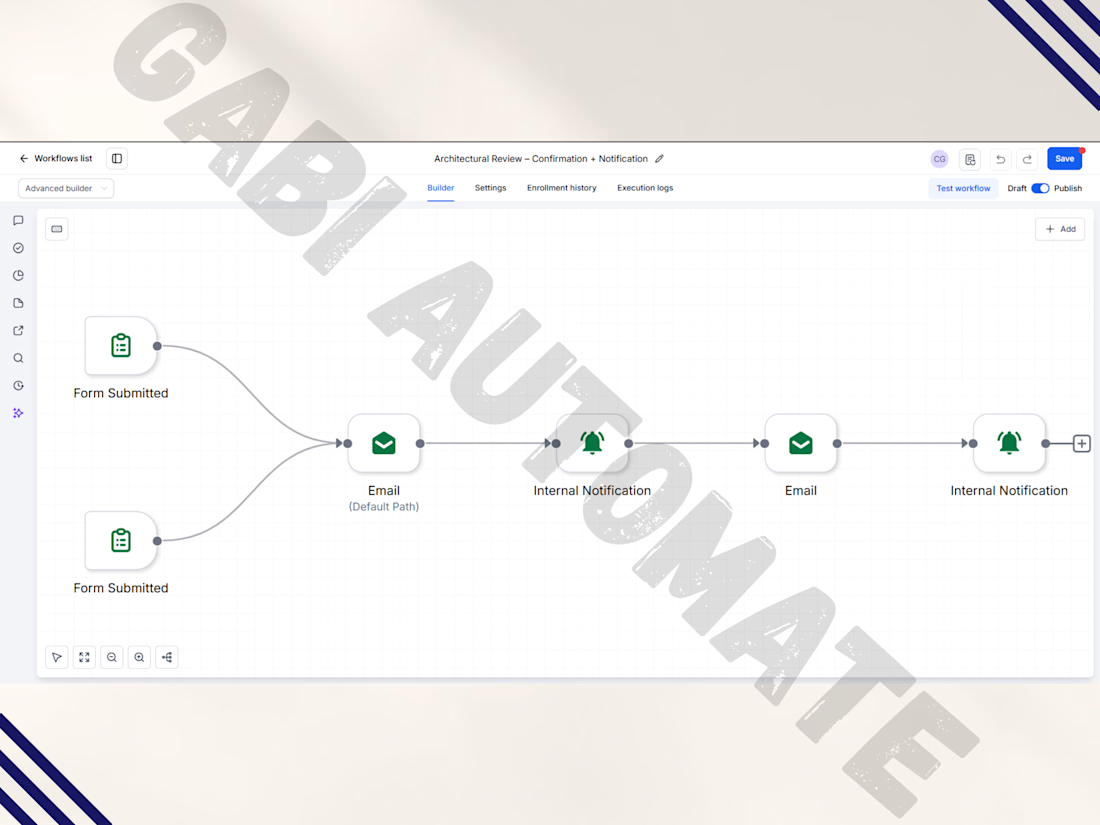
GoHighLevel Architectural Review Confirmation & Notification Workflow
Engineered an automated architectural review workflow in GoHighLevel to capture incoming submission forms, dispatch automated email confirmations to applicants, and alert internal review teams immediately.
Key Deliverables & Setup:
• Form Trigger Ingestion: Automatically captures new submissions from multiple architectural review forms.
• Applicant Confirmation Emails: Triggers personalized confirmation emails to notify clients that their submission was received.
• Internal Alerts & Notifications: Sends real-time team notifications to ensure timely review and approval routing.
Results & Impact:
• Guarantees instant client communication upon request submission.
• Streamlines internal operations and removes manual follow-up delays for review teams.


AI can write the code. Engineering is knowing what to test.
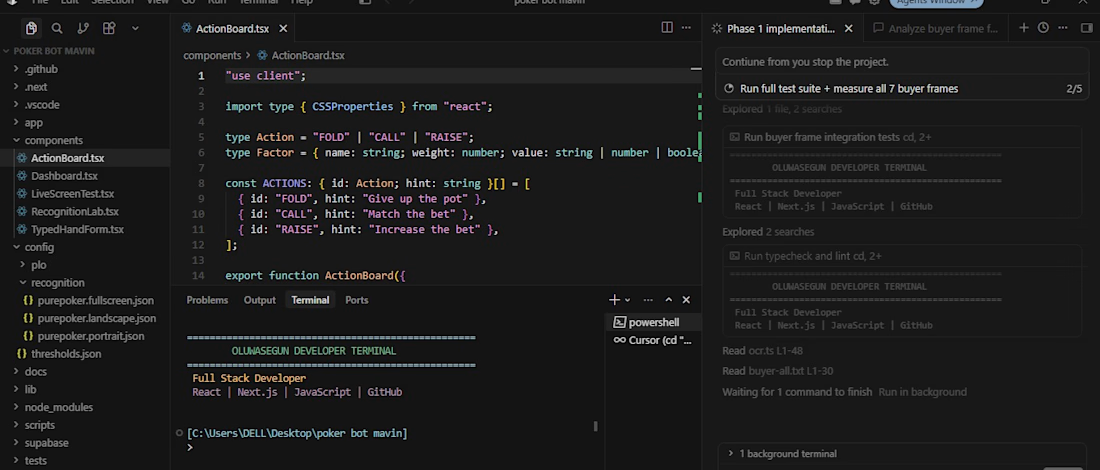
I’m currently working on a poker-vision system where the application needs to understand what is happening on the table — recognize cards, identify ranks, process board states, and translate visual information into usable application logic.
And this project is teaching me something important about AI-assisted development.
The difficult part isn't getting AI to change the code.
The difficult part is proving that the change actually works.
My current workflow looks more like:
Read the codebase → Understand the existing logic → Make the change → Run the test suite → Inspect the real output → Find inconsistencies → Fix → Test again.
For example, I’m currently testing multiple buyer frames against the recognition logic instead of assuming that one successful test means the system is correct.
That's a big difference.
A function can compile.
A test can pass.
The UI can render.
And the system can still be wrong.
That's why I don't want my AI workflow to be:
“Generate the code and move on.”
I want it to be:
“Make the change, challenge the result, and verify the behavior.”
This is becoming increasingly important as coding agents take on more implementation work. Modern agent workflows are already moving toward repository-wide investigation, automated tests, linting, code review, and validation rather than simply generating files. The GitHub Blog
For me, AI isn't replacing the development process.
It's changing where I spend my attention.
Less time typing every line.
More time understanding:
What should happen?
What actually happened?
Why are they different?
And how do I prove the fix is correct?
That's where the interesting engineering work begins. 🔥
For developers building with AI agents: what do you trust more a passing test, the actual application behavior, or both?