The network for creativity
Join 1.25M professional creatives like you
Connect with clients, get discovered, and run your business 100% commission-free
Creatives on Contra have earned over $150M and we are just getting started
Back to feedPost
Title:
The Graphic Novel Syndicate: A Fully Automated 60-Page Production Pipeline
Project Link: [https://app.melius.com/projects/c95de835-b21e-42cb-b77b-d11344bb6a92/canvas/feccc0eb-d8d4-4196-8dfd-21ee38fe6af0 ]
Video Walkthrough: [https://youtu.be/lN5iBnjXkAw]
Project Description:
Most creators use generative AI to create isolated images or short videos. I wanted to push Melius to its absolute architectural limits by building a fully automated, scalable production pipeline designed to generate a cohesive 60-page noir graphic novel. I successfully rendered 18 complete pages (over 100 panels) end-to-end, but I eventually hit the hard limits of both the UI performance (severe lagging) and my credit balance. However, the engine architecture itself is fully functional, proven, and ready to scale. It is not just a comic; it is a workflow-native engine designed for continuous storytelling.
Process Overview & Architecture (What I Used):
To achieve absolute consistency without the system hallucinating or losing the plot, I structured the Melius canvas like a software backend, utilizing multiple node types:
Phase 1: The Master Brain (World Building LLM)
I started with a primary LLM node acting as the "Showrunner." Given a single seed sentence, it generated a comprehensive "Story Bible," locking in the overarching plot, environmental aesthetics, and strict character design rules.
Phase 2: The Logic Parsers (Workflow Routing LLMs)
To prevent data overload, the output from the Master Brain is fed into secondary, specialized AI Text Nodes. These act as logical routers. They parse the master script and isolate exact prompts for specific panels, ensuring each downstream image node receives only the precise data it needs.
Phase 3: The Render Array (Parallel Text-to-Image)
The parsed prompts are fed simultaneously into a battery of Image Generation nodes (Flux/Grok). This parallel array generates the raw pages (6 panels at a time) maintaining the high-contrast noir aesthetic dictated by the Master Brain.
Phase 4: The Cinematic Climax (Start/End Frame Video & Audio)
To fulfill the ">1 node type" requirement and add a massive "wow" factor, the final panels of key scenes are routed into Image-to-Video and Audio (ElevenLabs) nodes. By feeding Panel A (Start Frame) and Panel B (End Frame) into the video model, the engine creates hyper-smooth, logical cinematic transitions for the story's climax, complemented by epic sound design.
Extensiveness of Agent Use:
The Melius Agent was my co-architect throughout this build. I utilized the Agent to help design the logical flow of the parsing nodes. When dealing with the massive data flow from the Master LLM to the 6-panel Render Array, the Agent helped structure the prompt extraction logic, ensuring the "spaghetti wiring" remained functional and the data routed correctly to the visual generators.
Feedback on Experience Using Melius:
The Highlights & UI Experience:
This is arguably the first AI agent I've encountered capable of genuinely grasping complex, high-level structural requests. While I am highly accustomed to the deep technicality of complex node-based tools like ComfyUI, Melius offers a brilliant contrast: the visual canvas is incredibly clean and accessible. The ability to visually orchestrate AI collaboration is phenomenal.
Areas for Improvement (Stress-Test Feedback):
Because I pushed the platform to its limits with this massive pipeline, I found a few severe bottlenecks:
Credit Exhaustion from Deep R&D: My ultimate goal was to finalize the entire 60-page project to the highest possible polish, but I hit hard credit limitations after rendering 18 pages. I burned through a massive portion of my credits purely on R&D—extensively testing different model outputs, probing the Agent's comprehension limits, and figuring out exactly how far and how deep I could push the node architecture before it broke.
Performance & Batch Errors: The web app currently struggles under heavy production loads. By the time I reached 18 pages, I experienced choppy canvas navigation and frequent errors when queuing multiple generation batches.
Wiring Logic at Scale: In massive multi-node networks, the Agent occasionally lost track of correct connections. It would claim everything was wired perfectly, but upon explicit prompting to double-check its work, it would discover its own routing errors.
Pre-Run Cost Estimator: A massive UX improvement for power users would be implementing a built-in UI feature that analytically calculates the exact credit cost of the entire node tree before hitting "Generate," rather than relying on the Agent's estimates.
Custom LoRAs: Adding support for custom LoRAs would be the ultimate upgrade for maintaining absolute character consistency in sequential art pipelines like this one.

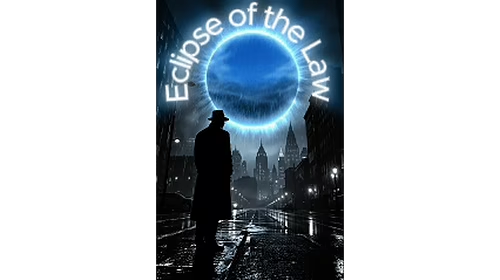
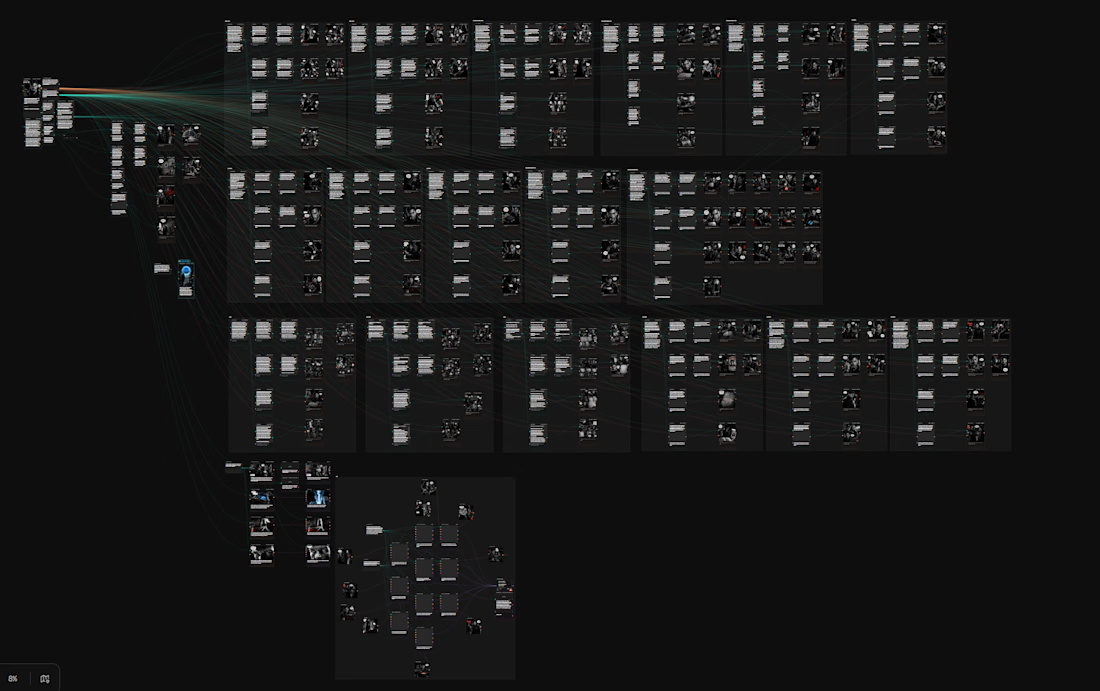
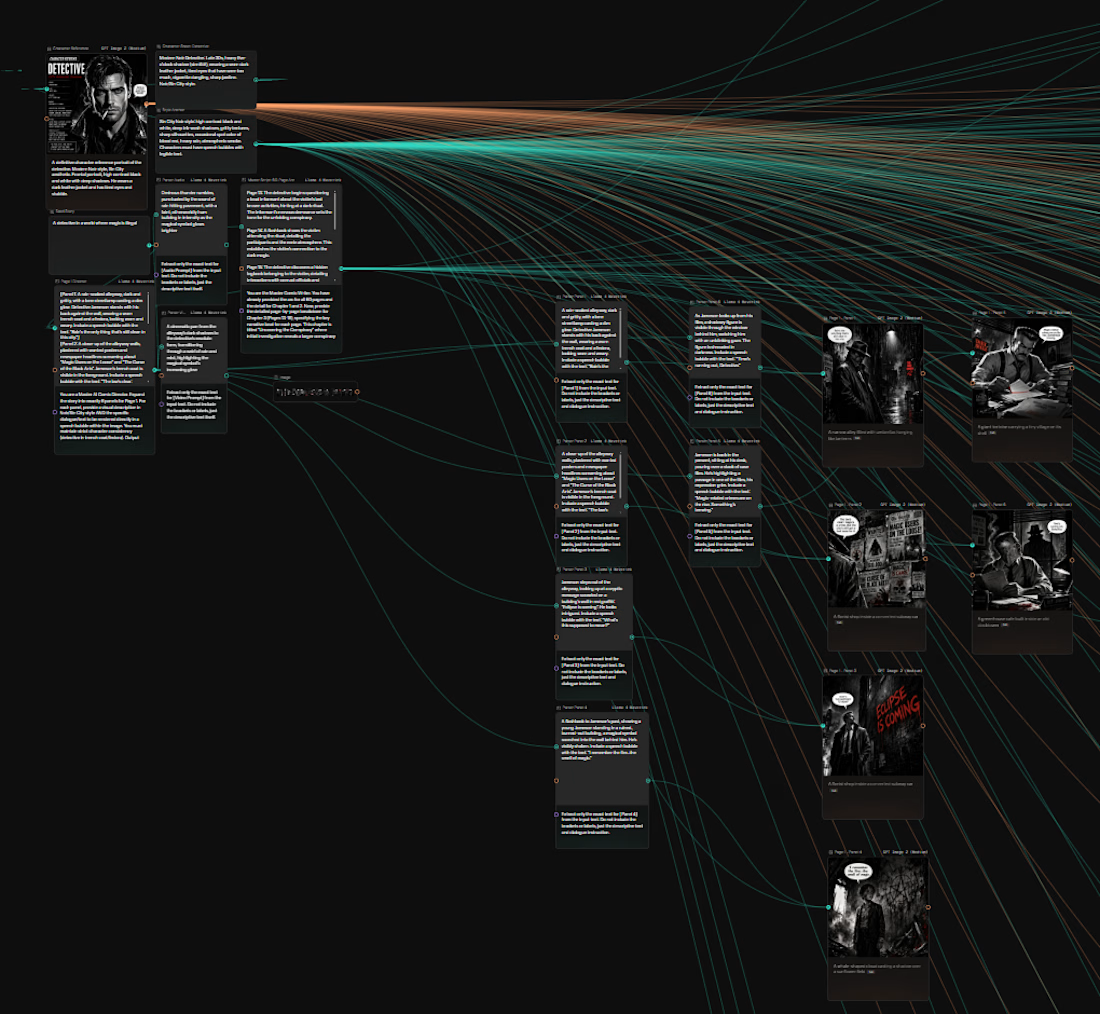


wow i didn't even know our agent was capable of this

Haha, I appreciate it! I just kept adding nodes and hoping it wouldn't crash. 😂
You guys built an awesome tool, it was super fun to mess around with it.


Inspired from Sin City? SICK!!!!
Exactly! That gritty visual style and dark graphics really inspired me when it came to designing the visuals. The story and characters, however, are entirely my own creation. Thanks so much!


love the style on this!

Clean work

Amazing!

Impressive work. The spacing, and layout choices create a premium feel.

This style didn't even cross my mind. Wow

Looks unique!

The network for creativity
Join 1.25M professional creatives like you
Connect with clients, get discovered, and run your business 100% commission-free
Creatives on Contra have earned over $150M and we are just getting started
Related posts

Finally brought this artwork to life in Framer.✨
Subtle motion, smooth interactions, and a seamless loop designed for a premium landing page experience.
Should I turn this into a full landing page? 👀


too cool!


Every great marketing agency needs more than a beautiful website—it needs a digital experience that convinces visitors within seconds. This Marketing Agency Webflow Website was designed with one objective: transform traffic into qualified leads through strategic storytelling, immersive interactions, and a frictionless user journey.
One of the biggest challenges during this project was balancing visual creativity with website performance. The design featured complex animations, overlapping sections, dynamic content, and interactive elements that could easily impact loading speed if not handled correctly. Another challenge was creating premium animations without sacrificing responsiveness across different screen sizes.
To overcome these challenges, I built the project with a performance-first mindset, optimizing assets, refining the page structure, and implementing clean Webflow practices. I also leveraged powerful tools and integrations including GSAP for advanced animations, Spline for immersive 3D experiences, Finsweet Attributes for enhanced CMS functionality, Relume for rapid component structuring, Memberstack for membership capabilities, Jetboost for dynamic filtering and search, and LottieFiles to create lightweight, engaging animations without compromising speed.
Built as a Webflow Expert, Webflow Designer, and Webflow Developer project, the final result is a lightning-fast, fully responsive, and visually captivating marketing agency website that not only looks premium but is strategically engineered to increase engagement, build trust, and convert visitors into long-term clients.


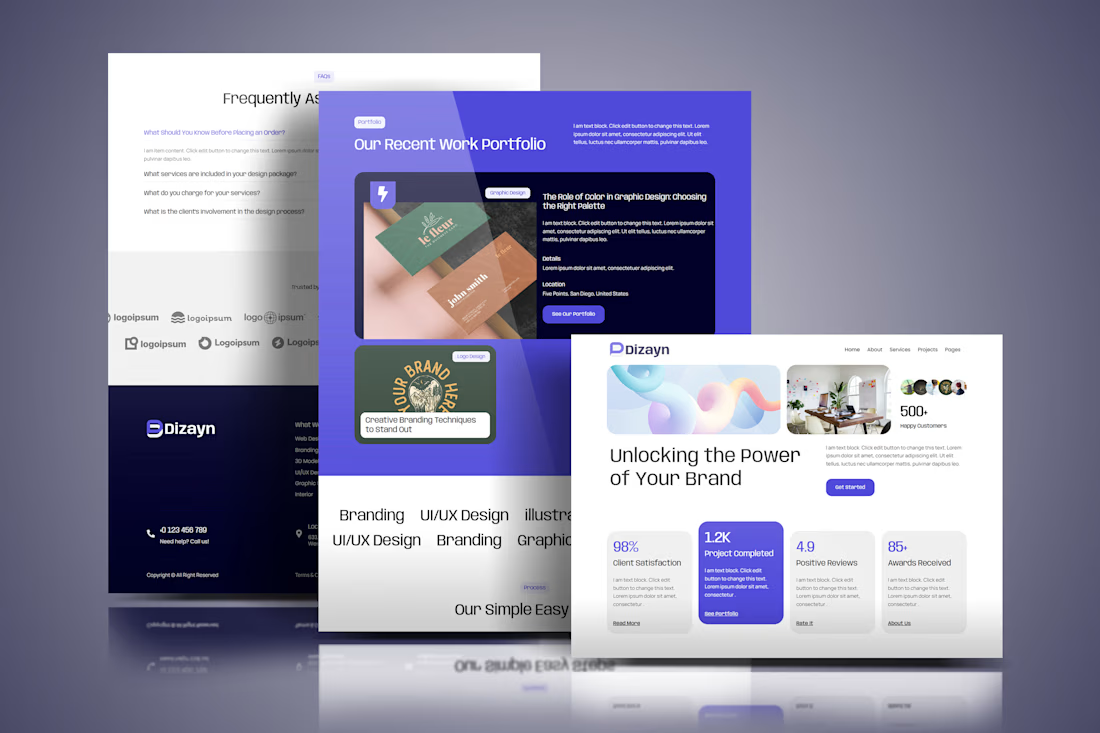

Lovely

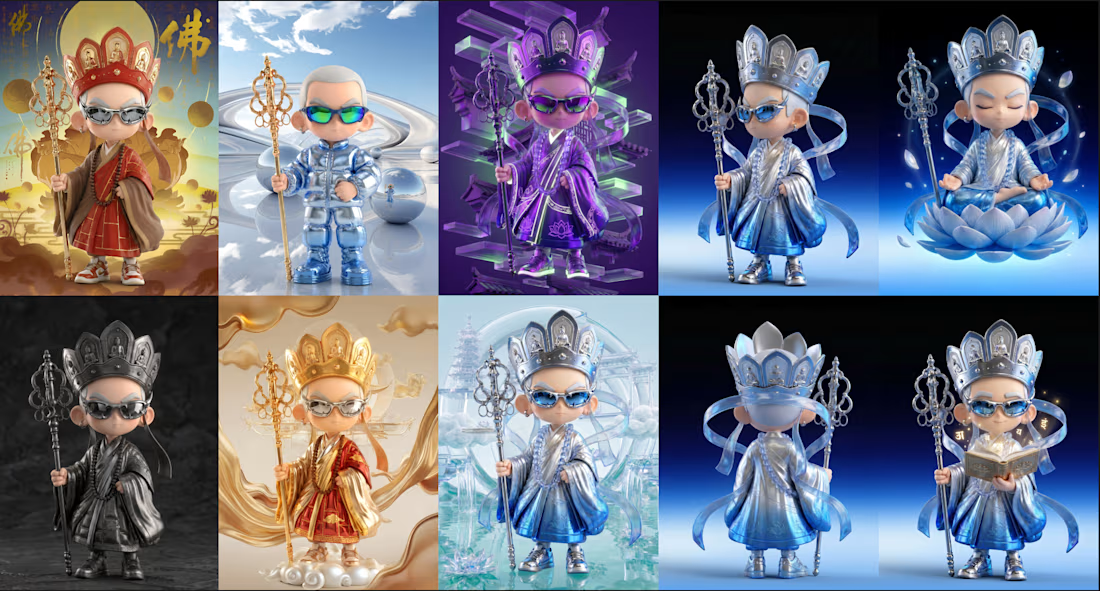
SANZØ™ is the AI guardian of the Future Temple—a virtual sanctuary where technology meets inner peace.
Designed to guide travelers through immersive VR experiences, SANZØ™ helps you slow down, reflect, and reconnect with yourself in a futuristic world beyond reality.
Would you enter the Future Temple with SANZØ™?
Link: https://www.recraft.ai/project/e892a8ae-d800-4a26-af2f-e85091178ec1













Trending

Claude
Claude has entered the design space. How are you using Claude Design?

Contra University
Learn from expert creatives how to earn more using next-gen AI tools.
fifaworldcup2026
The World Cup is here and the whole world's watching. How are you designing for the world stage?
creativeaiflow
Creative AI workflows are evolving. What tools do you use, and what are their strengths and weaknesses?
freelancerlife
Freelancer life is wins, pivots, and everything in between. What’s yours right now?