The network for creativity
Join 1.25M professional creatives like you
Connect with clients, get discovered, and run your business 100% commission-free
Creatives on Contra have earned over $150M and we are just getting started
Back to feedPost

Project Overview
Kolo Kept is a digital savings application, much like a piggy bank with vault grade locks. Users create savings vaults, deposit and withdraw funds in real time, and track progress toward their savings goals. The entire experience is built around one principle: security should never be an afterthought. Every login, every signup, and every password reset is protected by multiple independent layers of defense. The result is a fintech style application where the authentication system alone implements rate limiting, account lockout, email enumeration prevention, and cookie based session management, all without compromising on user experience.
The Tech Stack and Tools
Framework: Next.js 15 (App Router)
Language: TypeScript 5
UI: React 19, Tailwind CSS 3, Lucide React icons
Database: PostgreSQL via Supabase
Auth: Supabase Auth, @supabase/ssr
Rate Limiting and Lockout: Upstash Redis and Upstash Ratelimit
Validation: Zod 4
Tooling: PostCSS, Autoprefixer
The Challenge and Strategy
Authentication in financial applications is a highly critical problem. The challenge was to build a login system that resists brute force attacks, credential stuffing, and email enumeration without relying on an external auth wall like Auth0 or Clerk that would lock the project into a fixed pricing tier.
The strategy was defense in depth. Instead of a single gatekeeper, every auth endpoint was wrapped in multiple independent checks. Zod validation rejects malformed input immediately. Redis based rate limiting throttles abusive IPs before they reach the database. An account lockout counter per email prevents targeted brute force attacks even from rotating IPs. Finally, all server actions use Supabase SSR cookie based sessions for secure, browser managed credential storage.
Technical Implementation
The auth module was split into five focused server actions (login, signup, password reset, update password, logout), each with its own validation schema and rate limiter. Redis stores two kinds of state: sliding window rate limit counters (5 attempts per 15 minutes for login, 3 per 30 minutes for password reset) and an account lockout counter per email with a threshold of 10 failures and a 1 hour expiry.
Three separate Supabase clients were created following the principle of least privilege: an anonymous browser client for public reads, a cookie based server client for authenticated server actions, and a service role admin client restricted to user provisioning triggers. Row Level Security is enabled on all database tables, and a database trigger automatically provisions a profile and vault row for every new user at signup. The auth callback handler processes verification tokens on the client and syncs them seamlessly with Supabase's cookie based server client, ensuring secure session persistence that survives full page navigations.
Technical Result
A fully functional, production ready savings application where authentication is resilient to automated attacks. The login endpoint runs four sequential security checks before granting access, the password reset flow is rate limited and immune to enumeration, and account lockout automatically resets after one hour or upon successful password reset.
You can explore the live application here: https://kolo-kept-woad.vercel.app/
#Nextjs #TypeScript #Supabase #WebDevelopment #CyberSecurity #SoftwareEngineering #BuildInPublic #Fintech #React


The network for creativity
Join 1.25M professional creatives like you
Connect with clients, get discovered, and run your business 100% commission-free
Creatives on Contra have earned over $150M and we are just getting started








Related posts

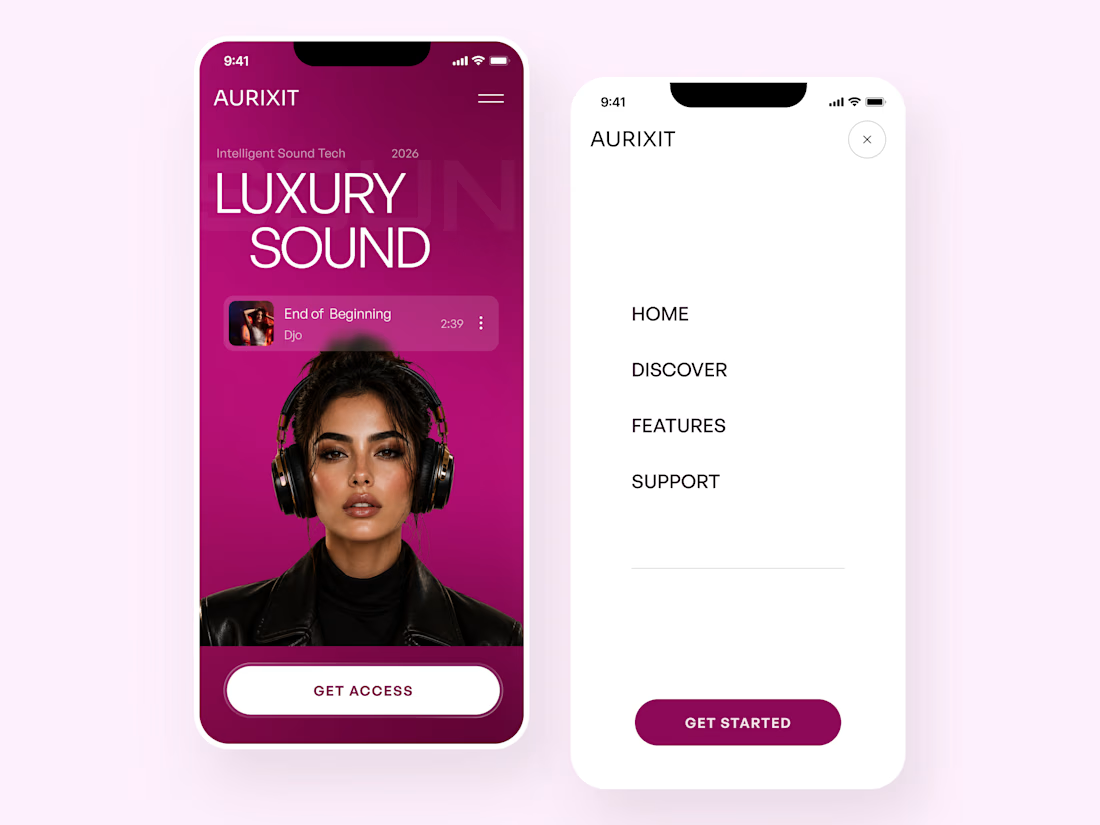
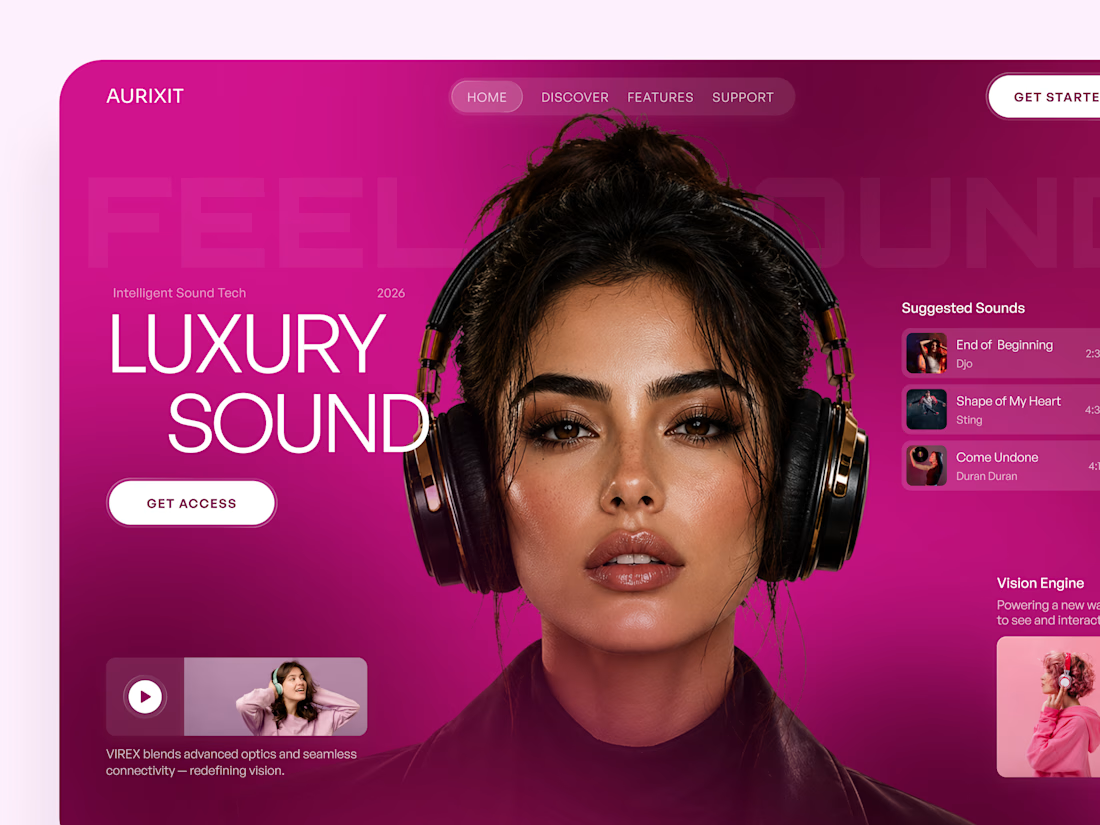
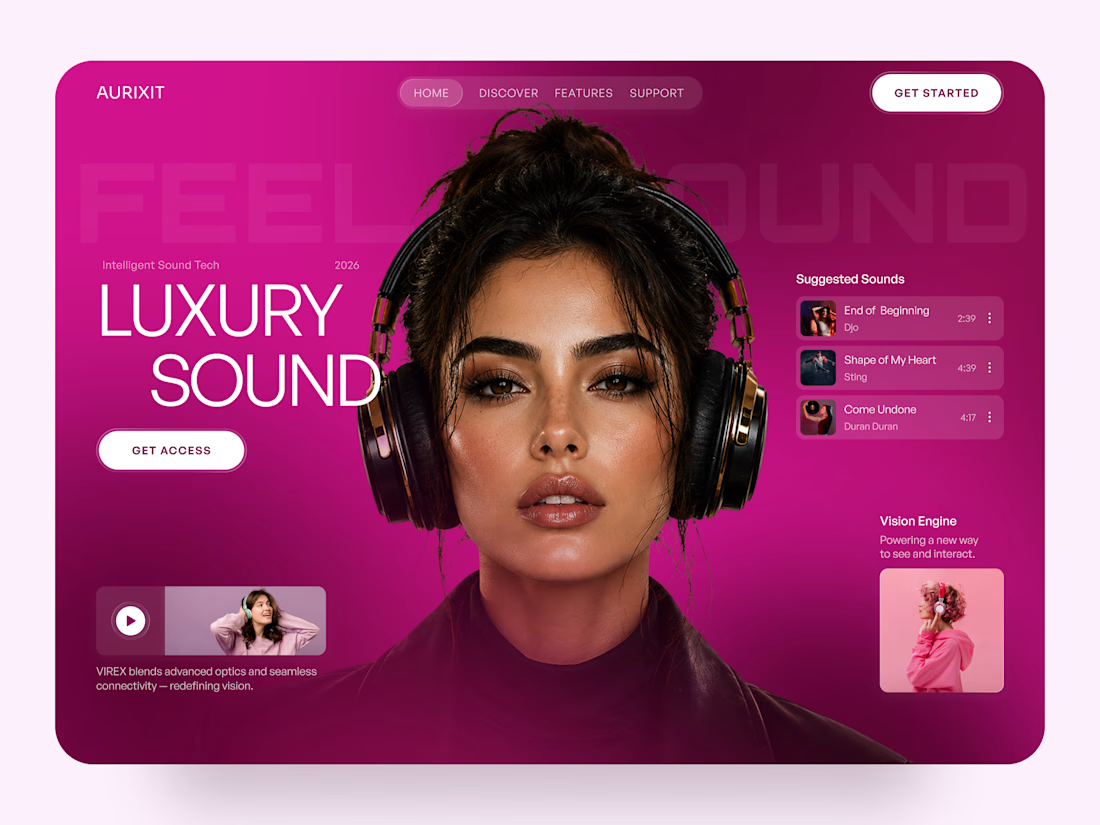
AURIXIT — Luxury Headphones Landing Page 🎧💗
A vibrant landing page concept for a premium audio brand, combining luxury sound, fashion-inspired visuals, and a bold digital experience
The design brings together bright magenta tones, oversized typography, lifestyle photography, and clean UI elements to create a modern, eye-catching aesthetic
Special attention was given to:
• Bold lifestyle-focused hero composition
• Vibrant pink and magenta color palette
• Clean, oversized typography
• Music playlist and suggested tracks
• Premium headphone presentation
• Clear CTA and minimal navigation
• Responsive mobile experience
The result is a fresh, stylish landing page that connects premium audio technology with fashion, music, and personal expression ✨



Magenta with the black headphones really pops. Was the small playlist text on pink tricky for contrast?

Designing a fragrance website with 2 sections that feels as premium as the product.
Built a fragrance experience where the product takes center stage.
I wanted the website to feel as refined as the fragrances themselves minimal layout, strong typography, immersive product visuals, and subtle interactions that make exploring each scent feel premium.
The goal wasn’t to fill the page with elements, but to give every product enough space to create its own presence.
Built with Next.js, with a focus on responsive design, smooth interactions, and a polished browsing experience.


The product imagery is doing most of the work here. Did you use art-directed mobile crops, or keep one image with a different object position? That can preserve label detail without loading the full desktop asset.

Building a Modern Restaurant Management Dashboard with Lovable (Light ☀️ vs. Dark 🌙)
I’ve been working on the dashboard interface for ReserveTable (Eat Pro Japan), focusing on giving restaurant managers and users a clean, modern, and intuitive interface to manage bookings, tables, and analytics.
Using Lovable, I was able to rapidly prototype and construct a modern UI system complete with smooth component transitions and native theme switching.
✨ Key Design & Tech Highlights:
⚡ Built with Lovable: Leveraged AI-powered design-to-code workflows to assemble clean component hierarchies, responsive search/filter bars, and sleek cards rapidly.
🌗 Seamless Light & Dark Mode: Designed a flexible color system using modern CSS variables / Tailwind tokens so the entire interface gracefully shifts between an elegant light aesthetic and a moody, dark dining ambience.
🎯 Contextual UI Elements: Styled input controls, select menus, and primary CTA buttons to maintain legibility and contrast across both light and dark themes.

For reservation and table states, the same semantic color tokens need to stay clear in light and dark mode. Did you define status tokens once and map both themes to them, or tune those colors per component?