The network for creativity
Join 1.25M professional creatives like you
Connect with clients, get discovered, and run your business 100% commission-free
Creatives on Contra have earned over $150M and we are just getting started
Back to feedPost

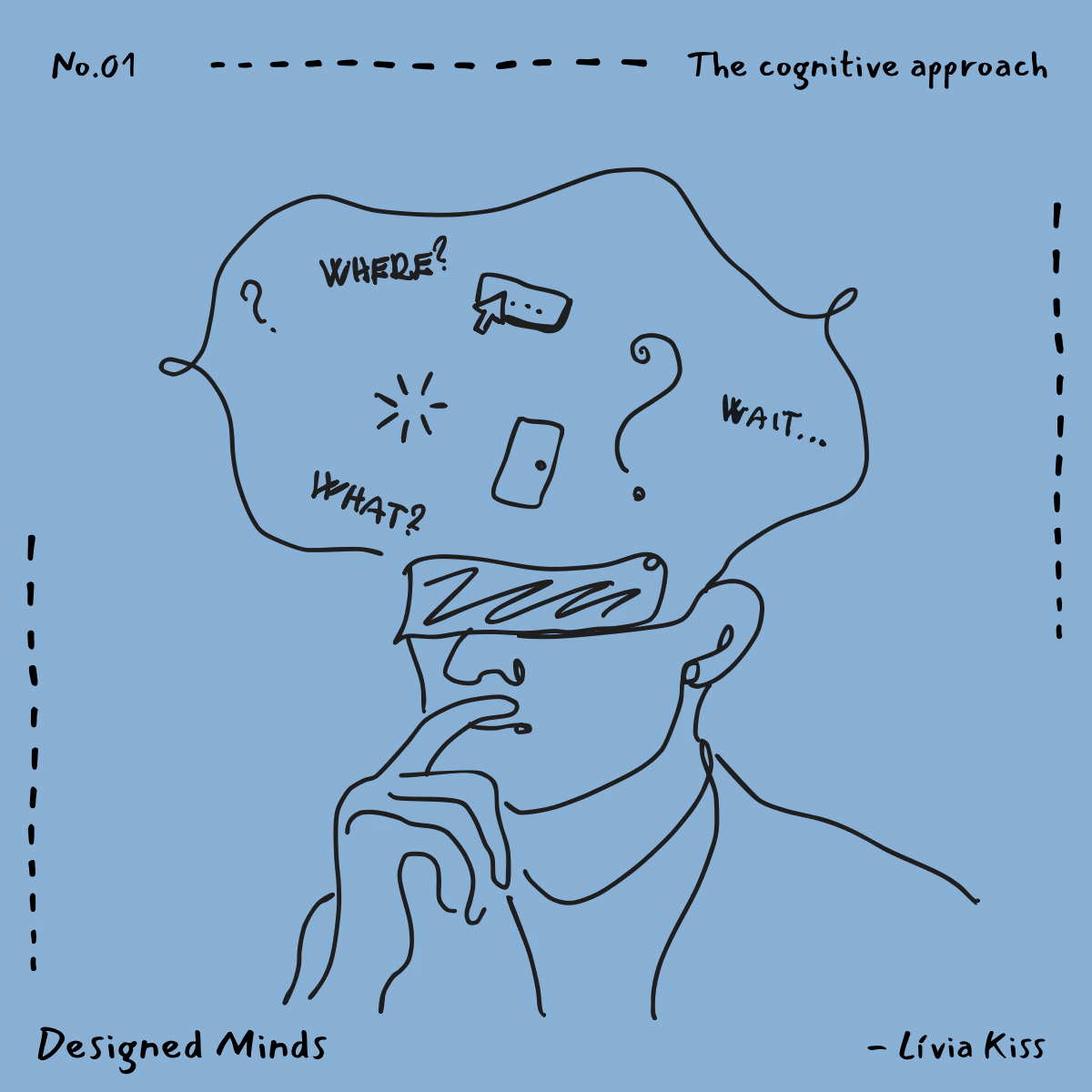
Here’s something Ulric Neisser -the father of cognitive psychology- established back in 1967:
Your brain is not a camera.
It doesn’t passively record what’s in front of you. It actively selects, transforms, and reconstructs information. Every moment, your mind is filtering what matters, ignoring what doesn’t, and filling in gaps with what it expects to find.
You are not receiving the world. You are interpreting it.
Now here’s where it gets interesting for design.
Donald Norman built on exactly this idea in The Design of Everyday Things. If users don’t passively absorb your interface -if they’re actively constructing meaning from incomplete signals- then design isn’t just about how something looks.
It’s about what story it tells the brain.
A button that doesn’t look clickable won’t be clicked -not because the user is careless, but because their brain never selected it as relevant. A form that gives no feedback after submission leaves the mind in a loop, still searching for confirmation. A layout with no visual hierarchy forces the brain to process everything at equal weight -which is exhausting.
Bad design doesn’t just look wrong.
It fights how cognition actually works.
This is what Designed Minds is about.
Every Friday -one concept from cognitive psychology, paired with what it actually means for the things we design.
Starting here.
Starting with the most fundamental idea:
Your user’s brain is always doing the work. Your job is to make that work easier.
#DesignedMinds #UXDesign #ProductDesign #CognitivePsychology #DesignThinking #UserExperience #LinkedInDesign

looks great👌
The network for creativity
Join 1.25M professional creatives like you
Connect with clients, get discovered, and run your business 100% commission-free
Creatives on Contra have earned over $150M and we are just getting started
Related posts

Tokenomics isn’t design decoration — it’s communication.
For Vortex FX, we created a tokenomics landing page concept built for readability and trust. Clean layout, strong hierarchy, and controlled 3D animation help guide users through the story without overwhelming them.
Designed to feel modern, structured, and conversion-ready.
This was created with a design subscription from FANCY — and yes, we’re currently open to new projects.



Stunning!


Most designers ruin projects for one reason:
They design for their ego.
Not for the client.
A calm brand doesn’t need chaos just because you’re bored.
And an aggressive brand shouldn’t look like Stripe just because it’s trendy.
Good design isn’t self-expression.
It’s strategy.
Before choosing colors or layouts, ask:
Who’s the audience?
What’s the goal?
What actually moves the needle?
Skip that part…
And you’re not designing.
You’re gambling.
If your brand or website feels off right now, DM me before it becomes an expensive mistake.
Also... "Most clients ruin their brand for one reason: They want designs for their ego. Not for the brand." hahaha

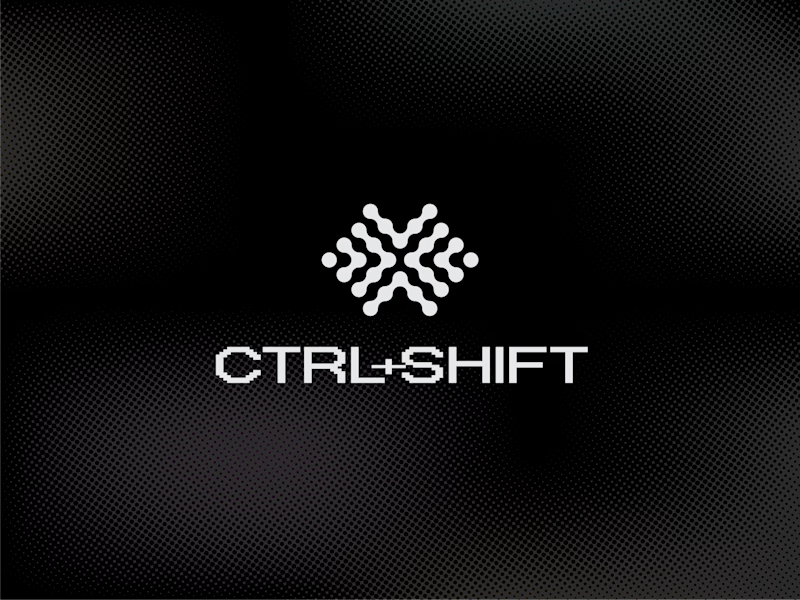
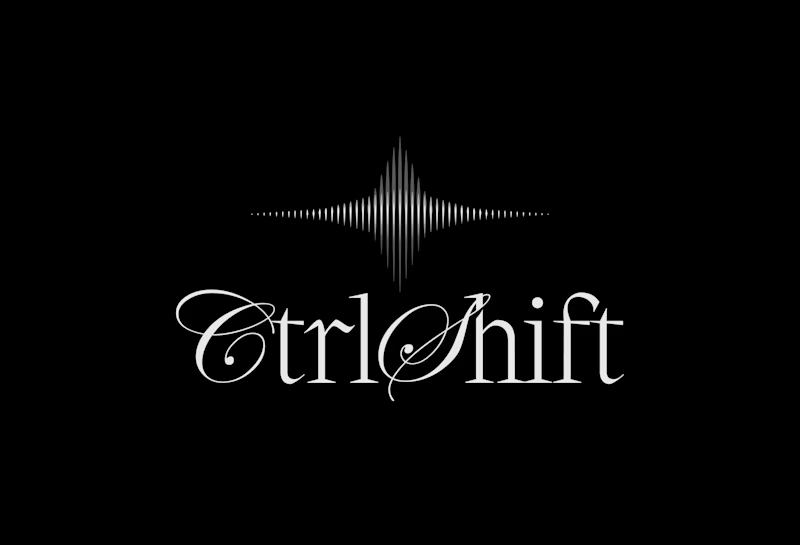
Which one is your preference and why?
Context:
1. The logo represents an abstract and thoughtful brain symbol featuring interconnected geometric dots representing both left and right hemisphere of the brain, as a progressively pulsing neutrons resembling ideas generations as part of the creative intelligence.
2. The logo features a modern, intelligent logomark built around a three-phased star symbolizing curiosity, signal throught the noise, and transformation. Constructed from sharp vertical lines with varying stroke weights, it creates a subtle optical illusion that reflects the brand’s core idea of clarity emerging from complexity. The three phases are conceptually tied to the brand name - Ctrl, Shift, and the final outcome: taste.

52 voted
81%
12 voted
19%
64 votes
Closed

1










Trending

Claude
Claude has entered the design space. How are you using Claude Design?

Contra University
Learn from expert creatives how to earn more using next-gen AI tools.
creativeaiflow
Creative AI workflows are evolving. What tools do you use, and what are their strengths and weaknesses?
portfolioreview
The best portfolios tell a story, not just show a grid. Share yours for feedback.
freelancerlife
Freelancer life is wins, pivots, and everything in between. What’s yours right now?