The network for creativity
Join 1.25M professional creatives like you
Connect with clients, get discovered, and run your business 100% commission-free
Creatives on Contra have earned over $150M and we are just getting started
Back to feedPost

Payments have been updated on Amazon.
Yeah!
Amazon has updated their payments policy by introducing "DD-7 or Delivery Date + 7 Days" policy. Meaning, sellers will have to wait seven days after the delivery date of an order gets updated.
What this really means?
This means that sellers have to wait additional days to get the funds cleared out on Amazon. earlier, fraction of the funds were kept on hold by Amazon for possible returns and sellers used to get paid once the payments were verified.
Now, They first have to wait for the delivery date to get updated, which can get delayed as per Amazon issues recently. But, even after that you have to wait additional 7 days after delivery confirmation to get those funds out.
What this policy tries to achieve?
Amazon is trying to reducing the possibility of having no funds for the refunds but that's ridiculous because there weren't be that much refunds that might required all the funds to get delayed.
This basically, delays seller's plans that were waiting for their funds to order new inventory or something but at the end - No one has a choice.
#amazonaccount #amazonupdate #amazon #amazondelivery #amazonstore #amazonbrand #amazonseller #accountmanager
The network for creativity
Join 1.25M professional creatives like you
Connect with clients, get discovered, and run your business 100% commission-free
Creatives on Contra have earned over $150M and we are just getting started





Related posts

Backfill: every cancellation becomes a booking.
Why: a late cancellation leaves an empty chair. Filling it means calling down a waitlist, which nobody at a busy front desk has time for, so the hour and the revenue are simply lost.
What it does: when a patient cancels, Backfill offers the slot to everyone on the waitlist whose service, day and time match, all at once. The first to tap Claim gets it. The slot is re-checked first, so nobody is ever double-booked. Everyone else is told it's taken and keeps their place. The front desk sees every step on a live dashboard, along with the revenue recovered. If nobody claims within 30 minutes, staff get a "Needs you" alert.
Try it: open the link and choose "Use a demo account". Nora is the front desk; Sarah, Mike and Amara are patients. Cancel as Sarah in one window and claim as Mike in another. Or register with your own email and tap "Send me an offer" to get the real offer email.
Built with Base44: the data model, the offer chain, a demo clinic that refreshes every day, a demo sign-in with an in-app inbox, real offer emails, and a split-screen demo view.

Behind the build: a design system and a clickable prototype first, then every screen rebuilt in Base44's AI chat, one prompt at a time.
Data, offer automation, real emails and the front desk dashboard all run on Base44, responsive down to a phone.

Stop answering the same customer questions by hand. I build you an AI agent that handles questions, bookings, and orders for you, day and night. Delivered in 1 to 3 days, from $200. Message me and tell me what you want it to do.

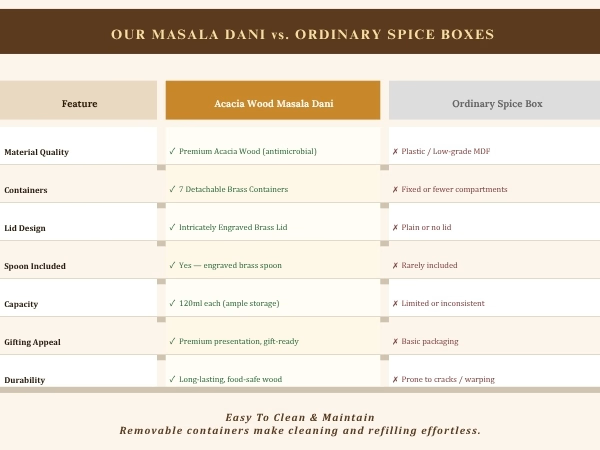
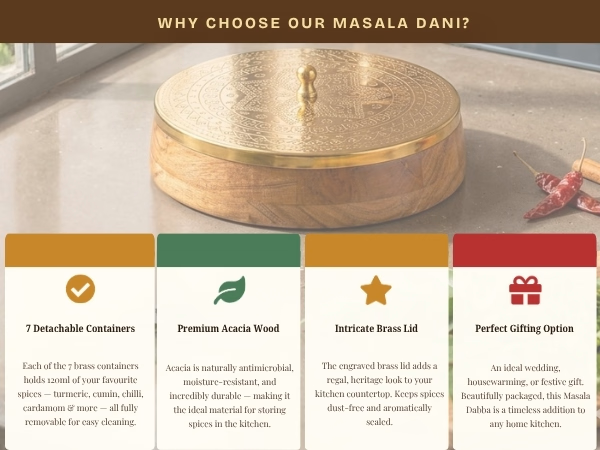
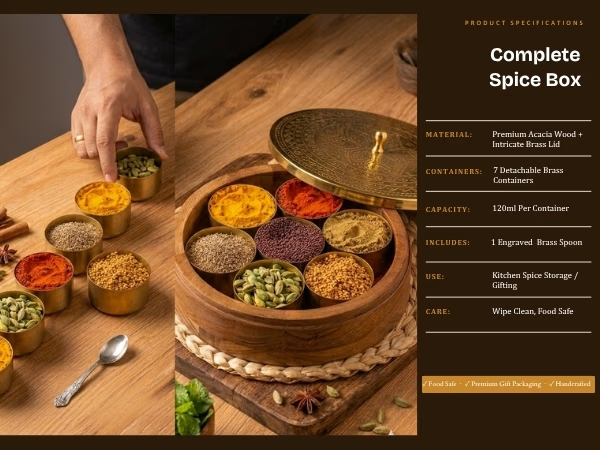
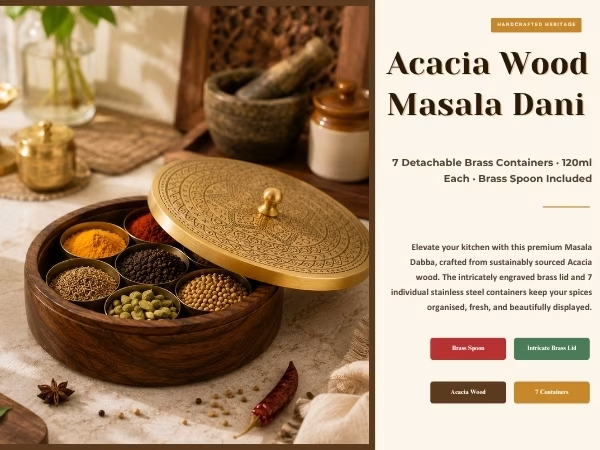
Amazon Premium A+ Content Design for Acacia Wood Masala Dani
Designed premium Amazon A+ Content for an Acacia Wood Masala Dani, combining warm lifestyle imagery, elegant typography, and a rich, earthy color palette. The layout highlights the product’s handcrafted aesthetic, seven detachable spice containers, brass spoon, and key features through a refined, organized presentation designed to enhance product appeal and communicate value to shoppers.