The network for creativity
Join 1.25M professional creatives like you
Connect with clients, get discovered, and run your business 100% commission-free
Creatives on Contra have earned over $150M and we are just getting started
Back to feedPost

Successfully installed and integrated Linux with a different hard disc on a system of Windows with a different SSD. Both are physically separate but joined together in a single laptop.
Mighty Power House of two operating systems.
Now I can work with two operating systems and copy their data here and there and not only this, I can also play games by switching any operating system, directly from Linux to steam or Windows to steam.
Further experiments remain.


The network for creativity
Join 1.25M professional creatives like you
Connect with clients, get discovered, and run your business 100% commission-free
Creatives on Contra have earned over $150M and we are just getting started



Related posts

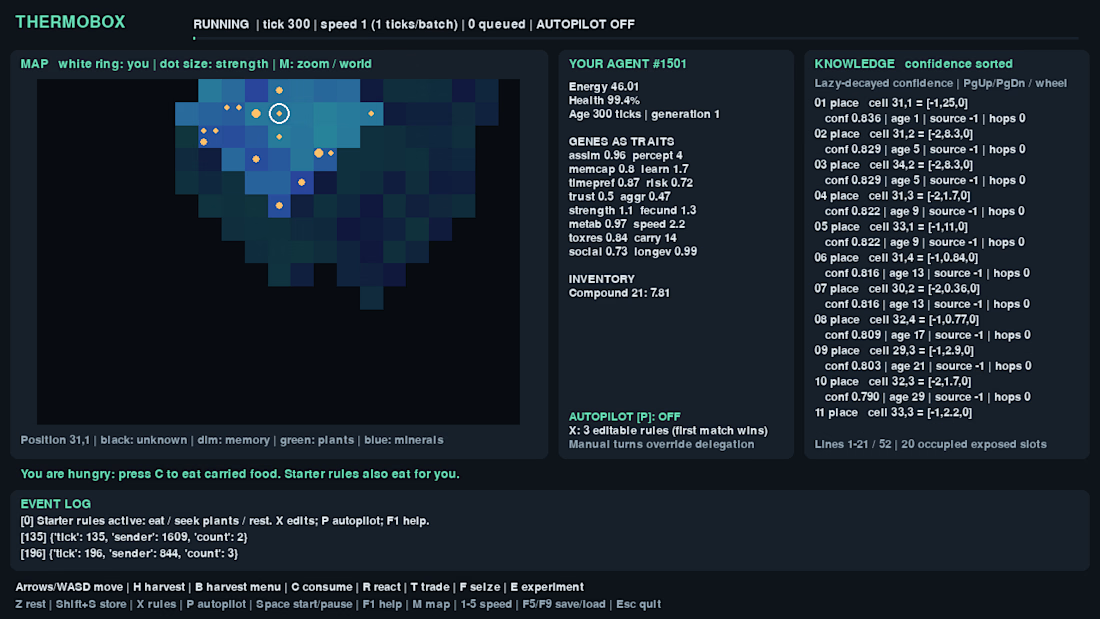
Open thermodynamic multi-agent simulation and survival game in Python: mass-conserving chemistry, ecology grid, genetics, barter market. Playable Pygame/TUI plus headless runs for experiments.




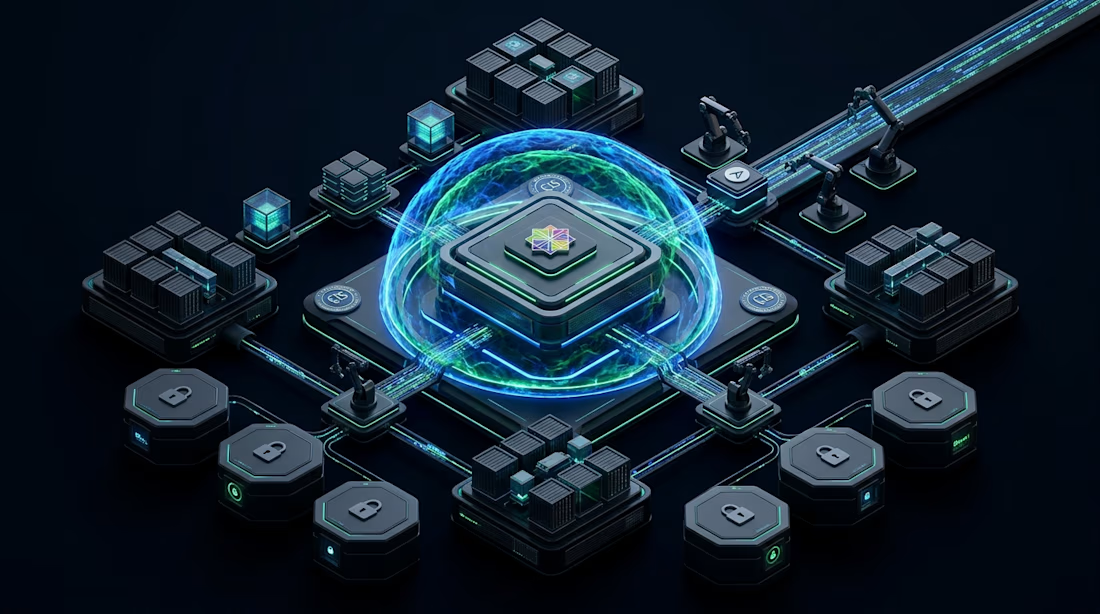
Why relying on public CAs for internal infrastructure is an operational time bomb: The case for your own private Root and Sub-CA.
How many times has your engineering team been paged at 3:00 AM because an internal TLS certificate expired, taking down database connection pools, internal APIs, or background workers?
When securing internal networks, teams usually fall into one of three traps:
1. The Self-Signed Disaster: Generating ad-hoc self-signed certificates and scattering them across servers. Developers end up adding --insecure or insecure_skip_verify: true to application code, completely gutting transport security.
2. The Public ACME Workaround: Trying to use Let's Encrypt on non-routable internal hostnames (like .internal or RFC 1918 IPs). This requires leaking internal network topology to public DNS or storing sensitive DNS API credentials on every internal host.
3. The Spreadsheet Calendar: Tracking certificate expiration on calendar reminders until an un-tracked intermediate cert inevitably lapses.
Enterprise sovereign infrastructure solves this permanently with a dedicated, multi-tier Private Public Key Infrastructure (PKI):
• Offline Enterprise Root CA: An ultra-secure, isolated trust anchor that signs only subordinate issuing authorities and never touches online network traffic.
• High-Availability Subordinate Issuing CAs (Sub-CAs): Domain-level issuing authorities (Dogtag PKI/FreeIPA) handling day-to-day certificate issuance.
• Zero-Touch Automated Renewal: Using certmonger on Linux hosts to continuously monitor certificate lifecycles, automatically re-requesting certificates 30 days prior to expiration and reloading daemons hitlessly.
• Mutual TLS (mTLS) Enforcement: Cryptographic workload identity verifying both server and client authenticity across internal database listeners, microservices, and admin interfaces.
Stop debugging expired certificates during outages. Deploy an automated private PKI foundation.
Deploy your sovereign PKI with our 2-week Enterprise FreeIPA HA & Centralized PKI/CA Sprint on Contra:
#Security #CyberSecurity #Cryptography #Infrastructure #Linux #DevOps #SRE #Architecture

Why your 10-person engineering team probably doesn't need Kubernetes: The power of rootless Podman and systemd Quadlets.
The modern tech industry has convinced early-stage founders and engineering teams that to run containerized web services, they must deploy a multi-node Kubernetes cluster.
Here is what happens in practice:
You spin up managed Kubernetes (EKS, GKE, or AKS). You immediately burn $300–$800/month just on control plane fees and worker nodes before your first customer signs up.
Then comes the operational tax: 35% of node memory is consumed by ingress controllers, CNI overlay networks, and daemonsets. Your developers spend more time debugging Helm charts and ingress routing bugs than writing business features.
On the opposite extreme, teams deploy unmanaged Docker engines running as root, using fragile docker-compose scripts that fail to restart cleanly after host reboots.
There is a battle-tested, high-performance sweet spot: Rootless Podman managed natively by systemd Quadlets.
• Native Linux Supervision: Declarative .container and .network Quadlet files let systemd supervise your containers natively. You get automated restarts, dependency ordering, watchdog probes, and structured journald logging out of the box.
• Zero Control Plane Overhead: No etcd consensus cluster, no heavy daemon eating RAM. If your containers need 2GB of memory, they use 2GB—not 8GB.
• Rootless Security by Default: Containers run inside unprivileged user namespaces with strict SELinux volume isolation (:z/:Z). Even if an attacker breaks out of the container process, they possess zero root privileges on the underlying host.
• Instant Portability: Standard OCI container images. If you ever genuinely scale to the point where multi-datacenter orchestration is necessary, your containers migrate cleanly.
Stop paying a 40% complexity tax for infrastructure you don't need.
Harden your container platform with our 2-week Hardened Linux & Container Infrastructure Sprint on Contra:
#Docker #Kubernetes #Infrastructure #Architecture #Linux #DevOps #SRE #Performance