The network for creativity
Join 1.25M professional creatives like you
Connect with clients, get discovered, and run your business 100% commission-free
Creatives on Contra have earned over $150M and we are just getting started
Back to feedPost

Most payment integration bugs don't appear during development; they appear when real money starts moving.
Stripe and PayPal are more than checkout buttons. They're critical financial infrastructure that demands reliable engineering.
Some of the most common issues I see are:
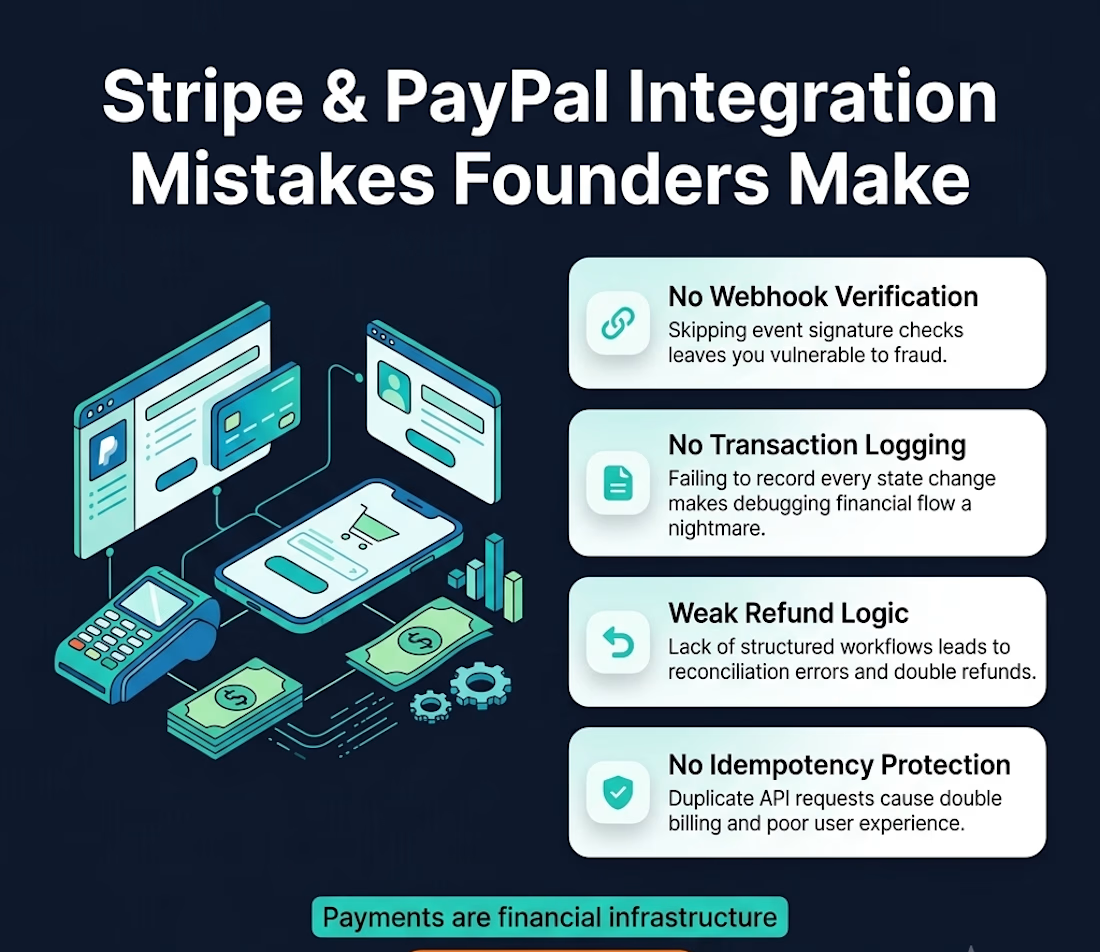
• Missing webhook signature verification
• No transaction logging for audits and debugging
• Weak refund workflows that create reconciliation problems
• No idempotency protection, resulting in duplicate charges
These aren't just technical oversights they can lead to lost revenue, customer frustration, and costly support tickets.
When I build payment systems, I focus on:
✅ Secure webhook handling
✅ Reliable payment state management
✅ Idempotent API design
✅ Comprehensive transaction logging
✅ Clean refund and reconciliation workflows
A payment system should be secure, observable, and resilient, not just functional.
If you're building a SaaS, marketplace, or subscription platform, investing in the payment architecture early saves significant engineering time later.
What payment integration challenge has been the most difficult in your product?
#WebDevelopment #Stripe #PayPal #PaymentGateway #NextJS #React #NodeJS #FullStackDeveloper #SaaS #Startup #FinTech #API #SoftwareEngineering #Contra #BuildInPublic
The network for creativity
Join 1.25M professional creatives like you
Connect with clients, get discovered, and run your business 100% commission-free
Creatives on Contra have earned over $150M and we are just getting started






Related posts

Primland puts a whole mountain resort on one interactive 3D map. You start high above the Blue Ridge Mountains with clouds drifting through the valley, then pick a pin and fly down to the lodge, the pool, or the mountaintop restaurant. The terrain, the trees, and the smooth camera moves make you want to book a trip.
Big shout-out to Robert Borghesi for building this. The scale and the attention to detail are impressive.


My first Framer template is live! This was a huge learning milestone for me. Since wrapping it, I’ve finished another project and can already see a million things I’d do differently - onward and upward! 😄
Villa Doma - a private villa website template built for boutique stays, vacation rentals, and small hospitality businesses.
I was going for warm, editorial, and grounded in place: stone, olive, and natural light.
5 pages, 2 CMS connected sections, dynamic gallery layout and fully responsive.


first template live is a big one, congrats gyte


Happy Monday!
A business can be doing great work behind the scenes and still struggle to communicate its value online.
Think about it.
You may have an excellent service.
You may deliver real results for your clients.
You may even get referrals from satisfied customers.
But when someone hears about your business and visits your website, can they see why you're worth considering?
Can they understand the value you offer without speaking to you first?
Can they find the information they need to feel confident about taking the next step?
Your website is an opportunity to communicate your business's value, even when you're busy doing the actual work.
It shouldn't just tell people that your business exists.
It should help them understand why your business matters.
As we begin a new week, take a moment to look at your website from the perspective of someone who has never worked with you before.
Does it communicate the value you bring, or does it leave visitors to figure it out themselves?
What is the one thing you want a potential customer to understand about your business within the first few seconds of visiting your website?
I am Michael Adetayo, a Kajabi Expert and course creator who helps startups, organizations, and service-based businesses build and strengthen their online presence through website design, redesign, development, and optimization.
I create clear, responsive, and user-friendly websites that communicate what a business does, build credibility, improve the user experience, and guide visitors to take action. My goal is to help businesses turn their websites into valuable tools that support growth.

This looks very solid