The network for creativity
Join 1.25M professional creatives like you
Connect with clients, get discovered, and run your business 100% commission-free
Creatives on Contra have earned over $150M and we are just getting started
Back to feedPost

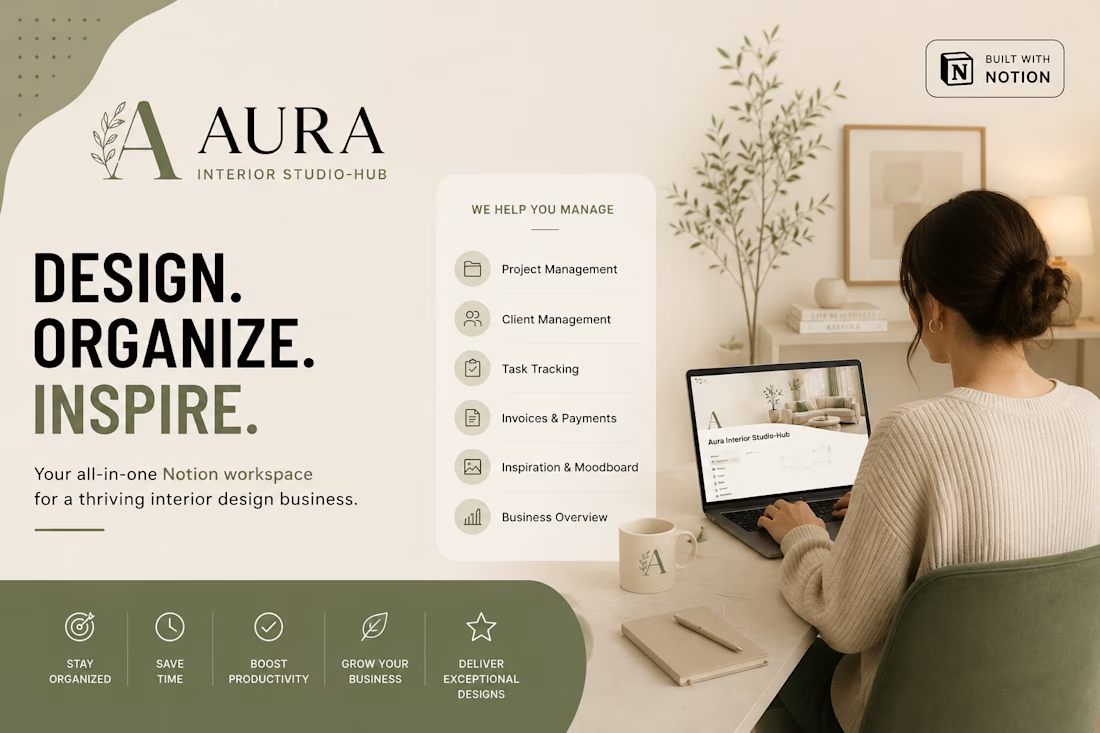
Aura Interior Studio-Hub — Notion Workspace
A clean, all-in-one Notion workspace designed for an interior design studio to manage projects, clients, tasks, invoices, payments, and creative inspiration in one organized hub.
The system brings project management and day-to-day studio operations together through structured databases, connected workflows, intuitive navigation, and a visually clean workspace designed for easier collaboration and organization.
Key features include:
Project & task management · Client management · Invoices & payments · Inspiration & moodboards · Organized workflows · Business overview
Built with Notion
Database AdministrationData EngineeringBusiness AnalysisBusiness Workflow AutomationOperations ManagementNotion

The network for creativity
Join 1.25M professional creatives like you
Connect with clients, get discovered, and run your business 100% commission-free
Creatives on Contra have earned over $150M and we are just getting started











Related posts

Project Management Dashboard – A powerful and intuitive interface designed to enhance team collaboration, productivity, and workflow efficiency.


Some places deserve a website as quiet as their halls 🏛️
Landing page for Timeless Treasures, a small museum in Florence: three halls, twenty-six centuries and one very old house ✨
Instead of another ticket-shop layout, we let the collection speak. Big photography, a strict Swiss grid and one calm typeface, so it feels like walking through the museum itself.
Scroll through the halls, from paintings to the princes' ballroom to a room full of marble faces 🖼️ Then check what's on this season, the museum in numbers, and everything you need to plan a visit, all in one place.
Got a story that deserves more than a template? Let's make it together 🙌


I just love it!

As a psychologist and technical designer, I've always been interested in how technology can simplify complex workflows.
Managing a clinical practice involves much more than conducting therapy sessions. There are patient records, clinical notes, assessments, follow-ups, appointments, and administrative tasks. Each one takes time and attention that could otherwise be dedicated to patients.
Instead of adapting my workflow to another generic management platform, I decided to build something around the way I actually work.
That's how Quinde Clínica started.
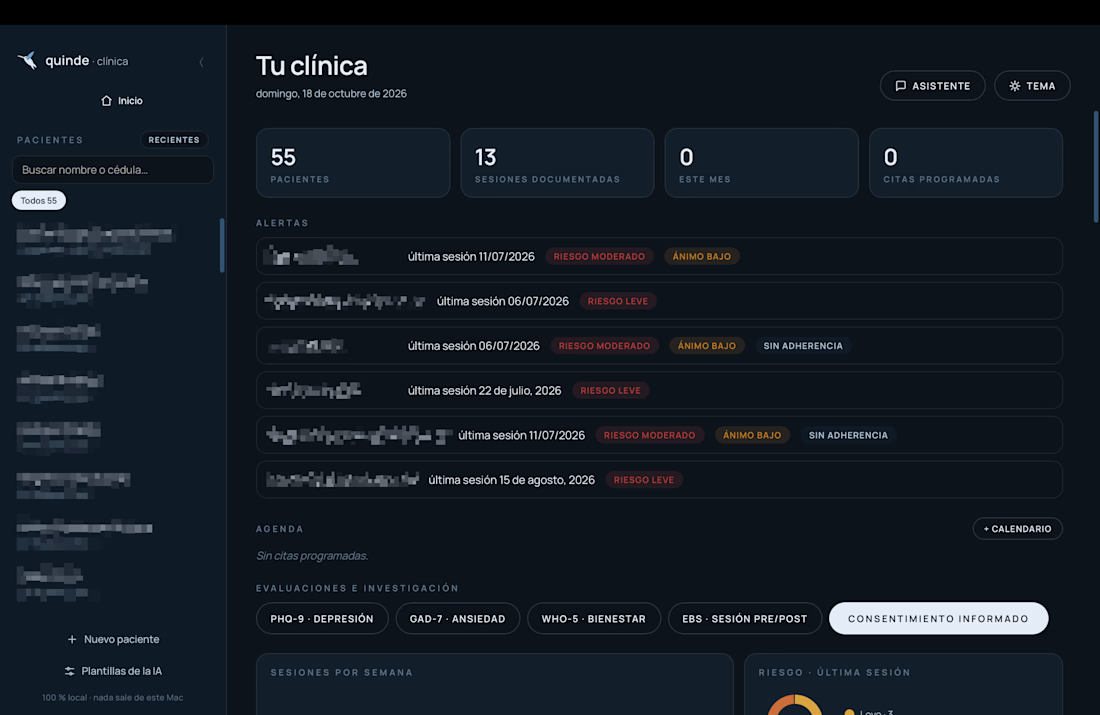
I designed and developed a clinical management application that brings my essential tools into a single interface, with local AI capabilities to support my daily workflow.
Designing for Real Needs
My approach was simple: understand the problem first, then design the solution.
I wanted a clean interface where I could quickly access patient information, document sessions, identify clinical alerts, manage appointments, and work with psychological assessment tools.
Every design decision focused on reducing friction, improving information hierarchy, and making everyday tasks easier.
Bringing Local AI into the Workflow
One of my priorities was exploring how AI could support clinical work without making everything dependent on external cloud services.
By incorporating local AI capabilities, I could experiment with intelligent assistance while keeping privacy and control over sensitive information at the center of the design.
The goal was never to replace clinical judgment. It was to create a tool that helps me organize information, reduce repetitive work, and dedicate more attention to the human side of my profession.
Building Something I Actually Use
What started as a personal experiment became a practical tool for my clinical workflow.
The most rewarding part has been seeing how design, software development, and AI can come together to solve a problem I understand firsthand.
This project also changed how I think about building software.
You don't always need to start with a revolutionary idea. Sometimes, the most meaningful products begin with a problem you face every day.
Quinde Clínica is an ongoing personal project, and perhaps the most valuable thing I've learned is that understanding a problem deeply can be just as important as knowing how to code its solution.