The network for creativity
Join 1.25M professional creatives like you
Connect with clients, get discovered, and run your business 100% commission-free
Creatives on Contra have earned over $150M and we are just getting started
Back to feedPost

I designed Askly — an Ai powered mobile app that makes it easier to find the right local help when you need it.
Finding someone to help with a simple task should be easy.
You need a plumber. A cleaner. An electrician. A photographer. Someone to help you move. Someone to fix your laptop. Someone to teach you something.
But in many cases, finding the right person still depends on asking friends, searching through random social media posts, joining WhatsApp groups, or scrolling through endless search results.
And even after finding someone, there are still questions:
Are they actually available?
Can I trust them?
How much will it cost?
Are they close to me?
Do they have the experience I need?
This is the problem I explored while designing Askly.
Askly is a mobile app designed to help people find local professionals and service providers online based on what they need and where they are.
Instead of searching through a long list of random results, users can simply describe what they need and discover relevant people who can help.
The experience is built around one simple idea:
Finding help should feel as easy as asking a question.
The challenge was to design an experience that feels simple enough for anyone to use while still providing enough information for users to confidently choose the right person.
A user shouldn't have to understand complex categories or know the exact name of the service they need.
They should be able to open the app and say:
"I need someone to fix my washing machine."
"I need a photographer for my birthday."
"I need someone to design a logo."
"I need a makeup artist near me."
The product should then help connect them to the right people.
I designed the experience around a straightforward discovery flow:
The user explains what they need.
Askly helps surface relevant local professionals.
The user explores available profiles.
They compare important information such as services, experience, location, availability, and reviews.
They can contact the right person and get the help they need.
The goal was to remove unnecessary friction from the process.
Rather than forcing users to navigate through several layers of categories, the experience allows them to start with their actual problem.
One of the biggest challenges with a local services marketplace is trust.
Users are not simply choosing a product.
They are choosing a person.
That means the interface needs to communicate more than just a name and a service.
I designed the profile experience to help users quickly understand who they are considering.
The profile experience focuses on information such as:
• What the person does
• Their services
• Their experience
• Their location
• Their availability
• Reviews and ratings
• Relevant work or portfolio
• How to contact them
The idea is to help users make a decision with confidence instead of blindly contacting multiple people.
Making discovery feel natural
Search experiences can easily become overwhelming.
A user can be presented with hundreds of results, filters, categories, and options.
For Askly, I wanted the experience to feel more conversational and human.
The interface encourages users to start with what they need rather than forcing them to understand how the platform is structured.
This creates a more natural experience for people who may not know the exact service category they should be searching for.
The design direction
For the visual design, I focused on creating an interface that feels modern, friendly, and easy to navigate.
The design system uses:
• Clear visual hierarchy
• Generous spacing
• Rounded UI elements
• Simple navigation
• Strong but approachable typography
• Clear calls to action
• A card-based system for presenting people and services
The goal was to create a product that feels approachable from the first screen.
A local services app should not feel complicated.
The interface should get out of the way and help the user focus on one thing:
Finding the right person to help.
Designing the mobile experience
Since Askly is designed as a mobile-first experience, I paid close attention to how information is presented within a limited screen space.
The most important information needs to be visible quickly.
Users should be able to understand:
Who is this person?
What do they do?
Where are they located?
Can they help me?
What should I do next?
This influenced the structure of the search results, profile cards, service information, and interaction patterns throughout the app.
My role
I worked on the product experience from the perspective of a UI/UX designer, focusing on:
• User experience and information architecture
• Search and discovery flows
• Local service provider profiles
• Mobile interface design
• Interaction patterns
• Visual hierarchy
• Component design
• Prototyping
• Creating a consistent design system
The goal was not just to make the screens look good.
The goal was to make the experience feel simple and useful.
The result
Askly is an exploration of how local service discovery can become more personal, more accessible, and easier to navigate.
Instead of searching endlessly for someone who can help, users can start with a simple need and quickly discover people who may be able to solve their problem.
From finding a cleaner to discovering a photographer, from getting technical help to finding a local expert, the idea is simple:
Ask for what you need. Find someone who can help.
This project was a great opportunity to explore the intersection of local discovery, marketplaces, trust, and mobile product design.
I enjoyed thinking through how small UX decisions can make the process of finding help feel significantly easier.
Designed with curiosity, intention, and a lot of attention to the details.
What do you think of the experience?


The network for creativity
Join 1.25M professional creatives like you
Connect with clients, get discovered, and run your business 100% commission-free
Creatives on Contra have earned over $150M and we are just getting started
Related posts


🚀 The new Edge Hound website is live. Not Framer this time, but the dev team did a stellar job with the implementation.
Most AI fintech sites explain the tech. This one had to explain the category.
Decision intelligence for capital markets - agentic AI that replaces the analyst function for brokers, neo banks, and investing platforms.
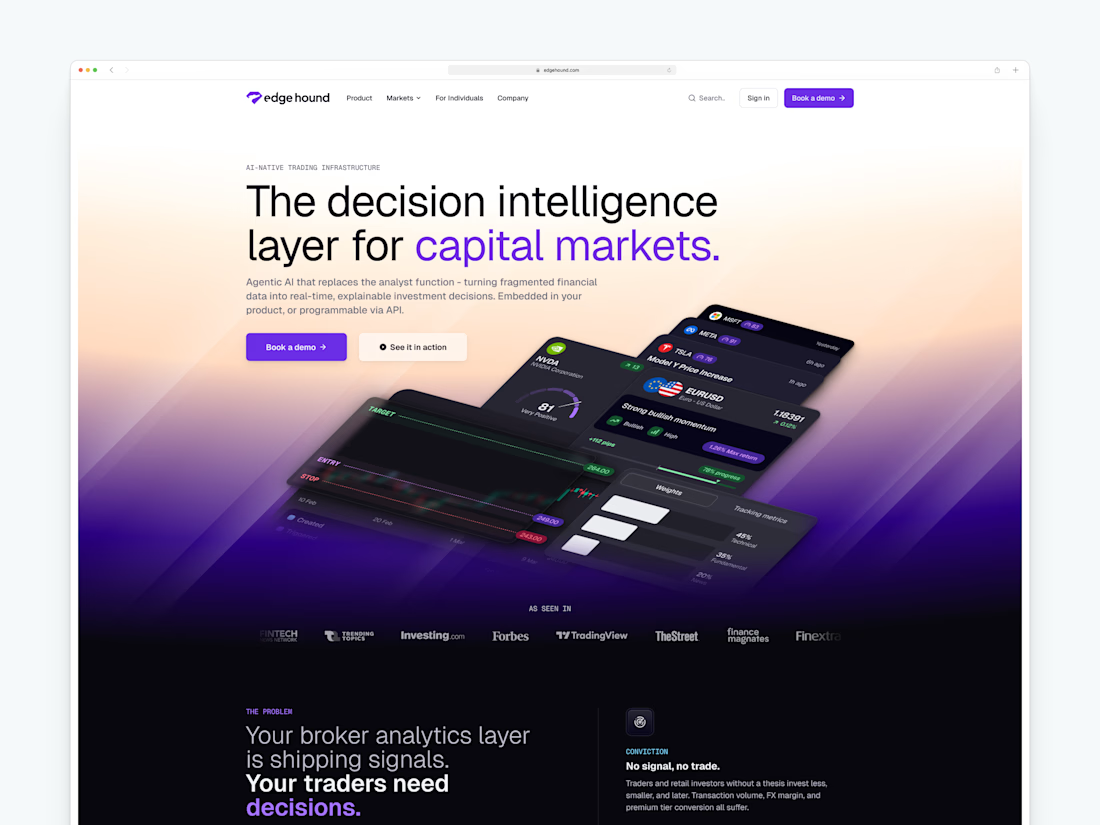


I think you did the right call by explaining the category here. This whole space is so new and different, and taking advantage of it is definitely the right call from your end.

Most event apps help you find something to do. Evara was designed to help you find somewhere to belong.
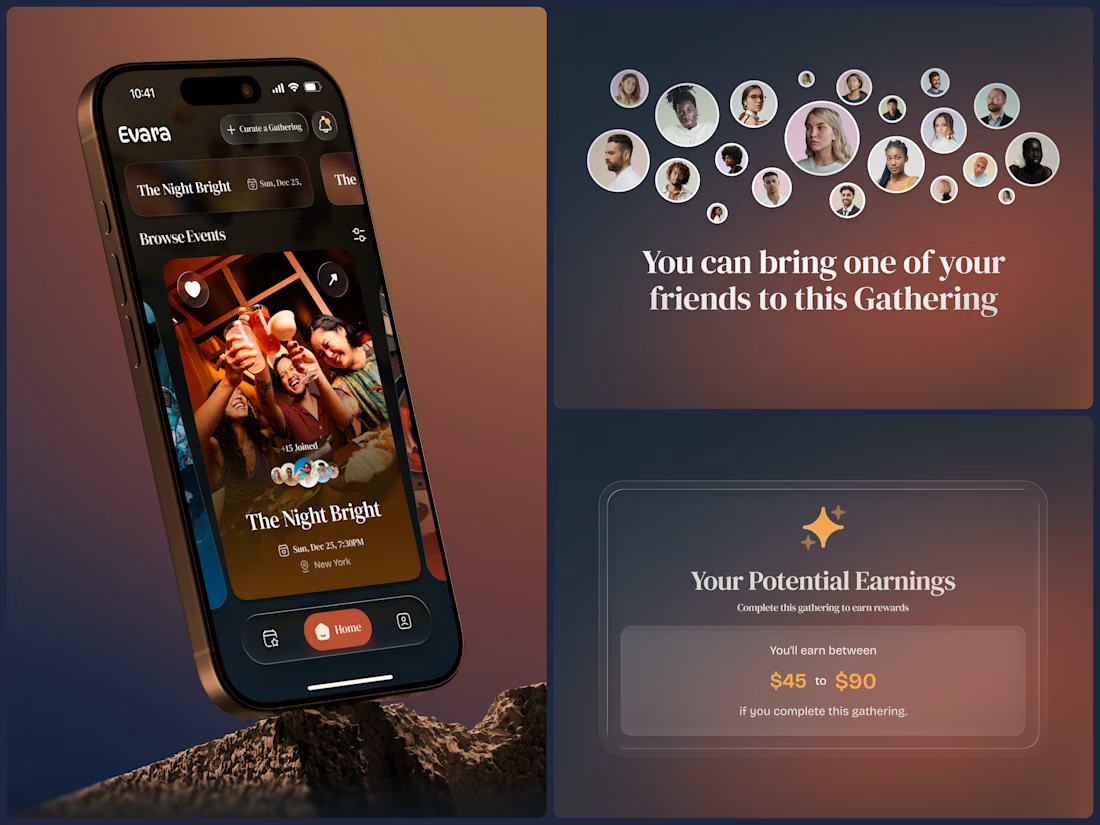
The brief was a social gathering platform built around intention - not just events, but curated experiences where the host chooses who joins, what kind of gathering it is, and who it's for. The Night Bright. Friday Night Bright. A cozy night with good music, fun people, and zero pressure.
The design reflects that warmth completely. Deep amber gradients, organic photo collages, rich brown surfaces, and an event detail page that feels like a personal invitation rather than a ticket listing. 150+ people joined. Gathering. Social. Night Out. "I'm In" in amber gold is a button that actually feels like a decision worth making.
And then the layer that makes Evara different - hosts earn between $45 and $90 for completing a gathering. The platform rewards the people who create the experience, not just the ones who attend it.
This is what social app design looks like when the product actually cares about connection.
Does this feel like an app worth showing up for? 👇
Tools: Figma
#AppDesign #SocialApp #MobileDesign #UIDesign #DarkUI #ContraFreelance #EventApp #ProductDesign
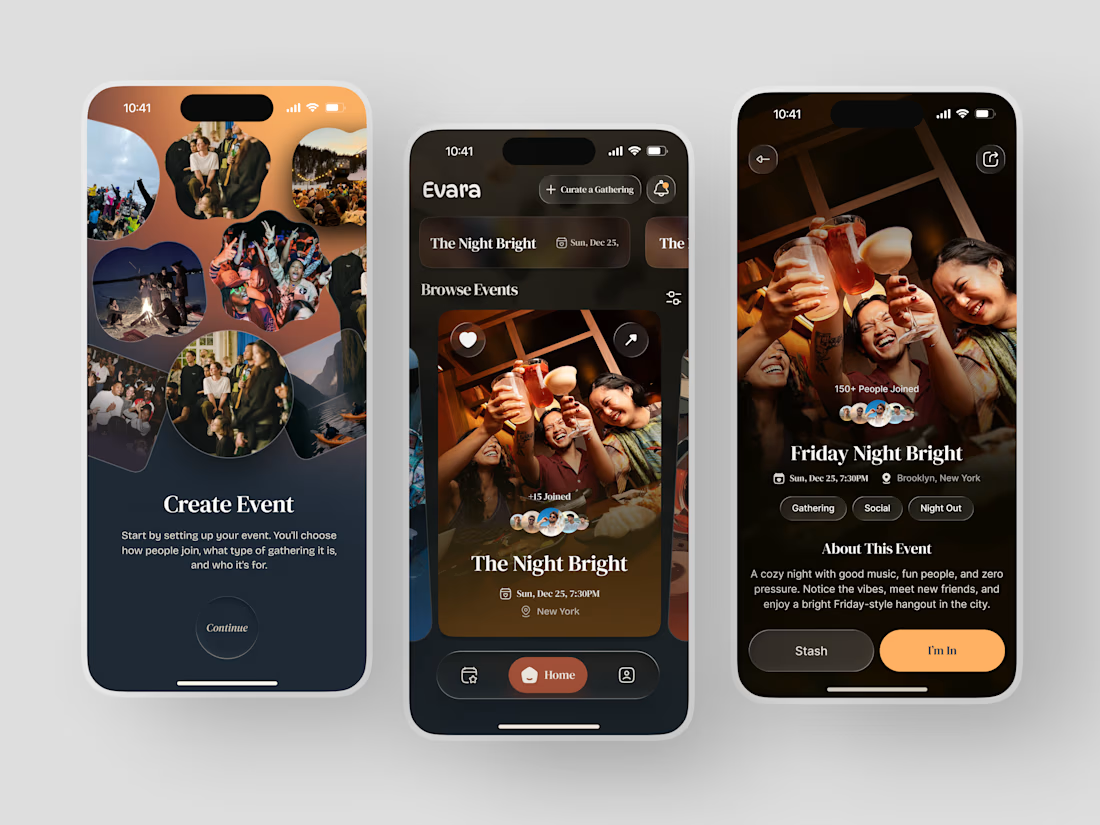

Clean layout and super intuitive design!

One of our older concepts that still stands out to us is Sentra Wallet.
At the time, most crypto wallets leaned into dark themes and interfaces that felt built for experienced users. We wanted to explore a different direction. Something brighter, friendlier, and easier to navigate without losing the feeling of security or control.
The goal was simple: make managing digital assets feel approachable. We focused on clear information hierarchy, intuitive navigation, and a visual identity that didn't rely on the usual Web3 design trends.
Looking back, we'd definitely refine parts of it today, but the core idea remains the same. Great product design isn't about making crypto look more complex. It's about making it feel easier to use.


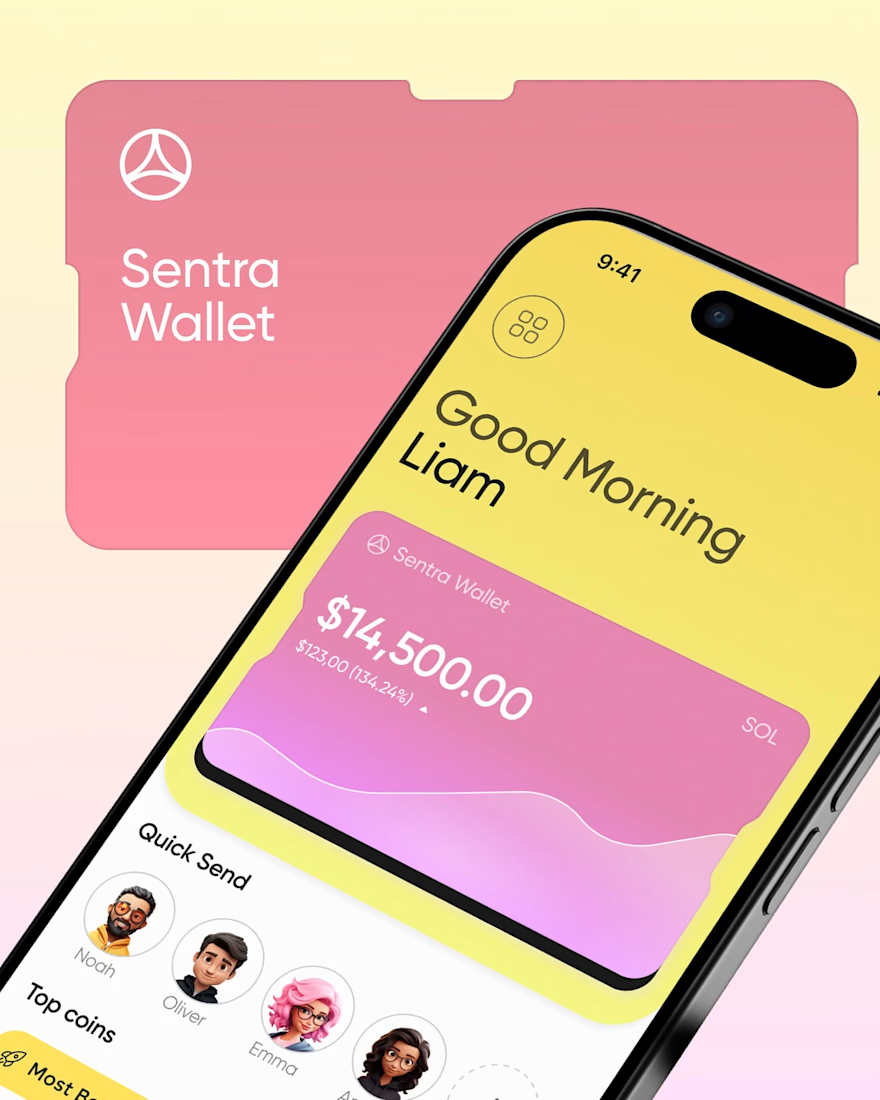
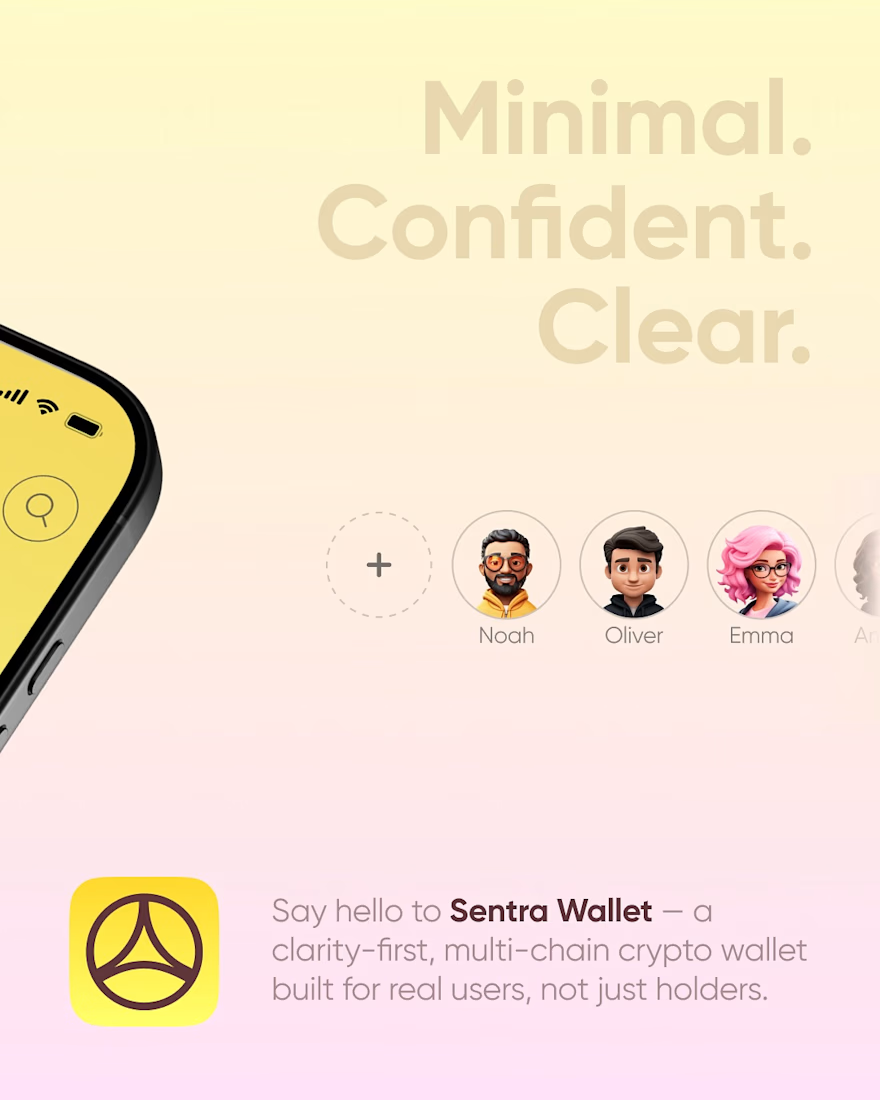
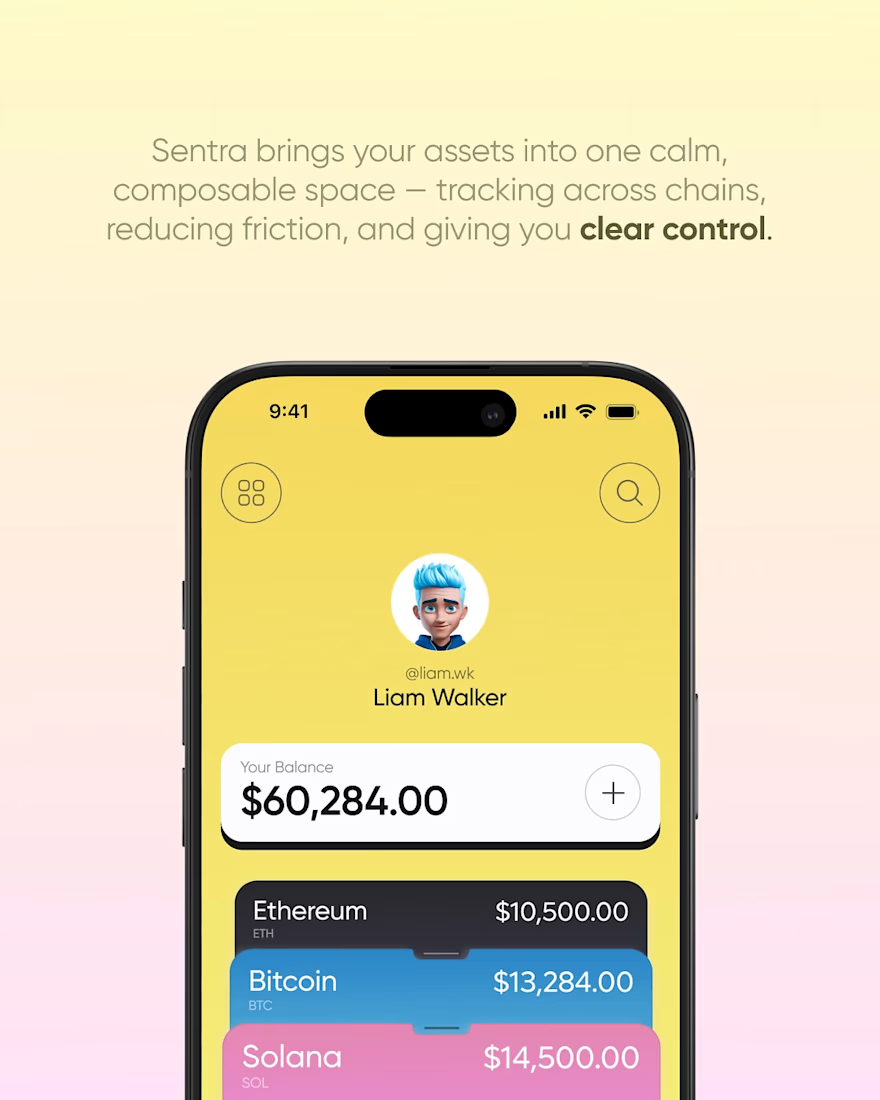

Going brighter and friendlier for a crypto wallet is still the harder design problem, most teams default to dark mode because it's easier to fake secure. What was the biggest pushback from users used to the darker wallet convention?











Trending

Claude
Claude has entered the design space. How are you using Claude Design?

Contra University
Learn from expert creatives how to earn more using next-gen AI tools.
creativeaiflow
Creative AI workflows are evolving. What tools do you use, and what are their strengths and weaknesses?
freelancerlife
Freelancer life is wins, pivots, and everything in between. What’s yours right now?