The network for creativity
Join 1.25M professional creatives like you
Connect with clients, get discovered, and run your business 100% commission-free
Creatives on Contra have earned over $150M and we are just getting started
Back to feedPost

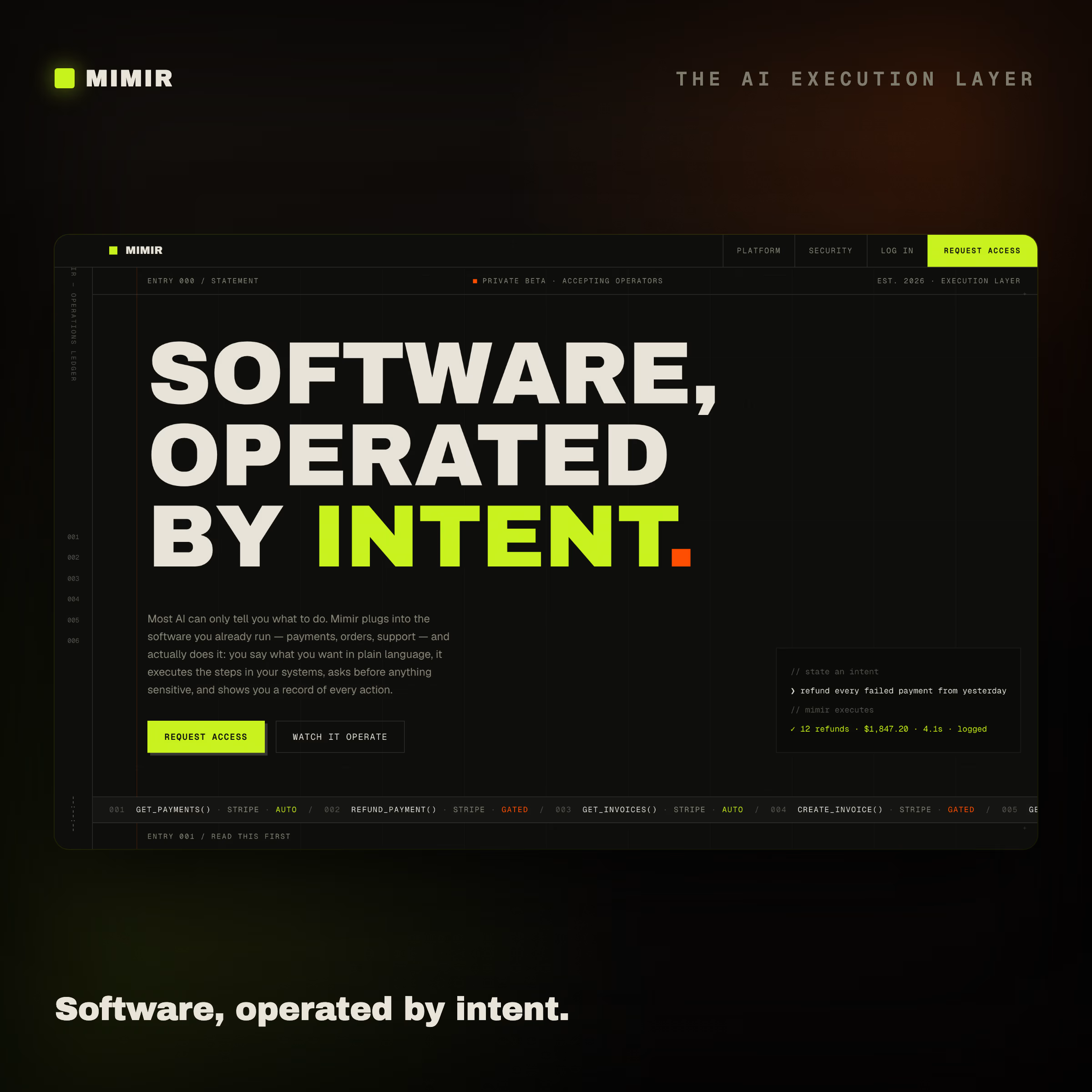
Mimir — the AI execution layer for software
Build story
I kept hitting the same wall with AI agents: they can tell you what to do, but the moment you let one actually touch a real system — payments, orders, refunds — you're one hallucinated call away from a disaster. The demo is easy. The safety is the whole product. So I built Mimir around that problem instead of around the demo.
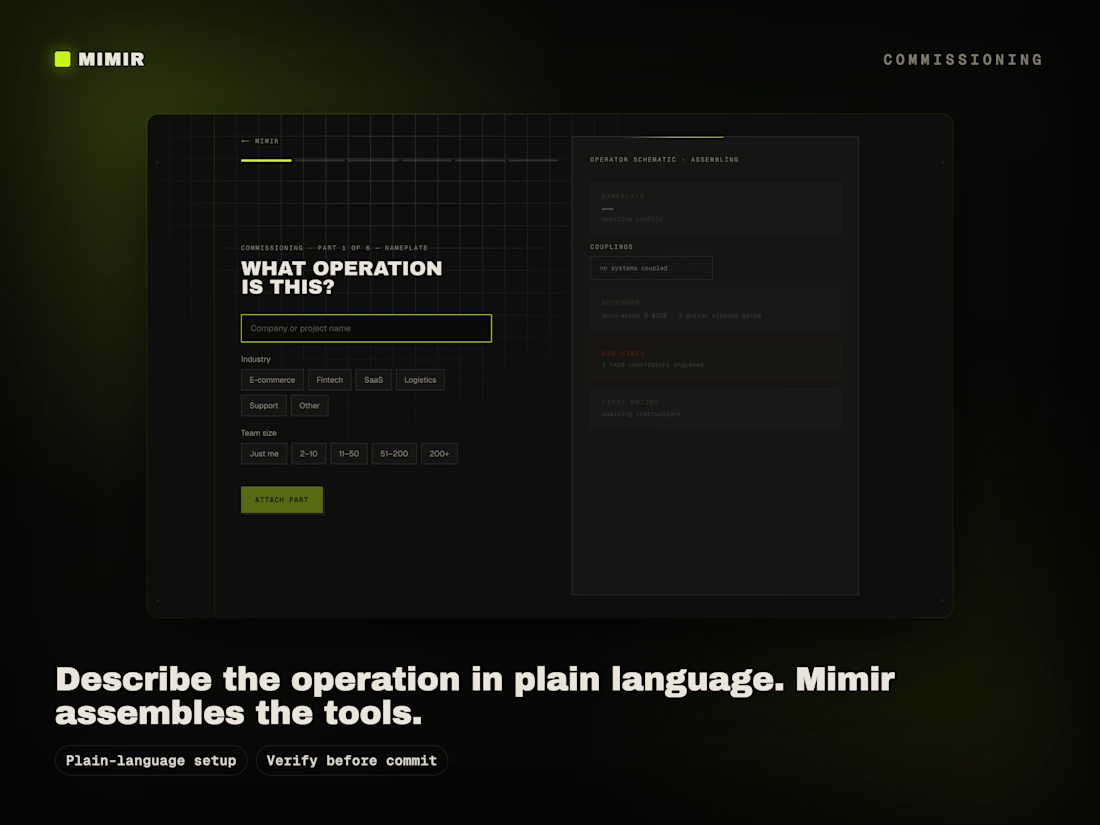
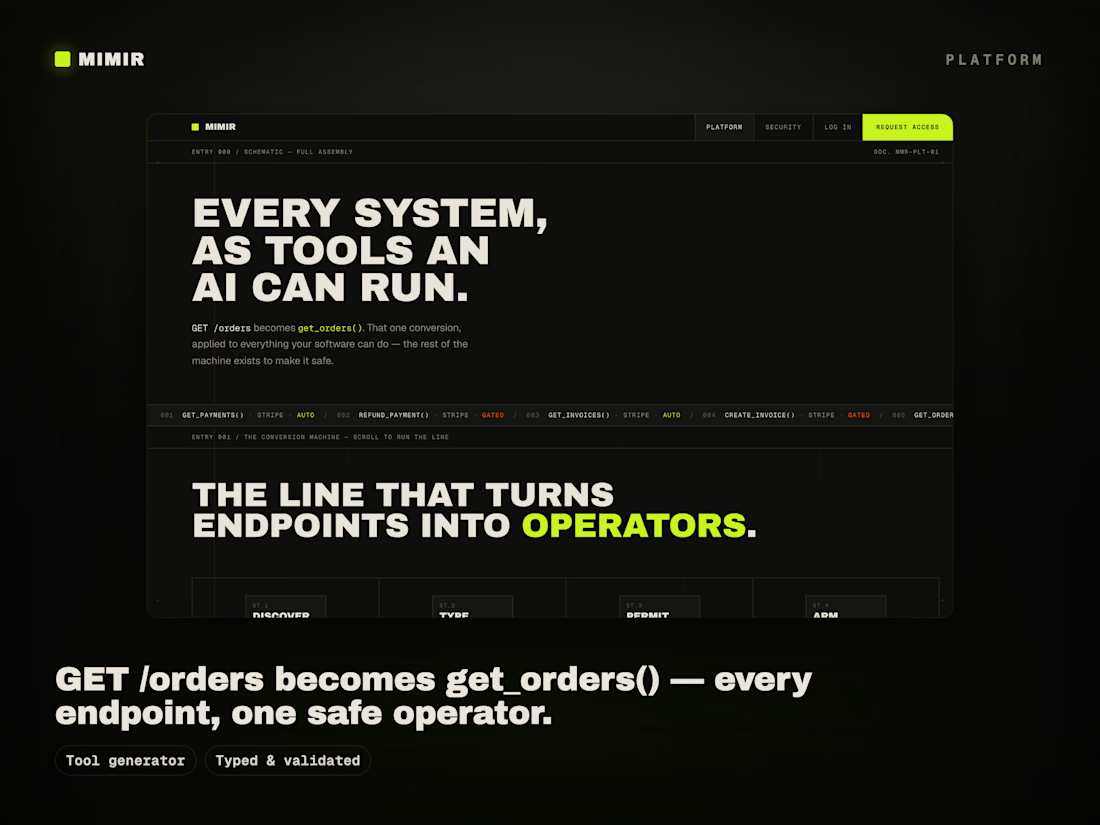
The core move is a single conversion: every API endpoint becomes one safe, callable operator. GET /orders becomes get_orders(). You point Mimir at an OpenAPI spec — or just paste the docs — and the model reads it, normalizes it, and commits it as a set of typed, validated tools an agent can run.
Three decisions shaped the build:
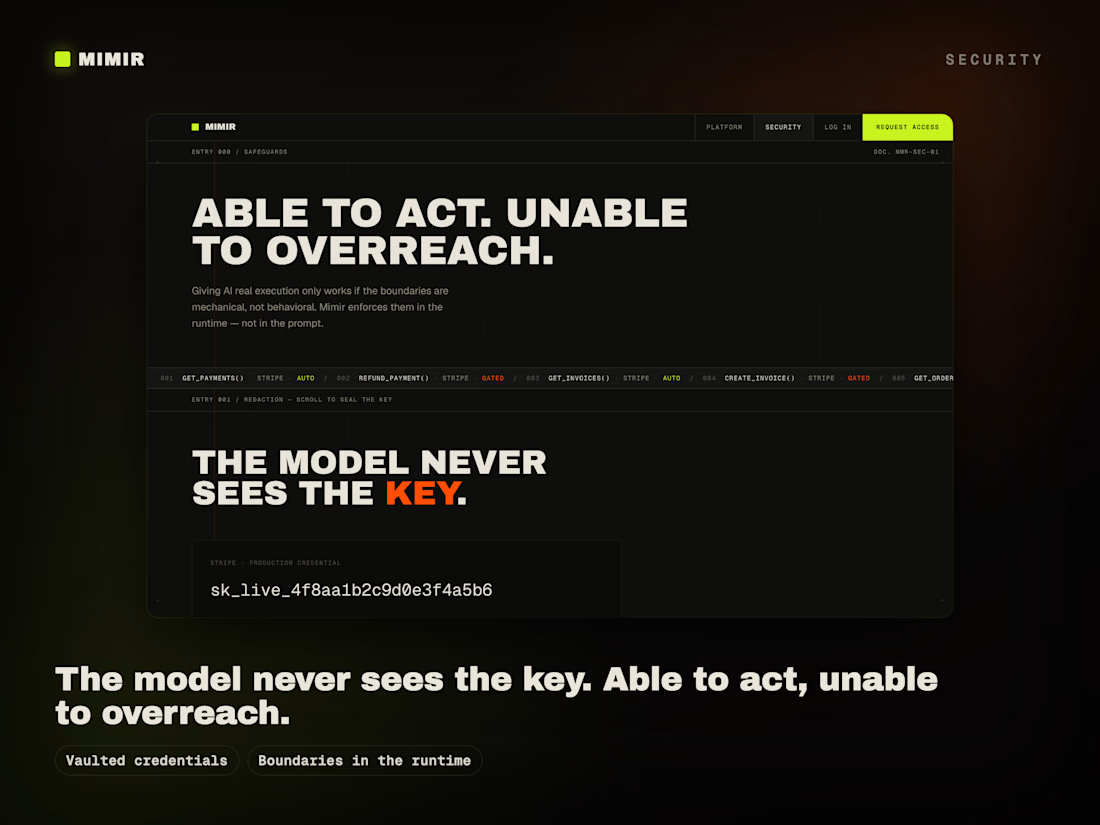
Boundaries live in the runtime, not the prompt. Permissions, approval gates, and destructive-write flags are enforced in code. You can't jailbreak a policy that was never a sentence. The agent is able to act, unable to overreach.
The model never sees the key. Credentials are vaulted and injected at execution time. The LLM operates the system without ever holding the secret to it.
Every action is signed and logged. Runs are stamped to an operator and written to an audit trail — so "the AI did it" is always answerable with who, what, and when.
The part I'm most proud of: I engineered it to run on a local 7B model, not a frontier API. That forced real discipline — small-model-first, code-enforces-not-prompts, eval-driven, structured output over brittle parsing, and a rule I made non-negotiable: the AI understands the docs and normalizes them; code only validates against known types. No hard-coding one company's naming conventions, because the next API won't share them. It's a deliberately-engineered system, not a wrapper around a chat box — and it's executed real refunds end-to-end.
Stack: Next.js 16 · React 19 · Tailwind v4 · TypeScript on the front; FastAPI · Postgres · LiteLLM → Ollama on the back. The interface is a custom design system I call "Operations Ledger" — carbon, bone, and one acid accent; Archivo Black; flat brutalist. It's meant to feel like an instrument panel, not a landing page.
Software you can operate by intent — safely.
#SoftwareArchitecture #SystemDesign #FullStack #SaaS #AIEngineering #DistributedSystems #React #PostgreSQL #NodeJS #Python #ProductEngineering #WebDevelopment

It looks promising!
The network for creativity
Join 1.25M professional creatives like you
Connect with clients, get discovered, and run your business 100% commission-free
Creatives on Contra have earned over $150M and we are just getting started

Challenges
View all


Related posts

👋 I am new to Contra and I did my first post without realizing I hadn't even introduced myself!
Hey! I am Abuzar.
I build AI agents, automations and full web apps for small businesses and freelancers:
🤖 Agents that reply to new leads and follow up so nobody goes cold
💬 Chatbots that answer customers using your own documents
🔗 Connections between your apps, so data moves on its own instead of through copy-paste
💻 Custom web apps and dashboards, from idea to launch, when off-the-shelf tools just dont fit
✦ ✦ ✦✦ ✦ ✦✦ ✦ ✦✦ ✦ ✦✦ ✦ ✦✦ ✦ ✦
For 3.5 years I built payment systems at a fintech company, where my whole job was making sure money never disappeared.
Now I make busywork disappear instead 😄
Off the keyboard, you will find me watching cricket or on a long motorcycle ride somewhere outside Lahore 🏏🏍️
I've noticed this community is full of amazing designers, editors and creatives, and I'm the guy who loves the techy plumbing behind the scenes. So I'm curious 👇
What's the most annoying non-creative part of your freelance week? Invoicing, client onboarding, chasing feedback, organising files?
Tell me in the comments. I'll reply to each one with an idea for how to automate it 🤝

Why just browse a portfolio when you can interview it?
I added an AI assistant to my website. Ask about my experience, projects, technical stack, or availability—and get an instant answer based on my actual work.
Try it: AISaaSwithMustafa.com
What would you ask first?
#AI #Groq #SaaS #FullStackDevelopment #WebDevelopment #Angular #ReactJS #NodeJS #AIAssistant


Use AI for the boring 60% of your MVP: boilerplate, CRUD screens, forms, API wiring. Save your own brain for the 40% that decides if it works: the core loop, edge cases and what NOT to build:)