
Ernest Oricha
Brand Strategist, E-commerce & Shopify Expert
- 26
- Followers



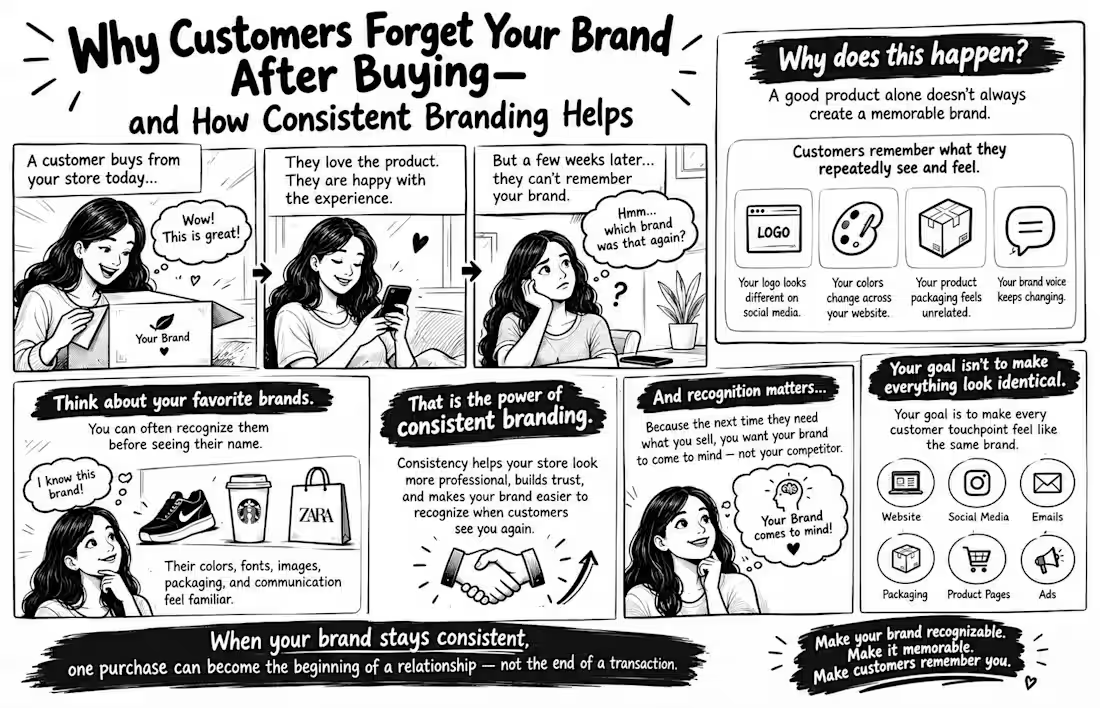
Why Customers Forget Your Brand After Buying and How Consistent Branding Helps
A customer buys from your store today. They love the product. They are happy with the experience.
But a few weeks later… they can’t remember your brand.
Why?
Because a good product alone doesn’t always create a memorable brand.
Customers remember what they repeatedly see and feel. If your logo looks different on social media, your colors change across your website, your product packaging feels unrelated, or your brand voice keeps changing, customers have fewer things to connect with your business.
Think about your favorite brands. You can often recognize them before seeing their name. Their colors, fonts, images, packaging, and communication feel familiar.
That is the power of consistent branding.
Consistency helps your store look more professional, builds trust, and makes your brand easier to recognize when customers see you again.
And recognition matters because the next time they need what you sell, you want your brand to come to mind not your competitor.
Your goal isn't to make everything look identical.
Your goal is to make every customer touchpoint feel like the same brand.
Your website. Social media. Emails. Packaging. Product pages. Ads.
When your brand stays consistent, one purchase can become the beginning of a relationship not the end of a transaction.
Make your brand recognizable. Make it memorable. Make customers remember you.
1
1
86
Absolutely. Here’s a ~1,200-character version written to make store owners stop, think, and keep reading.
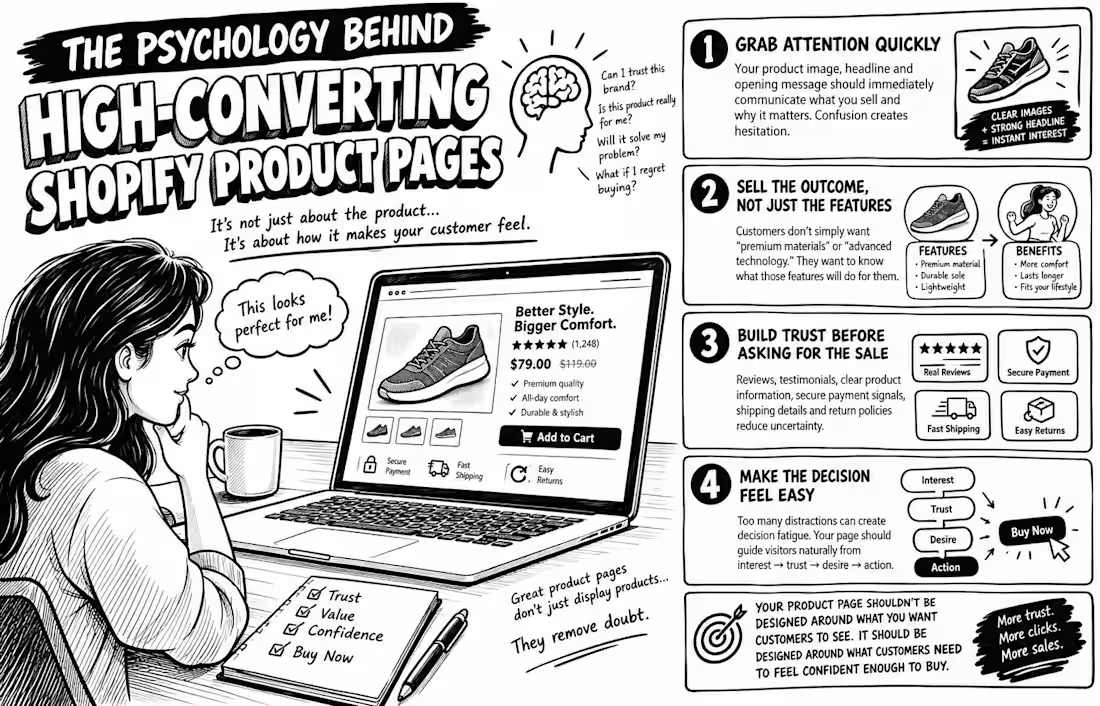
The Psychology Behind High-Converting Shopify Product Pages
Why do some Shopify product pages make you want to click “Buy Now”, while others make you leave, even when the product is good?
It’s not always about price. It’s psychology.
Before customers buy, their brains are quietly asking: Can I trust this brand? Is this product really for me? Will it solve my problem? What happens if I regret buying it?
A high-converting product page answers these questions before the customer has to ask.
1. Grab attention quickly.
Your product image, headline, and opening message should immediately communicate what you sell and why it matters. Confusion creates hesitation.
2. Sell the outcome, not just the features.
Customers don’t simply want “premium materials” or “advanced technology.” They want to know what those features will do for them.
3. Build trust before asking for the sale.
Reviews, testimonials, clear product information, secure payment signals, shipping details, and return policies reduce uncertainty.
4. Make the decision feel easy.
Too many distractions can create decision fatigue. Your page should guide visitors naturally from interest → trust → desire → action.
And here’s the biggest mistake:
Your product page shouldn’t be designed around what you want customers to see.
It should be designed around what customers need to feel confident enough to buy.
Because great product pages don’t just display products.
They remove doubt.
If you want, I can also turn this into a 1400 × 900 black-and-white comic/sketch illustration concept that visually explains the psychology behind the post.
1
73
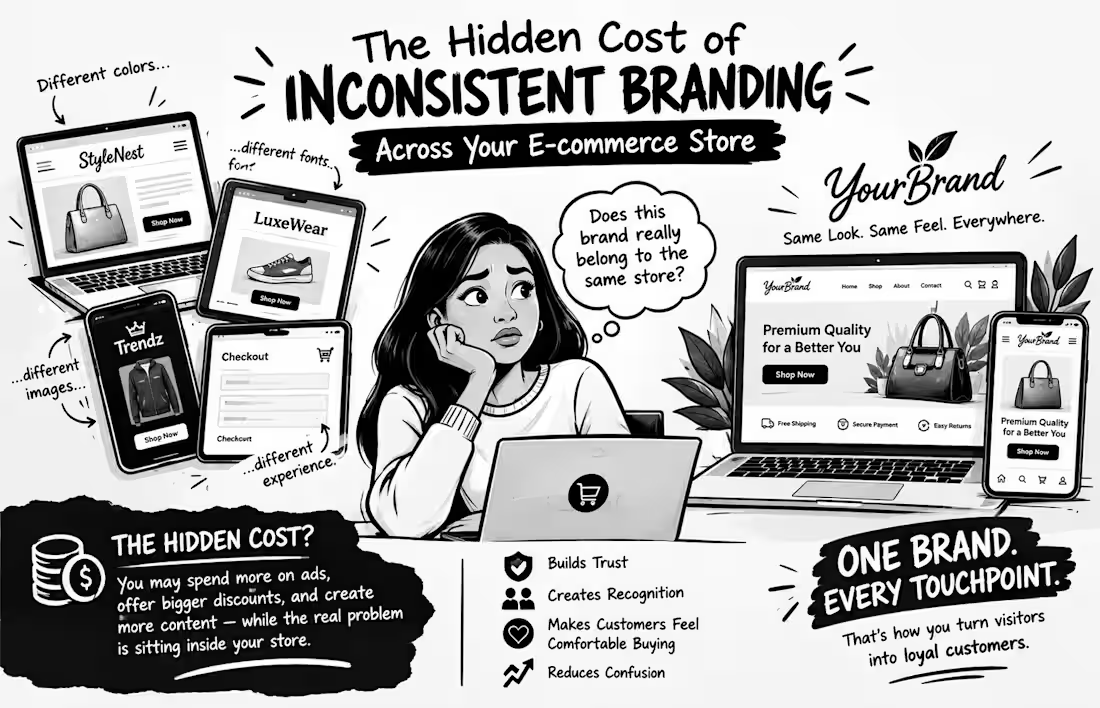
The Hidden Cost of Inconsistent Branding Across Your E-commerce Store
Your customers may not complain when your branding feels inconsistent, but they notice it.
One page uses different colors. Another has a different font. Your product photos feel premium, but your checkout page looks outdated. Your social media looks completely different from your website.
The result? Your brand slowly loses credibility.
In e-commerce, customers make quick judgments. When your visual identity changes from page to page, your store can feel less trustworthy, even if your products are excellent.
And here’s the hidden cost: inconsistent branding can make you spend more to earn the same customer.
You may increase ad budgets, offer bigger discounts, or create more content, while the real problem is sitting inside your store.
Consistent branding creates recognition. Recognition builds familiarity. Familiarity can make customers feel more comfortable buying from you.
Your logo is only one piece of your brand. Colors, typography, photography, messaging, buttons, packaging, product pages, and even your checkout experience should feel like they belong to the same business.
A professional brand doesn't just look good. It reduces confusion, builds trust, and makes every customer touchpoint feel intentional.
Before spending more money to attract traffic, ask yourself:
“Does my entire store look like one brand, or five different businesses?”
0
25
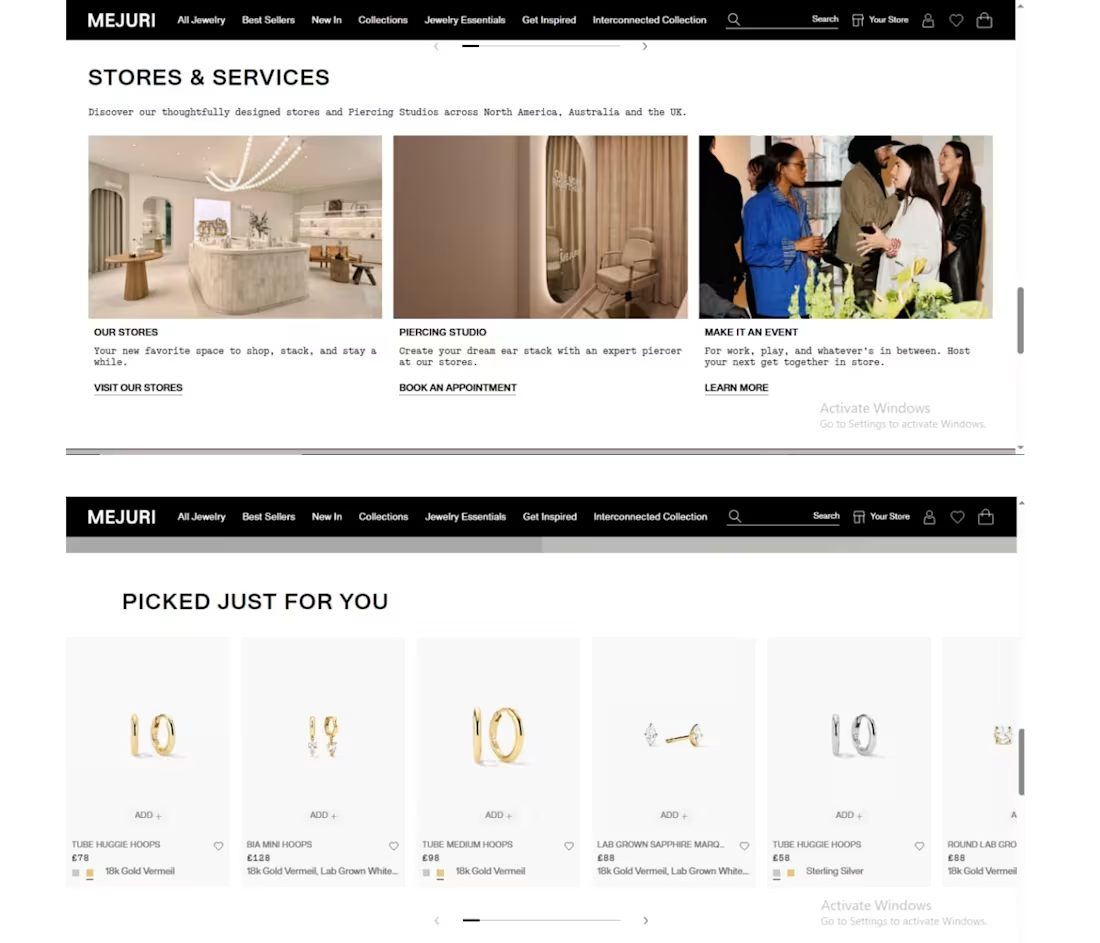
Mejuri is a brand whose objective is to transform fine jewelry into everyday moments, empower women, and drive meaningful change in our communities and beyond, the brand isnt limited only to her current location.
0
21