The network for creativity
Join 1.25M professional creatives like you
Connect with clients, get discovered, and run your business 100% commission-free
Creatives on Contra have earned over $150M and we are just getting started
Back to feedPost

A generated image still needs work before someone can download it, print it and use it.
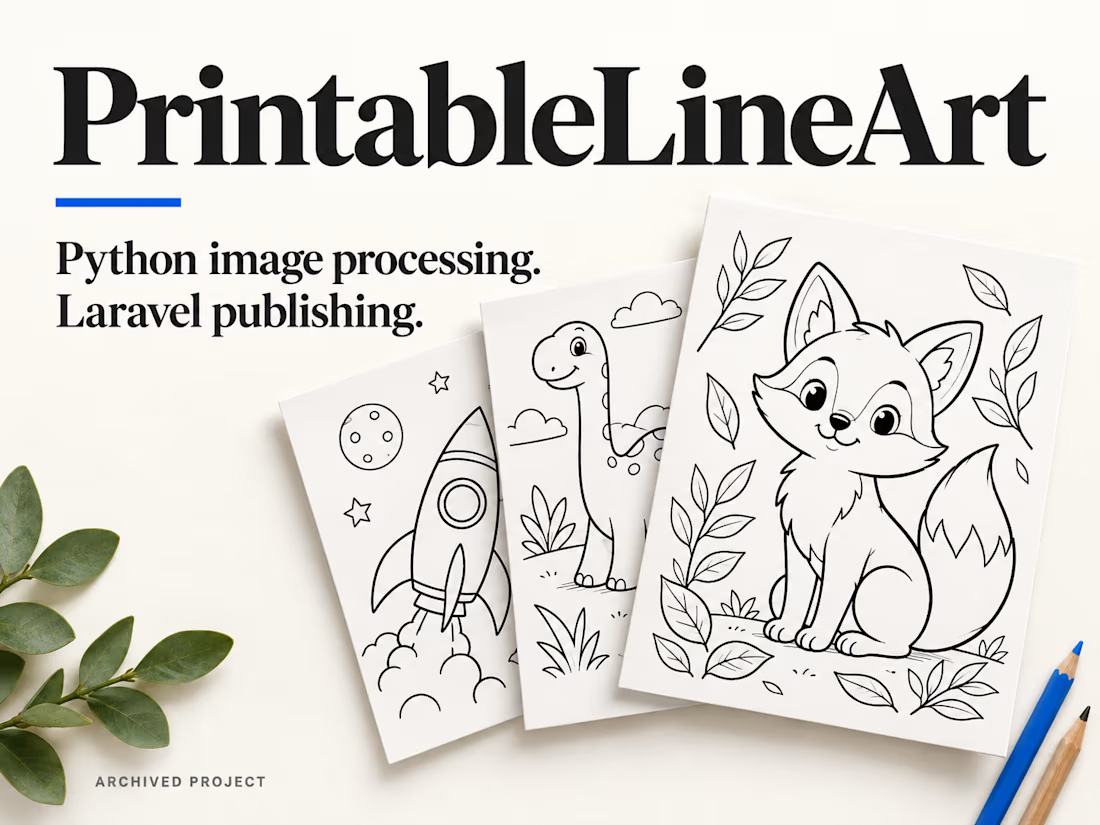
For PrintableLineArt, I built a Python workflow around Stable Diffusion that prepared black-and-white artwork, exported Letter-size PNGs and PDFs, and produced captions, tags and publishing metadata.
I connected that to a Laravel application with B2 imports, source-and-hash duplicate checks, editable catalogue entries and scheduled publication. Visitors got a simple category browser and downloadable colouring pages; the file preparation and publishing work happened behind it.
The original website is retired. The project is still a useful example of the work that connects an image model to a usable application: processing files, organising metadata and giving an operator control over publication.


The network for creativity
Join 1.25M professional creatives like you
Connect with clients, get discovered, and run your business 100% commission-free
Creatives on Contra have earned over $150M and we are just getting started









Related posts

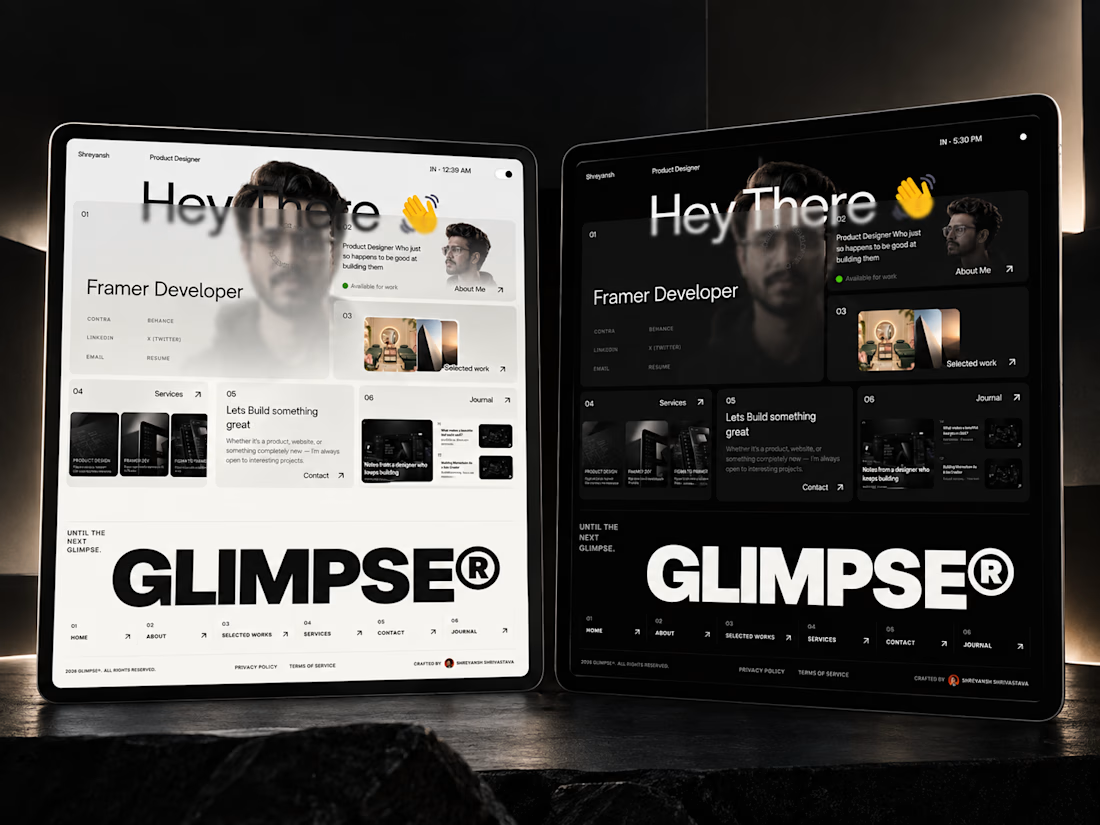
I didn't want to make another “pretty Framer template.”
So I built Glimpse® as a complete portfolio system — motion, CMS, Journal, bento layouts, responsive behavior, and light + dark mode included.
Now I’m curious: does it actually feel like a system, or does it still feel like a template?
I’d genuinely love your take. 👀


New project: CULTURE, a frozen yogurt brand identity built entirely with AI.
I designed the mascot, the packaging system, the social campaigns, and the photography direction, all generated and art directed from the ground up.
This is what AI-powered creative direction actually looks like when it's done with intention.
Check out the full project below.


What if Google Maps had been designed in the 1920s? 👀
For the #revival challenge, I reimagined Google Maps through the visual language of Soviet Constructivism.
Routes become bold diagonals, turns become oversized arrows, and ETA and distance become strong typographic statements. Navigation stops feeling like a quiet interface and starts feeling like a piece of graphic propaganda telling you exactly where to go.
Such a fun exercise in taking something extremely familiar and asking how differently it could have been designed in another time.
Your turn!
What modern product would you send back in time, and to which era? 👀


Curious whether the diagonals fought you at phone size — Constructivist posters were built for one long look from across a room, while a nav screen only gets half-second glances from someone already moving. For your question: airline safety cards, sent back to 1960s Swiss...