The network for creativity
Join 1.25M professional creatives like you
Connect with clients, get discovered, and run your business 100% commission-free
Creatives on Contra have earned over $150M and we are just getting started
Back to feedPost

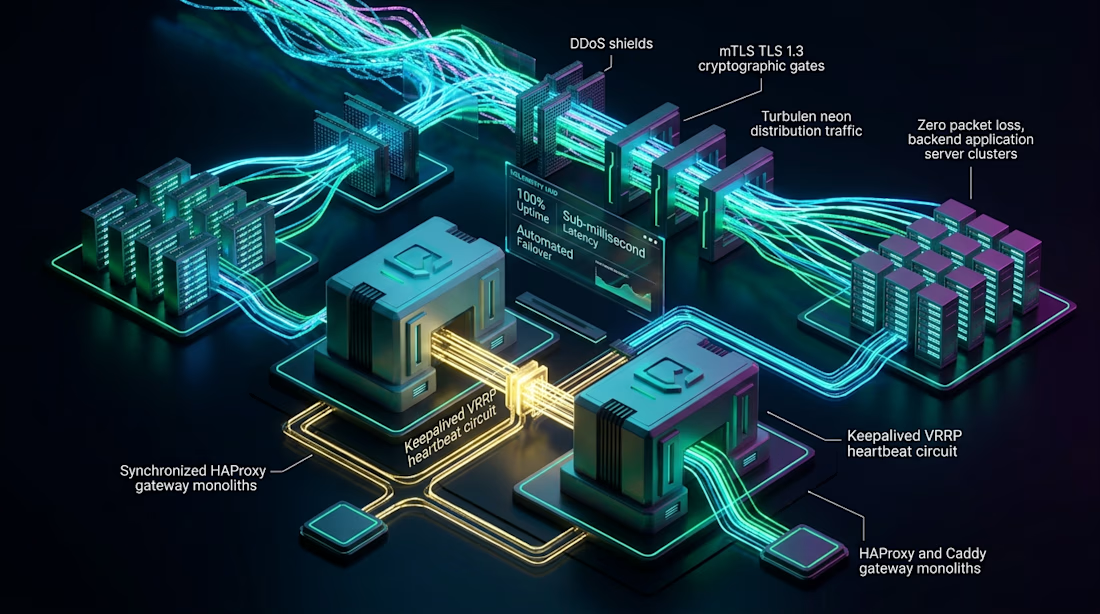
The TLS 1.3 0-RTT vulnerability: Why blindly enabling zero-round-trip session resumption exposes state-modifying APIs to duplicate financial transactions.
One of the headline performance features of TLS 1.3 is **0-RTT (Zero Round Trip Time) Resumption**, often marketed as "Early Data". When a returning client reconnects to your server, it uses a previously negotiated session ticket to transmit HTTP request data alongside the initial TLS Client Hello—achieving zero handshake latency and dramatically speeding up mobile connections.
However, enabling 0-RTT without strict Layer-7 application awareness introduces a critical security flaw: **Early Data lacks forward secrecy and is vulnerable to replay attacks**.
1. The Replay Attack Vector: Because early data is encrypted under a static resumption key derived from the previous session, a passive on-path network eavesdropper (in a coffee shop Wi-Fi or compromised transit router) can capture the raw 0-RTT packet and re-transmit it to your server minutes or hours later. 2. Duplicate Non-Idempotent Actions: If the replayed request is a non-idempotent API call—such as ``POST /api/v1/orders/checkout``, ``POST /api/v1/transfers``, or ``POST /api/v1/votes``—your server decrypts and processes the request a second time. Customers are double-billed, account balances are debited twice, or state is corrupted. 3. Standard TLS Defenses Are Bypassed: Standard TLS sequence numbers do not protect 0-RTT data because each replayed packet appears to the server as a new, legitimate handshake resumption.
Hardening TLS 1.3 ingress requires enforcing strict anti-replay boundaries at the reverse proxy layer: • Restrict 0-RTT Strictly to Idempotent Verbs: In HAProxy, Nginx, or Caddy, configure edge rules to reject early data for non-safe HTTP methods. If an incoming 0-RTT request contains ``POST``, ``PUT``, ``PATCH``, or ``DELETE``, the proxy must delay processing until the full 1-RTT handshake completes. • Enforce Anti-Replay Caches: Enable edge anti-replay mechanisms (such as HAProxy ``ssl-max-record`` and ticket replay filters) that record client ticket identifiers and reject duplicated resumption handshakes within the ticket validity window. • Mandate Idempotency Keys in Application APIs: Require clients to include a unique UUID ``Idempotency-Key`` header on all state-modifying requests, deduplicating transactions in Redis before executing business logic. • Conservative Session Ticket Lifetimes: Limit session ticket validity (``ssl-default-bind-options ssl-min-ver TLSv1.3`` and short ticket lifetimes) to shrink the replay window.
Enjoy the speed of modern TLS 1.3 without exposing your financial and transactional endpoints to replay exploits.
Deploy hardened, high-availability ingress with our 1-week High-Availability Ingress & Hardened Reverse Proxies Sprint on Contra: https://contra.com/s/Ec6sEAUW-high-availability-ingress-and-hardened-reverse-proxies-ha-proxy-and-caddy
#Security #CyberSecurity #Networking #Architecture #Backend #SRE #Infosec
The network for creativity
Join 1.25M professional creatives like you
Connect with clients, get discovered, and run your business 100% commission-free
Creatives on Contra have earned over $150M and we are just getting started







Related posts

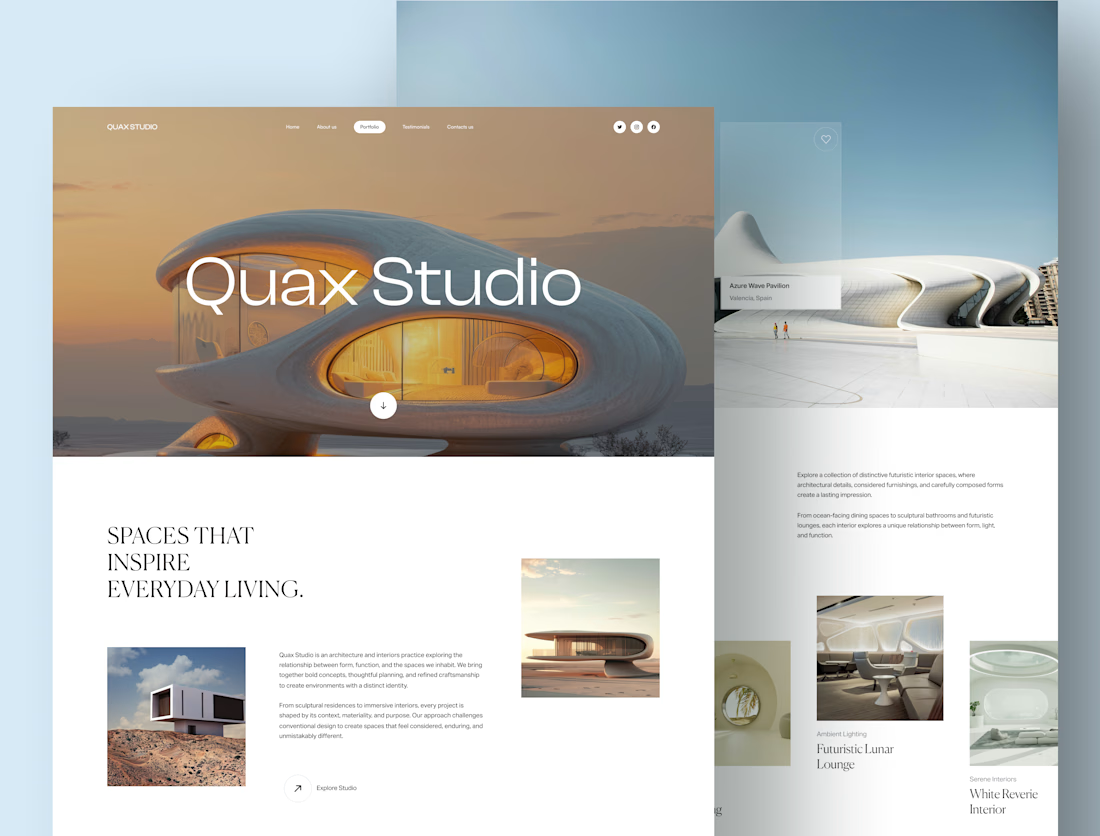
Meet Quax Studio, a stealth-mode architecture and interiors studio based in Australia, specialising in highly modern, futuristic spaces.
The brief was simple: no generic architecture website. The projects had to take centre stage, with minimal copy, a clean white aesthetic, and modern typography that lets the visuals speak for themselves.
So, I built the experience around:
1- Minimal layouts with plenty of breathing room
2- Refined typography and a clean visual hierarchy
3- Project-led storytelling, with less content and more focus on the work
The architectural imagery currently uses visuals from HD images platforms while the studio’s project photography is being finalised.
Would you explore a futuristic architecture studio through a minimal website like this?


Excellent work @gayathri p great balance of colors and visual hierarchy

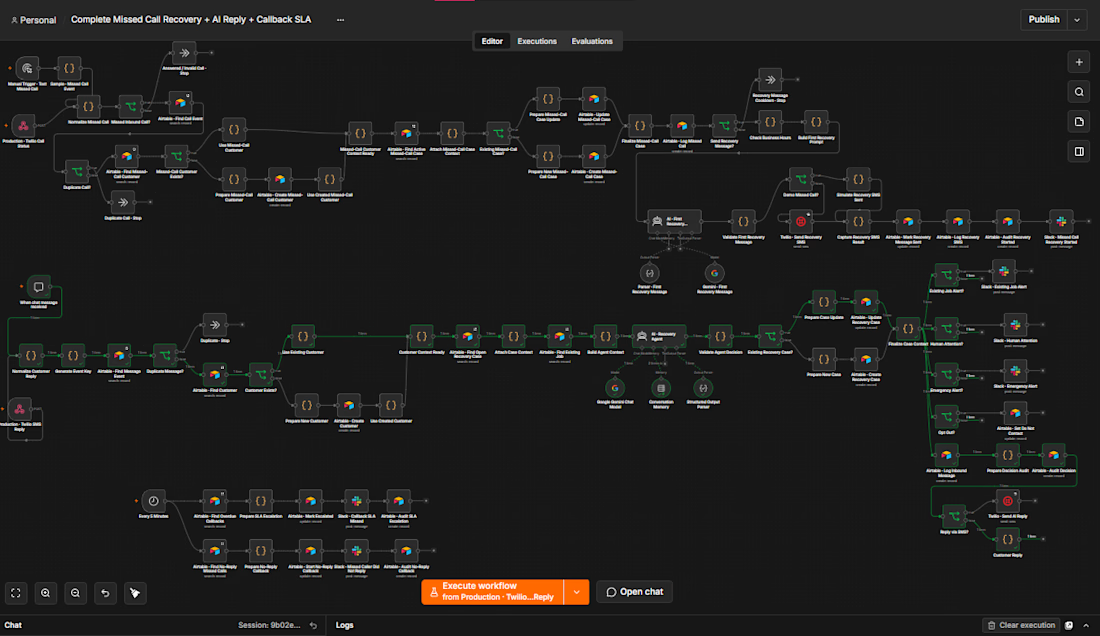
Built an n8n automation that recovers missed customer calls, starts an AI conversation, checks CRM context, routes urgent requests, and tracks callback SLAs until the customer is handled.



nice that it tracks the callback until someone actually handles it. which businesses is this built for, trades or more like clinics

I’ll test one website flow or API flow and send a concise bug report within 24h