The network for creativity
Join 1.25M professional creatives like you
Connect with clients, get discovered, and run your business 100% commission-free
Creatives on Contra have earned over $150M and we are just getting started
Back to feedPost
I went through a full purchase flow just recently before our webinar launch — sales page, checkout, upsell, emails, the whole flow.
At first glance, nothing looked off.
But going through it like an actual user, a few things started to surface.
In one path, the upsell linked to the wrong offer.
In another, the welcome email never arrived.
Access only worked because I used the password reset option — otherwise, nothing happened.
These were the kinds of issues that started to surface.
What I notice quite often in funnels is this: everything works in isolation, but the transitions between systems are where things actually break.
And no one really sees it, because most tests follow the expected path, and most testers are part of the bubble in which the flow was originally created.
This is often where it helps to have someone outside the original setup, with an eye for UX, flow logic and the smaller details that tend to be overlooked.
That’s usually where QA becomes less about checking things and more about understanding how the system actually behaves under slightly different conditions.
Not perfect conditions, just ordinary ones.
I’d be curious how you currently approach testing your purchase or access flows.




Something I keep noticing in these flows — most things don’t actually break completely.
They still “work” in some way.
But small inconsistencies add up, and that’s usually where confusion starts.
The network for creativity
Join 1.25M professional creatives like you
Connect with clients, get discovered, and run your business 100% commission-free
Creatives on Contra have earned over $150M and we are just getting started

Challenges
View all


Related posts

If Customers Can't Find It, They Can't Buy It.
A WooCommerce store can have amazing products and still lose sales because the navigation is confusing.
Good eCommerce navigation should help customers answer one question quickly:
“Where do I go next?”
When designing a store, I focus on:
→ Clear product categories
→ Simple menus
→ Smart filtering
→ Search that actually helps
→ Logical product organization
→ Easy access to the cart
→ Consistent navigation on mobile
The goal isn't to show customers everything.
It's to help them find the right thing faster.
Less confusion.
Less friction.
Better shopping experience.
Great eCommerce UX doesn't make customers think—it helps them shop.
What makes you leave an online store: slow loading or confusing navigation?
#WooCommerce #Ecommerce #WebDesign #WordPress #UXDesign #OnlineStore #EcommerceDesign




Smart filtering and search are doing different jobs here: filtering narrows what the shopper already knows they want, search recovers the visit when they don't have the right words for it.

I’ve been building SabiFlow for a while, and honestly, the most interesting part of the project isn’t the code.
It's the problem.
Because it's personal.
I've experienced that thing where money comes in and somehow, without you really noticing, it starts disappearing.
Not because you don’t earn enough.
Not necessarily because you're irresponsible either.
Sometimes money simply has no job when it arrives.
And as an engineer, that got me thinking:
What if the problem isn't budgeting? What if the problem is that we’re asking people to make too many good decisions at the exact moment they have the most temptation to make bad ones?
That question became the foundation for SabiFlow.
Instead of telling someone, "You should save 20% of your income," I started thinking about what would happen if the system simply helped assign every inflow a purpose the moment it arrived.
That led me down a rabbit hole.
Funnels.
Automated distribution.
Wallet infrastructure.
Virtual accounts.
User behaviour.
Transaction flows.
KYC.
Compliance.
Even the psychology behind notifications.
And this is probably my favourite part of being both an engineer and a founder.
I don’t just ask:
"How do I build this feature?"
I ask:
"Why does this problem exist, and what kind of system could make dealing with it easier?"
Then the engineer in me comes along and asks:
"Okay… but how do we actually make this work reliably?" 😂
That tension between the founder thinking about the problem and the CTO thinking about the system is probably what I enjoy most about building SabiFlow.
I’m still figuring a lot of it out.
But I'm curious:
What’s a problem you’ve experienced personally that eventually made you want to build something around it?


The framing around “why does this problem exist?” is exactly the kind of product thinking that keeps a financial tool from becoming another dashboard. SabiFlow sounds strongest where the behavioral insight meets the practical system design—especially around notifications and reliable follow-through.

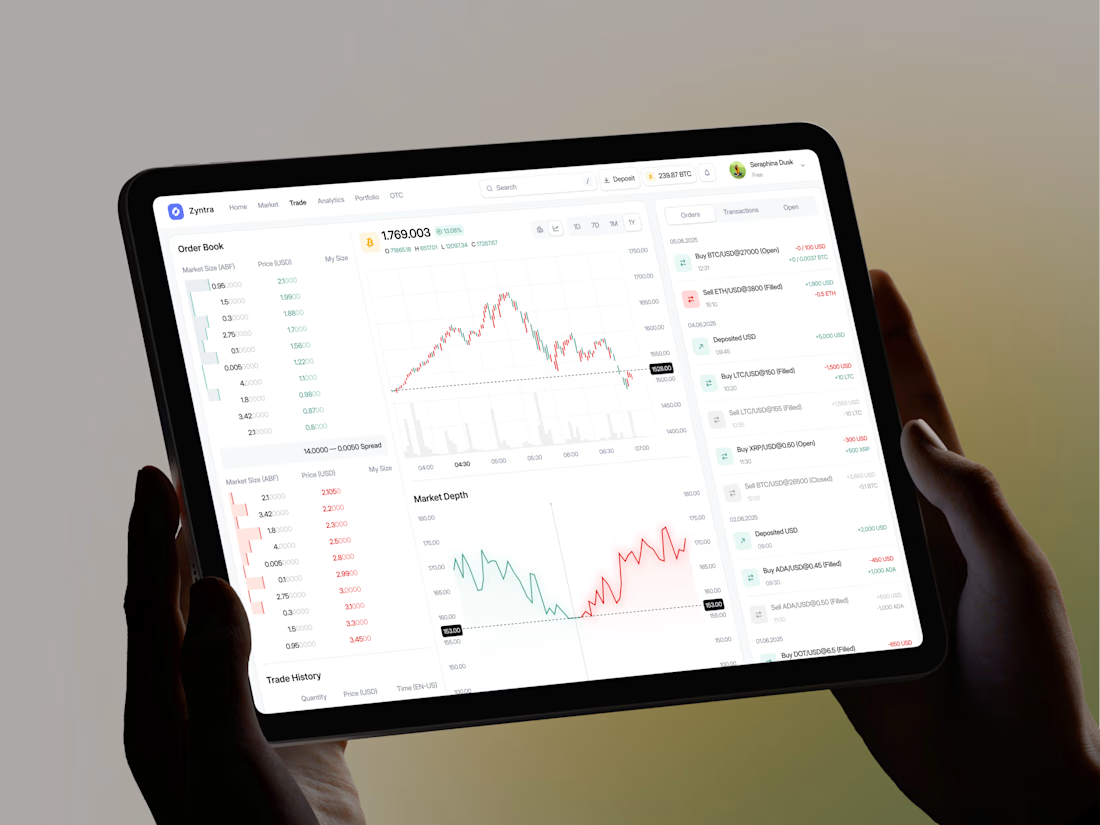
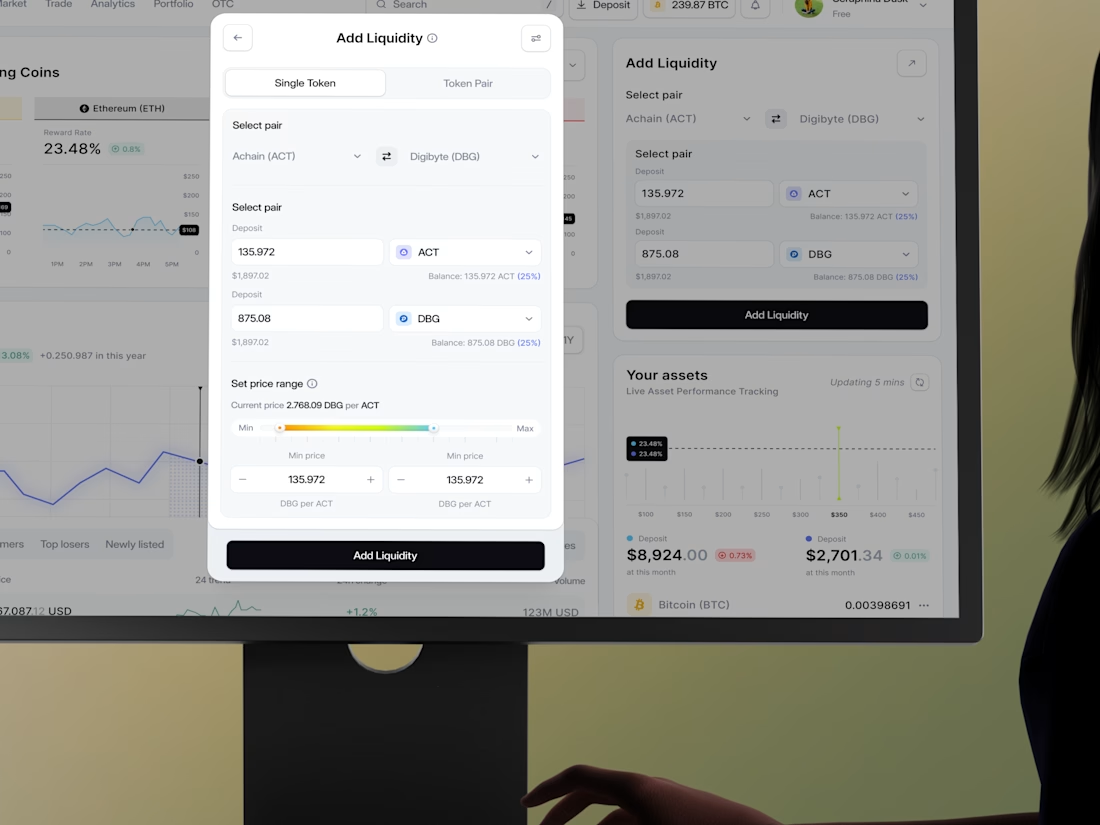
Managing high-yield liquidity pools and executing crypto buys shouldn't feel like navigating a chaotic enterprise terminal. We designed Zyntra to bring institutional trading data into a crisp, light-mode Web3 workspace! 💎⚡
Slide through the 4 frames to inspect the UI up close:
🎛️ Add Liquidity Control Modal
💸 Transparent Buy Gateway
📊 Pro Order Book Engine
📈 Live Portfolio Performance
Which layout component catches your eye first; the interactive liquidity range slider or the transparent buy fee breakdown? Swipe across and drop your feedback below! 👇💬

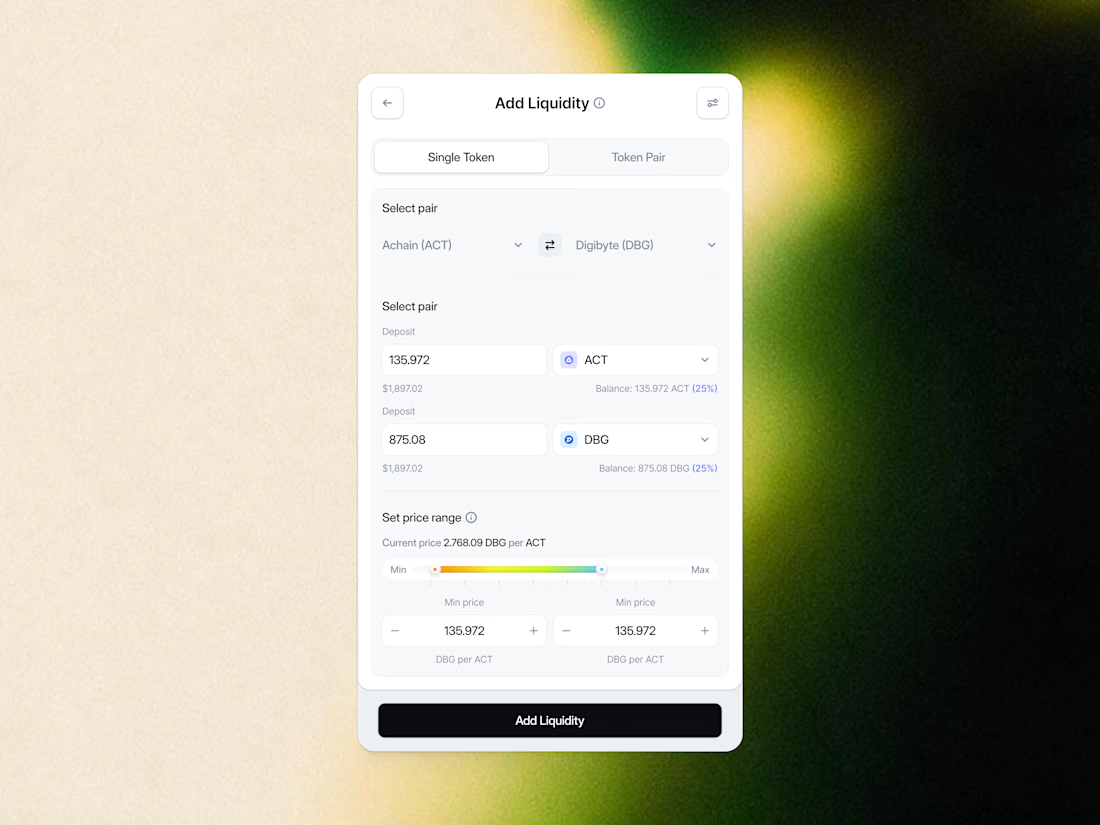
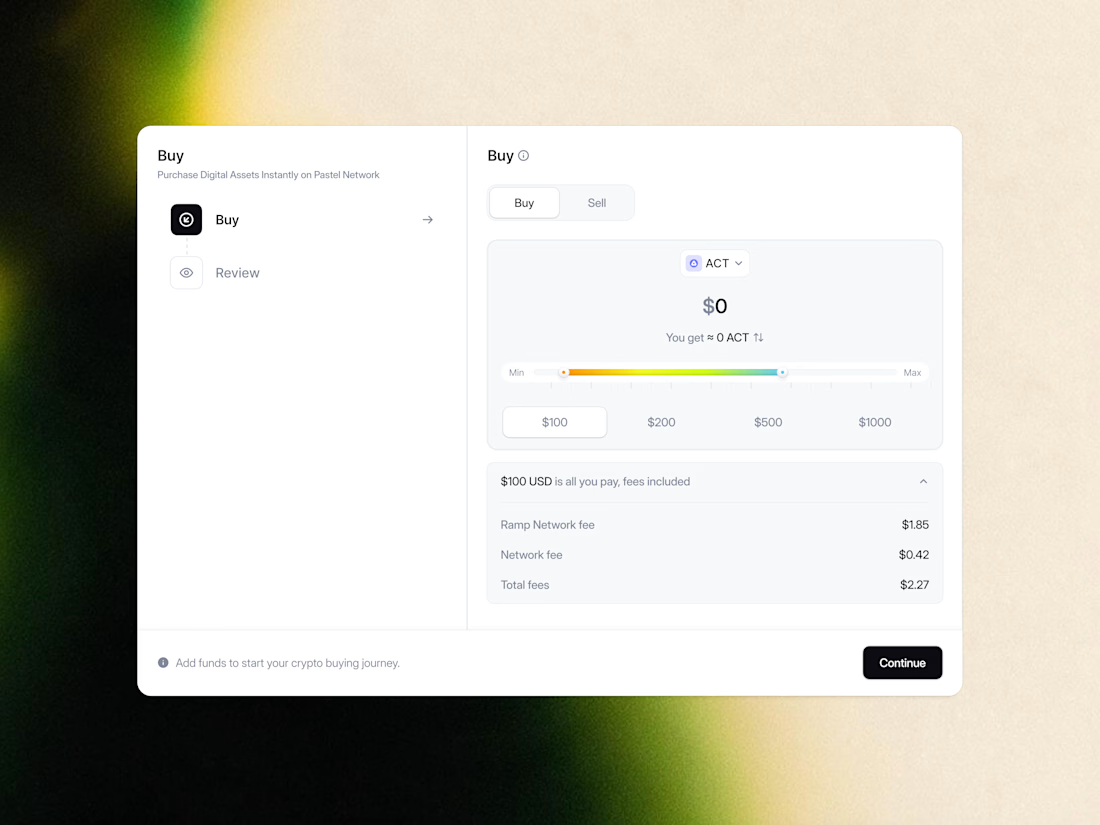
The Add Liquidity Control Modal and the Transparent Buy Gateway get separate named surfaces instead of one combined trade panel - each mirrors a distinct DeFi action with its own risk profile.