The network for creativity
Join 1.25M professional creatives like you
Connect with clients, get discovered, and run your business 100% commission-free
Creatives on Contra have earned over $150M and we are just getting started
Back to feedPost
I’ve been building SabiFlow for a while, and honestly, the most interesting part of the project isn’t the code.
It's the problem.
Because it's personal.
I've experienced that thing where money comes in and somehow, without you really noticing, it starts disappearing.
Not because you don’t earn enough.
Not necessarily because you're irresponsible either.
Sometimes money simply has no job when it arrives.
And as an engineer, that got me thinking:
What if the problem isn't budgeting? What if the problem is that we’re asking people to make too many good decisions at the exact moment they have the most temptation to make bad ones?
That question became the foundation for SabiFlow.
Instead of telling someone, "You should save 20% of your income," I started thinking about what would happen if the system simply helped assign every inflow a purpose the moment it arrived.
That led me down a rabbit hole.
Funnels.
Automated distribution.
Wallet infrastructure.
Virtual accounts.
User behaviour.
Transaction flows.
KYC.
Compliance.
Even the psychology behind notifications.
And this is probably my favourite part of being both an engineer and a founder.
I don’t just ask:
"How do I build this feature?"
I ask:
"Why does this problem exist, and what kind of system could make dealing with it easier?"
Then the engineer in me comes along and asks:
"Okay… but how do we actually make this work reliably?" 😂
That tension between the founder thinking about the problem and the CTO thinking about the system is probably what I enjoy most about building SabiFlow.
I’m still figuring a lot of it out.
But I'm curious:
What’s a problem you’ve experienced personally that eventually made you want to build something around it?


The framing around “why does this problem exist?” is exactly the kind of product thinking that keeps a financial tool from becoming another dashboard. SabiFlow sounds strongest where the behavioral insight meets the practical system design—especially around notifications and reliable follow-through.

Exactly @Rohan Ahmed , I mean financial planning is being over rated with systems that sells you the future with out first understanding who you. So, the intelligence part has to kick-in and say... Hey Obi, I'm with you... I understanding but if you spend xyz now, you might suffer x in the...
The network for creativity
Join 1.25M professional creatives like you
Connect with clients, get discovered, and run your business 100% commission-free
Creatives on Contra have earned over $150M and we are just getting started





Related posts

Booking a fitting shouldn’t take more messages than the alteration itself.
Meet Tivora Atelier, a fictional clothing alterations studio in Bucharest. The problem: a solo owner spends too much time asking every customer the same questions and coordinating appointments by hand.
I designed and built a booking experience in @Lovable that takes a customer from “Can I book?” to a confirmed fitting. They share garment details, choose an available time and receive a confirmation email. They can add the fitting to their calendar or use a private link to manage it later.
On the other side, the owner has one view for appointments, garment notes and availability.
This is an exploratory demo, not a real booking service. The video walks through the customer and owner experiences in under a minute.
Explore the public project: https://tivoraatelier.lovable.app/
#lovablechallenge


Great job, Anca

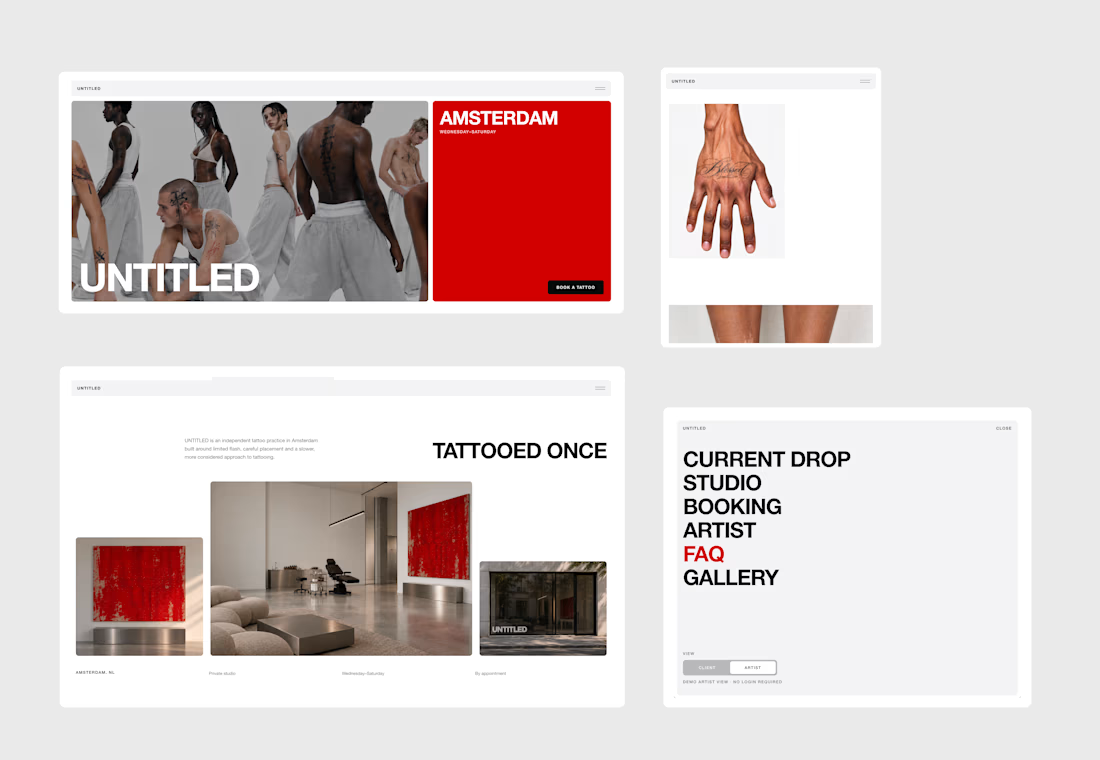
From tattoo enquiry to confirmed appointment.
UNTITLED is a fictional independent tattoo studio in Amsterdam, built around a very real problem: tattoo bookings often live in DMs.
Clients ask about prices, availability, placement, references and custom ideas, while artists spend time managing the same back-and-forth manually.
UNTITLED brings that entire process into one connected experience.
The product has two sides:
CLIENT VIEW
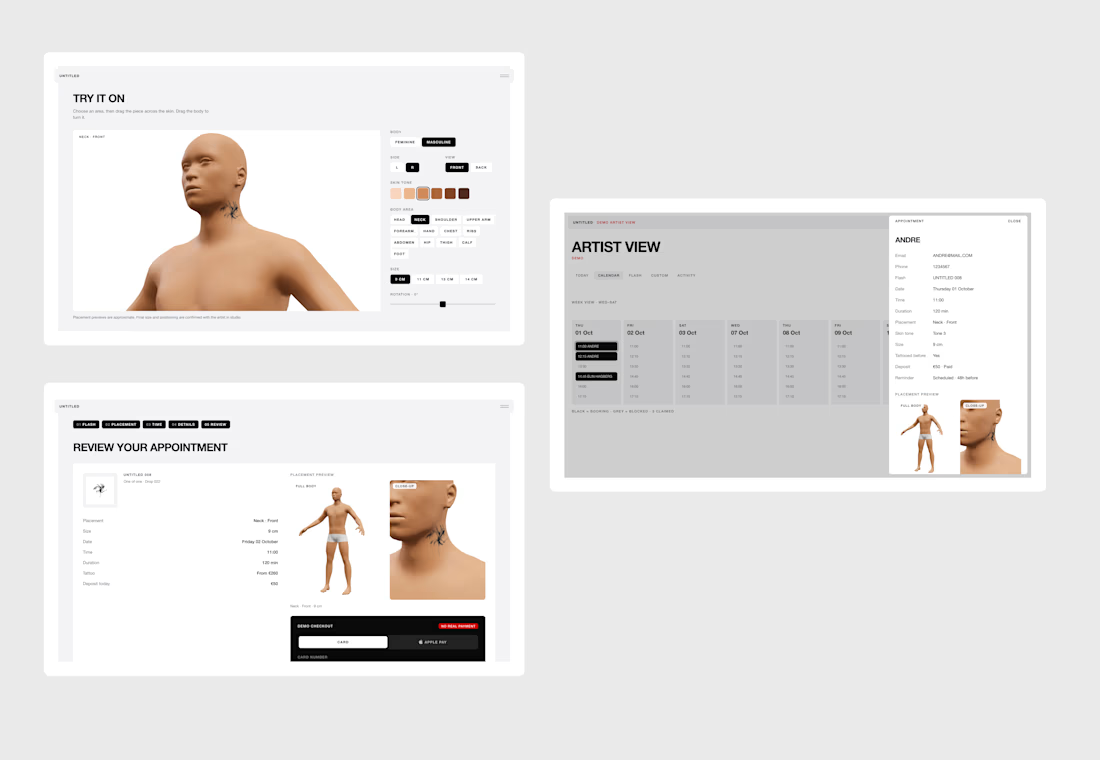
Clients can browse available flash, place tattoos on a 3D body model, choose a date and time, complete a demo checkout, or submit a custom tattoo request with references, placement, size, budget and preferred availability.
ARTIST VIEW
The artist dashboard brings together bookings, payments, calendar availability, flash management, custom enquiries, quotes and activity in one place.
Both views are connected, creating a fully working end-to-end demo.
A flash booking updates the artist calendar and design availability, while a custom request appears in the dashboard for the artist to review, quote and turn into a confirmed appointment.
3D PLACEMENT
The booking flow includes an interactive 3D tattoo placement system, allowing clients to choose body type, skin tone and body area, then position, scale and rotate the selected tattoo before booking.
This replaces part of the placement conversation that would normally happen through messages.
CUSTOM REQUESTS
Not every tattoo starts from an existing design.
Clients can switch from FLASH to CUSTOM and send a structured enquiry with reference images and project details.
The artist can then review the request, create a quote and propose an appointment directly from the dashboard.
Custom request → quote → approval → booking.
FULLY RESPONSIVE
The complete experience is responsive across desktop, tablet and mobile, including the website, booking flow, 3D placement interface and artist dashboard.
DEMO
UNTITLED is a functional demo built for the Lovable Challenge.
Payments are simulated and the data is session-based so the full experience can be tested repeatedly, but the core product logic is fully interactive across both Client and Artist views.
BUILT WITH LOVABLE
I built UNTITLED entirely in Lovable, from the client-facing website to the booking logic, 3D placement experience and artist dashboard.
I also applied to the Lovable Partner Program during the challenge and I’m now officially a Lovable Partner!
Live website: https://untitledamsterdam.lovable.app/
X Post
Walkthrough video (for product and process) below.

Looks amazing, pretty clean, but a product menu in a tattoo studio feels kind of odd. But it looks nice..

What if you could explore a basketball arena in 3D before booking your seat?
You found the game. But before you pay, how do you know which seat is worth it? A flat seating chart gives you a section and a number, but it can be hard to picture your position relative to the court.
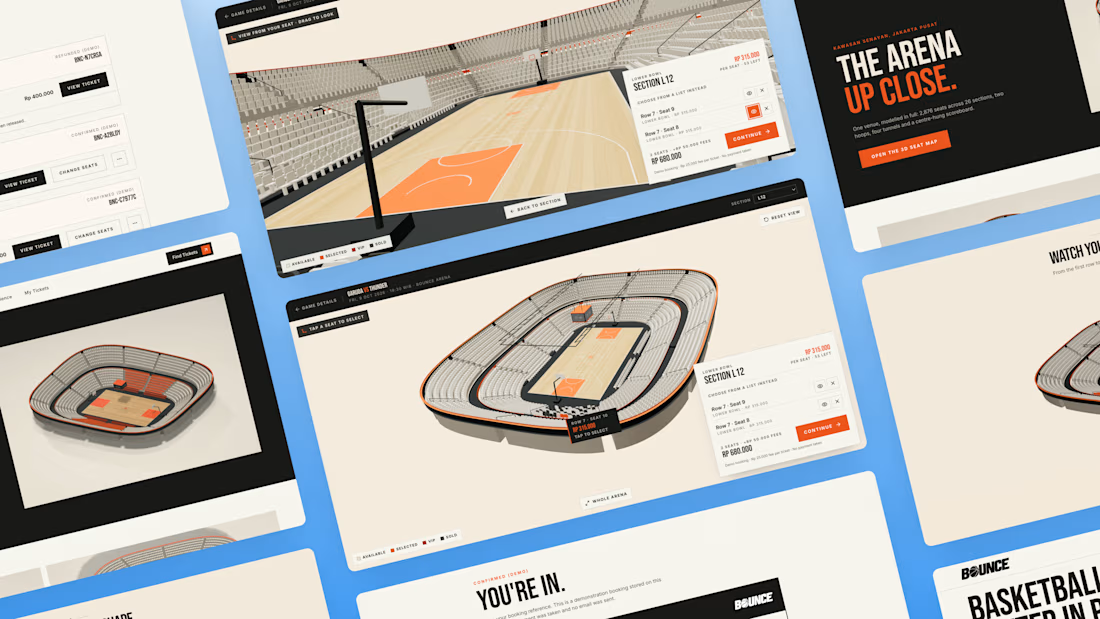
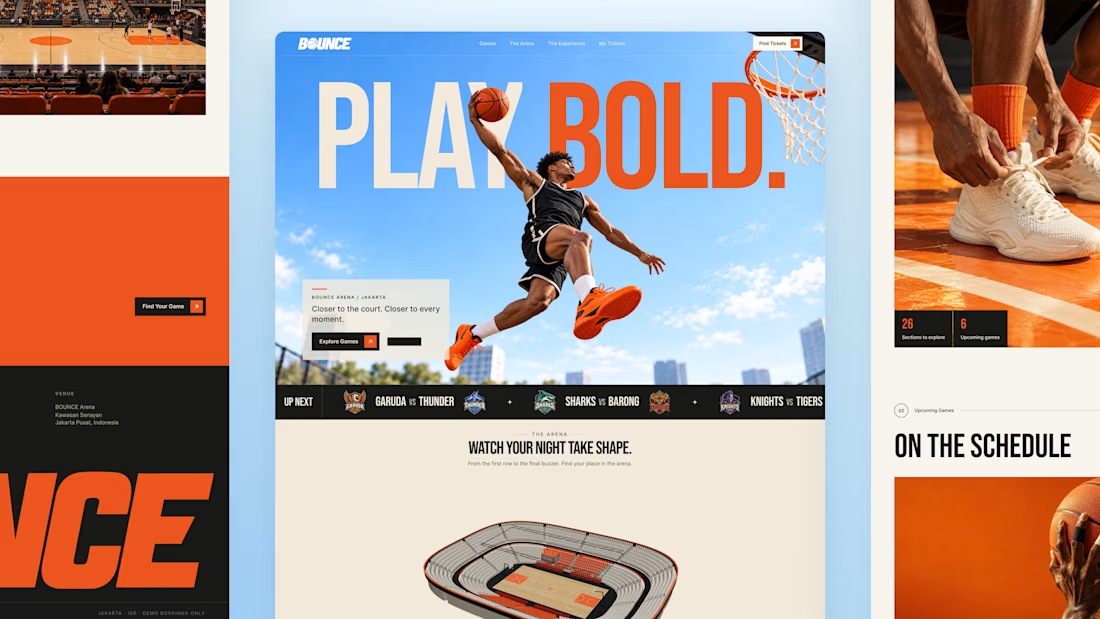
So I built BOUNCE with Lovable, a basketball ticketing concept centered around interactive 3D seat selection.
Rotate the stadium, zoom into the stands, explore different sections, and compare prices before choosing your seats directly inside the 3D arena. The goal is simple: help fans feel more confident about where they’re sitting before they book.
From there, complete checkout and get a ticket you can view, save, or print. My Tickets brings bookings together, with a one-time seat change for the same game and refund requests for eligible bookings.
Bold orange, oversized typography, and scroll driven motion bring the energy of basketball into the experience.
Try the demo: https://bouncebasketball.lovable.app/
Fictional teams. Simulated payments. No real charges.
Less guesswork. More game. BOUNCE. Your game. Your view.


The 3D elements, especially seat pov idea is very interesting🔥