The network for creativity
Join 1.25M professional creatives like you
Connect with clients, get discovered, and run your business 100% commission-free
Creatives on Contra have earned over $150M and we are just getting started
Back to feedPost
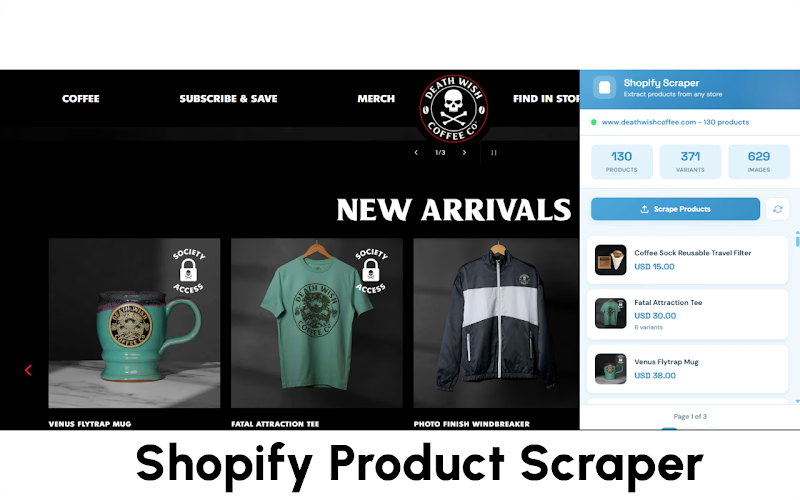
Shopify Products Scraper - Extension
Scrape all products from any Shopify store using products.json
Scrape Shopify products instantly. Export to CSV & JSON with variants, images, and full product data.
Shopify Product Scraper – Extract Store Data in Seconds 🚀
Shopify Product Scraper is a powerful Chrome extension that allows you to extract product data from any Shopify store quickly and efficiently.
Perfect for drop-shippers, developers, and researchers who need structured product data without manual effort.
🔥 Features
✅ Scrape all products from any Shopify store
✅ Supports both simple and variant products
✅ Export data in CSV and JSON formats
✅ Includes product images and links
✅ Clean, Shopify-compatible data structure
✅ Fast, lightweight, and easy to use
💡 Use Cases
Dropshipping product research
Competitor analysis
Bulk data extraction
Shopify store migration
Data analysis and automation
⚙️ How It Works
Install the extension
Open any Shopify store
Click the extension icon
Export product data instantly
https://chromewebstore.google.com/detail/diohjckocnkbflfjbelbagnkcaoljlnk?utm_source=item-share-cb



great extension very helpful for the shopify developers.

Clean feature set. Curious how you're handling Shopify's rate limiting on larger stores (1000+ SKUs) — pacing requests against products.json, or pulling in one burst?

For larger stores, I don't fetch everything in a single burst. Requests are paced and paginated to stay within Shopify's rate limits. The extension processes products in batches, adds a small delay between requests when needed, and resumes automatically if throttling occurs....

good work.

Fast, lightweight, and easy to use
The network for creativity
Join 1.25M professional creatives like you
Connect with clients, get discovered, and run your business 100% commission-free
Creatives on Contra have earned over $150M and we are just getting started



Related posts

Some details from my latest redesigns project
🔗 codex.io


The dark screens look sharp, and the product data stays easy to read. The redesign feels focused on the people using it, not just on a new look.

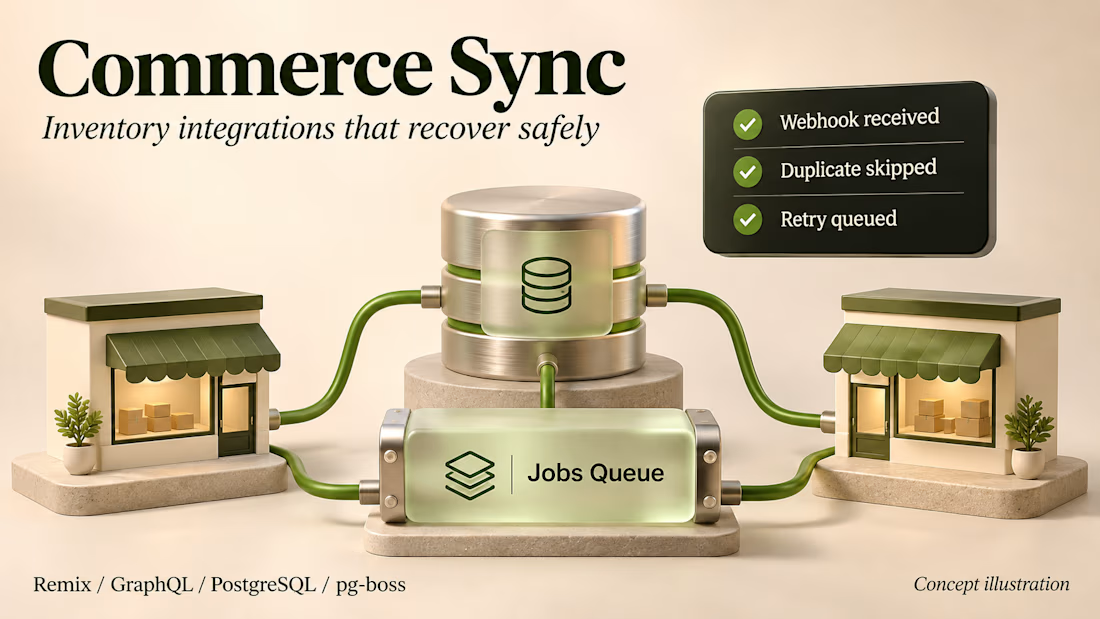
A duplicate webhook should not change inventory twice.
Commerce Sync is my multi-store Shopify integration example. Product changes move between storefronts, and inventory updates make their way back to the parent store.
The part I care about is what happens when something fails. PostgreSQL catches duplicate deliveries, pg-boss keeps jobs durable, and separate workers handle throttling and retries. Partial syncs have a rollback path.
I put the architecture and implementation decisions in the case study below. Client details are removed, and the render is a concept illustration.
I am taking on Shopify app integrations and backend maintenance, remotely from India, up to 20 hours a week.


How do you help someone find the right ski jacket fast?
For rehall.com, a Dutch skiwear brand, we started with who it's for. The Shopify mega menu opens by audience, so Men, Women, Boys and Girls each get their own garment list and campaign tiles in one hover.
On a collection, you filter by size, colour, waterproofness and breathability. The counts update live and the grid refreshes without reloading the page.
A custom Liquid theme, selling in the Netherlands, Belgium and Germany in three languages.
Would you shop by audience first, or by product type?