The network for creativity
Join 1.25M professional creatives like you
Connect with clients, get discovered, and run your business 100% commission-free
Creatives on Contra have earned over $150M and we are just getting started
Back to feedPost
Handling Chaos with Atomic Precision: The Saldovia Inventory Engine
Most booking systems are built on sand. They treat inventory as a simple number in a spreadsheet—a "count" that can easily go out of sync, leading to the nightmare of every operator: overbooking and lost revenue. When I architected the Saldovia Engine, I moved away from "counting" and toward Atomic Inventory. I don't just book a seat; I secure a specific physical slot in a specific window of time. This isn't just an app—it’s a resilient business infrastructure designed to eliminate human error at the database core.
My architectural philosophy for this project was "Smart Backend, Thin Client." While most developers overload the user interface with logic, I buried the heavy lifting deep within the core of PostgreSQL (Supabase). Every critical business rule—from price calculations and availability checks to complex seat-locking mechanisms—is handled by custom-built PL/pgSQL functions and triggers. This ensures that the system is unhackable and consistent, regardless of what happens in the user’s browser. Whether the frontend is a web dashboard or a mobile app, the data remains absolute and synchronized.
To manage the high-pressure environment of real-time bookings, I implemented a sophisticated Seat Lifecycle. Every resource in the system passes through four distinct states: Available, Held, Confirmed, or Blocked. To prevent race conditions—where two people try to buy the same seat at the exact same millisecond—I used Database-level Locking. If a user clicks a seat, the engine secures it for exactly 15 minutes. This creates a "safe zone" for the transaction to complete without friction or technical debt.
But a great system must also clean up after itself. I built "The Janitor"—an automated Cron Job that wakes up every minute to scan the system for expired holds. If a payment wasn't completed, the Janitor instantly releases the resource back to the market. This ensures that the inventory is always 100% accurate and that "abandoned carts" don't bleed the operator's profit. Every transaction also leaves a rich Financial Tracepoint, storing market rates and operational metadata in native JSONB format for a perfect audit trail.
This is what I call "Digital Concrete." I build systems that are rigid in their integrity but fluid in their scale. The Saldovia Engine is designed to handle 10 trips or 10,000 trips a day with zero changes to the core logic. I specialize in taking messy, manual business processes and turning them into surgical, high-performance automation. If your current infrastructure feels fragile, it’s because it lacks a solid architectural foundation. Let’s build your next system on concrete.



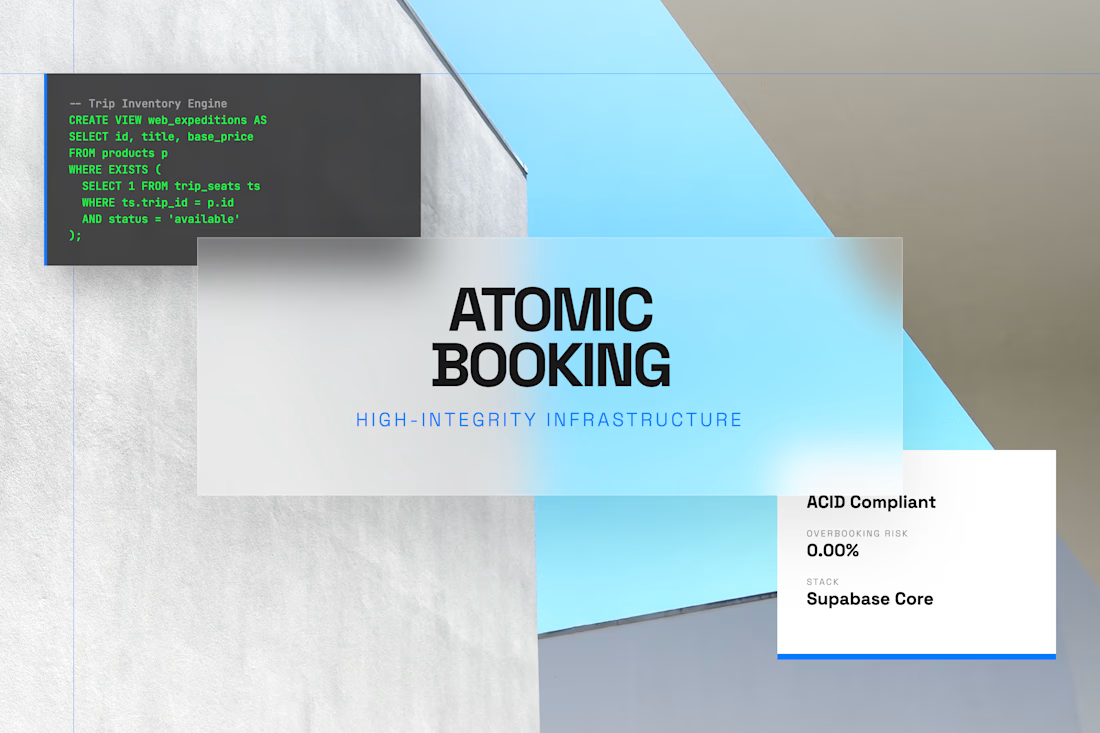

When systems scale, the first thing that breaks isn't the UI — it’s the integrity of the data. Most platforms treat inventory as a simple number that increments or decrements. But in high-stakes operations, "counting" is a liability. It leads to overbooking, race conditions, and...
The network for creativity
Join 1.25M professional creatives like you
Connect with clients, get discovered, and run your business 100% commission-free
Creatives on Contra have earned over $150M and we are just getting started
Related posts


I built a reusable booking website template in Anything — designed for service businesses, studios, consultants, rentals, events, and local experiences.
The goal was simple: make something polished enough to publish immediately, but flexible enough for anyone to remix.
Inside the template:
• Clean landing page structure
• Fully responsive design
• Service and pricing sections
• Smooth booking flow
• Visual-first layout
• Easy-to-edit content, images, branding, and availability
• Instructions for reusing and customizing the template
• Marketplace-ready structure for fast remixing
It’s a practical starting point for anyone who needs a modern booking site without designing everything from scratch.
https://www.anything.com/build/WRNXu2c7TFqL3YN6GUjqBw?v=uUBc8QHhQuGmDhzCwnnHyg
@Anything @Contra HQ



always building , great work

Managing logistics operations without clear insights can lead to delays, inefficiencies, and lost revenue. This dashboard is built to give you complete visibility into your transportation performance — all in one place.
A powerful analytics solution that helps you track bookings, delivery performance, delays, and operational efficiency in real time. Designed for clarity and speed, so you can make decisions without digging through raw data.
🔹Monitor on-time vs delayed deliveries instantly
🔹Track booking trends and operational workload over time
🔹Analyze trip efficiency with lead time and distance metrics
🔹Identify peak hours and demand patterns
🔹Evaluate top drivers and most frequent routes/destinations
🔹Compare weekday vs weekend performance
If you want a clean, professional dashboard that turns your logistics data into real operational insights, I can build a custom solution tailored to your business needs.



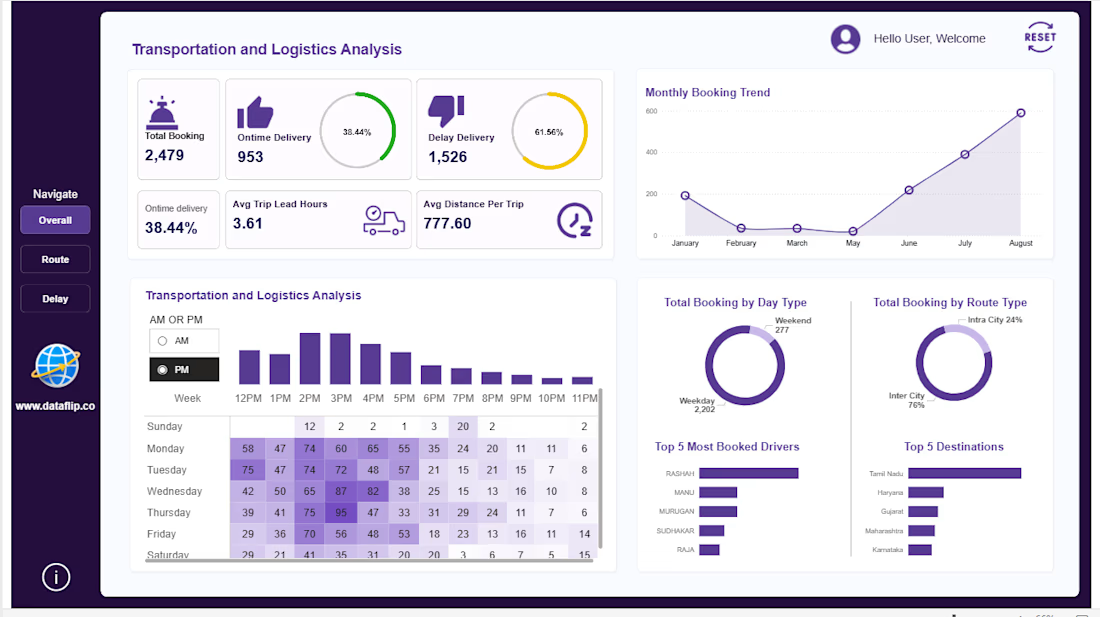

The PM peak hour heatmap by day is the most actionable view here — you can see Wednesday 3PM spiking immediately without digging through any data. That kind of instant pattern recognition is exactly what operations managers need to plan driver allocation. What industry was this built for?

5 months ago, a client came to me with a problem.
Not just "we need a B2B ordering portal."
More like – "we had a team build it. It didn't work. Can you start over?"
That's a different kind of brief.
I said yes, opened Figma, and started from scratch.
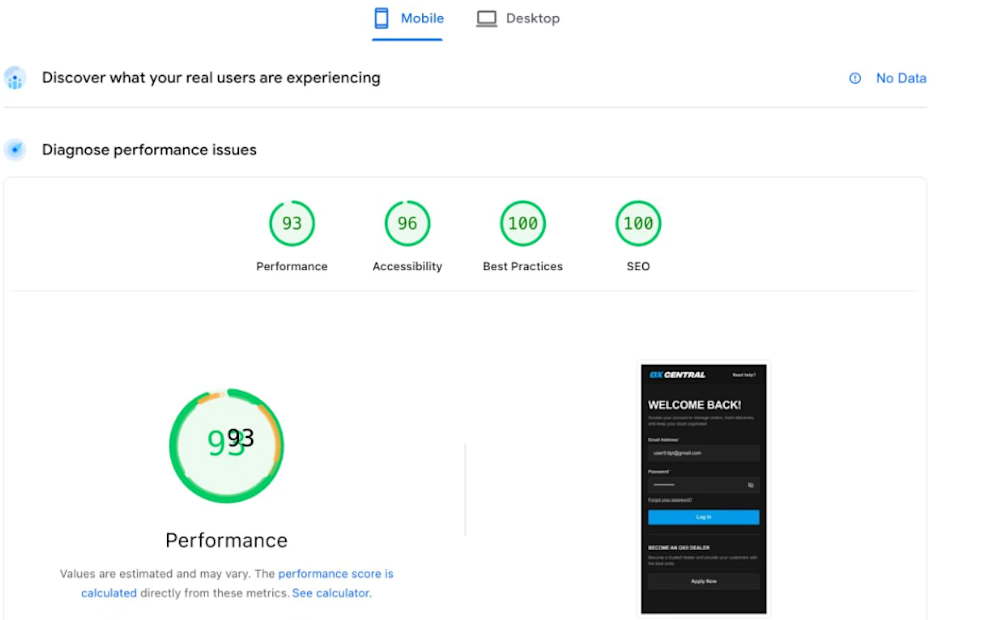
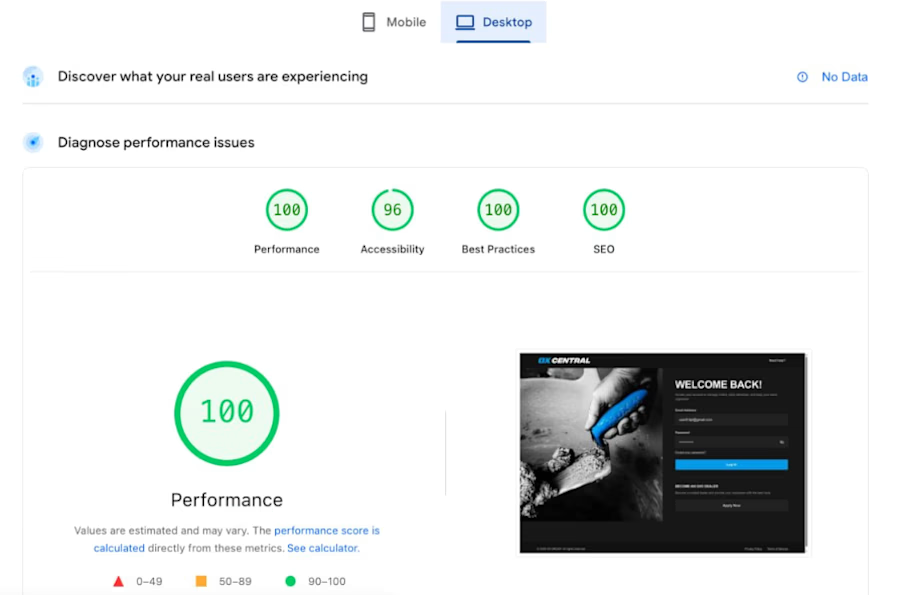
50+ unique screens for OXGroup, a full B2B dealer ordering platform. Every flow, every state, every edge case was designed properly before a single line of code was written.
Then the previous dev team was out. My team was in.
Backend devs. Frontend devs. Me, somehow, as the PM now.
That last part still feels new. I've spent years living in Figma. Coordinating a full dev team, keeping scope tight, making calls under pressure, different muscle entirely.
Turns out I don't hate it.
1 week of AI development later, we have a live, working demo. Built from my Figma file using Claude Code as the foundation.
4 weeks, we will have a live, fully functional platform we can give access to our customers.
We're not done. Automation testing is next, to catch everything before the client does. Then PostHog goes in, so we have real analytics from launch, not assumptions.
The lesson I keep coming back to:
Good design doesn't save a bad process. But a good process makes design unbreakable.
Got a product that didn't survive its first dev team?
💌 DM me. That's kind of our thing now.




Trending

Claude
Claude has entered the design space. How are you using Claude Design?

Contra University
Learn from expert creatives how to earn more using next-gen AI tools.
creativeaiflow
Creative AI workflows are evolving. What tools do you use, and what are their strengths and weaknesses?
portfolioreview
The best portfolios tell a story, not just show a grid. Share yours for feedback.
freelancerlife
Freelancer life is wins, pivots, and everything in between. What’s yours right now?